
The landscape of household finance has shifted dramatically over the last decade. Where families once spent Saturday mornings navigating crowded supermarket aisles with a physical list and a handful of clipped coupons, the modern consumer is more likely to be building a virtual cart on a smartphone. At the forefront of this digital grocery revolution is Amazon Fresh. However, for the budget-conscious consumer or the financially disciplined household, the convenience of home delivery raises a critical question: how much does Amazon Fresh actually cost, and does it align with a sophisticated personal finance strategy?
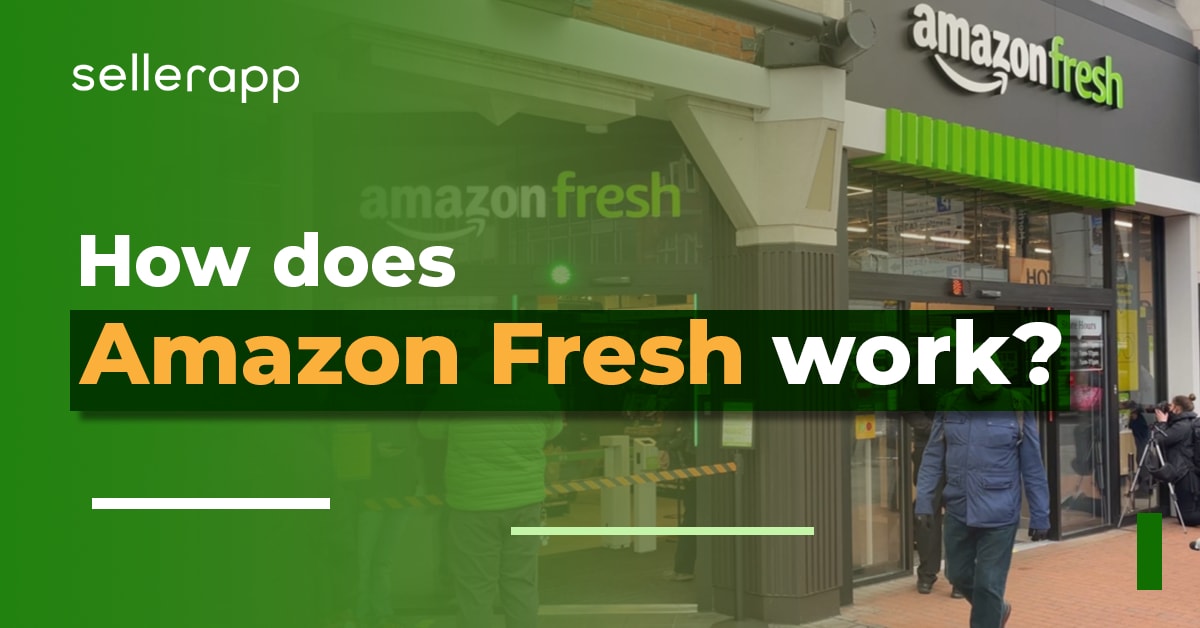
To understand the true cost of Amazon Fresh, one must look beyond the price tag on a gallon of milk. Determining the financial viability of this service requires a multi-layered analysis of membership fees, delivery structures, price-per-unit comparisons, and the hidden “opportunity costs” of traditional shopping.
Understanding the Core Cost Structure of Amazon Fresh
The financial barrier to entry for Amazon Fresh is not a standalone subscription, but rather its integration into the broader Amazon ecosystem. To access Amazon Fresh, consumers must first understand the primary “gatekeeper” fee: Amazon Prime.
The Prime Membership Prerequisite
As of current market rates, an Amazon Prime membership—which is required to access the “Fresh” storefront in most regions—costs $139 per year or $14.99 per month. From a personal finance perspective, this is a fixed recurring expense that must be amortized across all services used, including streaming, shipping, and groceries. If a household utilizes Prime solely for grocery delivery, the “entry fee” is roughly $11.58 per month before a single item is purchased.
Delivery Fees and Thresholds
The most significant change in the Amazon Fresh financial model occurred recently with the restructuring of delivery fees. For years, the service offered free delivery on orders over a relatively low threshold. Today, the pricing is tiered to encourage larger, less frequent orders—a strategy that aligns with bulk-budgeting techniques.
Typically, the fee structure follows a pattern:
-
Orders over $100: Generally qualify for free delivery within specific windows.
-
Orders between $50 and $100: Incur a delivery fee, often around $6.95.
-
Orders under $50: Incur a higher delivery fee, often reaching $9.95.
For a household operating on a strict weekly budget, these fees can represent a 10% to 20% “convenience tax” on smaller orders. Therefore, the most financially sound way to utilize Amazon Fresh is to consolidate purchases into a single “bi-weekly” or “monthly” shop that exceeds the $100 threshold, effectively neutralizing the delivery cost.
Tipping and Service Fees
A frequently overlooked component of the Amazon Fresh budget is the gratuity for the delivery driver. While technically optional, the industry standard is 10% to 20% of the order total, or a minimum of $5. For a $150 grocery haul, this adds an additional $15 to $30 to the total expenditure. In a pure price-to-price comparison with self-service grocery shopping, this is a direct “leak” in the budget that must be accounted for when calculating the total cost of ownership for the service.
Comparing Amazon Fresh to Traditional Grocery Spending
To determine if Amazon Fresh is “expensive,” we must compare its unit pricing against traditional brick-and-mortar competitors like Kroger, Publix, or discount giants like Walmart and Aldi.
Price Competitiveness on Staples
Market research consistently shows that Amazon Fresh maintains highly competitive pricing on shelf-stable goods and “center-store” items. Brands of cereal, canned goods, and household cleaners are often priced at parity with or slightly lower than national grocery chains. Amazon’s private label brand, “365 by Whole Foods Market,” also provides a lower-cost alternative to premium national brands, allowing consumers to maintain a lower average cost per item.
The Perishables Premium
Where the financial math becomes more complex is in the produce and protein categories. While Amazon Fresh offers competitive pricing, the inability for the consumer to personally select the most “value-heavy” produce (e.g., the largest head of lettuce or the best-marbled cut of meat) can lead to perceived value loss. Furthermore, discount grocers like Aldi often undercut Amazon Fresh on fresh produce prices by 15% to 30%. For a family whose diet is heavily reliant on fresh fruits, vegetables, and meats, the digital premium may be higher than it is for a household that buys mostly packaged goods.
Avoiding the “Impulse Buy” Trap
One of the greatest financial benefits of Amazon Fresh is the elimination of the “checkout line impulse buy.” Traditional grocery stores are designed as psychological mazes intended to trigger unplanned spending. By shopping via a digital interface, consumers can search strictly for what they need, view their total in real-time, and easily remove items to stay within a predetermined budget. For many, the $10 saved by avoiding unplanned snacks and magazines at the physical register more than offsets the cost of a delivery tip.
Maximizing Your ROI: Financial Tools and Strategies

For the savvy investor or budgeter, using Amazon Fresh is not just about spending; it’s about optimizing the return on every dollar spent.
Utilizing the Amazon Prime Rewards Visa Card
One of the most effective ways to lower the effective cost of Amazon Fresh is through the use of the Amazon Prime Rewards Visa Signature Card. This card offers 5% back on all Amazon.com and Amazon Fresh purchases.
Let’s look at the math: If a household spends $800 per month on groceries through Amazon Fresh, the 5% cashback totals $40. Over a year, that is $480 in “found money.” This more than covers the $139 Prime membership fee and a significant portion of the annual delivery tips. When integrated correctly, this turns a convenience service into a high-yield spending category.
Coupons and “Subscribe & Save”
Amazon Fresh integrates digital coupons directly into the interface, often more efficiently than physical stores. Furthermore, the “Subscribe & Save” model can be applied to many recurring grocery items (like coffee, paper towels, or pet food), offering an additional 5% to 15% discount. By automating the purchase of non-perishables, a consumer can significantly lower their average monthly grocery expenditure compared to erratic, manual shopping.
The Opportunity Cost: Is the Time Saved Worth the Premium?
In personal finance, “money” is only one half of the equation; “time” is the other. To truly understand “how much” Amazon Fresh costs, one must calculate the value of the time saved.
The Value of Time Analysis
Consider the average grocery trip: 15 minutes of driving (round trip), 45 minutes of shopping, and 15 minutes of unloading. This is 75 minutes per week, or roughly 65 hours per year.
If a professional values their time at $50 per hour, those 65 hours represent $3,250 in “time value.” Even if one values their time at a more modest $20 per hour, the annual “cost” of physical shopping is $1,300. When compared to the $139 Prime fee and occasional delivery tips, Amazon Fresh often emerges as the more “profitable” choice for busy professionals and families.
Fuel and Transportation Savings
With fluctuating gas prices, the cost of operating a vehicle for grocery runs is a tangible expense. If a round trip to the store is 10 miles, and the IRS standard mileage rate is $0.67 per mile, each trip costs roughly $6.70 in vehicle wear and fuel. Over a year of weekly trips, that’s $348. This hidden saving further narrows the gap between the “free” act of driving to the store and the “paid” service of delivery.
The Future Outlook: Inflation and Digital Logistics
As we look at the financial trajectory of services like Amazon Fresh, we must consider the impact of inflation. Grocery prices have seen significant volatility in recent years. Amazon’s massive scale and logistics network allow it to absorb some supply chain shocks better than smaller regional chains, potentially offering a “hedge” against localized price spikes.
However, as labor costs for delivery drivers and fuel costs for delivery vans rise, it is likely that the “free” delivery thresholds will continue to climb. For the consumer, this means that the financial viability of Amazon Fresh will increasingly depend on “bulk” digital shopping rather than “on-demand” small orders.

Final Financial Verdict
So, how much is Amazon Fresh?
For the unoptimized user—someone who places small, frequent orders and does not use a rewards card—the service can be expensive, adding an estimated 15% to 25% premium to their grocery bill through fees and tips.
However, for the strategically-minded consumer, the math changes. By hitting the $100+ delivery threshold, utilizing a 5% cashback credit card, leveraging “Subscribe & Save” discounts, and factoring in the massive savings in fuel and time, Amazon Fresh can actually be cheaper than traditional shopping.
In the modern economy, “cost” is a multifaceted metric. Amazon Fresh represents a shift from a labor-intensive shopping model to a capital-intensive one. For those who manage their personal finances with an eye on efficiency and ROI, the “cost” of Amazon Fresh is a manageable investment that often pays dividends in both time and treasury.
aViewFromTheCave is a participant in the Amazon Services LLC Associates Program, an affiliate advertising program designed to provide a means for sites to earn advertising fees by advertising and linking to Amazon.com. Amazon, the Amazon logo, AmazonSupply, and the AmazonSupply logo are trademarks of Amazon.com, Inc. or its affiliates. As an Amazon Associate we earn affiliate commissions from qualifying purchases.