
In the modern landscape of e-commerce, shipping costs represent one of the most significant “hidden” drains on a household budget. While a five-dollar delivery fee may seem negligible in isolation, the cumulative impact of these charges over a fiscal year can erode the benefits of online price-matching and competitive deals. For the financially conscious consumer, mastering the art of securing free delivery on Amazon is not merely a convenience—it is a strategic move in personal finance management. By understanding the mechanics of Amazon’s logistics and its various membership tiers, you can significantly lower your cost of living while maintaining the convenience of doorstep delivery.

The Economic Analysis of Amazon Prime
The most prominent method for securing free delivery is Amazon Prime. However, from a personal finance perspective, Prime is not “free”; it is a prepaid service. To determine if the annual or monthly membership fee serves your financial interests, you must conduct a rigorous return on investment (ROI) analysis.
Evaluating the Break-Even Point
As of the current fiscal period, an Amazon Prime membership costs approximately $139 per year or $14.99 per month. For a consumer whose primary goal is to eliminate shipping fees, the break-even point is the most critical metric. If the average standard shipping cost is roughly $7.00, a member must place at least 20 orders per year to justify the annual fee solely on the basis of delivery costs.
For those who shop frequently—averaging two or more orders per month—the membership pays for itself through shipping savings alone. However, for the disciplined shopper who consolidates orders, the subscription might actually be a net loss. It is essential to review your purchase history from the previous twelve months to calculate your personal break-even point before committing to the annual expense.
Value-Added Services as Cash-Equivalent Benefits
To accurately assess the financial value of Prime, one must look beyond the “Free Two-Day Shipping” badge. A Prime membership includes several “cash-equivalent” benefits that can replace other monthly line items in your budget:
-
Prime Video: This can serve as a direct replacement for other streaming services like Netflix or Hulu, potentially saving you $120 to $200 per year.
-
Amazon Music: This offers a baseline alternative to Spotify or Apple Music.
-
Prime Reading and First Reads: For avid readers, this reduces the monthly expenditure on books and periodicals.
-
Unlimited Photo Storage: This can eliminate the need for paid tiers of Google Photos or iCloud.
When these services are integrated into your lifestyle, the “cost” of free delivery effectively drops to zero, or even becomes a net positive in your monthly cash flow.
Strategic Optimization for Non-Prime Members
For many, avoiding the annual commitment of Prime is the superior financial choice. Amazon allows non-members to access free shipping through several mechanical triggers within their checkout system. Success in this area requires patience and a “batching” mindset.
Mastering the Minimum Purchase Threshold
Amazon typically offers free standard shipping on orders that meet a minimum price threshold—usually $35 for eligible items. The strategy here is “order consolidation.” Rather than purchasing a $10 item immediately when the need arises, the financially savvy consumer adds that item to their cart and waits until their total needs exceed the $35 mark.
This approach serves two financial purposes: it eliminates the shipping fee and acts as a natural cooling-off period, which often prevents impulse purchases. If you find yourself just a few dollars short of the threshold, consider “pantry loading”—adding a non-perishable item you know you will eventually need, such as toothpaste, detergent, or dry goods, to bridge the gap without wasting money on “filler” items you don’t need.
The Subscribe & Save Model for Recurring Savings
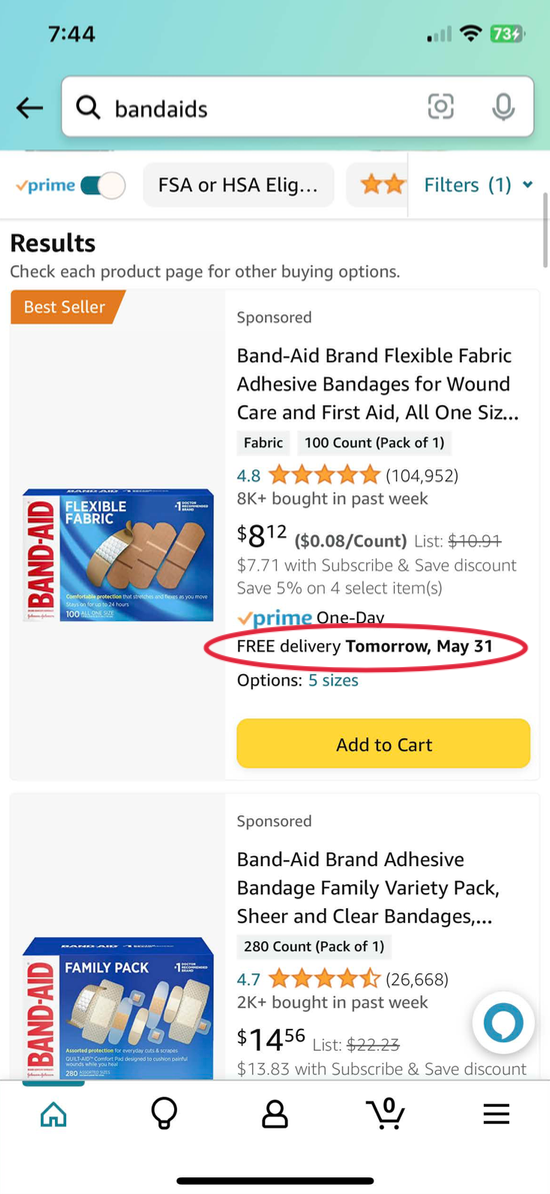
One of the most effective tools for the budget-conscious shopper is the “Subscribe & Save” program. This feature is not exclusive to Prime members. By committing to a recurring delivery of essential household goods, you can unlock free standard shipping on those items regardless of the total order value.
From a business finance perspective, this is a win-win. Amazon gains predictable inventory demand, and you receive a discount—often between 5% and 15%—alongside the elimination of delivery fees. For items you purchase regularly, such as coffee, pet food, or vitamins, this model automates your savings and ensures you never pay a premium for last-minute shipping.
Leveraging Financial Tools and Credit Rewards
In the realm of personal finance, how you pay for an item is just as important as the price of the item itself. Amazon offers several financial products that can indirectly or directly offset the costs associated with delivery.
The 5% Cashback Advantage
The Amazon Prime Visa or the Amazon Store Card provides a 5% cashback reward on all Amazon purchases for Prime members (and often 3% for non-members). When applied strategically, this cashback can be used to “fund” your shipping costs or pay off the annual membership fee.
For example, if you spend $3,000 annually on Amazon for household essentials, a 5% cashback reward yields $150. This effectively covers the entire cost of a Prime membership, making every delivery “free” while leaving a small surplus. This creates a self-sustaining ecosystem where your consumption habits fund your access to the platform’s logistics network.
No-Rush Shipping Credits as a Revenue Stream
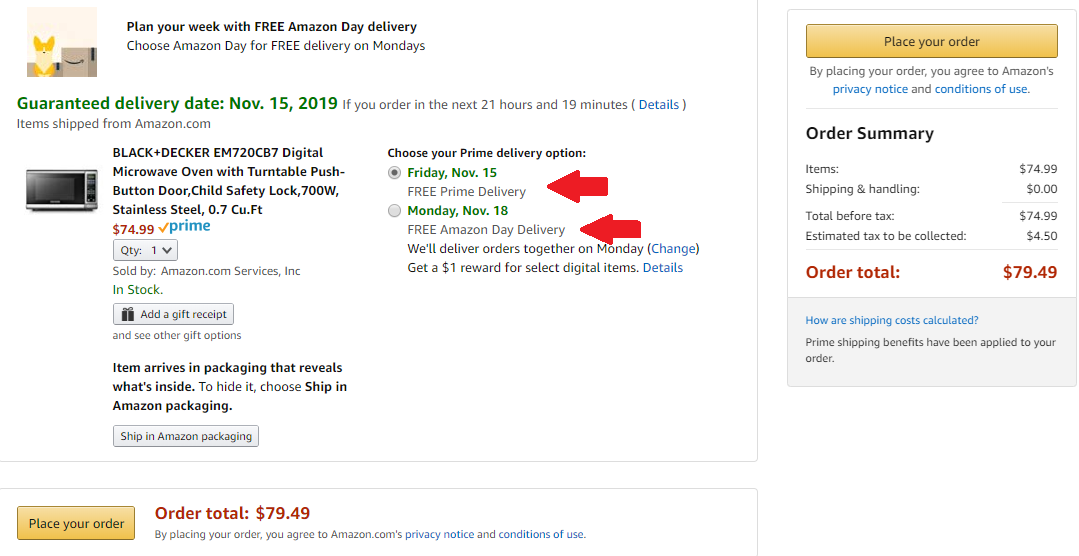
For Prime members who do not require immediate delivery, the “No-Rush Shipping” option is a hidden gem for digital budgeting. By selecting a slower delivery window, Amazon frequently rewards the account with digital credits (usually $1 to $3 per order).
These credits can be used to purchase Kindle books, Prime Video rentals, or even grocery deliveries through Amazon Fresh. Over a year, a frequent shopper can accumulate $50 to $100 in digital credits. In the context of a total financial plan, this is essentially “found money” that offsets entertainment expenses, further increasing the ROI of the platform.
Navigating Third-Party Sellers and Global Logistics
Not every item on Amazon is shipped by Amazon. Understanding the distinction between “Fulfilled by Amazon” (FBA) and “Merchant Fulfilled” is crucial for avoiding unexpected shipping liabilities.
Understanding FBA vs. Merchant Fulfilled
Items marked “Fulfilled by Amazon” fall under the standard Prime and $35-threshold rules. However, third-party sellers who ship their own products set their own rates. To maintain a lean budget, always filter your search results by “Prime” or “Free Shipping by Amazon.” Even if you aren’t a Prime member, filtering for Prime-eligible items ensures that you are looking at products that can be grouped together to meet the $35 free shipping minimum.
Be wary of low-priced items from third-party sellers that carry high shipping fees. Often, a $10 item with $10 shipping is a worse financial deal than a $15 item with free shipping. Always calculate the “landed cost”—the total price including tax and delivery—before clicking the buy button.
Using Amazon Hubs to Mitigate Hidden Costs
While not a direct “free shipping” hack in the traditional sense, utilizing Amazon Lockers or Hub Counters can protect your financial assets. “Porch piracy”—the theft of delivered packages—is a significant uncompensated loss for many consumers. If you live in an area where package security is an issue, shipping to a secure Amazon Locker is free and ensures you don’t have to spend money replacing stolen goods. Furthermore, some promotional offers provide “pickup discounts” for choosing a locker over home delivery, providing an additional layer of savings.
Integrating Shipping Strategies into Your Personal Finance Routine
The quest for free delivery on Amazon is ultimately about intentionality. Shipping fees are a friction point that, when ignored, lead to “lifestyle creep” and budget leaks. When managed correctly, the strategies outlined above do more than just save a few dollars on a cardboard box; they instill a sense of financial discipline.
To optimize your Amazon spending:
-
Conduct an annual audit: Look at your total Amazon spend and shipping fees paid. Decide if Prime is an asset or a liability.
-
Utilize the “Save for Later” feature: Use your cart as a holding pen to reach the $35 threshold rather than buying items piecemeal.
-
Automate with Subscribe & Save: Take the guesswork out of essential shopping and lock in free delivery for your most-used items.
-
Maximize Credit Rewards: Use the right financial instruments to ensure that your spending generates a return.
By viewing Amazon delivery through the lens of business finance and personal budgeting, you transform a simple shopping errand into a sophisticated exercise in wealth preservation. Free delivery is not just a perk; it is the result of a well-executed financial strategy.
aViewFromTheCave is a participant in the Amazon Services LLC Associates Program, an affiliate advertising program designed to provide a means for sites to earn advertising fees by advertising and linking to Amazon.com. Amazon, the Amazon logo, AmazonSupply, and the AmazonSupply logo are trademarks of Amazon.com, Inc. or its affiliates. As an Amazon Associate we earn affiliate commissions from qualifying purchases.