
In the vast architecture of global e-commerce, Amazon stands as a monolith of logistical and software engineering. While the front-end user experience is designed for frictionless consumption, the back-end processes governing disputes, returns, and claims are governed by complex algorithms and strict technical protocols. For the end-user, understanding how to file a claim in Amazon is not merely about clicking a button; it is about navigating a sophisticated digital infrastructure designed to balance consumer protection with automated fraud detection.
The Amazon A-to-z Guarantee is the cornerstone of this system, serving as a tech-enabled safety net for purchases made from third-party sellers. When the standard transactional flow breaks down—whether due to a logistical failure, a software glitch in tracking, or a discrepancy in product data—the claims process becomes the primary mechanism for financial and digital resolution.

Understanding the Architecture of the Amazon A-to-z Guarantee
The A-to-z Guarantee is an integrated software framework that automates the dispute resolution process between buyers and third-party sellers. Unlike traditional customer service models that rely heavily on human intervention, Amazon’s system utilizes decision-tree logic and automated verification to handle millions of claims simultaneously.
The Backend Logic of Buyer Protection
When a user initiates a claim, they are triggering a series of events within Amazon’s database. The system first validates the transaction against specific metadata: the date of purchase, the promised delivery window, and the real-time telemetry data provided by the shipping carrier’s API.
The A-to-z Guarantee covers two primary technical failures:
-
Logistical Failure: The item was not delivered within the timeframe recorded in the system, or the tracking API indicates delivery, but the geolocation data of the package drop-off does not align with the customer’s address.
-
Data Mismatch: The physical item received does not match the technical specifications, images, or metadata provided in the product listing.
Digital Eligibility Requirements and Timelines
The claims engine operates within strict temporal parameters. A claim cannot typically be filed until the “Maximum Estimated Delivery Date” (Max EDD) has passed plus three days. This buffer is hard-coded into the system to account for minor delays in carrier scanning or last-mile delivery transitions. Furthermore, the window for filing a claim is capped at 90 days from the Max EDD. Understanding these digital timestamps is crucial for ensuring the claim is not automatically rejected by the system’s initial validation filter.
The Technical Workflow: Step-by-Step Execution of an Amazon Claim
Navigating the user interface (UI) to file a claim requires a systematic approach. Amazon’s UI is optimized for mobile and desktop, though the pathing varies slightly between the application and the web browser.
Initiating via the Mobile App vs. Desktop Interface
On a desktop, the pathing begins at the “Returns & Orders” section of the top-level navigation. Users must locate the specific Order ID—a unique alphanumeric string that serves as the primary key for the entire transaction history. Once the order is identified, the “Problem with Order” button acts as the gateway to the claims engine.
In the Amazon mobile app, the process is streamlined through a touch-optimized interface. Users navigate to the “Your Orders” menu, select the item, and utilize the “Get help” or “Problem with order” prompts. In both instances, the system will first attempt to redirect the user to a chat interface or a direct messaging portal with the seller. This is a deliberate design choice: Amazon’s algorithms prioritize peer-to-peer resolution before escalating to a formal A-to-z claim, which impacts the seller’s “Order Defect Rate” (ODR) metric.
Documenting Digital Proof: Photos, Chat Logs, and Tracking Data
To successfully navigate a claim involving a defective or incorrect item, the user must provide high-quality digital evidence. The claims portal allows for the upload of image files (JPEG, PNG). These images are often processed by basic computer vision algorithms to identify discrepancies between the received item and the catalog data.
Key technical documentation includes:
-
High-Resolution Images: Focus on the shipping label, the packaging, and the defect itself.
-
Communication Metadata: Ensure all correspondence with the seller occurs through the Amazon Message Center. The claims system automatically parses these logs; external emails are not recognized as valid evidence within the automated dispute flow.
-
Carrier Logs: If a package is marked as delivered but is missing, screenshots of the carrier’s detailed tracking page (which may include the weight of the package at various nodes) can serve as critical data points for the human auditors who review escalated claims.
Leveraging Automated Systems and AI Chatbots for Resolution
Amazon has invested heavily in Natural Language Processing (NLP) to handle the initial stages of claim filing. The “Customer Service Associate” encountered by most users is, in fact, a sophisticated AI chatbot designed to categorize the issue and provide immediate solutions based on predefined business logic.
Navigating the Neural Networks of Amazon Customer Service
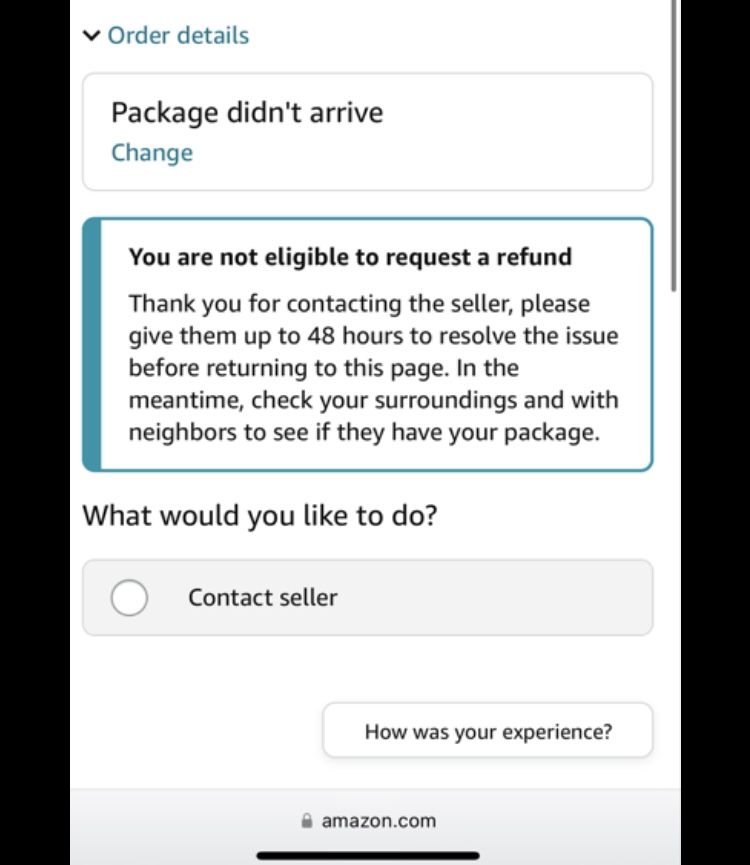
When interacting with the AI chatbot, the user’s input is analyzed for specific keywords such as “damaged,” “not received,” “wrong item,” or “late.” These keywords act as triggers for the bot to check the order’s status via the backend API. If the API confirms the delivery is past the Max EDD, the bot may offer an immediate refund or the option to file a formal claim without human intervention.
To interact effectively with these systems, users should use concise, keyword-rich language. Instead of a narrative description, phrases like “Package not received despite tracking saying delivered” or “Item received is different from listing description” allow the NLP engine to route the request more efficiently.
Escalation Protocols: When Automation Fails
In cases where the automated system cannot resolve the issue—for instance, if the tracking data is ambiguous or the seller disputes the claim—the case is moved to a manual review queue. This is where “Account Health” metrics and “Buyer Trust” scores come into play. Amazon’s internal systems maintain a profile for every user, tracking the frequency of claims. A high volume of claims relative to purchase history can trigger a fraud detection flag, leading to more rigorous manual auditing of the claim.
Security Protocols and Fraud Prevention in the Claims Process
The claims process is a high-risk area for digital security. Malicious actors often use the guise of “order issues” to execute phishing attacks or account takeovers.
Protecting Your Account During Dispute Resolution
A legitimate Amazon claim will never require you to provide sensitive information like your full credit card number, Social Security number, or account password via email or chat. All financial transactions and refunds are handled through the encrypted payment gateway associated with your Amazon account.
Users should be wary of any seller who asks to move the conversation outside of the Amazon platform (e.g., to WhatsApp or personal email). Doing so bypasses Amazon’s security layer and invalidates the A-to-z Guarantee. From a technical standpoint, the “Message Center” is the only secure, encrypted environment where communication is logged and admissible for claim reviews.
Identifying Phishing Attempts Masked as Claim Notifications
Once a claim is filed, you will receive status updates. Phishing bots often send fake “claim update” emails to capture login credentials. Always verify the sender’s domain (it should be @amazon.com) and, more importantly, check the “Your Account” dashboard directly on the Amazon website or app. If the status of the claim in the app does not match the email, the email is likely a security threat.
Technical Best Practices for Data Integrity and Record Keeping
For frequent users of the platform, maintaining a “digital paper trail” is essential for the seamless resolution of claims. This involves more than just keeping receipts; it involves managing the digital data generated by every transaction.
Data Integrity and User Habits
Every order generates a unique set of data points: the Order ID, Tracking ID, ASIN (Amazon Standard Identification Number), and Seller ID. Keeping a log of these, perhaps in a simple spreadsheet or a digital note-taking app, allows for rapid retrieval when dealing with the claims interface.
Furthermore, users should be aware of the “Browser Cache and Cookies” impact. Sometimes, the “Problem with Order” button may not appear or may lead to an error page due to stale session data. Performing a hard refresh (Ctrl+F5) or clearing the browser’s cache for Amazon.com can often resolve interface glitches during the claim filing process.
The Role of API Integration for Third-Party Sellers
While this guide focuses on the buyer’s perspective, the technical reality of the claim is also felt on the seller’s side. Sellers often use third-party software integrated with Amazon’s SP-API (Selling Partner API) to manage their inventory and disputes. When a buyer files a claim, an API notification is pushed to the seller’s system.
If a buyer provides clear, technically accurate information (like the specific SKU or a clear photo of a barcode), the seller’s automated systems are more likely to approve the refund instantly. High-quality data from the buyer reduces the “friction” in the seller’s internal workflow, leading to a faster resolution for everyone involved.

Conclusion: The Future of Claims Management
As Amazon continues to integrate advanced AI and machine learning into its ecosystem, the claims process will likely become even more automated. We are moving toward a “predictive resolution” model where Amazon’s systems may identify a shipping delay or a recurring product defect before the user even realizes there is a problem, proactively offering a claim filing option.
By understanding the technical logic, UI paths, and data requirements of the current system, users can navigate the Amazon claims infrastructure with professional precision. Treating the claim not just as a complaint, but as a technical data submission, ensures the highest probability of a successful and rapid financial recovery.
aViewFromTheCave is a participant in the Amazon Services LLC Associates Program, an affiliate advertising program designed to provide a means for sites to earn advertising fees by advertising and linking to Amazon.com. Amazon, the Amazon logo, AmazonSupply, and the AmazonSupply logo are trademarks of Amazon.com, Inc. or its affiliates. As an Amazon Associate we earn affiliate commissions from qualifying purchases.