
In the landscape of modern commerce, few names carry as much weight as Amazon. It is a brand that has transcended its origins as an online bookstore to become a global infrastructure for consumption, cloud computing, and digital entertainment. However, for many consumers and market analysts, a frequent point of confusion arises when distinguishing between “Amazon” the marketplace and “Amazon Prime” the service. While they are inextricably linked, they represent two different facets of a sophisticated brand strategy designed to capture every possible moment of a consumer’s daily life.
To understand the difference between Amazon and Amazon Prime is to understand the evolution of brand architecture in the 21st century. One is a transactional platform—a digital utility where the world goes to find everything from A to Z. The other is a premium membership layer designed to create “sticky” customer relationships, driving brand loyalty through an integrated ecosystem of value.
The Core Identity: Defining the Amazon Marketplace
At its most fundamental level, Amazon is a brand defined by selection, price, and convenience. As a brand identity, the Amazon marketplace functions as the world’s largest retail aggregator. It is a transactional engine where the brand promise is simple: if a product exists, you can find it here, and it will likely be cheaper and arrive faster than anywhere else.
The Master Brand Philosophy
The Amazon master brand is built on what founder Jeff Bezos famously termed the “Flywheel.” This brand philosophy suggests that by offering lower prices and a wider selection, the platform attracts more customers. A larger customer base, in turn, attracts more third-party sellers, which further increases selection and allows for even lower prices through economies of scale.
In this context, “Amazon” refers to the core retail experience available to anyone with an internet connection. You do not need a subscription to use Amazon; you simply need an account and a method of payment. The brand identity here is that of a “Universal Store.” It is utilitarian, efficient, and relentlessly focused on removing friction from the buying process.
The Transactional Foundation
The marketplace side of the brand is characterized by its accessibility. It serves the “occasional” shopper—the individual who needs a specific item once and has no long-term loyalty to the platform. For these users, the Amazon brand is a tool. The relationship is purely transactional: the customer provides capital, and Amazon provides the logistics of delivery. However, without the “Prime” layer, the brand experience is subject to the standard hurdles of e-commerce, such as shipping costs, slower delivery timelines, and a lack of access to proprietary digital content.
Amazon Prime: The Strategic Evolution of Brand Loyalty
If Amazon is the store, Amazon Prime is the VIP entrance and the curated experience within that store. Launched in 2005, Amazon Prime was a revolutionary brand extension that shifted Amazon from a retail destination to a lifestyle subscription. From a branding perspective, Prime is a masterclass in “Ecosystem Lock-in.”
From Convenience to Ecosystem
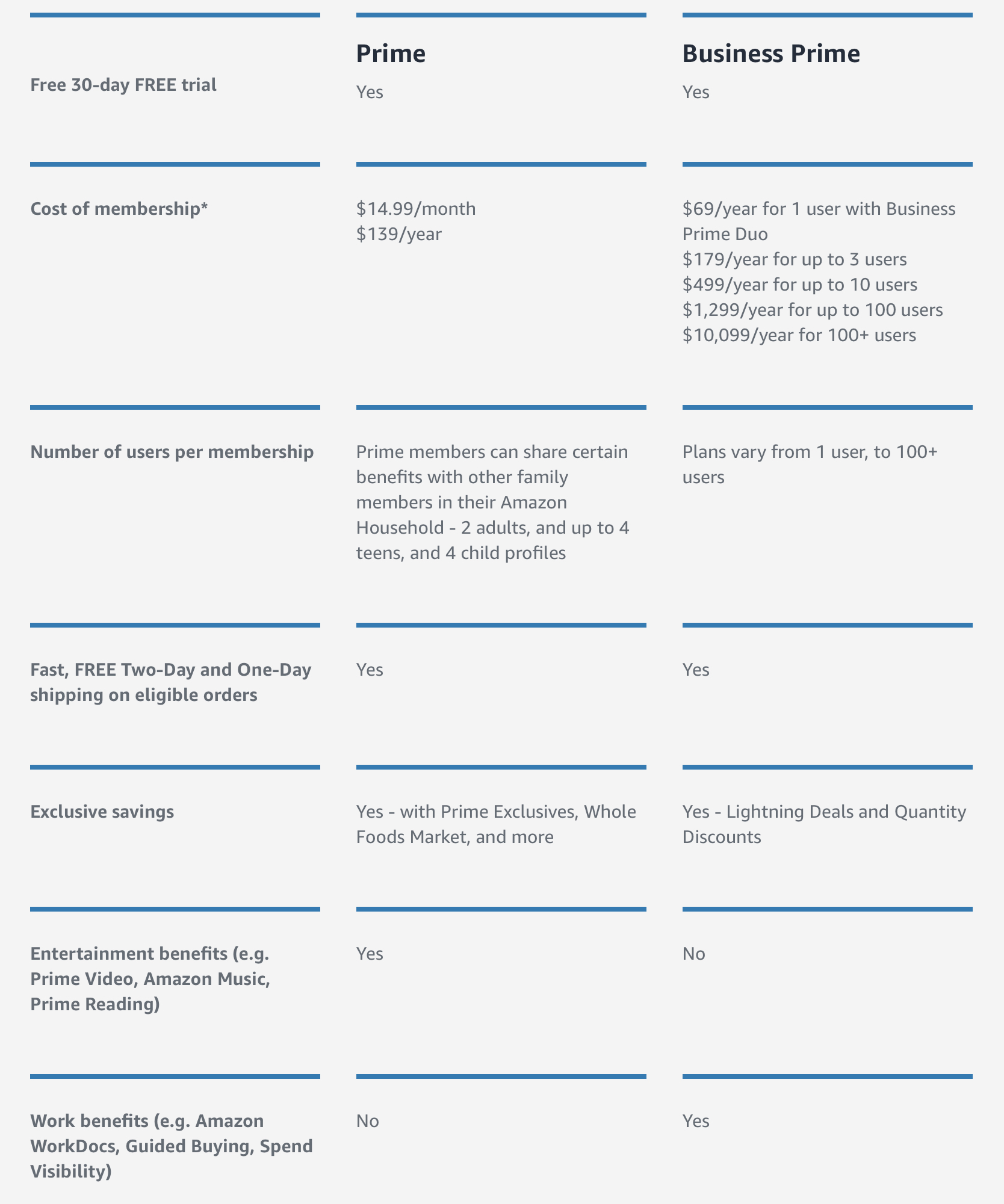
The primary difference lies in the nature of the relationship. Amazon Prime is a paid membership program that offers a suite of services that go far beyond simple retail. While the marketplace focuses on the “what” (the products), Prime focuses on the “how” (the experience).
Initially, the Prime brand was synonymous with “Free Two-Day Shipping.” It was a marketing masterstroke that addressed the single biggest pain point in online shopping: the cost and time of delivery. However, as the brand matured, Prime evolved into a comprehensive lifestyle bundle. Today, the Prime brand includes:
-
Prime Video: A direct competitor to Netflix, positioning Amazon as a major player in Hollywood.
-
Prime Music: A streaming service that integrates with the Alexa/Echo hardware ecosystem.
-
Prime Reading and Gaming: Extensions that capture the attention of different demographic segments.
-
Whole Foods Integration: A bridge between the digital brand and physical grocery retail.
The Psychology of the Subscription Model
The branding strategy behind Prime is rooted in behavioral economics. Once a consumer pays an annual or monthly fee for Prime, their psychological relationship with the Amazon brand changes. They no longer view Amazon as one of many shopping options; they view it as their default option. The “sunk cost” of the membership fee incentivizes the user to shop more frequently to “get their money’s worth.”
For the Amazon brand, Prime is the ultimate data harvester. It allows the company to track user behavior across movies, music, and groceries, creating a 360-degree view of the consumer. This data then fuels the marketplace’s recommendation engine, further tightening the bond between the user and the brand.
Brand Architecture: How the Sub-Brand Enhances the Parent
The relationship between Amazon and Amazon Prime is a classic example of a “Branded House” architecture, where the sub-brand (Prime) derives its authority from the parent (Amazon) but also adds significant equity back to the parent brand.
Synergy and Cross-Platform Integration
The genius of the Prime brand is how it leverages “halo effects.” When a customer has a positive experience watching an exclusive series on Prime Video, it reinforces their positive perception of the Amazon retail platform. Conversely, the convenience of the retail platform makes the Prime membership feel indispensable.
This synergy is most visible in Amazon’s hardware strategy. Devices like the Kindle, Fire TV, and Echo are sold at near-cost prices to act as physical conduits for Prime services. Here, the tech and the brand strategy merge: the device (Tech) serves the Brand (Prime), which in turn feeds the Marketplace (Amazon). This creates a closed-loop system where the “difference” between the brands becomes blurred, which is exactly what the corporate strategy intends.
Perceived Value vs. Real Cost
From a marketing perspective, Amazon Prime is framed as a “value play.” The brand messaging emphasizes how much a member saves (on shipping, on movies, on music) rather than what they pay. By bundling disparate services—logistics, entertainment, and cloud storage—Amazon makes it difficult for consumers to perform a direct price comparison with competitors. This makes the Prime brand uniquely resilient to market fluctuations; even when the membership price increases, the “perceived value” of the bundled ecosystem remains high enough to retain the vast majority of subscribers.
The Competitive Advantage: A Case Study in Market Dominance
The distinction between the marketplace and the membership is the cornerstone of Amazon’s competitive advantage. Most retailers have customers; Amazon Prime has members. This distinction is vital in the world of brand strategy.
Barrier to Entry for Competitors
For a competitor to challenge Amazon, they cannot simply build a better store. They must build a better ecosystem. This is why we have seen brands like Walmart launch “Walmart+” in a direct attempt to mimic the Prime model. However, Amazon’s head start in brand-building has given it a “moat.” The Prime brand is so deeply integrated into the digital lives of its users that switching costs are high—not necessarily in financial terms, but in terms of convenience and habit.
The Amazon brand stands for “Everything,” while the Prime brand stands for “Access.” This tiered approach allows the company to capture the entire market spectrum. The price-sensitive, occasional shopper uses the Amazon marketplace. The high-lifetime-value consumer, who prioritizes time and integrated entertainment, becomes a Prime member.

Future-Proofing the Brand Identity
As Amazon continues to expand into healthcare, pharmacy services, and autonomous delivery, the Prime brand will likely serve as the vehicle for these new ventures. By keeping the core “Amazon” brand as the reliable foundation, the company can use “Prime” as an experimental label for premium, tech-forward services.
The difference between Amazon and Amazon Prime is ultimately a difference in brand depth. Amazon is the horizontal platform—broad, reaching, and inclusive. Amazon Prime is the vertical integration—deep, specialized, and loyalty-driven. Together, they represent a dual-threat brand strategy that has redefined the relationship between a corporation and its customers.
In summary, while the Amazon marketplace provides the functional utility of commerce, Amazon Prime provides the emotional and experiential connection of a membership. One delivers the product; the other delivers the lifestyle. For the modern consumer, the “difference” is the gap between a simple purchase and a total brand immersion. By maintaining these two distinct yet overlapping identities, Amazon has ensured that it is not just a store people visit, but an environment in which they live.
aViewFromTheCave is a participant in the Amazon Services LLC Associates Program, an affiliate advertising program designed to provide a means for sites to earn advertising fees by advertising and linking to Amazon.com. Amazon, the Amazon logo, AmazonSupply, and the AmazonSupply logo are trademarks of Amazon.com, Inc. or its affiliates. As an Amazon Associate we earn affiliate commissions from qualifying purchases.