
In the landscape of modern personal finance, few line items in a household budget are as ubiquitous as the Amazon Prime subscription. What began as a bold, somewhat risky experiment in 2005 has transformed into a global economic engine. For many consumers, the question of “how much was Amazon Prime” is not just a query about a historical price point, but an inquiry into the shifting value of digital convenience and the rising cost of the subscription economy. Understanding the financial trajectory of Prime requires an analysis of inflationary pressures, logistics overhead, and the strategic pivot from a shipping utility to an all-encompassing lifestyle ecosystem.
The History of Amazon Prime Pricing: From $79 to Today
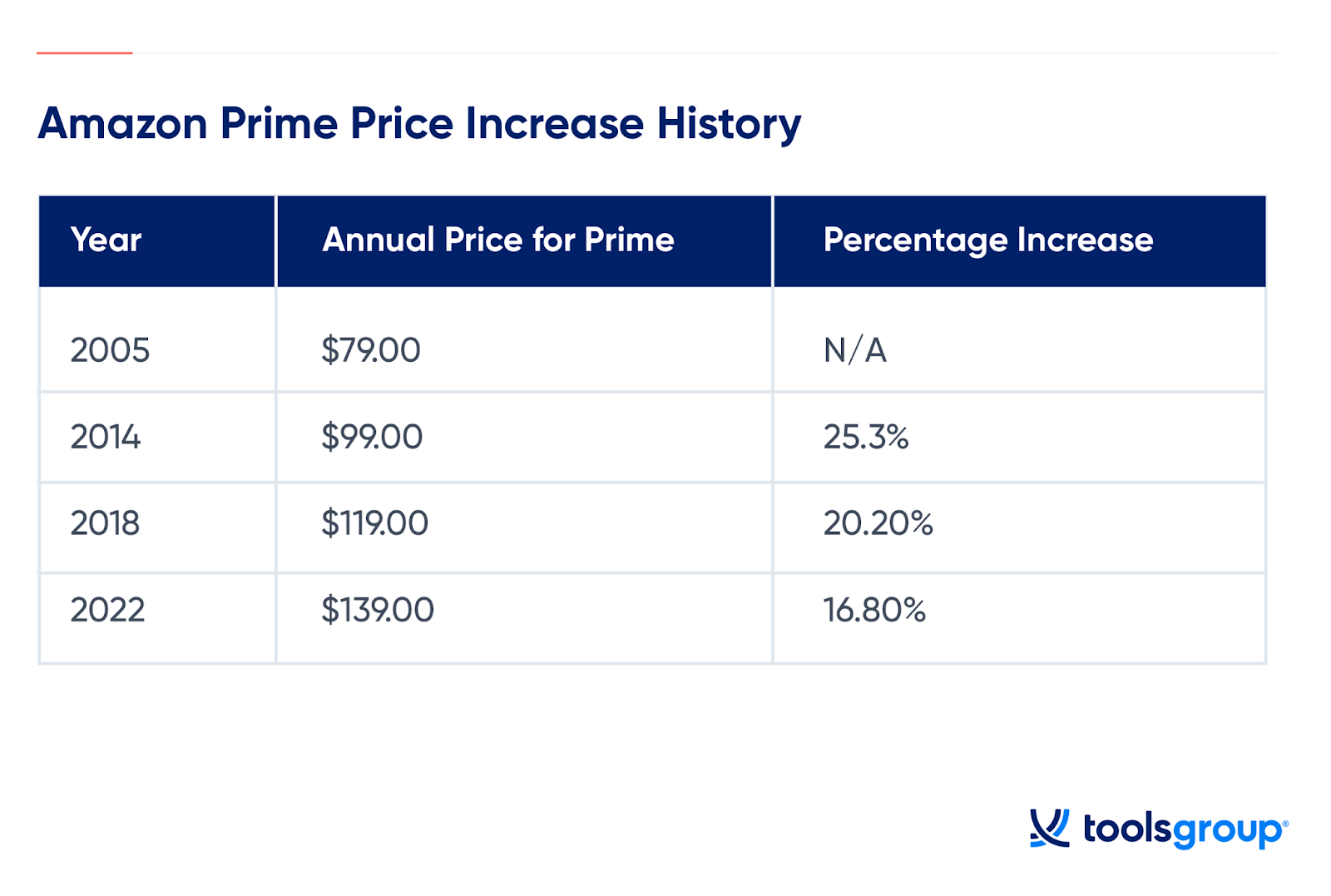
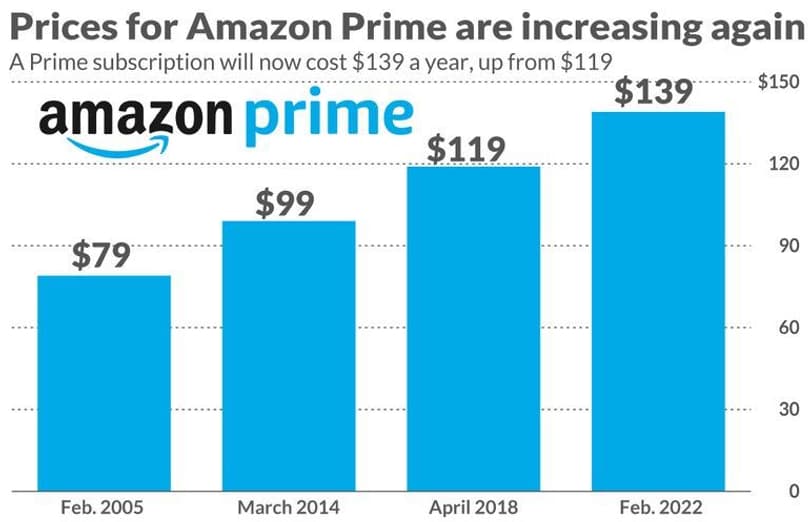
To understand where Prime is going, one must look at where it started. When Jeff Bezos introduced Amazon Prime in February 2005, it was positioned as a “buffet” of shipping. For a flat annual fee of $79, members received unlimited two-day shipping on over a million items. At the time, this was a radical financial proposition. Shipping costs were the primary friction point in e-commerce, and by removing that friction, Amazon fundamentally altered consumer spending habits.
The Era of Price Stability: 2005–2014
For nearly a decade, the price of Amazon Prime remained stagnant at $79. During this period, the membership was strictly a logistics tool. Consumers calculated the value of the service based on a simple formula: the cost of the subscription divided by the average cost of individual shipping. If a household ordered more than ten or fifteen times a year, the service paid for itself.
However, behind the scenes, the financial burden of maintaining this price point was growing. Amazon was aggressively expanding its fulfillment center network and investing in its own delivery fleet. The $79 price point became a “loss leader”—a service sold at a loss or thin margin to attract and retain customers who would ultimately spend significantly more on the platform than non-members.
The First Major Hike and the Expansion of Value (2014–2018)
In 2014, Amazon announced its first price increase, raising the annual fee from $79 to $99. This 25% jump was met with initial skepticism, but it marked a shift in the service’s financial identity. Amazon began bundling more than just shipping into the fee. Prime Video, which had been in development, became a central pillar of the value proposition.
By 2018, the price climbed again to $119. This increase was justified by the inclusion of Prime Music, Prime Reading, and an ever-expanding catalog of original content. Financially, Amazon was moving away from being a shipping company and toward becoming a media and technology conglomerate. The $119 price reflected the staggering capital expenditure required to compete with the likes of Netflix and Spotify while simultaneously maintaining a world-class logistics network.
The Current Landscape: The $139 Threshold
In early 2022, Amazon implemented its most recent price hike, bringing the annual membership to $139 and the monthly fee to $14.99. This move was a direct response to the macroeconomic environment. Rising fuel costs, labor shortages, and global supply chain disruptions increased the cost of “free” shipping exponentially. For the consumer, the $139 price tag represents a significant jump from the original $79, representing a 75% increase over 17 years. When adjusted for inflation, the original $79 in 2005 would be worth roughly $120 today, meaning the real-dollar cost of Prime has outpaced general inflation, largely due to the massive expansion of bundled services.
Analyzing the ROI: Is the Membership Fee Justified?
From a personal finance perspective, the decision to maintain a Prime membership should be treated as an investment. Calculating the Return on Investment (ROI) of a $139 annual fee requires a deep dive into individual consumption patterns and the utilization of the bundled services that many users overlook.
The Break-Even Point: Shipping and Logistics
The core utility of Prime remains shipping. To determine the financial viability of the fee, consumers must analyze their order frequency. If the average shipping cost for a non-Prime order is approximately $7.00, a member must place at least 20 orders per year to break even on shipping alone.
However, the “Money” aspect of Prime goes beyond just shipping costs. There is the “opportunity cost” of time. Prime’s same-day or one-day delivery in many metropolitan areas saves the consumer the time and fuel costs associated with physical retail trips. In a high-inflation environment, where gas prices and the value of time are at a premium, the logistics side of Prime often remains its strongest financial selling point.
The Digital Bundle: Content vs. Cost
A significant portion of the $139 fee now funds Amazon’s media ambitions. For households that use Prime Video as their primary streaming service, the value is clear. If a standalone streaming service costs $10 to $15 per month, Prime Video effectively pays for the entire membership.
The financial pitfall occurs when a consumer pays for Prime but also maintains subscriptions to Netflix, Hulu, Disney+, and Max. In this scenario, the “hidden” cost of Prime Video becomes a redundant expense. To optimize personal finances, users must audit their digital consumption. If the Prime Music, Prime Reading, and Prime Gaming components are left untouched, the consumer is effectively overpaying for a shipping service.
The “Prime Effect” on Consumer Spending
One of the most critical financial considerations of an Amazon Prime membership is its impact on discretionary spending. Studies have consistently shown that Prime members spend significantly more on Amazon than non-members—often more than double. The removal of shipping friction encourages “micro-purchasing,” where consumers buy low-cost items frequently rather than consolidating orders. From a budgeting standpoint, the convenience of Prime can lead to “leakage,” where small, unplanned purchases accumulate into a significant monthly drain on cash flow.
Subscription Economics and the Business of Loyalty
From a business finance perspective, Amazon Prime is a masterclass in recurring revenue and customer lifetime value (LTV). The “How much was Amazon Prime” question is secondary to the “How much does a Prime member spend” question for the company’s bottom line.
The Sunk Cost Fallacy in Subscriptions
Amazon utilizes a psychological phenomenon known as the sunk cost fallacy. Once a consumer has paid $139 upfront, they feel a financial obligation to “get their money’s worth.” This leads them to check Amazon first for any purchase, effectively locking them into the ecosystem. This loyalty is worth far more to Amazon than the $139 fee itself. The subscription fee serves as a psychological barrier that prevents customers from price-shopping at competitors like Walmart, Target, or specialized retailers.
Comparing Prime to Alternative Financial Ecosystems
In recent years, the competitive landscape has shifted. Walmart+ and Target Circle 360 have entered the fray with their own subscription models, often priced lower than Prime. Walmart+, for instance, remains at a lower price point and includes perks like fuel discounts and Paramount+.
For a consumer looking to optimize their finances, the choice is no longer binary. It requires a comparative analysis of where they spend the most on essentials. If a household spends $500 a month on groceries, a membership that offers discounts at Whole Foods (owned by Amazon) might be more financially beneficial than a membership that offers fuel discounts. The “Money” niche of the Prime discussion is increasingly about ecosystem optimization rather than just the flat fee.
The Future of Prime: Where Will the Price Go Next?
As we look toward the future, the financial trajectory of Amazon Prime suggests that the price will continue to rise. Amazon is no longer in a growth-at-all-costs phase; it is in a margin-expansion phase.
Vertical Integration and Tiered Pricing
There is ongoing speculation in the financial world that Amazon may eventually move to a tiered pricing model. We have already seen the introduction of ad-supported tiers for Prime Video, requiring an additional monthly fee to go ad-free. This “unbundling” within the bundle is a common tactic in subscription finance to increase the Average Revenue Per User (ARPU).
Furthermore, as Amazon integrates more healthcare services via Amazon Clinic and One Medical, we may see a “Prime Health” tier. This would move the membership from a retail and entertainment expense to a core utility of personal wellness, fundamentally changing how households budget for the service.

Managing Subscription Fatigue
The greatest threat to the Prime financial model is subscription fatigue. As the cost of living rises, consumers are becoming more surgical with their recurring expenses. If Amazon Prime reaches a price point of $179 or $199—which is not inconceivable in the next five years—the value proposition will face its toughest test. The financial durability of Prime will depend on Amazon’s ability to remain an essential utility rather than a discretionary luxury.
In conclusion, the history of how much Amazon Prime was reveals a story of aggressive expansion and calculated financial maneuvers. From its origins as a $79 shipping club to its current status as a $139 multi-media and logistics powerhouse, the service has redefined the economics of retail. For the savvy consumer, the key is to look beyond the annual fee and analyze the true ROI, ensuring that the convenience of the service does not come at the expense of long-term financial health.
aViewFromTheCave is a participant in the Amazon Services LLC Associates Program, an affiliate advertising program designed to provide a means for sites to earn advertising fees by advertising and linking to Amazon.com. Amazon, the Amazon logo, AmazonSupply, and the AmazonSupply logo are trademarks of Amazon.com, Inc. or its affiliates. As an Amazon Associate we earn affiliate commissions from qualifying purchases.