
In the contemporary digital landscape, the term “Prime Television”—most commonly associated with Amazon Prime Video—represents far more than a simple library of movies and shows. It is a sophisticated Over-the-Top (OTT) streaming platform that sits at the intersection of cloud computing, artificial intelligence, and hardware integration. As the shift from linear broadcast to digital-first consumption nears completion, understanding the technological framework of Prime Video is essential for anyone tracking the evolution of the modern media ecosystem.
At its core, Prime Television is a high-performance software application designed to deliver high-definition video content over the internet, bypassing traditional cable or satellite providers. However, its technical complexity extends deep into the backend, leveraging massive server architectures and cutting-edge data processing to provide a seamless user experience across thousands of different device types.
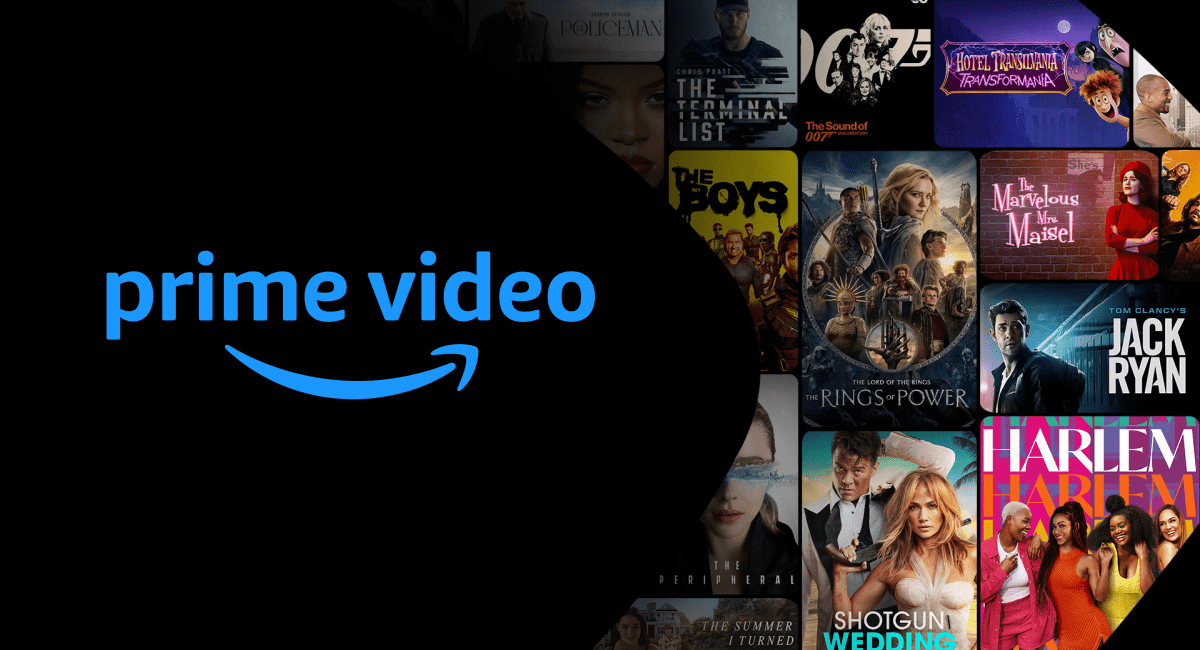
The Architecture of a Global Streaming Giant
The technical backbone of Prime Television is inextricably linked to Amazon Web Services (AWS), the world’s most comprehensive and broadly adopted cloud platform. Unlike competitors who may rely on third-party cloud providers, Prime Video operates on a custom-built infrastructure designed for massive scale and low latency.
The Role of Content Delivery Networks (CDNs)
To ensure that a user in Tokyo and a user in New York can both watch a 4K stream without buffering, Prime Video utilizes a global network of Edge Locations. When you press “play,” the software doesn’t pull data from a single central server in Seattle. Instead, it identifies the server geographically closest to you. This reduces “latency”—the delay between a data request and its fulfillment—ensuring that the high-bitrate video reaches your screen with minimal interruption.
Adaptive Bitrate Streaming (ABS)
One of the most critical software components within the Prime Video app is Adaptive Bitrate Streaming. The tech works by monitoring your internet speed in real-time. The video file is not a single large entity; it is broken into small chunks of varying quality levels. If your Wi-Fi signal dips, the player automatically switches to a lower-resolution chunk to prevent the video from stopping entirely. As the signal improves, the software seamlessly scales back up to 1080p or 4K.
Cross-Platform Software Engineering
Prime Television exists as a native application on an staggering variety of operating systems, including iOS, Android, FireOS, tvOS, and various proprietary smart TV platforms (Tizen, WebOS). Each version of the app must be optimized for the specific hardware constraints of the device. A high-end PlayStation 5 has significantly more processing power than a budget Android tablet, and the Prime Video software must adjust its resource consumption accordingly to maintain UI fluidity and playback stability.
The Evolution of Video and Audio Standards
As a technology platform, Prime Television has been a primary driver in the adoption of high-fidelity digital standards. It serves as a showcase for what modern home theater hardware can achieve when paired with optimized software.
4K UHD and HDR10+
Prime Video was among the first platforms to push 4K Ultra High Definition as a standard for its original programming. Beyond resolution, the platform utilizes High Dynamic Range (HDR) technology—specifically HDR10+. This technical standard allows for dynamic metadata, which tells your TV exactly how to adjust brightness and color levels on a frame-by-frame basis. This results in deeper blacks and more vibrant highlights, pushing the limits of modern OLED and QLED panels.
HEVC and AV1 Codecs
Behind the scenes, the “magic” of Prime Television lies in its compression algorithms. Sending a 4K video stream requires immense bandwidth. To make this manageable, Prime uses High Efficiency Video Coding (HEVC) and is an early adopter of AV1, an open-source, royalty-free video coding format. These codecs allow the platform to compress video files more efficiently without losing visual detail, making high-quality streaming accessible even to users with moderate internet speeds.
Immersive Audio Engineering
Tech enthusiasts recognize Prime Video for its support of Dolby Atmos and spatial audio. The software is capable of outputting object-based audio, which allows sound engineers to treat individual sounds as objects that can be placed and moved in a three-dimensional space. When processed through a compatible soundbar or home theater receiver, the Prime Video app orchestrates a complex audio map that enhances the immersion of the viewing experience.
AI and Machine Learning: The Intelligence Behind the Screen

Prime Television is not just a passive delivery mechanism; it is an intelligent system that uses data to enhance the user experience. Machine learning (ML) and Artificial Intelligence (AI) are integrated into nearly every facet of the platform.
X-Ray: The Technical Edge
One of the most distinctive technological features of Prime Television is “X-Ray.” Powered by IMDb (an Amazon subsidiary), X-Ray is a sophisticated metadata overlay. While a scene is playing, the software identifies the actors on screen, the background music, and even trivia about the production. This is achieved through time-coded metadata synchronized with the video stream. It showcases the platform’s ability to handle multi-layered data streams simultaneously without impacting playback performance.
Predictive Caching and Personalization
The “Home” screen of a Prime Video app is the result of complex algorithms. The platform analyzes viewing habits, watch time, and genre preferences to curate a personalized interface. Beyond simple recommendations, the tech uses predictive caching. If the algorithm is highly confident you will watch the next episode of a series, it may begin pre-loading the first few seconds of that video into your device’s local memory (RAM) before you even click play. This results in “instant-start” playback that feels significantly faster than traditional apps.
Automated Quality Control (AQC)
With thousands of hours of content being uploaded, human review is impossible. Prime Video utilizes AI-driven Automated Quality Control to scan files for digital artifacts, audio desynchronization, or closed-captioning errors. These AI tools can detect a single frame of corruption that a human eye might miss, ensuring that the library maintains a high technical standard.
Hardware Integration and the Smart Home Ecosystem
In the tech world, Prime Television is often viewed as the software centerpiece of a much larger hardware ecosystem. Its integration with physical devices defines how many users interact with digital media.
The Fire TV Ecosystem
While Prime Video works on many devices, it is most deeply integrated with Amazon’s Fire TV hardware. This integration allows for “system-level” features, such as universal search, where the hardware scans multiple apps to find content, but prioritizes the Prime interface. The software is optimized to run on the low-power processors found in streaming sticks, utilizing hardware acceleration to decode video and keep the interface snappy.
Voice Command and Alexa Integration
The intersection of Prime Television and voice AI (Alexa) represents a significant leap in accessibility and UI design. Through Natural Language Processing (NLP), users can control their viewing experience entirely through voice. Commands like “Alexa, skip the intro” or “Alexa, find 4K action movies” require the Prime Video software to communicate seamlessly with cloud-based voice servers, execute a search, and return visual results in milliseconds.
The Mobile Experience and Offline Tech
For mobile users, Prime Television offers advanced offline viewing tech. The software allows users to download encrypted video files to local storage. This involves complex Digital Rights Management (DRM) handshakes to ensure the content remains secure while allowing the user to watch without an active data connection. The app also features a “Data Saver” mode, which uses specialized encoding to provide a watchable experience while consuming minimal cellular data.
The Future: Live Streaming and Low-Latency Innovations
The next frontier for Prime Television is the mastery of live digital broadcasting. As the platform acquires rights to major sporting events like the NFL’s Thursday Night Football, the technical challenges shift from on-demand delivery to live synchronization.
Solving the “Spoiler” Problem
One of the biggest hurdles in live streaming tech is latency. Traditional streams often lag 30 to 60 seconds behind the actual live action, meaning a user might hear their neighbor cheer for a touchdown before they see it on their screen. Prime Television is investing heavily in low-latency streaming protocols. By reducing the size of “video segments” and optimizing the handoff between servers, they are aiming to bring digital broadcast latency down to parity with traditional cable.

Interactive Live Features
Beyond just showing the game, the Prime Television tech stack allows for interactive overlays. Viewers can toggle live stats, alternate commentary tracks, and even real-time “Next Gen Stats” powered by AWS. This transforms the television from a “lean-back” experience into an interactive data hub, representing the logical conclusion of the “smart TV” evolution.
In summary, Prime Television is a multifaceted technological achievement. It is a masterclass in how cloud infrastructure, intelligent software design, and high-end hardware integration can converge to redefine an entire industry. From the codecs that compress its pixels to the AI that predicts your next favorite show, it remains at the absolute cutting edge of the digital revolution.
aViewFromTheCave is a participant in the Amazon Services LLC Associates Program, an affiliate advertising program designed to provide a means for sites to earn advertising fees by advertising and linking to Amazon.com. Amazon, the Amazon logo, AmazonSupply, and the AmazonSupply logo are trademarks of Amazon.com, Inc. or its affiliates. As an Amazon Associate we earn affiliate commissions from qualifying purchases.