
Investing in the financial sector requires a deep understanding of how macroeconomic trends, regulatory environments, and consumer behavior converge to influence a company’s valuation. When investors ask, “What is the Bank of America stock price?” they are rarely looking for a singular numerical figure that changes by the second on the New York Stock Exchange (NYSE). Instead, they are seeking an analysis of the value proposition behind the ticker symbol BAC. As one of the “Big Four” banking institutions in the United States, Bank of America serves as a vital barometer for the health of the American economy.

Understanding the stock price of Bank of America involves more than just monitoring a ticker. It requires a deep dive into the bank’s balance sheet, its sensitivity to interest rate fluctuations, and its ability to return value to shareholders through dividends and buybacks. This guide explores the multifaceted nature of BAC’s valuation and what investors should consider when evaluating its position in their portfolios.
Decoding the Performance of Bank of America in the Modern Market
Bank of America’s stock price is a reflection of its massive operational scale. With trillions of dollars in assets under management, the bank operates across four primary segments: Consumer Banking, Global Wealth & Investment Management, Global Banking, and Global Markets. Each of these segments contributes differently to the consolidated stock price, creating a diversified yet complex financial profile.
The Role of BAC in the Financial Sector
As a systemic pillar of the global financial system, Bank of America is often classified as a “value” stock. Unlike high-growth tech companies that reinvest every penny into R&D, BAC is valued for its stability, its massive deposit base, and its ability to generate consistent cash flow. When the economy is expanding, the stock price typically moves upward as loan demand increases and credit quality remains high. Conversely, during recessionary fears, the stock may face downward pressure as investors price in potential loan defaults.
How Valuation Metrics Define Price Action
To understand if the current stock price is “expensive” or “cheap,” seasoned investors look at specific financial ratios. The Price-to-Earnings (P/E) ratio and the Price-to-Book (P/B) ratio are essential here. Historically, Bank of America often trades at a lower P/E than the broader S&P 500, reflecting its status as a mature enterprise. However, its P/B ratio is perhaps the most telling; trading significantly above its book value indicates strong market confidence in the bank’s asset quality, while trading near or below book value often signals a buying opportunity for value investors.
Key Drivers Behind Bank of America’s Valuation
Several external and internal factors dictate the movement of BAC’s stock price. Because the bank is so deeply integrated into the credit markets, it is more sensitive to Federal Reserve policy than almost any other sector.
Interest Rates and the Federal Reserve
The single most influential factor on Bank of America’s stock price is the federal funds rate. Bank of America is known for being particularly “asset-sensitive.” This means that when the Federal Reserve raises interest rates, the bank can increase the interest it charges on loans (like mortgages and credit cards) faster than it increases the interest it pays out on deposits. This expansion of the “spread” directly boosts the bottom line.
Net Interest Income (NII) Dynamics
Net Interest Income is the lifeblood of Bank of America. It represents the difference between the revenue the bank generates from its interest-bearing assets and the expenses associated with paying its interest-bearing liabilities. When NII grows, the stock price usually follows. Investors closely watch quarterly earnings reports for NII guidance, as it serves as a primary indicator of the bank’s profitability in a shifting rate environment.
Operational Efficiency and the Efficiency Ratio
Beyond interest rates, the bank’s internal management of expenses plays a crucial role. The “efficiency ratio” measures how much it costs the bank to generate a dollar of revenue. Bank of America has invested billions into digital transformation and branch optimization to lower this ratio. A lower efficiency ratio suggests a leaner, more profitable machine, which translates into higher earnings per share (EPS) and a more attractive stock price.
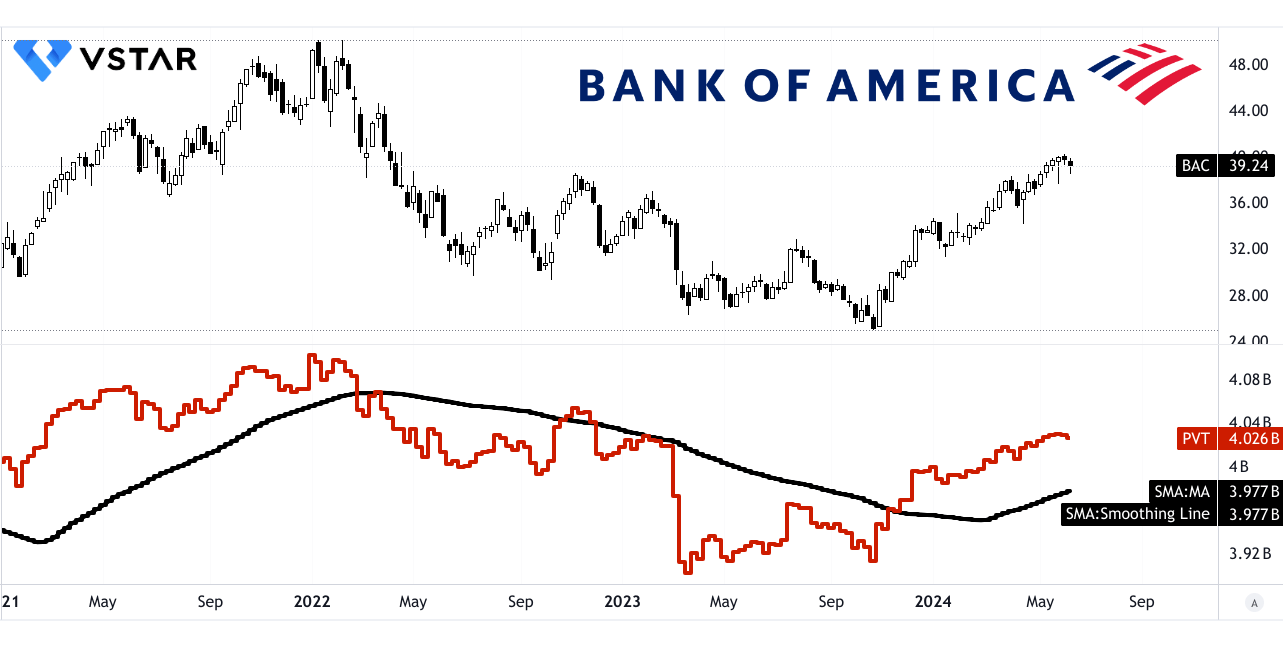
Analyzing Dividend Sustainability and Shareholder Value
For many investors, the Bank of America stock price is only half the story. The other half is the income generated through dividends. Bank of America is a favorite among income-oriented investors due to its commitment to returning capital to shareholders.
Dividend History and Growth
Following the 2008 financial crisis, Bank of America, like many peers, was forced to slash its dividend. However, over the last decade, the bank has aggressively rebuilt its payout. The dividend yield—calculated by dividing the annual dividend by the current stock price—is a key metric for total return. A rising stock price combined with a growing dividend creates a “compounding machine” that is highly attractive for long-term retirement accounts.
Share Buyback Programs
In addition to dividends, Bank of America utilizes share buybacks to support its stock price. By purchasing its own shares on the open market, the bank reduces the total number of shares outstanding. This makes each remaining share more valuable because it represents a larger slice of the company’s earnings. When the bank’s management believes the stock is undervalued, they often accelerate buybacks, providing a “floor” for the stock price during market volatility.
Risk Factors and Market Challenges
No investment is without risk, and Bank of America faces unique challenges that can cause significant volatility in its stock price. Understanding these risks is essential for any investor looking to time their entry or manage their exposure.
Credit Risk and Provisions for Loan Losses
The primary risk for any commercial bank is credit risk—the possibility that borrowers will be unable to repay their loans. During economic downturns, Bank of America must set aside “provisions for loan losses.” These are non-cash charges that reduce reported earnings. If the market anticipates a spike in unemployment or a crash in the commercial real estate market, BAC’s stock price will often drop in anticipation of these provisions eating into profits.
Regulatory Hurdles and Capital Requirements
As a Global Systemically Important Bank (G-SIB), Bank of America is subject to stringent regulatory oversight, including “stress tests” conducted by the Federal Reserve. These tests determine how much capital the bank must hold in reserve to weather a severe economic crisis. If regulators increase capital requirements (such as through Basel III endgame proposals), the bank may have less flexibility to increase dividends or buy back shares, which can act as a drag on the stock price.
Long-Term Outlook: Is BAC a Buy, Hold, or Sell?
When evaluating the Bank of America stock price for the long term, investors must look past quarterly noise and focus on the bank’s strategic positioning in a digital-first world.
Digital Banking Transformation
The future of banking is not in brick-and-mortar branches, but in the palm of the consumer’s hand. Bank of America has been a leader in digital adoption, with its mobile app and “Erica” AI assistant boasting tens of millions of active users. This digital shift is not just about convenience; it is a massive cost-saving measure. Digital transactions cost a fraction of what in-person transactions cost, allowing the bank to maintain high margins even in a low-growth environment.
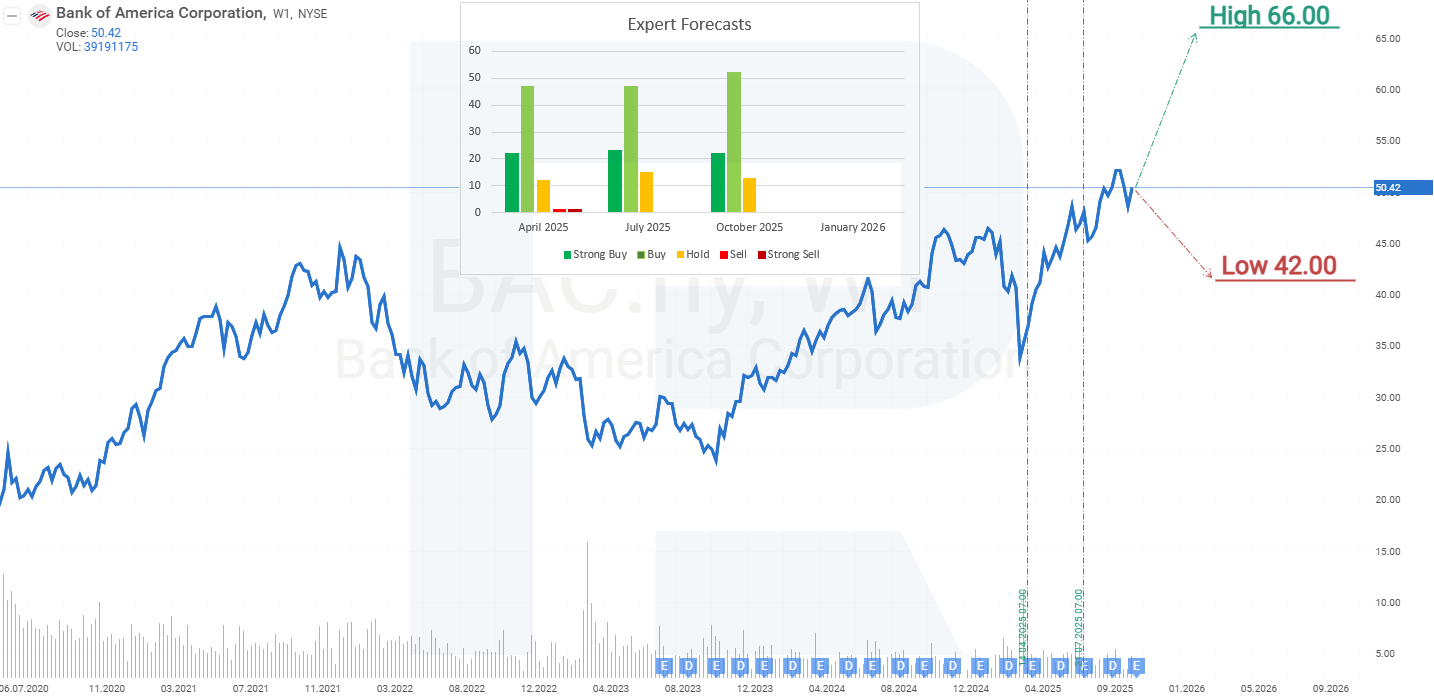
Economic Cyclicality and Growth Prospects
Ultimately, Bank of America is a cyclical stock. It thrives when the economy is in an expansionary phase. For investors with a multi-year horizon, the stock offers a way to bet on the continued resilience of the US consumer and the strength of the American corporate sector. While the price may fluctuate based on the latest inflation data or Fed minutes, the underlying value lies in the bank’s massive deposit moat and its diversified revenue streams.
In conclusion, “what is Bank of America stock price” is a question that encompasses the entirety of the financial landscape. It is a reflection of interest rate trajectories, regulatory shifts, technological innovation, and the fundamental health of the global economy. For the disciplined investor, BAC represents more than just a number on a screen; it is a strategic asset that requires careful monitoring of both macroeconomic signals and the bank’s internal operational excellence. Whether viewed as a source of steady dividends or a play on economic growth, Bank of America remains a cornerstone of the financial markets.
aViewFromTheCave is a participant in the Amazon Services LLC Associates Program, an affiliate advertising program designed to provide a means for sites to earn advertising fees by advertising and linking to Amazon.com. Amazon, the Amazon logo, AmazonSupply, and the AmazonSupply logo are trademarks of Amazon.com, Inc. or its affiliates. As an Amazon Associate we earn affiliate commissions from qualifying purchases.