
Apple Inc. (AAPL) stands as a titan of the modern financial landscape, frequently serving as a bellwether for the broader stock market. For retail investors and institutional analysts alike, few events generate as much buzz as a potential stock split. While a split does not change the fundamental value of a company or the proportional ownership of a shareholder, it carries significant psychological weight and tactical implications for market liquidity. Understanding when Apple might split its stock again requires a deep dive into the company’s historical patterns, its position within price-weighted indices, and the current economic environment.
Understanding the Logic Behind Apple’s Stock Split History
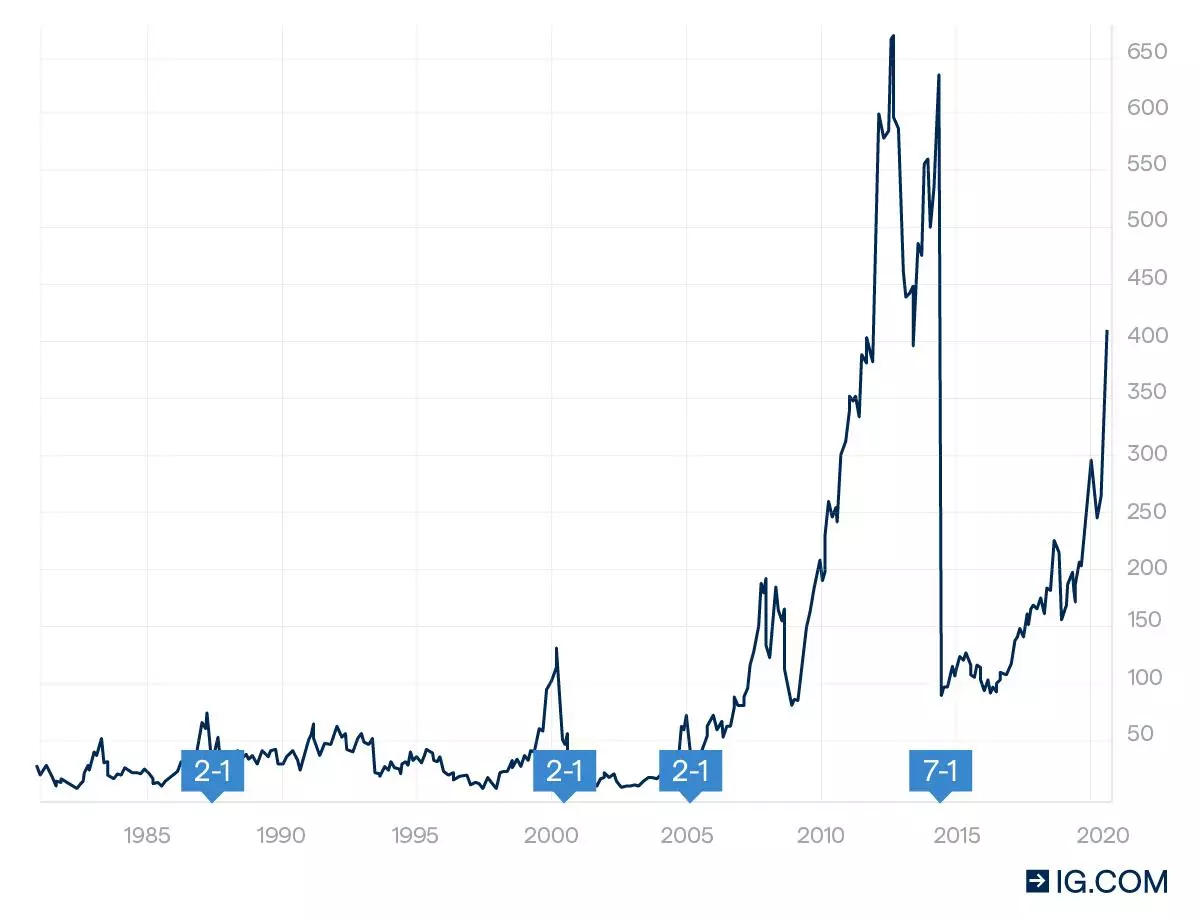
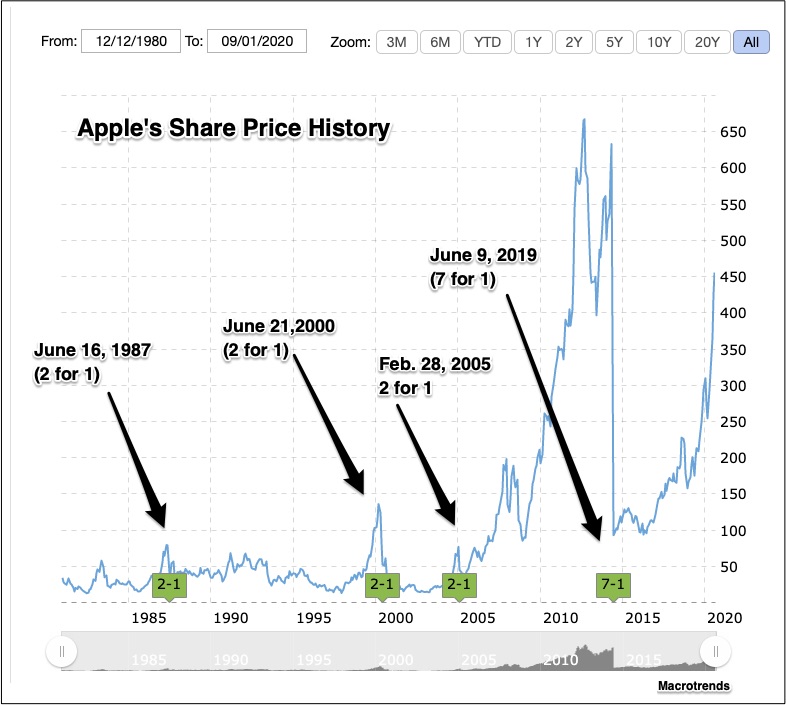
To predict the future, one must first analyze the past. Apple has a long-standing history of managing its share price through splits to remain accessible to a broad base of investors. Since its initial public offering, Apple has executed five stock splits. These events were strategically timed to coincide with periods of rapid valuation growth, ensuring that the nominal price of a single share did not become a barrier to entry for individual retail investors.
The Psychology of the Share Price
From a purely mathematical standpoint, a stock split is a non-event. If you own one share of a company worth $500 and it splits 5-for-1, you then own five shares worth $100 each. Your total equity remains $500. However, in the world of behavioral finance, the “unit price” matters immensely. High share prices can intimidate retail investors who may only have a few hundred dollars to invest monthly. By lowering the share price, Apple creates a psychological sense of affordability.
Historically, Apple has looked to keep its share price in a range that feels “attainable.” In the early 2000s and mid-2010s, as the price climbed toward the high triple digits, the board of directors intervened. This democratization of the stock ensures that the “Apple ecosystem” extends beyond its products and into the portfolios of its consumers, fostering a unique type of brand loyalty that translates into market stability.
Enhancing Liquidity and Accessibility
Liquidity refers to how easily a stock can be bought or sold without affecting its price. When a stock’s price becomes excessively high, the bid-ask spread can widen, and the sheer volume of shares traded might decrease because fewer people can afford a round lot (100 shares). By splitting the stock, Apple increases the number of shares outstanding, which typically leads to higher daily trading volumes.
Greater liquidity is beneficial for the company’s treasury operations and for employee compensation. Apple compensates a significant portion of its workforce through Restricted Stock Units (RSUs). A lower share price allows for more granular distribution of these units, making it easier to manage equity-based compensation packages across a global workforce.
Key Indicators: When Will Apple Trigger the Next Split?
Determining the exact timing of the next Apple stock split involves monitoring specific financial triggers. While Apple does not have a formal policy stating a “split threshold,” market observers look for a combination of share price milestones and index-related pressures.
The “Magic Number” for AAPL
Looking at Apple’s 2014 split (7-for-1) and its 2020 split (4-for-1), a clear pattern emerges. In 2014, the stock was trading north of $600 per share before the split brought it down to the $90 range. In 2020, the stock had surged past $500, and the split reset the price to approximately $125.
Based on this historical context, many analysts believe that once Apple stock consistently trades in the $450 to $500 range, the board will begin serious discussions regarding a split. This range appears to be the “ceiling” where the company feels the price might start to limit retail participation or skew its influence on certain market indices.
Influence of the Dow Jones Industrial Average
Unlike the S&P 500, which is market-capitalization-weighted, the Dow Jones Industrial Average (DJIA) is a price-weighted index. This means that companies with higher nominal share prices have a disproportionately large impact on the index’s movement.
Apple was added to the Dow in 2015, following its 7-for-1 split. If Apple’s share price were allowed to climb to $1,000 without a split, it would essentially “break” the Dow, as a 1% move in Apple would move the index significantly more than a 1% move in a lower-priced component like Coca-Cola or Verizon. Therefore, to remain a functional member of the Dow Jones, Apple is incentivized to keep its share price in a range that is comparable to other blue-chip components, usually between $100 and $300.
Market Reaction and Investor Sentiment
Stock splits are often preceded by a period of upward momentum and followed by a “split rally.” This phenomenon is less about the mechanics of the split and more about what the split signals to the market. A company only splits its stock when the leadership is confident that the price will continue to rise; you rarely see a company split its stock if they fear a major downturn is imminent.
The Post-Announcement Rally
When Apple announces a split, the market typically interprets it as a sign of corporate health and future growth. Between the announcement date and the effective date of the split, it is common to see an influx of buying activity. Investors want to “get in” before the split, anticipating that the lower post-split price will attract a new wave of retail buyers, further driving up the price.
However, savvy investors also watch for the “sell the news” effect. Sometimes, the excitement is priced in during the weeks leading up to the split, leading to a temporary plateau or minor correction immediately after the new shares hit accounts. For the long-term investor, these short-term fluctuations are less important than the underlying earnings growth that necessitated the split in the first place.
Long-term Performance Trends
Historical data shows that companies that split their shares tend to outperform the broader market in the twelve months following the event. This isn’t because of the split itself, but because companies that are in a position to split are usually high-performers with strong cash flows and dominant market positions. Apple fits this profile perfectly. Its transition into a services-heavy model, combined with its hardware dominance and foray into spatial computing and AI, provides the fundamental backing required to sustain the price growth that leads to splits.
Strategic Alternatives: Share Buybacks vs. Stock Splits
While the public often focuses on stock splits, Apple management has historically placed a much higher priority on share buybacks (stock repurchases). It is essential for investors to distinguish between these two capital allocation strategies.
Why Buybacks Matter More to Institutional Investors
A stock split increases the number of shares, but a buyback reduces them. Apple has spent hundreds of billions of dollars over the last decade buying back its own stock. By reducing the total number of shares outstanding, Apple increases the Earnings Per Share (EPS) for the remaining shareholders. This is a direct driver of share price appreciation.
Institutional investors often prefer buybacks over splits because buybacks represent a tangible return of capital and an increase in ownership stake without the tax implications of dividends. For Apple, the buyback program is the primary engine of shareholder value, while the stock split is merely a “cosmetic” tool used to manage market access.
Balancing Retail Demand with Corporate Value
The tension between these two strategies defines Apple’s financial management. The company uses buybacks to drive the stock price up by creating scarcity and boosting EPS. Eventually, the price rises so high that a split becomes necessary to maintain retail interest. This cycle—buybacks driving price growth, followed by a split to reset the entry point—has been a hallmark of the Tim Cook era. Investors should view a split not as an isolated event, but as a byproduct of a successful, long-term buyback and growth strategy.
Navigating the Future of AAPL in Your Portfolio
For the individual investor, the question of “when” Apple will split is secondary to the question of “how” to position a portfolio for long-term growth. While a split provides an easier entry point for those without access to fractional shares, the fundamental value of the company remains the most critical factor.
The Role of Fractional Shares
It is worth noting that the rise of fractional share trading through platforms like Robinhood, Fidelity, and Charles Schwab has slightly diminished the functional necessity of stock splits. In the past, if a share cost $500 and you had $100, you couldn’t buy in. Today, you can buy 0.2 shares.
Despite this, Apple is likely to continue splitting its stock periodically. The psychological prestige of the “split announcement” and the need to remain balanced within price-weighted indices like the Dow ensure that the split remains a tool in Apple’s financial arsenal.

Conclusion: Preparing for the Next Move
While no one can predict the exact date of the next Apple stock split without insider knowledge, the indicators are clear. Investors should keep a close eye on the $450 to $500 price range. As Apple continues to integrate artificial intelligence across its device ecosystem and expand its high-margin services revenue, the upward pressure on the share price will likely persist.
For those looking to build wealth through Apple, the strategy should remain focused on the company’s robust balance sheet, its massive share buyback program, and its ability to innovate. A stock split is a celebration of growth that has already occurred—a signal from the board that they believe the best is yet to come. Whether you buy before or after a split, the core value of the Apple engine remains one of the most compelling stories in the history of finance. Stay focused on the fundamentals, and treat the eventual split as a tactical milestone in a much longer journey of wealth accumulation.
aViewFromTheCave is a participant in the Amazon Services LLC Associates Program, an affiliate advertising program designed to provide a means for sites to earn advertising fees by advertising and linking to Amazon.com. Amazon, the Amazon logo, AmazonSupply, and the AmazonSupply logo are trademarks of Amazon.com, Inc. or its affiliates. As an Amazon Associate we earn affiliate commissions from qualifying purchases.