
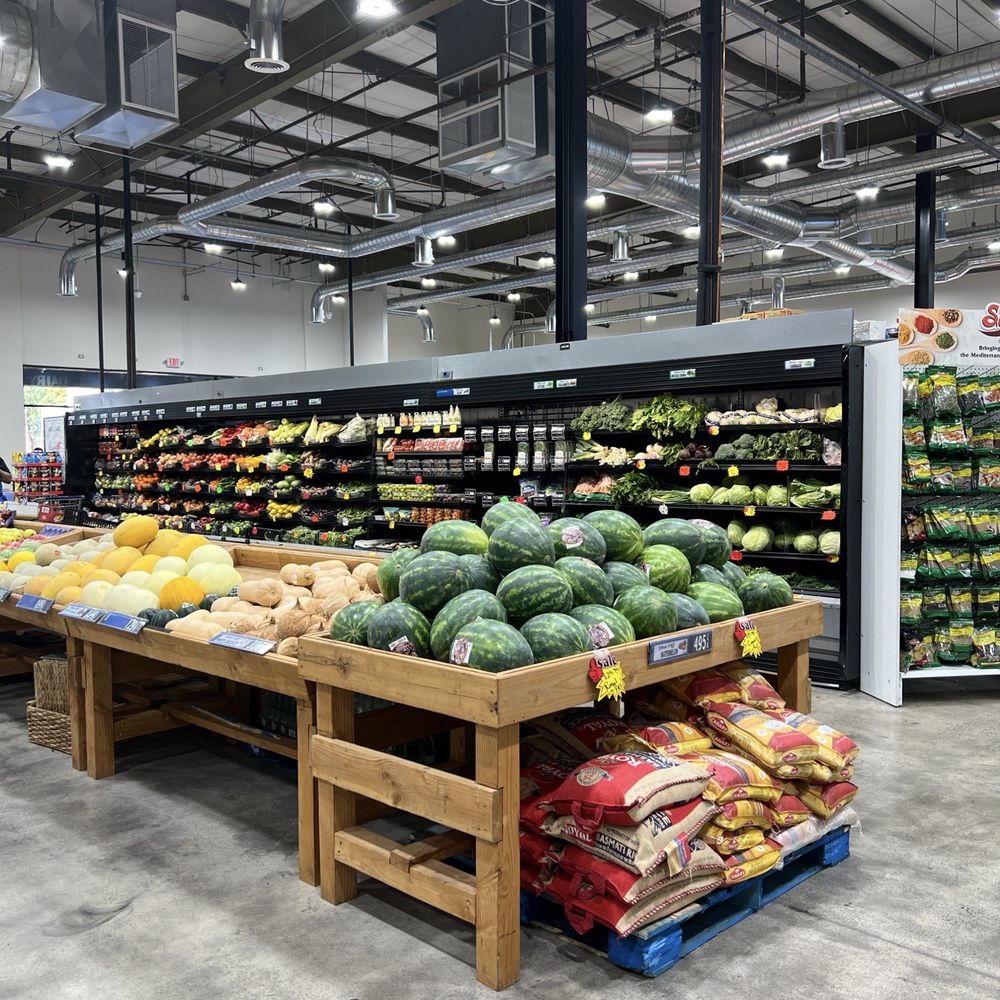
The simple act of searching “where to buy fresh produce near me” has evolved from a basic directory lookup into a sophisticated interaction with a global technological ecosystem. For the modern consumer, finding a ripe tomato or farm-fresh eggs is no longer just about driving to the nearest supermarket; it is about leveraging geofencing, real-time inventory tracking, and specialized digital platforms designed to bridge the gap between rural agriculture and urban demand. The technology driving these searches is fundamentally transforming how we perceive food accessibility, moving us away from centralized supply chains toward a decentralized, data-driven model of local consumption.

The Evolution of Geo-Location and Mapping in Food Tech
The primary engine behind the “near me” query is the maturation of Geographic Information System (GIS) technology. When a user inputs a request for fresh produce, a complex series of API calls occurs within milliseconds, cross-referencing the user’s precise coordinates with localized databases. This is not merely about identifying locations on a map; it is about the integration of real-time metadata that informs the user about operational hours, current stock levels, and consumer sentiment.
Leveraging GPS and Real-Time Data for Local Discovery
Modern mapping applications have moved beyond static markers. Through the integration of dynamic data layers, platforms can now display “live” statuses of farmers’ markets and independent kiosks. For instance, advanced local SEO (Search Engine Optimization) and Google My Business integrations allow small-scale organic farms to push updates to potential customers within a specific radius. This hyper-local targeting ensures that when a consumer searches for produce, they are presented with options that are physically accessible and currently active.
Furthermore, the rise of “micro-warehousing” and local fulfillment centers has necessitated a more granular approach to mapping. Algorithms now calculate the carbon footprint and transit time of produce from a local hub to a consumer’s doorstep, providing a level of transparency that was previously impossible. This tech-heavy approach to geography empowers consumers to make choices based on the freshness of the product, which is often inversely proportional to the distance it has traveled.
The Role of Direct-to-Consumer (D2C) Mobile Applications
While general search engines provide a broad overview, a new wave of specialized Direct-to-Consumer (D2C) applications is refining the search for fresh produce. These apps serve as dedicated marketplaces where farmers can list their daily harvests directly. From a software perspective, these platforms solve the “fragmentation problem” of the agricultural market.
By using a SaaS (Software as a Service) model, these apps provide farmers with inventory management tools that automatically update the consumer-facing interface. When a bushel of apples is sold at a physical stand, the digital inventory reflects the change in real-time, preventing the frustration of a user arriving at a location only to find the produce sold out. This synchronization is the backbone of the modern “near me” experience, turning a simple search into a reliable transaction.
AI and Machine Learning: Optimizing the Local Supply Chain
Artificial Intelligence (AI) is the invisible hand guiding the availability of fresh produce in our immediate vicinity. While the consumer sees a list of stores, the backend involves predictive analytics that determine what should be stocked where, and when. AI tools are now used to forecast harvest cycles with incredible precision, allowing digital platforms to “prime” the search results even before the produce has been picked.
Predictive Analytics for Inventory Management
For a local grocer or a tech-enabled farm stand, overstocking leads to waste, while understocking leads to lost revenue. Machine learning models analyze historical search data, local weather patterns, and seasonal trends to predict surges in demand for specific types of produce. If data indicates a trend toward organic kale in a specific zip code, the AI-driven supply chain prioritizes the movement of that product to the hyper-local nodes nearest to those users.
This predictive capability extends to the consumer side as well. Recommendation engines now suggest “fresh produce near you” based on previous purchasing behavior and current local availability. This creates a personalized digital farmers’ market, where the technology anticipates the user’s needs before they even finish typing their search query.
Smart Algorithms Connecting Farmers and Consumers
Matching supply with demand in the fresh produce sector is notoriously difficult due to the perishability of the goods. Smart algorithms are now being deployed to solve this “perishability gap.” Apps like Too Good To Go or Misfits Market utilize algorithmic discounting and geo-targeted notifications to alert users when fresh produce near them is at risk of going to waste.
By analyzing the shelf-life data of produce in real-time, these platforms can push notifications to users within a five-mile radius, offering deep discounts. This not only solves a logistical problem for the seller but also utilizes tech to make fresh, healthy food more affordable for the digital-native consumer.
Beyond the Search Engine: Specialized Platforms and Digital Ecosystems
The quest for fresh produce has moved into specialized digital ecosystems that offer more than just a location. These platforms integrate social proof, community building, and subscription-based models to ensure a consistent flow of fresh goods.

Community-Supported Agriculture (CSA) Portals
Digital transformation has breathed new life into the Community-Supported Agriculture (CSA) model. Historically, CSAs were managed via paper ledgers and word-of-mouth. Today, sophisticated web portals allow users to find, join, and manage their CSA subscriptions with the same ease as a Netflix account. These portals use automated billing, digital pick-up reminders, and interactive “harvest calendars” that keep the consumer connected to the farm’s lifecycle.
The technology behind these portals often includes integrated logistics software that optimizes delivery routes for “last-mile” distribution. This ensures that the produce remains at peak freshness from the moment it leaves the farm until it reaches the local pick-up point identified in the “near me” search.
Virtual Farmers Markets and E-Commerce Integration
The “Virtual Farmers Market” is a burgeoning sector in the food tech industry. These are centralized e-commerce platforms that aggregate products from dozens of local producers. For the consumer, it provides a “one-stop-shop” experience for local goods. From a technical standpoint, these platforms require robust backend integration to handle multiple vendors, diverse SKU formats, and complex cold-chain logistics.
These platforms often utilize sophisticated filtering systems that allow users to search not just by “produce,” but by specific certifications (e.g., USDA Organic, Non-GMO), soil health practices, or even the date of harvest. This level of data granularity is what separates a modern tech-driven search from a traditional grocery trip.
Security and Transparency in Digital Food Procurement
As we rely more on digital tools to find our food, the issues of data security and supply chain transparency become paramount. Consumers are no longer satisfied with just “local”; they want proof of origin and safety.
Blockchain for Farm-to-Table Traceability
Blockchain technology is increasingly being used to provide an immutable record of a product’s journey. When a user finds a local source of fresh produce through an app, that app may provide a QR code linked to a blockchain ledger. This allows the consumer to see exactly when the produce was harvested, which farm it came from, and even the results of recent soil tests.
This “radical transparency” is a powerful branding and trust-building tool enabled by decentralized ledger technology. It transforms the “near me” search from a matter of convenience into a matter of verified quality and safety, providing a digital “handshake” between the producer and the local consumer.
Data Privacy in Hyper-Local Shopping Apps
The use of geo-location data inherently raises privacy concerns. Tech companies in the food space must balance the need for precise location data with the user’s right to privacy. Leading apps are now implementing “privacy-by-design” features, such as data anonymization and localized processing, where the user’s specific coordinates never leave the device. Instead, the “near me” processing happens locally, and only the relevant results are fetched from the cloud. This technical hurdle is essential for maintaining consumer trust in the digital food ecosystem.
The Future of Urban Agritech and Smart City Integration
Looking ahead, the search for “fresh produce near me” will likely yield results that are even closer than we imagine. The integration of agritech into smart city infrastructure is turning urban spaces into productive landscapes.
IoT and Vertical Farming in the Modern Neighborhood
The rise of IoT-enabled vertical farms in urban centers means that the “source” of fresh produce might be a repurposed shipping container or a basement in a downtown high-rise. These facilities use hydroponic or aeroponic systems monitored by thousands of sensors that track humidity, nutrient levels, and light cycles.
When these vertical farms are integrated into local search algorithms, they provide the ultimate “near me” experience. Because these farms are often located within the city limits, the transit time is measured in minutes rather than days. The software controlling these farms can even be synced with local demand data to adjust crop yields in real-time, ensuring that the urban population always has access to the freshest possible greens.
Conclusion: Navigating the Tech-Driven Fresh Produce Landscape
The digital infrastructure supporting our search for fresh produce is a testament to the power of technological convergence. By combining GIS, AI, blockchain, and IoT, the industry has created a seamless experience that empowers consumers to support local agriculture while enjoying the convenience of the digital age. As these technologies continue to mature, the gap between the farm and the table will continue to shrink, making “near me” not just a geographical search, but a guarantee of freshness, transparency, and sustainability.
aViewFromTheCave is a participant in the Amazon Services LLC Associates Program, an affiliate advertising program designed to provide a means for sites to earn advertising fees by advertising and linking to Amazon.com. Amazon, the Amazon logo, AmazonSupply, and the AmazonSupply logo are trademarks of Amazon.com, Inc. or its affiliates. As an Amazon Associate we earn affiliate commissions from qualifying purchases.