
The act of donating canned goods is often viewed through a lens of community service and altruism. However, for the financially savvy individual and the strategic business owner, these contributions represent a significant component of a broader fiscal strategy. Philanthropy, when executed with precision, serves as a bridge between social responsibility and sophisticated financial management. Understanding where and how to donate non-perishable food items requires more than just a list of local charities; it requires an understanding of tax codes, asset valuation, and the institutional health of the organizations receiving the bounty.

Integrating charitable giving into a personal or corporate financial plan ensures that every dollar—or every can—contributes to a more stable economic ecosystem while providing tangible benefits to the donor’s bottom line. This guide explores the financial mechanics of food donations, from tax mitigation strategies to the due diligence required to ensure your capital is being deployed efficiently.
The Financial Landscape of Food Donations: Why Your Contribution Matters
From a macroeconomic perspective, food insecurity is a significant drag on productivity and healthcare costs. By contributing to the infrastructure of food banks, donors are effectively investing in the stability of the local labor market and reducing the long-term public financial burden. However, on a micro-level, the primary concern for the donor is the intersection of charity and tax liability.
Charitable Contributions as a Tax Mitigation Tool
The Internal Revenue Service (IRS) recognizes the value of non-cash contributions, including canned goods and other shelf-stable items. For individuals who itemize their deductions on Schedule A (Form 1040), these donations can significantly lower taxable income. The key to maximizing this benefit lies in meticulous record-keeping and a clear understanding of the valuation process.
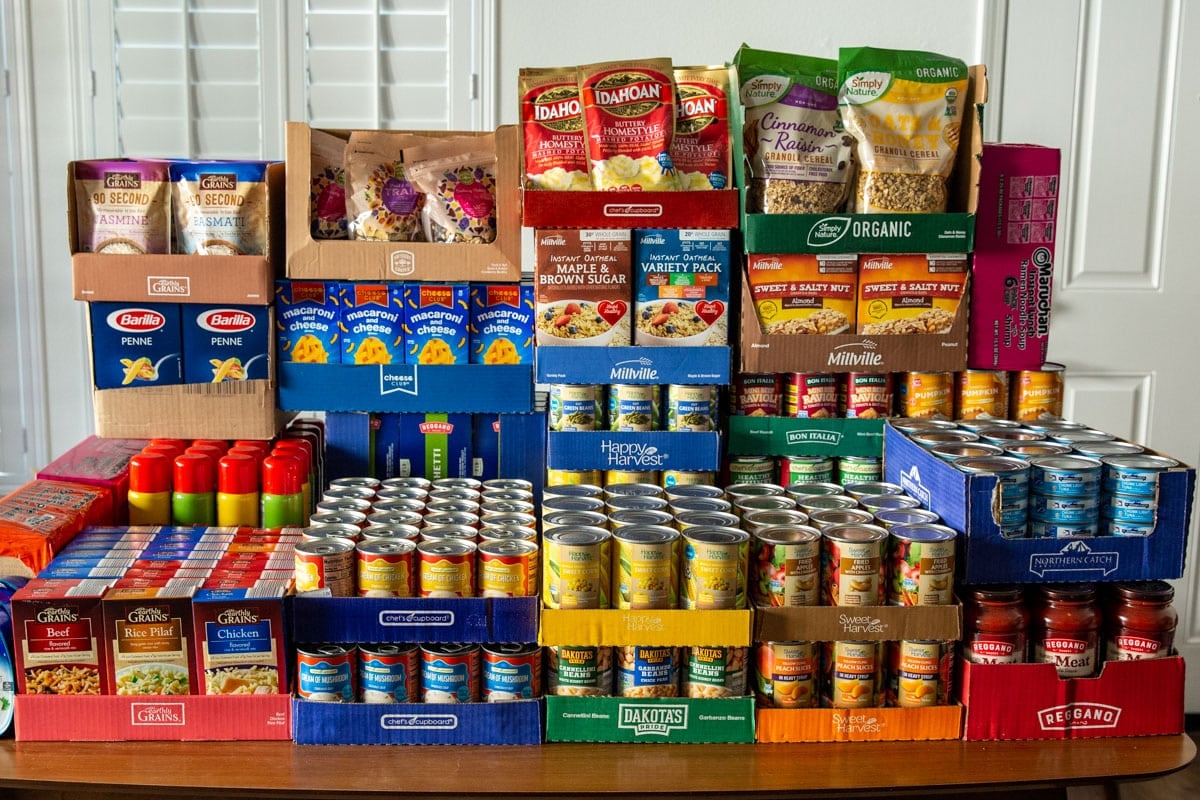
When you donate canned goods, you are generally allowed to deduct the fair market value (FMV) of the items at the time of the contribution. FMV is defined as the price that a willing buyer would pay a willing seller in an open market. For canned goods, this often equates to the retail price you paid, provided the items are in good condition. For high-volume donors, the difference between a standard deduction and an itemized deduction can result in thousands of dollars in tax savings, making the “where” of your donation a critical financial decision.
Understanding IRS Rules for Non-Cash Contributions
Navigating the IRS requirements is essential to ensure that your financial strategy remains compliant. For donations of canned goods and other property valued at over $500, donors must file Form 8283 (Noncash Charitable Contributions). If the value of the donation exceeds $5,000, a qualified appraisal may be required, although this is less common for standard grocery items unless they are donated in massive, industrial quantities.
Furthermore, the recipient organization must be a qualified 501(c)(3) non-profit. Donating to an individual or a non-certified “street pantry” may fulfill a moral obligation, but it offers zero financial benefit in terms of tax deductibility. Therefore, identifying a registered, reputable food bank is the first step in a professional giving strategy.
Maximizing Business ROI through Strategic Giving Programs
For corporations and small business owners, the donation of canned goods can be even more financially advantageous than it is for individuals. Businesses often deal with surplus inventory or seasonal shifts that leave them with excess stock. Rather than liquidating these assets at a loss or paying for storage, strategic donation can provide a superior return on investment (ROI).
Corporate Social Responsibility (CSR) and the Bottom Line
Modern branding and marketing are inextricably linked to a company’s Corporate Social Responsibility (CSR) profile. Investors and consumers alike are increasingly directing their capital toward brands that demonstrate a commitment to community welfare. A well-publicized food drive or a consistent partnership with a regional food bank can enhance brand equity, leading to increased customer loyalty and, ultimately, higher revenue.
Beyond the marketing benefits, CSR programs can improve employee retention and morale. In the current labor market, the cost of turnover is a significant financial drain. Programs that allow employees to participate in canned food drives or volunteer at food banks create a sense of purpose that can reduce churn and its associated recruitment and training costs.
Inventory Management and Tax Write-offs for Businesses
One of the most powerful financial tools for businesses is the “enhanced deduction” for food donations. Under Section 170(e)(3) of the Internal Revenue Code, C-corporations may be eligible for a larger tax deduction when donating food inventory to a qualified charity that uses the food for the care of the ill, the needy, or infants.
This enhanced deduction allows the business to deduct the cost to produce or purchase the food, plus half of the difference between the cost and the fair market value. This can result in a deduction of up to twice the cost basis of the donated goods. For a grocery retailer or a food wholesaler, this transforms a potential inventory loss into a significant tax asset, protecting the company’s EBITDA and improving cash flow.
How to Evaluate the Financial Health of a Food Bank
In the world of finance, you wouldn’t invest in a company without looking at its balance sheet. The same logic should apply to your charitable donations. To ensure that your canned goods are being used effectively, you must conduct due diligence on the receiving organization.
Analyzing Form 990 Data
Every registered 501(c)(3) is required to file Form 990 with the IRS. This document is a goldmine of financial information for the prospective donor. When reviewing a food bank’s Form 990, pay close attention to the “Program Service Expenses” versus “Administrative Expenses.”
A financially healthy and efficient food bank should ideally spend at least 75% to 90% of its budget directly on its programs—in this case, the distribution of food. If an organization spends a disproportionate amount on executive salaries or fundraising consultants, your “investment” in that charity is providing a lower social return, which effectively diminishes the impact of your financial contribution.
Program Expense Ratios and Operational Efficiency
Operational efficiency is paramount in food logistics. The best food banks have optimized supply chains that allow them to turn one dollar of cash or one can of food into multiple meals through bulk purchasing power and efficient distribution networks.
Look for organizations that hold certifications from “Feeding America” or similar oversight bodies. These organizations are often subject to rigorous audits and financial reporting standards. By choosing a food bank with high operational efficiency, you ensure that your donation is not being wasted on logistical friction, thereby maximizing the “social dividend” of your gift.
Modern Financial Tools and Platforms for Giving
The digital transformation of the financial sector has introduced new ways to track and manage charitable giving. From fintech apps that facilitate micro-donations to sophisticated donor-advised funds, the “where” of your donation is now often managed through a digital interface.
Donor-Advised Funds (DAFs) and Food Security
A Donor-Advised Fund (DAF) is one of the most tax-efficient ways to manage long-term philanthropy. By contributing assets to a DAF, you receive an immediate tax deduction. You can then advise the fund to distribute grants to food banks over time.
While canned goods themselves are tangible assets, many high-net-worth individuals use the liquidation of appreciated securities to fund a DAF, which then purchases canned goods or provides cash grants to food pantries. This strategy avoids capital gains tax on the appreciated assets while providing the food bank with a steady, predictable stream of support.
Digital Ledger Transparency in Food Supply Chains
Emerging technologies like blockchain are beginning to play a role in the transparency of food donations. Some advanced non-profits are using digital ledgers to track the journey of a donation from the point of origin to the final recipient. For the donor, this provides an unprecedented level of financial transparency and assurance. Knowing exactly where your “can of goods” ended up and how many people it fed provides a level of data-backed satisfaction that traditional giving cannot match.
Integrating Food Security into a Holistic Financial Plan
The most effective financial strategies are those that are integrated and long-term. Donating canned goods should not be an afterthought; it should be a line item in your annual budget or corporate fiscal plan.
Long-term Wealth Management and Legacy Planning
For those involved in estate planning, charitable giving is a cornerstone of legacy building. Establishing a foundation or a recurring trust that focuses on food security ensures that your financial influence extends beyond your lifetime. This can also provide significant estate tax benefits, reducing the tax burden on heirs while cementing a reputation for community leadership.
By viewing the question of “where can I donate canned goods” through a financial lens, it becomes clear that this is not just an act of kindness, but a sophisticated move in the game of asset management and tax optimization. Whether you are an individual looking to lower your taxable income or a business owner seeking to turn surplus inventory into a strategic advantage, the intersection of food security and finance offers a wealth of opportunities for growth, stability, and impact.
aViewFromTheCave is a participant in the Amazon Services LLC Associates Program, an affiliate advertising program designed to provide a means for sites to earn advertising fees by advertising and linking to Amazon.com. Amazon, the Amazon logo, AmazonSupply, and the AmazonSupply logo are trademarks of Amazon.com, Inc. or its affiliates. As an Amazon Associate we earn affiliate commissions from qualifying purchases.