
A legal name change is a significant life event that carries profound implications for your personal financial infrastructure. Whether the change stems from marriage, divorce, a court-ordered petition, or a gender transition, your bank account remains the central hub of your economic life. Ensuring that your financial identity aligns perfectly with your legal identity is not merely a matter of administrative tidiness; it is a critical step in maintaining credit integrity, ensuring tax compliance, and securing your assets against fraud.
Navigating the bureaucracy of financial institutions requires a strategic approach. Because banks operate under strict federal “Know Your Customer” (KYC) and Anti-Money Laundering (AML) regulations, they cannot simply take your word for a name change. This guide explores the professional steps, necessary documentation, and broader financial considerations involved in updating your name across your banking and investment platforms.
The Strategic Importance of Financial Consistency
Before diving into the paperwork, it is essential to understand why this process is non-negotiable. In the world of personal finance, your name is a primary key that links your physical person to your digital assets and credit history.
Credit Reporting and Score Integrity
Your credit report is managed by three major bureaus: Equifax, Experian, and TransUnion. These bureaus aggregate data from various lenders. If you update your name with your credit card issuer but not your primary bank, or vice versa, you risk creating “split files.” A split file occurs when a bureau creates two separate credit histories for the same person under different names. This can temporarily lower your credit score, make it difficult to qualify for loans, or lead to identity verification failures when you apply for new financial products.
Tax Reporting and Compliance
Financial institutions are required to report interest income, dividends, and capital gains to the internal revenue service. These reports (such as 1099-INT or 1099-DIV forms) are filed under your name and Social Security Number (SSN). If the name on your bank account does not match the name registered with the Social Security Administration (SSA), it can trigger a “B-Notice” from the IRS. This may result in the bank being forced to implement backup withholding on your accounts, where a portion of your interest and dividends is automatically sent to the government to cover potential tax liabilities.
Security and Fraud Prevention
In an era of heightened digital security, inconsistencies in your financial profile can trigger fraud alerts. If you attempt to deposit a check made out to your new name into an account still held in your old name, the bank’s automated systems may flag the transaction as suspicious. Over time, these discrepancies can lead to account freezes, causing significant disruption to your liquidity and bill-pay schedules.
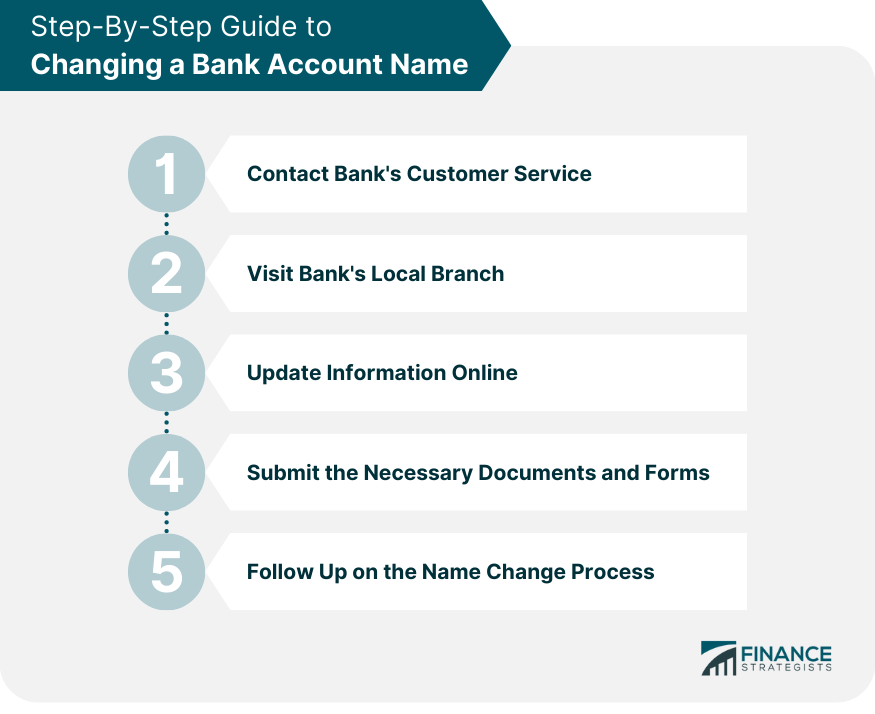
The Step-by-Step Process of Updating Your Banking Identity
Changing your name at a bank is a sequential process. You cannot start with the bank; you must start with the government. Banks require primary legal proof that the government recognizes your new identity before they can update their internal records.
Step 1: Update Your Social Security Records
The Social Security Administration is the gatekeeper of your financial identity. Before visiting your bank, you must apply for a new Social Security card. While your SSN will remain the same, the name on the card must be updated. You will need to provide a completed Form SS-5 and original documents proving your identity and the legal basis for the name change (such as a marriage certificate or court order). Once you receive your new card—or at least the official receipt of the change—you are ready to proceed to the bank.
Step 2: Update Your Government-Issued Photo ID
Most banks require at least one form of government-issued photo identification that matches the new name. Usually, this means visiting the DMV to update your driver’s license or state ID. Since many banks require “primary” and “secondary” identification, having a corrected license and your updated Social Security card provides the strongest foundation for a seamless transition.
Step 3: Contacting Your Financial Institution
While some modern “fintech” or online-only banks allow for digital uploads of documents, the majority of traditional brick-and-mortar institutions require an in-person visit to a branch. This is because you must sign a new “Signature Card.” The signature card is the legal document that allows the bank to verify your identity when you sign checks or withdrawal slips.
When you visit the bank, bring the following:
-
A certified copy of the legal document authorizing the name change (Marriage License, Divorce Decree, or Court Order).
-
Your updated Driver’s License or Passport.
-
Your updated Social Security card.
-
Existing debit cards and checkbooks associated with the account.
Step 4: Updating the Signature Card
During your meeting with a personal banker, they will update your profile in the core banking system. You will be asked to sign a new signature card. This is a vital moment; ensure your signature reflects how you intend to sign legal and financial documents moving forward. Once the system is updated, the bank will typically issue a new debit card and order new checks.
Managing Secondary Financial Products and Third-Party Links
Updating your primary checking and savings accounts is only the first phase. The modern financial life is interconnected, and failing to update the “spokes” of your financial wheel can lead to failed payments and lost income.
Credit Cards and Personal Loans
If your credit cards are held at the same institution as your bank account, the update might be automatic, but you should never assume this. Contact each card issuer individually. For credit cards, you can often handle the change via a secure message portal where you upload a PDF of your legal documentation. However, be prepared for them to mail you a new card with a new CVV code, which will require you to update any saved payment methods on retail websites.
Mortgages and Auto Loans
For long-term debt like mortgages, the process is slightly different. The name on the deed of the house and the name on the mortgage note should ideally match. While a name change does not invalidate your mortgage contract, it is wise to provide the servicer with your legal name change documents to ensure that your year-end tax statements (Form 1098) are accurate.
Direct Deposits and Payroll
One of the most common points of failure in a name change is the employer’s payroll system. If your employer sends a direct deposit to “Jane Smith” but the bank account is now held by “Jane Doe,” some banks’ automated clearing house (ACH) filters may reject the deposit. Notify your HR or payroll department as soon as you have your updated bank details to ensure your salary is routed correctly.
Investment Accounts and Retirement Funds
Brokerage accounts (like Vanguard, Fidelity, or Charles Schwab) and retirement accounts (401ks and IRAs) require meticulous attention. Because these accounts involve long-term tax implications and beneficiary designations, the documentation requirements are often more stringent. You may be required to obtain a “Medallion Signature Guarantee”—a special certification stamp provided by a bank—to prove that your request to change the name on a high-value investment account is legitimate.
Navigating Complex Financial Scenarios
Not all name changes are straightforward. Certain financial structures require additional layers of legal and professional oversight.
Joint Accounts
If you hold a joint account, the name change process usually requires both parties to be present or at least acknowledge the change. If the name change is due to a divorce, the process is more complex. You may need to close the joint account entirely and move the funds into a new individual account to clearly delineate assets and liabilities according to the divorce decree.
Business Accounts and Entrepreneurship
For business owners, a personal name change can trigger a need to update corporate filings. If you are a sole proprietor or a partner in a firm, your name may be tied to the business’s “Doing Business As” (DBA) filing or its Articles of Organization. You must ensure that the bank’s records for your business account align with your personal identification and your business’s legal registration with the Secretary of State. Failure to do so can complicate your ability to secure business credit or sign corporate contracts.
Beneficiary Designations and Estate Planning
A name change is an ideal time to audit your estate planning documents. Look at the “Transfer on Death” (TOD) or “Payable on Death” (POD) designations on your bank accounts. If you have changed your name, you should also check if you are listed as a beneficiary on someone else’s account. If a relative has you listed under your former name, it could delay the transfer of assets in the event of their passing.

A Checklist for Professional Financial Transition
To ensure no detail is overlooked, follow this organized checklist to transition your financial identity completely:
-
Obtain Certified Copies: Get at least 3–5 certified copies of your name change document. Photocopies are rarely accepted by financial institutions.
-
Social Security and DMV: Update these two pillars of identity first.
-
Primary Bank Visit: Update your core checking/savings and sign a new signature card.
-
Employer Notification: Update payroll and insurance records to match your new bank details.
-
Credit Card Updates: Contact each issuer and request new physical cards.
-
Investment Audit: Update brokerage accounts and 401k providers.
-
Automated Payments: Review your “autopay” list. When you receive new debit cards with new expiration dates and CVV codes, you must update these in every utility, subscription, and service portal you use.
-
Internal Revenue Service: While the SSA usually notifies the IRS, it is prudent to ensure your tax preparer has the new information before filing season begins.
By treating a name change as a comprehensive financial audit rather than a simple administrative task, you protect your credit standing, simplify your tax reporting, and ensure that your financial life remains organized and secure. Professional identity management is the foundation of long-term financial health.
aViewFromTheCave is a participant in the Amazon Services LLC Associates Program, an affiliate advertising program designed to provide a means for sites to earn advertising fees by advertising and linking to Amazon.com. Amazon, the Amazon logo, AmazonSupply, and the AmazonSupply logo are trademarks of Amazon.com, Inc. or its affiliates. As an Amazon Associate we earn affiliate commissions from qualifying purchases.