
Depositing a check is a routine part of financial management, whether you are an individual managing your personal budget or a business owner processing client payments. However, there are instances where you might realize—immediately after scanning a check on your smartphone or handing it to a teller—that something is wrong. Perhaps the check was written for the wrong amount, the issuer notified you of insufficient funds, or you realized the check was intended for a different account.
The question of whether you can cancel a check deposit is one that involves the intersection of banking regulations, internal bank policies, and the technology used to process payments. Unlike a “stop payment” order, which a drawer (the person who wrote the check) places on a check they issued, canceling a deposit as the payee (the person receiving the money) is significantly more complex and time-sensitive.

The Banking Mechanics: Why Canceling a Deposit is a Race Against Time
To understand why canceling a deposit is difficult, one must understand the lifecycle of a check within the modern financial system. Gone are the days when physical checks were transported by truck and plane to a central clearinghouse before funds moved. Today, under the Check Clearing for the 21st Century Act (Check 21), banks process digital images of checks, which accelerates the movement of money across the global financial infrastructure.
The Clearing Process and Regulation CC
When you deposit a check, the bank does not immediately receive the cash from the issuing institution. Instead, they provide you with “provisional credit.” Under Federal Reserve Regulation CC, banks are required to make funds available within specific timeframes, but the actual settlement between banks can take several business days.
Because the system is designed for speed and efficiency, the “cancellation window” is remarkably narrow. Once a check is scanned through a mobile app or processed at a branch, it enters an automated queue. At this point, the digital image is transmitted to the Federal Reserve or a private clearinghouse. If you attempt to cancel the deposit after this transmission has occurred, the bank may no longer have the unilateral power to stop the transaction.
Pending vs. Posted Transactions
In your online banking portal, you will often see a deposit listed as “Pending.” While this suggests the transaction is still in limbo, it usually means the bank has acknowledged the receipt and is verifying the funds. However, the internal “point of no return” often happens well before the status changes from “Pending” to “Posted.” For mobile deposits, this can happen within minutes of the upload. For ATM deposits, the window might last until the next scheduled pickup or processing cycle.
Practical Steps to Halting a Deposit in Progress
If you find yourself in a position where a deposit must be stopped, you must act with extreme urgency. The method of deposit dictates the most effective path toward a potential resolution.
Mobile App Deposits
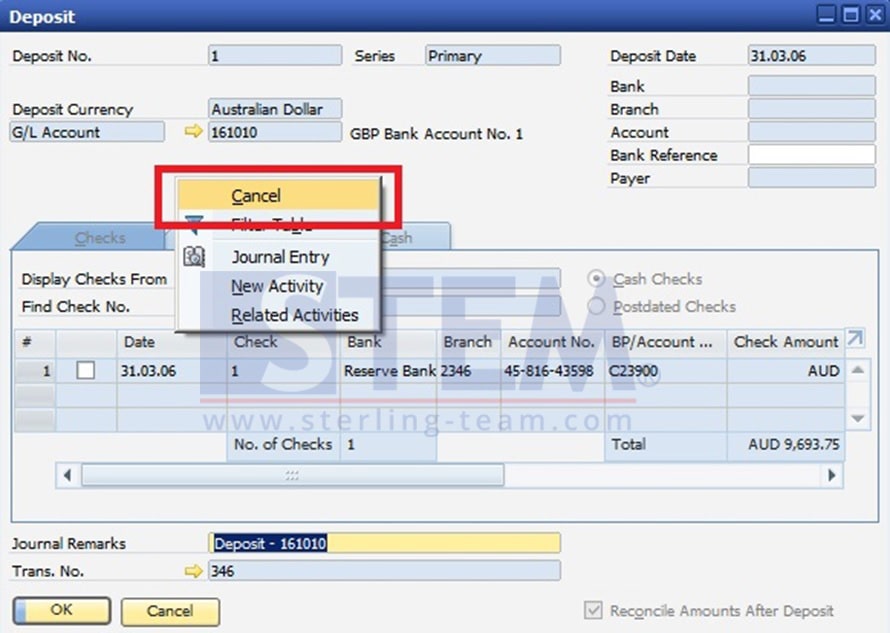
The most common way checks are deposited today is via mobile banking. If you have just hit “submit” on a mobile deposit and realized an error, check the app immediately for a “cancel” or “void” option. Most major banking apps do not provide this feature because the image is transmitted to the server instantly.
If no button exists, your only recourse is to call the bank’s high-level customer service or fraud department immediately. General customer service lines often have long wait times; if the matter is urgent, some users find success by selecting the “report a lost or stolen card” option to reach a human representative faster, who can then transfer them to the deposit operations department.
Branch and ATM Deposits
If you deposited the check at a physical branch, the best course of action is to return to the teller or speak with a branch manager immediately. If the check is still in the teller’s drawer or has not yet been bundled for the afternoon processing, they may be able to physically return the check and delete the entry from their system.
For ATM deposits, the process is harder. ATMs are typically serviced by third-party vendors or specific bank teams. Once the check is inside the machine, it is essentially in a secure vault. You will need to contact the bank to place a “hold” on the specific transaction reference number found on your ATM receipt.
Contacting the Issuer
If the bank cannot stop the deposit, your next step is to contact the person or entity who wrote the check. If the reason for your cancellation is a known issue—such as the issuer realizing they don’t have the funds—they can place a “Stop Payment” on their end. When the check reaches their bank for settlement, it will be rejected. Note, however, that this will likely trigger a “Returned Item Fee” on your account, as your bank will have to reverse the provisional credit they gave you.
Navigating the Risks: Fees, Overdrafts, and Legal Implications
Attempting to cancel a deposit or dealing with a failed deposit carries several financial risks. Understanding these consequences is vital for maintaining a healthy relationship with your financial institution and protecting your credit standing.
The Reality of Returned Item Fees
When a check deposit fails—whether because you requested a cancellation that the bank processed as a reversal, or because the issuer had insufficient funds—the bank often charges a “Returned Deposit Item” fee. This is different from an overdraft fee. It is a penalty for the administrative work required to undo the credit previously applied to your balance. These fees typically range from $15 to $35. If you are canceling the deposit due to a bank error or a legitimate misunderstanding, you can often request a one-time fee waiver from a branch manager.
The “Float” and Overdraft Risks
One of the most dangerous aspects of canceling a deposit is the impact on your “available balance.” If you deposited a $1,000 check and immediately used those funds to pay a mortgage or credit card bill, and then successfully canceled the deposit, you could trigger a cascade of overdrafts.
Modern banking systems often show “available funds” that include the provisional credit from a check. If that credit is retracted, any payments you authorized in the interim may bounce. This not only results in bank fees but can also negatively affect your credit score if a major payment is reported as late.
Regulatory Scrutiny and Fraud Prevention
Banks are highly sensitive to unusual deposit activity. Repeatedly depositing and then attempting to cancel checks can trigger “red flags” within the bank’s Anti-Money Laundering (AML) and “Know Your Customer” (KYC) protocols. The bank may view this behavior as a sign of “check kiting” or other forms of deposit fraud. If a bank suspects fraudulent activity, they reserve the right to freeze your account entirely or terminate their relationship with you, often with little to no notice.
Preventing the Need for Cancellation: Smart Deposit Habits
The best way to manage check deposits is to ensure they are correct before they ever enter the banking system. Implementing a few professional financial habits can mitigate the risk of needing a high-stress cancellation.
Verification and Endorsement Standards
Before depositing any check, verify the following three elements:
-
The Payee Line: Ensure the check is made out exactly to the name on the bank account. For business owners, this means ensuring clients don’t use your personal name if the account is in a corporate name.
-
The Amount: Match the numerical box with the written legal line. If they differ, the bank will default to the written line, which might not be the amount you expected.
-
The Date: Ensure the check isn’t “stale-dated” (usually more than six months old) or “post-dated” (dated in the future).
Adopting Digital Alternatives
To move away from the physical limitations and clearing delays of paper checks, many businesses and individuals are moving toward electronic payment methods.
-
ACH Transfers: Automated Clearing House transfers are generally more stable and easier to track than checks. While they also have a clearing window, the data entry is usually handled by the sender, reducing the payee’s risk of processing an incorrect item.
-
Wire Transfers: For large sums where certainty is required, a wire transfer is the gold standard. Once a wire is “posted,” it is considered cleared funds and is virtually impossible to reverse, providing a level of finality that checks cannot match.
-
Peer-to-Peer (P2P) Business Tools: Platforms like Zelle (for banks) or professional versions of PayPal and Venmo offer immediate notification of funds, though they come with their own set of terms regarding reversals and disputes.
Maintaining a Cash Buffer
In the world of personal and business finance, liquidity is king. To avoid the stress of a deposit cancellation affecting your ability to pay bills, aim to maintain a “buffer” in your checking account that covers at least one month of essential expenses. When you aren’t relying on the immediate availability of a specific check to cover your next outgoing payment, the administrative headache of a deposit error becomes a minor inconvenience rather than a financial crisis.
In summary, while it is technically possible to cancel a check deposit, the window for doing so is incredibly small and requires immediate coordination with your bank. By understanding the underlying mechanics of the clearing system and practicing diligent financial oversight, you can navigate these rare errors without compromising your financial stability.
aViewFromTheCave is a participant in the Amazon Services LLC Associates Program, an affiliate advertising program designed to provide a means for sites to earn advertising fees by advertising and linking to Amazon.com. Amazon, the Amazon logo, AmazonSupply, and the AmazonSupply logo are trademarks of Amazon.com, Inc. or its affiliates. As an Amazon Associate we earn affiliate commissions from qualifying purchases.