
Bank of America (BofA) stands as one of the “Big Four” banking institutions in the United States, a pillar of the global financial system with trillions of dollars in assets under management. Because of its massive scale and influence, the question of who actually owns the company is a matter of significant interest for investors, policymakers, and the general public alike. Unlike a private company held by a founding family or a small group of partners, Bank of America is a publicly traded corporation (NYSE: BAC). This means its ownership is distributed across millions of individual and institutional shareholders.

Understanding the ownership structure of Bank of America requires a look at three distinct tiers: the institutional giants that manage massive index funds, the high-profile strategic investors who exert psychological influence over the market, and the retail investors who hold shares through brokerage accounts and retirement plans.
The Institutional Powerhouses: The Real Drivers of Ownership
As is common with most S&P 500 companies, the vast majority of Bank of America is owned by institutional investors. These are professional organizations—such as mutual fund companies, pension funds, and insurance providers—that pool money from millions of individual clients to buy large blocks of stock. Currently, institutional ownership of Bank of America typically hovers between 60% and 70% of all outstanding shares.
The Dominance of Vanguard and BlackRock
At the top of the pyramid are the “Big Three” of the asset management world: The Vanguard Group, BlackRock, and State Street Corporation. These firms do not “own” the bank in the traditional sense of personal wealth; rather, they hold the shares on behalf of the investors who participate in their exchange-traded funds (ETFs) and mutual funds.
Vanguard is often the largest or second-largest shareholder, holding approximately 7% to 8% of the company. Their ownership is driven primarily by passive indexing. When an investor buys a share of a Total Stock Market ETF or an S&P 500 Index Fund, Vanguard must purchase Bank of America stock to mirror the index. BlackRock, through its iShares brand, maintains a similarly massive stake.
State Street and the Role of Custodial Ownership
State Street Global Advisors typically rounds out the top three institutional holders. Their influence is particularly felt through the SPDR S&P Bank ETF (KBE) and the Financial Select Sector SPDR Fund (XLF). Because these institutions hold such a significant percentage of the voting power, they play a critical role in corporate governance. They vote on board members, executive compensation packages, and environmental, social, and governance (ESG) proposals during the bank’s annual shareholder meetings.
Warren Buffett and the Berkshire Hathaway Connection
While institutional giants like Vanguard hold shares for millions of people, one single entity stands out for its concentrated and strategic ownership: Berkshire Hathaway. Led by the legendary investor Warren Buffett, Berkshire Hathaway has long been Bank of America’s largest single shareholder, often holding more than 10% of the total outstanding stock.
A Relationship Born in Crisis
The story of Berkshire Hathaway’s ownership is one of strategic opportunism. In 2011, while Bank of America was still reeling from the aftermath of the 2008 mortgage crisis and facing significant litigation and capital concerns, Buffett stepped in with a $5 billion investment. In exchange, he received preferred stock and warrants to purchase 700 million common shares at a set price.
When Buffett eventually exercised those warrants in 2017, Berkshire Hathaway instantly became the bank’s top owner. This investment was a massive vote of confidence that helped stabilize the bank’s reputation during a volatile period. To this day, Buffett’s “seal of approval” remains a fundamental component of the bank’s investment thesis for many value-oriented investors.
The 10% Threshold and Regulatory Scrutiny
Ownership in the banking sector is unique because of federal regulations. If an investor owns more than 10% of a bank, they are often classified as a “bank holding company,” which triggers intense regulatory oversight from the Federal Reserve. Buffett has famously navigated these waters by maintaining a passive role, explicitly stating that Berkshire does not seek to control the bank’s operations, but rather to profit from its long-term growth and dividend payouts.
How Ownership Influences Corporate Strategy and Stability

The ownership structure of a bank isn’t just a list of names on a ledger; it dictates how the bank operates, its risk appetite, and how it returns value to its stakeholders.
Dividends and Share Buybacks
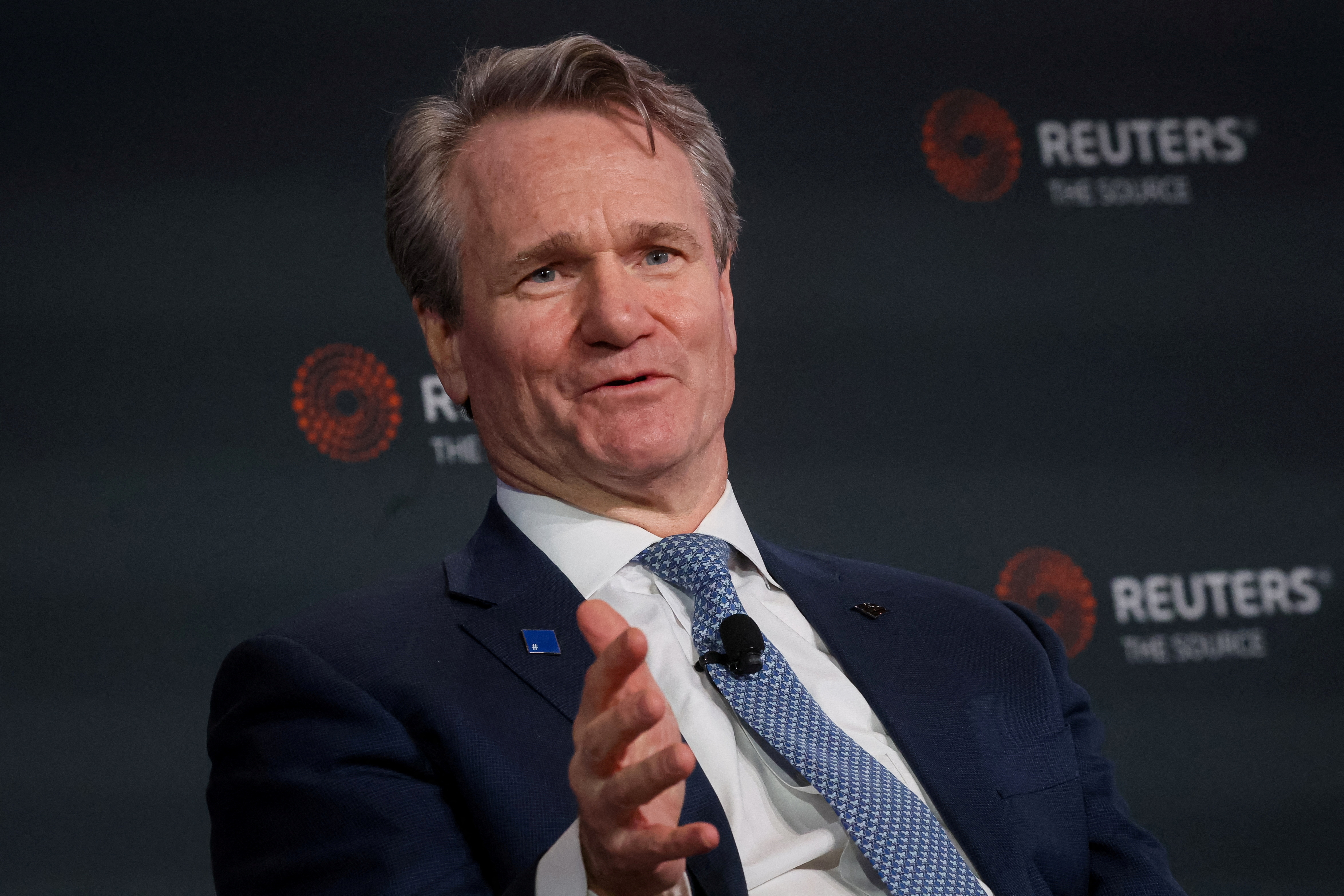
The primary goal of the institutional and strategic owners of Bank of America is the return of capital. Because the bank is a mature company in a highly regulated industry, explosive growth is less common than steady, incremental gains. Therefore, the owners place immense pressure on CEO Brian Moynihan and the board to maintain a robust dividend policy and engage in share buybacks.
Institutional investors view Bank of America as a “yield play.” When the Federal Reserve allows banks to increase their capital distributions (following the annual “stress tests”), the owners are the direct beneficiaries. For a firm like Berkshire Hathaway, which holds over a billion shares, even a small increase in the quarterly dividend results in hundreds of millions of dollars in additional annual income.
ESG and Shareholder Activism
In recent years, the nature of ownership has shifted toward activism. Large institutional holders like BlackRock have increasingly used their ownership stakes to push for climate-related disclosures and diversity initiatives. Because they own such a large portion of the bank, their “engagement” meetings with BofA leadership carry significant weight. This has led the bank to commit to “net-zero” goals and invest heavily in community development, essentially aligning the bank’s corporate identity with the values of its largest owners.
The Role of Insiders and Retail Investors
While institutions and billionaires dominate the headlines, a significant portion of Bank of America is owned by “Main Street” investors and the bank’s own employees.
Insider Ownership and Management Alignment
Insider ownership refers to the shares held by the bank’s officers and directors. While the percentage of insider ownership at a massive corporation like Bank of America is typically low (often less than 1%), the dollar value is substantial. For instance, CEO Brian Moynihan holds millions of shares, ensuring that his personal net worth is tied to the performance of the stock. Financial analysts generally view high levels of insider ownership as a positive sign, as it aligns the interests of management with those of the external shareholders.
The Power of the Retail Investor
Retail investors—individual people buying shares through platforms like Fidelity, Charles Schwab, or Robinhood—make up the remainder of the ownership pool. Collectively, these millions of individuals hold roughly 30% of the company. While a single retail investor has no power to change bank policy, their collective sentiment drives daily stock price volatility. During periods of economic uncertainty, the behavior of retail investors can lead to significant shifts in the stock’s valuation, even if the large institutional “diamond hands” refuse to sell.
The Evolution of Ownership: From NationsBank to Global Leader
To understand who owns Bank of America today, one must acknowledge the historical mergers that created the modern entity. The bank we know today is the result of a 1998 merger between the original BankAmerica of California and NationsBank of Charlotte, North Carolina.
This merger, and subsequent acquisitions of firms like Merrill Lynch and Countrywide Financial during the 2008 crisis, fundamentally changed the “cap table” (capitalization table) of the company. Every acquisition involved the issuance of new shares, diluting old owners but bringing in new ones. The acquisition of Merrill Lynch, in particular, integrated one of the world’s largest brokerage houses into the bank, creating a circular ownership dynamic where Merrill Lynch clients often hold significant amounts of their parent company’s stock.
Conclusion: A Multi-Faceted Ownership Model
So, who owns Bank of America? The answer is a mosaic of global finance. It is owned by the millions of workers whose pension funds are managed by Vanguard and BlackRock. It is owned by the most successful value investor in history, Warren Buffett. It is owned by its executives who are incentivized to see the stock price rise, and by individual investors who see the bank as a safe harbor for their savings.
This distributed ownership model is a hallmark of the American capitalist system. It ensures that while the bank is managed by a professional board and executive team, its ultimate “bosses” are the shareholders who provide the capital necessary for it to function. Whether through a 401(k), a strategic corporate stake, or a personal brokerage account, the ownership of Bank of America is a reflection of the broader economy—interconnected, institutionalized, and perpetually evolving.
aViewFromTheCave is a participant in the Amazon Services LLC Associates Program, an affiliate advertising program designed to provide a means for sites to earn advertising fees by advertising and linking to Amazon.com. Amazon, the Amazon logo, AmazonSupply, and the AmazonSupply logo are trademarks of Amazon.com, Inc. or its affiliates. As an Amazon Associate we earn affiliate commissions from qualifying purchases.