
In the contemporary financial landscape, the question “where is a bank located” has evolved from a simple inquiry about street addresses into a multifaceted exploration of accessibility, technology, and service delivery. For customers of U.S. Bank—the primary subsidiary of U.S. Bancorp and the fifth-largest retail bank in the United States—understanding location means navigating a hybrid world of over 2,000 physical branches, tens of thousands of ATMs, and a robust digital infrastructure that brings the bank into the palm of the user’s hand.
Determining where to manage your money is a foundational step in personal finance strategy. Whether you are seeking a local branch for a complex mortgage consultation or looking for the nearest fee-free ATM in a distant city, the “location” of your financial institution dictates the speed, cost, and convenience of your economic life.
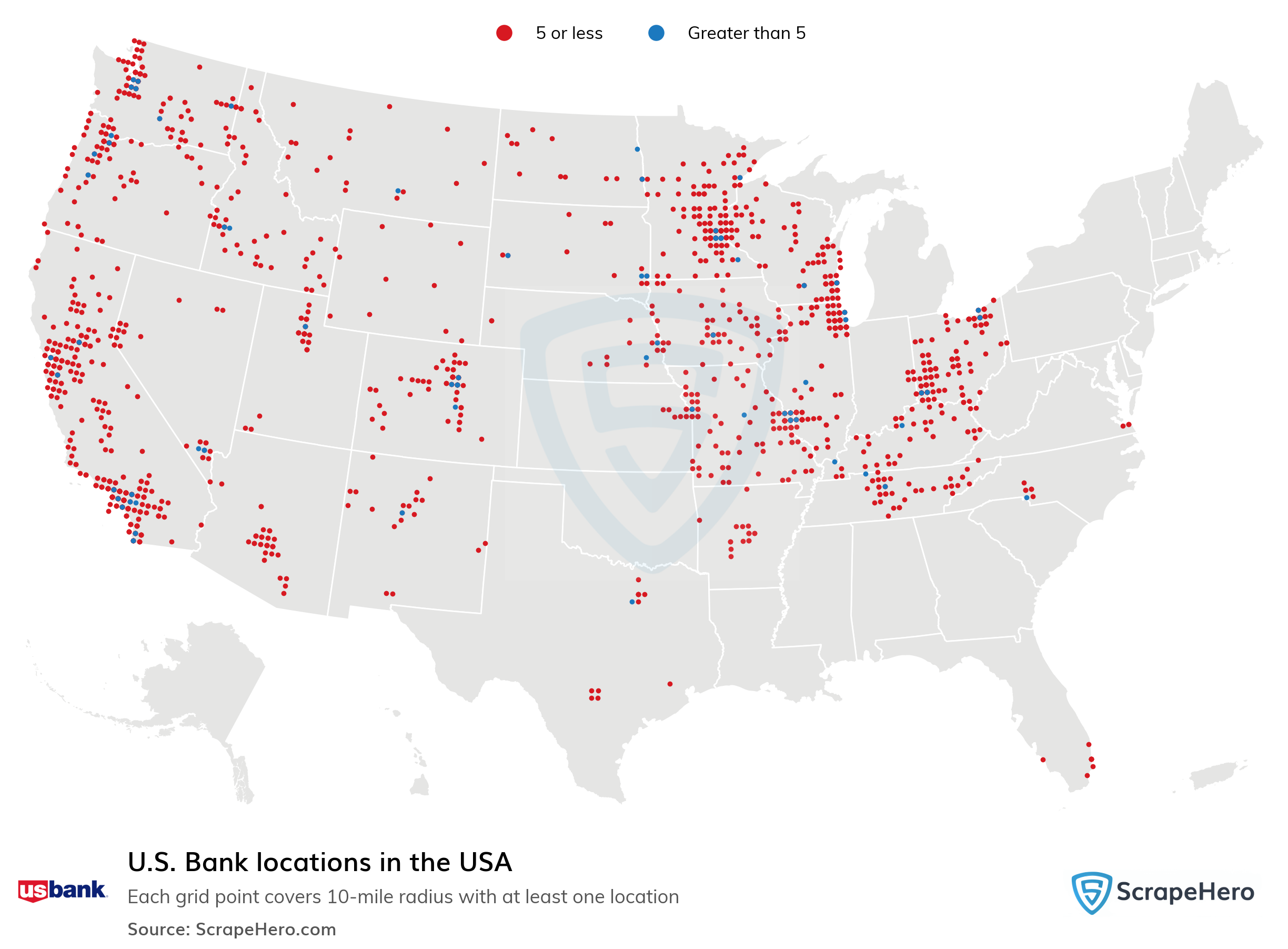
The Geography of U.S. Bancorp: Mapping Physical Accessibility
U.S. Bank maintains a significant physical footprint that serves as the backbone of its retail operations. While the banking industry has seen a general trend toward consolidation and branch closures, the physical presence of a major institution remains a vital component of consumer trust and high-level financial planning.
Regional Strongholds and Branch Density
U.S. Bank is not a “national” bank in the sense of having a brick-and-mortar presence in every single state, but its reach is vast. It primarily operates across 26 states, with a heavy concentration in the Midwest, the West, and the Southwest. States like Minnesota (where it is headquartered in Minneapolis), Ohio, Illinois, Oregon, and California host hundreds of locations.
In these regions, the bank is often integrated into the community fabric, located in high-traffic commercial zones, suburban shopping centers, and even inside select retail partners like Meijer or Safeway. For a consumer, this means that “where” the bank is located often coincides with their daily errands, lowering the friction of managing physical cash or seeking in-person advice.
The Strategic Placement of Full-Service Branches
A physical U.S. Bank location is more than just a place to deposit checks. These locations are strategically placed to serve as “financial centers.” Unlike the teller-only windows of the past, modern branches are staffed with specialists. When asking where a U.S. Bank is located, a savvy consumer is often looking for a specific type of expertise:
-
Mortgage Offices: Often clustered in growing residential markets.
-
Wealth Management Hubs: Located in metropolitan business districts.
-
Small Business Centers: Positioned in industrial or commercial corridors to assist entrepreneurs with lines of credit and payroll services.
For many, the physical location remains the go-to for “high-stakes” banking, such as opening a specialized trust account, notarizing legal documents, or accessing a safety deposit box—services that digital platforms cannot yet fully replicate.
Digital Locations: Banking Beyond the Brick and Mortar
In the modern era of personal finance, the most frequent answer to “where is my bank?” is “in my pocket.” U.S. Bank has invested billions in its digital transformation, ensuring that the bank’s “location” is ubiquitous as long as there is an internet connection.
Mobile Banking Apps and Remote Accessibility
The U.S. Bank mobile app serves as a virtual branch. For the vast majority of personal finance tasks—checking balances, transferring funds between accounts, and paying bills—the location is irrelevant. The app utilizes geolocation technology not just to help you find the nearest physical branch, but to enhance security. By knowing “where” a transaction is being initiated relative to the user’s phone, the bank can proactively prevent fraud.
Furthermore, the “location” of the bank in the digital sense includes the integration of AI-driven assistants. These tools provide real-time financial insights, effectively placing a financial advisor in the user’s digital workspace. This shift from physical to digital locations has democratized access to sophisticated financial tools, making them available to users in rural areas who might be hours away from a physical branch.
The Online Banking Ecosystem for Personal Finance
Beyond the app, the web portal represents a comprehensive “location” for long-term financial management. This is where users often go for “deep work,” such as analyzing spending patterns over several years, managing investment portfolios, or applying for credit cards. The digital location of the bank allows for a paperless environment, which is increasingly preferred by younger demographics and environmentally conscious investors. The ability to access 1099-INT forms or monthly statements from any computer globally redefines the concept of a bank’s “place of business.”
Finding Financial Tools in Your Neighborhood
For many individuals, the most important “location” isn’t a branch office but a point of access for cash. Despite the rise of digital payments, physical currency remains essential for many side hustles, small business transactions, and daily expenses.
ATM Networks and Fee-Free Access
U.S. Bank provides its customers with access to a massive network of ATMs. While there are thousands of U.S. Bank-branded machines, the institution also participates in the MoneyPass network. This partnership significantly expands the “location” of the bank, allowing customers to withdraw cash at over 32,000 ATMs nationwide without incurring surcharges.
Understanding this network is a key component of financial literacy. A customer in a state without a physical U.S. Bank branch (such as Florida or New York) can still find a “location” to access their funds for free by using the app’s ATM locator to find a partnered machine. This effectively turns thousands of convenience stores, grocery stores, and independent kiosks into functional outposts of the bank.
Co-Branded Locations and Strategic Partnerships
A unique aspect of U.S. Bank’s physical strategy is its presence within other businesses. You can often find U.S. Bank locations inside major grocery chains. These “in-store” branches offer extended hours compared to traditional stand-alone buildings, often remaining open on weekends or later into the evening. For the busy professional or the person managing a side hustle, these locations are often more convenient than the primary regional headquarters.
Choosing Between Physical Presence and Digital Convenience
When deciding where to bank, an individual must weigh the importance of a physical “location” against the features of an online-only model. Your financial goals should dictate which “location” you prioritize.
When Physical Locations Matter for Complex Transactions
There are moments in one’s financial journey where a physical “where” is non-negotiable.
-
Large Cash Deposits: Businesses that handle high volumes of physical currency need a secure, local drop-off point.
-
Medallion Signature Guarantees: Required for certain securities transfers, this often must be done in person for identity verification.
-
Building Relationships: For small business owners, knowing the manager at a local branch can be the difference between a loan approval and a rejection. A physical location facilitates the “soft data” of banking—trust and community reputation.
The Financial Benefits of Online-Only Banking Models
Conversely, many people are choosing to move away from traditional “locations” entirely. Online-only banks often offer higher Annual Percentage Yields (APY) on savings accounts because they do not have the overhead costs of maintaining thousands of physical buildings. While U.S. Bank offers the best of both worlds (a hybrid model), a savvy investor might use the physical branch for their primary checking and mortgage while keeping their emergency fund in a “location-independent” high-yield savings account to maximize interest.
Future Trends: The Evolution of Banking “Location”
The concept of “where” a bank is located is currently undergoing a radical transformation. As branch footprints shrink, the remaining locations are being reimagined.
The Rise of Financial Centers and Experience Hubs
We are seeing a move away from the “transactional” branch toward “experience hubs.” In the future, a U.S. Bank location might look less like a lobby with velvet ropes and more like a modern coworking space or a consultation suite. The focus is shifting from “where can I deposit this check” to “where can I sit down with an expert to plan my retirement or discuss my business’s expansion.” These locations are being redesigned to facilitate long-form conversations rather than quick exchanges.
Security and Verification in a Location-Independent World
As “where” we bank becomes increasingly untethered from physical earth, the bank’s location in the digital cloud becomes its most important asset. Cyber-security is the new “vault.” For the consumer, the bank’s location is defined by its server security, its encryption protocols, and its ability to verify identity through biometrics rather than a driver’s license handed to a teller.
In conclusion, “where is a U.S. Bank located” is a question with many answers. It is in the 2,000+ branches across the American landscape; it is in the 32,000+ ATMs in the MoneyPass network; it is in the sophisticated mobile app on your smartphone; and it is in the secure data centers that protect your wealth. For the modern consumer, the key to successful money management is learning how to leverage each of these “locations” to suit their specific financial needs, ensuring that their capital is always accessible, secure, and working toward their long-term goals.
aViewFromTheCave is a participant in the Amazon Services LLC Associates Program, an affiliate advertising program designed to provide a means for sites to earn advertising fees by advertising and linking to Amazon.com. Amazon, the Amazon logo, AmazonSupply, and the AmazonSupply logo are trademarks of Amazon.com, Inc. or its affiliates. As an Amazon Associate we earn affiliate commissions from qualifying purchases.