
Amazon is no longer just a digital bookstore; it is a global economic engine that dictates the flow of modern commerce. For those looking to interact with the platform—whether as a third-party seller, a stock market investor, or an entrepreneur seeking a side hustle—the question of “how much” is multifaceted. Understanding the financial architecture of Amazon requires diving deep into the costs of its services, the margins of its various business units, and the potential returns on investment it offers.
This guide provides a granular look at the financial realities of the Amazon ecosystem, focusing on the capital required to compete and the revenue potential for those who navigate its complexities successfully.
The Cost of Doing Business: Understanding Amazon Seller Fees and Overheads
For many entrepreneurs, Amazon represents the ultimate marketplace to launch a product. However, the “Amazon Tax”—the cumulative cost of selling on the platform—can be significant. To understand the financial commitment required, one must look past the simple monthly subscription and into the variable costs that eat into profit margins.
Referral Fees and Monthly Subscriptions
The first financial hurdle for any Amazon seller is the account fee. Amazon offers two primary tiers: Individual and Professional. The Individual plan charges $0.99 per item sold, making it suitable for low-volume hobbyists. However, any serious business will opt for the Professional plan, which costs $39.99 per month.
Beyond the subscription, the “Referral Fee” is the most consistent cost. This is essentially a commission Amazon takes on every sale. For most categories, this fee hovers around 15%, though it can range from as low as 6% (for personal computers) to as high as 45% (for Amazon Device Accessories). Calculating these fees accurately is the difference between a profitable venture and a failing one.
Fulfillment by Amazon (FBA) vs. Fulfillment by Merchant (FBM)
The logistics of shipping are where Amazon’s financial complexity peaks. Sellers choosing Fulfillment by Amazon (FBA) outsource storage, picking, packing, and shipping to Amazon. While this grants access to Prime shipping and increases conversion rates, it comes with a suite of fees:
-
Fulfillment Fees: Calculated based on the weight and dimensions of the product. Small, light items are cheap to ship, while “oversize” items can incur heavy surcharges.
-
Storage Fees: Amazon charges monthly fees for every cubic foot of space your inventory occupies. These prices spike significantly during the “peak season” (October through December).
-
Aged Inventory Surcharges: Items that sit in a warehouse for more than 180 or 270 days face steep penalties, encouraging sellers to maintain high inventory turnover.
For those choosing FBM, the seller handles shipping. While this avoids FBA fees, the merchant must account for their own warehouse labor, packaging materials, and carrier contracts, which often exceed Amazon’s bulk-negotiated rates.
The Hidden Cost of Advertising: Amazon PPC
In the modern Amazon landscape, organic growth is rarely enough. To get on the first page of search results, sellers must engage in Amazon Advertising (Pay-Per-Click). The cost of advertising (ACoS – Advertising Cost of Sales) has risen steadily over the last decade. It is common for sellers to spend 10% to 30% of their total revenue on ads just to maintain their sales velocity. This makes the “true cost” of selling on Amazon closer to 35% to 50% of the product’s retail price when fees and ads are combined.
Revenue Streams and Financial Powerhouses: Where Amazon Makes Its Billions
To understand Amazon from a business finance perspective, one must look at where the company actually generates its profit. While the retail site is the most visible part of the brand, the financial “heavy lifting” happens behind the scenes.

The AWS Profit Engine
Amazon Web Services (AWS) is the backbone of the internet and the primary driver of Amazon’s operating income. While the retail division often operates on razor-thin margins—sometimes even reporting losses to capture market share—AWS is a high-margin powerhouse.
For investors and financial analysts, AWS is the “safety net.” The revenue from cloud computing allows Amazon to invest billions into its logistics network, satellite internet (Project Kuiper), and AI development. Understanding how much Amazon “makes” requires acknowledging that it is essentially a high-margin tech company subsidizing a massive, low-margin logistics company.
Advertising Revenue: The Quiet Giant
One of the most explosive areas of Amazon’s financial growth is its advertising business. By leveraging the data of millions of shoppers, Amazon has built an advertising platform that rivals Google and Meta. Unlike Google, where users search for information, or Facebook, where users socialize, Amazon users are on the platform specifically to buy. This makes the advertising space incredibly valuable.
For the company, advertising is nearly pure profit. Unlike physical goods, there are no shipping costs or warehouse fees associated with a sponsored search result. This segment has become a multi-billion dollar pillar of Amazon’s quarterly earnings.
Prime Membership and Ecosystem Lock-in
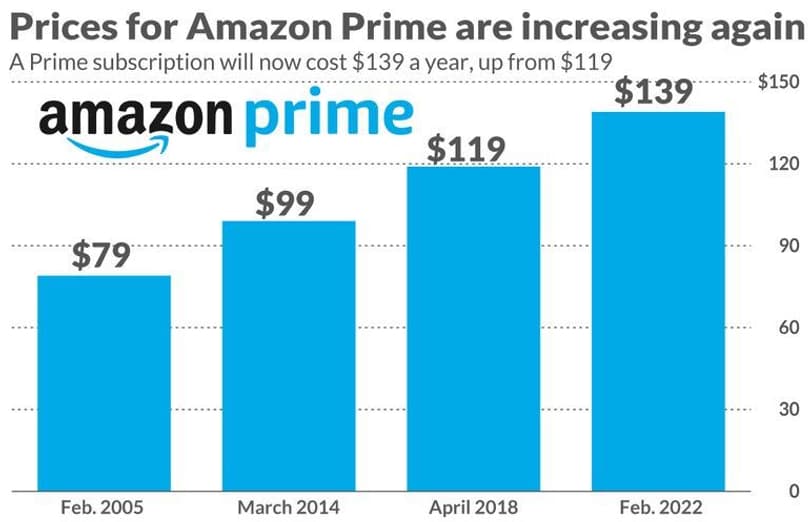
Amazon Prime is a masterclass in behavioral economics and corporate finance. By charging an annual fee (currently $139 in the U.S.), Amazon secures a massive upfront cash flow. However, the real value isn’t the fee itself; it’s the “lock-in” effect. Financial data consistently shows that Prime members spend significantly more per year than non-members. The cost of providing “free” shipping and Prime Video content is an acquisition cost designed to maximize the lifetime value (LTV) of the customer.
Investing in the Titan: Evaluating Amazon’s Stock and Long-term Value
From an investor’s perspective, the question of “how much” refers to the valuation and the potential for capital appreciation. Amazon (AMZN) has historically been a stock that defies traditional valuation metrics like the Price-to-Earnings (P/E) ratio.
The “Day 1” Philosophy and Reinvestment
For decades, Amazon famously reported little to no net income because it chose to reinvest every dollar of profit back into the business. This strategy of “aggressive reinvestment” is central to its financial identity. When analyzing Amazon’s books, sophisticated investors look at “Operating Cash Flow” rather than “Net Income.”
The company’s ability to generate cash and immediately deploy it into new industries—healthcare, grocery (Whole Foods), and autonomous vehicles—makes it a unique asset in a portfolio. The cost of the stock is often a reflection of the market’s belief in Jeff Bezos’ and Andy Jassy’s ability to find new markets to disrupt.
Volatility and Market Cap
As a member of the “Magnificent Seven,” Amazon’s market capitalization often fluctuates by hundreds of billions of dollars in a single quarter based on guidance regarding AWS growth or consumer spending trends. For the personal investor, Amazon represents a growth-oriented asset that is sensitive to interest rates (which affect the “present value” of future cash flows) and labor costs (which affect the logistics arm).
Side Hustle Potential: How Much Can You Actually Earn on Amazon?
Beyond large-scale selling and stock investing, Amazon offers several “micro-income” streams. For individuals looking to generate a side income, the financial entry barriers and potential returns vary wildly.
Kindle Direct Publishing (KDP) and Digital Assets
KDP allows authors to publish books with zero upfront cost. Amazon takes a percentage of the sales—usually either 30% or 65%, depending on the royalty plan chosen by the author. For a $9.99 eBook, an author typically nets about $7.00. The “cost” here is time and intellectual capital. Successful KDP entrepreneurs often treat it as a volume business, publishing dozens of niche titles to create a cumulative passive income stream that can range from $100 to over $10,000 per month.
Amazon Associates: The Affiliate Landscape
Amazon Associates is one of the oldest and largest affiliate marketing programs in the world. For content creators, the “cost” is the overhead of running a blog, YouTube channel, or social media account. The commissions, however, have seen downward pressure in recent years. Depending on the category, an affiliate might earn between 1% (for groceries) and 10% (for luxury beauty) of the sale price. While the margins are thin, the high conversion rate of Amazon—due to consumer trust and “one-click” buying—makes it a staple for online income seekers.
Amazon Mechanical Turk (MTurk)
At the lowest end of the earnings spectrum is MTurk, a crowdsourcing marketplace for “Human Intelligence Tasks.” While it requires no investment, the earning potential is minimal, often averaging below minimum wage. It serves as a reminder that within the Amazon financial ecosystem, the greatest returns are reserved for those who provide the most leverage—whether through capital, unique products, or high-level technical skills.
In conclusion, the answer to “how much does Amazon…” depends entirely on which side of the transaction you occupy. For the shopper, it is a game of convenience and price comparison. For the seller, it is a high-stakes environment where 15-50% of revenue is surrendered for access to a global audience. For the investor, it is a bet on the continued dominance of cloud infrastructure and the relentless optimization of global logistics. Navigating this landscape requires a keen eye on the data and a strategic approach to the costs of participation.
aViewFromTheCave is a participant in the Amazon Services LLC Associates Program, an affiliate advertising program designed to provide a means for sites to earn advertising fees by advertising and linking to Amazon.com. Amazon, the Amazon logo, AmazonSupply, and the AmazonSupply logo are trademarks of Amazon.com, Inc. or its affiliates. As an Amazon Associate we earn affiliate commissions from qualifying purchases.