
To understand the global economy, one must understand the financial architecture of Amazon. Often perceived by consumers as a massive online department store, Amazon is, in reality, a complex conglomerate with a revenue model that spans cloud computing, digital advertising, logistics, and subscription services. While its retail operations generate the most top-line revenue, the company’s actual profitability is driven by a sophisticated “flywheel” effect where high-margin business units fund the expansion of lower-margin consumer-facing services. This article explores the multifaceted financial machinery behind Amazon, breaking down the specific streams that contribute to its multi-billion dollar bottom line.
The Core Retail Engine: First-Party Sales and Physical Presence
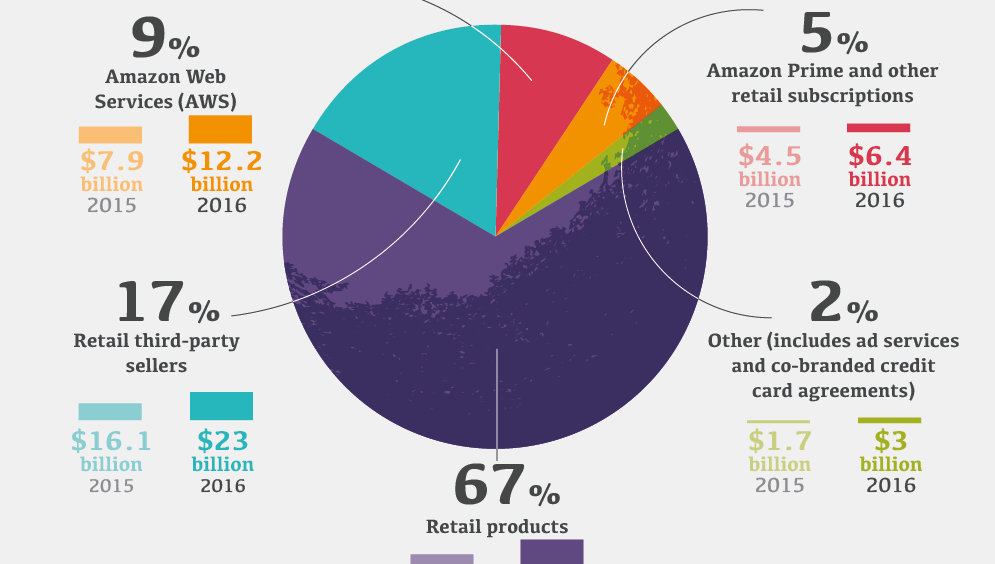
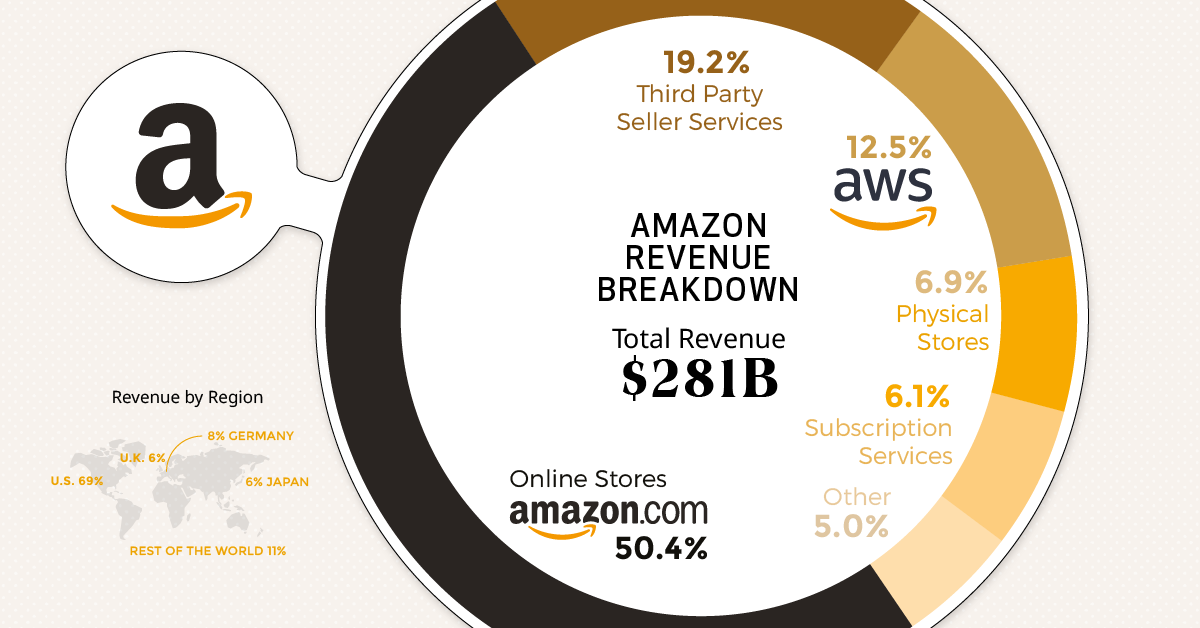
At its heart, Amazon remains a retail powerhouse, but the financial mechanics of this segment have evolved significantly since its inception as an online bookseller. Amazon’s retail business is split into two primary segments: Online Stores and Physical Stores.
Online Stores (1P Revenue)
The “Online Stores” category represents Amazon’s first-party (1P) sales. This is the revenue generated when Amazon buys inventory from manufacturers and sells it directly to consumers. While this accounts for a massive portion of Amazon’s total net sales, it is historically a low-margin business. The primary financial goal of 1P retail is not necessarily high profit margins per item, but rather the acquisition of market share and the aggregation of a massive customer base. By operating at scale, Amazon leverages its purchasing power to keep prices low, which fuels the “flywheel”—bringing more customers into the ecosystem who then engage with higher-margin services.
Physical Stores and Whole Foods
Amazon’s foray into physical retail, most notably through the acquisition of Whole Foods Market, represents a strategic move to capture “wallet share” in the grocery sector—a category with high purchase frequency. Financially, physical stores serve as both a revenue stream and a logistics asset. These locations act as micro-fulfillment centers and return hubs, reducing the high costs associated with “last-mile” delivery and reverse logistics. From a money management perspective, the physical store segment provides a stable, recurring revenue stream that complements the more volatile nature of e-commerce.
Amazon Web Services (AWS): The Profit Powerhouse
If the retail side of Amazon provides the volume, Amazon Web Services (AWS) provides the profit. AWS is the world’s most comprehensive and broadly adopted cloud platform, and its financial impact on Amazon’s balance sheet cannot be overstated.
High-Margin Infrastructure as a Service (IaaS)
Unlike the thin margins found in shipping physical goods, cloud computing offers exceptional scalability and high operating margins. AWS allows companies of all sizes—from startups to government agencies—to rent computing power, storage, and databases. Because the infrastructure is already built, every additional customer adds significant incremental profit. In many fiscal quarters, AWS has accounted for over 50% (and sometimes up to 100%) of Amazon’s total operating income, despite representing a much smaller percentage of total revenue.
Strategic Reinvestment
The massive cash flow generated by AWS is the “engine room” of Amazon’s financial strategy. It provides the capital necessary for Amazon to take long-term bets in other sectors, such as original content for Prime Video, satellite internet (Project Kuiper), and healthcare. Without the high-margin cushion of AWS, Amazon would likely not have the financial flexibility to sustain the aggressive price wars and infrastructure investments that define its retail dominance.
The Marketplace Evolution: Third-Party Seller Services
One of the most significant shifts in Amazon’s business model over the last decade has been the transition from a pure retailer to a service provider for other retailers. This is known as the Third-Party (3P) Marketplace.
Commissions and Referral Fees
Amazon allows independent sellers to list their products on its platform in exchange for a referral fee, which typically ranges from 8% to 15% of the sale price. This is a high-margin revenue stream because Amazon does not have to take on the inventory risk or the capital expenditure of purchasing the goods. They simply provide the digital shelf space and take a cut of the transaction.

Fulfillment by Amazon (FBA)
Beyond simple commissions, Amazon monetizes its logistics network through Fulfillment by Amazon (FBA). Sellers pay Amazon to store their products in warehouses, pick, pack, and ship them, and provide customer service. This transforms Amazon’s massive logistics overhead from a cost center into a profit center. By charging for storage and shipping, Amazon ensures that its warehouses are generating revenue even when it isn’t selling its own inventory.
The Advertising Juggernaut: Monetizing Consumer Intent
In recent years, Amazon has emerged as a titan in the digital advertising space, trailing only Google and Meta. This segment has become one of Amazon’s fastest-growing and most profitable revenue streams.
Sponsored Products and Search Results
Amazon’s advertising model is uniquely powerful because it captures “high-intent” shoppers. When a user searches for “wireless headphones” on Amazon, they are likely ready to buy. This makes the advertising space on Amazon’s search results pages incredibly valuable to brands. Amazon sells “Sponsored Product” placements, “Sponsored Brands,” and display ads throughout its ecosystem.
Data-Driven Margins
The financial beauty of the advertising business lies in its margins. Unlike shipping a physical box, the cost of serving a digital ad is negligible. Consequently, the revenue generated from advertising flows almost directly to the bottom line. As more sellers join the marketplace, the competition for visibility increases, driving up ad rates and further padding Amazon’s margins. This creates a secondary flywheel: the more products available on the marketplace, the more brands must spend on advertising to stay competitive.
Prime and Subscriptions: Engineering Recurring Revenue
Amazon Prime is the glue that holds the entire financial ecosystem together. While the membership fee itself is a significant source of revenue, its true value lies in the consumer behavior it incentivizes.
Subscription Revenue Streams
Amazon generates billions of dollars annually from Prime membership fees. Additionally, the company monetizes other subscription services including Kindle Unlimited, Amazon Music, and Audible. This “recurring revenue” model is highly prized by investors because it provides predictable cash flow and reduces the cost of customer acquisition. Once a customer has paid for a subscription, the “sunk cost fallacy” often drives them to consolidate their spending on Amazon to “get their money’s worth.”
Lifetime Value and Ecosystem Lock-in
The financial impact of a Prime member is significantly higher than that of a non-Prime member. Statistics consistently show that Prime members spend more per year and shop more frequently. By bundling video streaming, music, and shipping, Amazon creates a “sticky” ecosystem. The cost of providing these services (like the billions spent on content for Prime Video) is offset by the increased lifetime value (LTV) of the customer. From a business finance perspective, Prime is a tool for churn reduction and wallet share expansion.
The Financial Flywheel: How the Pieces Fit Together
To truly understand how Amazon makes money, one must view these segments not as isolated businesses, but as an integrated financial machine.
-
Retail Volume creates the massive customer base and data necessary for other services.
-
Third-Party Services leverage that volume to generate fee-based revenue without inventory risk.
-
AWS provides the massive capital and technological backbone to fund expansion and innovation.
-
Advertising monetizes the traffic generated by the retail and marketplace arms at extremely high margins.
-
Subscription Services ensure customer loyalty and provide steady, predictable cash flow.
Amazon’s genius lies in its ability to operate across different margin profiles. It uses its low-margin retail business to dominate the consumer’s daily life, while its high-margin cloud and advertising businesses provide the actual profits. This diversification makes the company incredibly resilient; if retail spending slows down, cloud demand or advertising often stays robust.
In conclusion, Amazon’s financial success is the result of a calculated move away from being a simple store toward becoming the essential infrastructure of the modern economy. Whether it is the digital infrastructure of the internet via AWS, the physical infrastructure of global commerce via its logistics network, or the attention infrastructure of digital advertising, Amazon has positioned itself to take a “toll” on a vast percentage of global economic activity. For the savvy observer, Amazon is less of a retailer and more of a diversified financial entity that has mastered the art of capturing value at every stage of the consumer and business lifecycle.
aViewFromTheCave is a participant in the Amazon Services LLC Associates Program, an affiliate advertising program designed to provide a means for sites to earn advertising fees by advertising and linking to Amazon.com. Amazon, the Amazon logo, AmazonSupply, and the AmazonSupply logo are trademarks of Amazon.com, Inc. or its affiliates. As an Amazon Associate we earn affiliate commissions from qualifying purchases.