
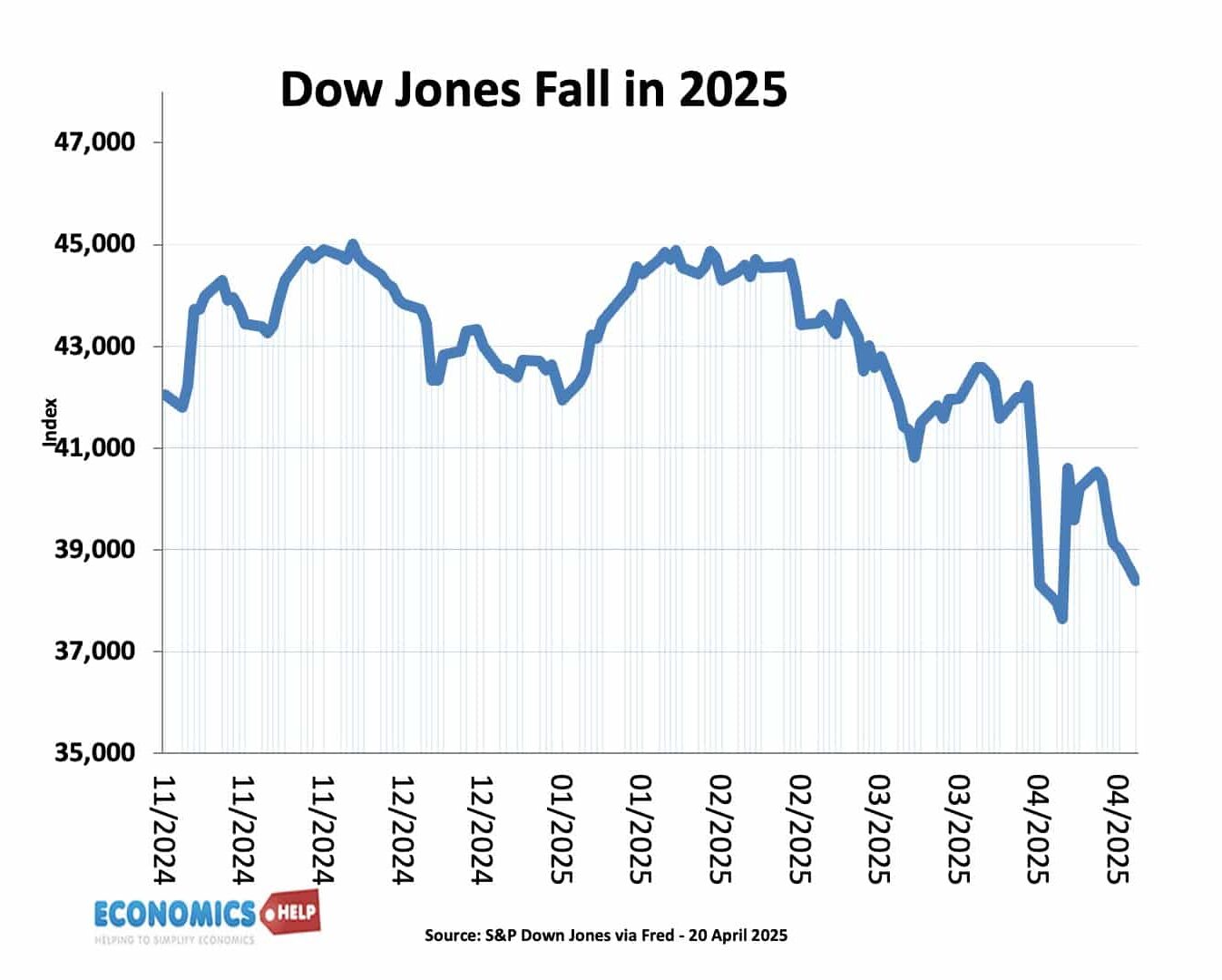
The trading session on June 11, 2025, has been defined by a sharp correction across major indices, leaving investors and analysts scrambling to unpack a complex web of macroeconomic data and shifting central bank expectations. As the opening bell rang this morning, the S&P 500, the Dow Jones Industrial Average, and the tech-heavy Nasdaq Composite all trended significantly lower, erasing gains from the previous weeks.
While the volatility may seem sudden, today’s market movement is the culmination of several underlying pressures that have been building throughout the second quarter of the year. From hotter-than-anticipated inflation data to a fundamental shift in how the market values the burgeoning artificial intelligence sector, several catalysts have converged to create a “perfect storm” of selling pressure.

The CPI Catalyst: Hotter-than-Expected Inflation Data
The primary driver of today’s downward trajectory was the 8:30 AM release of the Consumer Price Index (CPI) report for May. Markets had been pricing in a cooling trend, hoping for a “goldilocks” scenario that would allow the Federal Reserve to begin a meaningful cycle of rate cuts. Instead, the data revealed that inflation remains stubbornly high, particularly in the services sector and housing.
Breaking Down the Core CPI Numbers
The “Core” CPI, which excludes volatile food and energy prices, rose by 0.4% on a month-over-month basis, exceeding the consensus estimate of 0.2%. On an annual basis, core inflation sits at 3.9%, a figure that is uncomfortably far from the Federal Reserve’s 2% target. The persistence of high shelter costs and a sudden spike in transportation services have signaled to the market that the “last mile” of the inflation fight is proving to be the most difficult.
Investors react to these numbers not just because prices are higher, but because of what those prices dictate for future capital costs. When inflation stays high, the purchasing power of future corporate earnings is eroded, and the discount rates used to value stocks must be adjusted upward.
The Impact on Treasury Yields
Immediately following the CPI announcement, the 10-year Treasury yield surged, crossing a psychological threshold that hasn’t been seen since late 2024. In the world of finance, equity prices and bond yields often share an inverse relationship. As yields rise, bonds become a more attractive alternative to risky stocks. Furthermore, the rising cost of borrowing directly impacts corporate bottom lines by increasing the interest expense on debt, leading to the broad sell-off we are witnessing today.
Federal Reserve Speculation: Hawkish Pivot Fears
The inflation data has reignited fears of a “hawkish pivot” from the Federal Reserve. Heading into June 11, the prevailing narrative was that the Fed would maintain a neutral stance before potentially cutting rates in September. Today’s data has effectively shattered that timeline, with many institutional desks now pricing in the possibility of “higher for longer” interest rates well into 2026.
The “Higher for Longer” Narrative Returns
The term “higher for longer” has become a source of anxiety for the business finance sector. For the past decade, the global economy was fueled by cheap credit. As the Fed maintains its federal funds rate at these elevated levels to combat the inflation reported this morning, the “stress test” for mid-sized corporations becomes more acute. Companies that rely on rolling over short-term debt are now facing significantly higher interest obligations than they projected just six months ago.
Today’s market downturn reflects a repricing of this risk. Traders are no longer betting on a “soft landing” where inflation disappears without economic pain; instead, they are adjusting to a reality where the Fed may need to keep the brakes on the economy even at the risk of a technical recession.
Quantifying the Likelihood of a July Rate Hike
Prior to today, the probability of a rate hike at the July FOMC meeting was less than 5%. Following the June 11 data release, Fed Fund futures suggest that the probability has jumped to nearly 30%. While a hike is still not the base-case scenario, the mere fact that it is back on the table has caused institutional investors to reduce their exposure to equities. When the “risk-free rate” (Treasuries) rises, the premium required to hold stocks must also rise, leading to the price drops seen across the board.
The Tech Valuation Correction: AI Maturity Meets Margin Pressure
While the broader market is struggling with macro data, the technology sector—specifically companies involved in the Artificial Intelligence (AI) ecosystem—is facing a unique set of challenges. For much of 2023 and 2024, AI-related stocks were the primary engine of market growth. However, as we hit mid-2025, the market is shifting from “promise” to “proof.”

Earnings Guidance and the Shift to Profitability
Several major tech players issued mid-quarter guidance updates this week, noting that while revenue remains strong, the capital expenditures (CapEx) required to maintain AI infrastructure are cutting into profit margins. The massive investment in data centers and specialized hardware is beginning to weigh on free cash flow.
On June 11, the market is penalizing companies that cannot demonstrate a clear path to monetizing their AI investments. The “hype cycle” has reached a phase of maturity where investors are no longer satisfied with general growth projections; they are demanding to see how these tools translate into bottom-line earnings. This “valuation reality check” is particularly visible in the semiconductor and cloud computing sectors today.
Sector Rotation: Out of Growth, Into Defensives
We are also seeing a significant sector rotation. Growth stocks, which are highly sensitive to interest rates because their value is based on future cash flows, are being hit the hardest. Conversely, defensive sectors such as Utilities, Consumer Staples, and Healthcare are seeing relatively less damage. This suggests that “smart money” is moving toward capital preservation, bracing for a period of lower growth and higher volatility.
Geopolitical Volatility and Energy Market Disruptions
Beyond the domestic economic data, international factors are contributing to today’s market slide. Specifically, renewed tensions in key trade corridors have introduced fresh uncertainty into global supply chains, impacting the business finance outlook for multinational corporations.
Supply Chain Fragility in Global Markets
Reports emerged early this morning regarding new export restrictions on critical raw materials used in electronics and battery manufacturing. These restrictions threaten to reignite the supply-side inflation that plagued the economy in years past. For investors, this represents an “unknown-unknown”—a variable that is difficult to model but has massive implications for manufacturing costs and delivery timelines.
Oil Prices and the Ripple Effect on Transportation
Energy prices have also ticked upward today, with Brent Crude rising by over 2% in a single session. Higher energy costs act as a “tax” on both consumers and businesses. For consumers, it reduces discretionary spending; for businesses, it increases the cost of shipping and production. This inflationary pressure from the energy sector compounds the negative sentiment generated by the CPI report, making it difficult for the market to find a “floor” during today’s session.
Strategies for Investors: Navigating Volatility in a Shifting Landscape
When the stock market is down as significantly as it is on June 11, 2025, it is easy for individual investors to react emotionally. However, professional wealth management often dictates a more measured approach based on long-term financial goals rather than daily price action.
Portfolio Rebalancing for the Second Half of 2025
Today’s volatility serves as a reminder of the importance of portfolio rebalancing. Investors who were overweight in high-growth tech stocks have likely seen a disproportionate hit to their net worth today. Rebalancing into fixed-income instruments or value-oriented equities can help mitigate the impact of these sharp market corrections.
Furthermore, the rise in Treasury yields, while bad for stock prices, offers an opportunity for income-seeking investors. Short-term T-bills and high-yield savings accounts are now offering returns that were unimaginable a few years ago, providing a “safe haven” while the equity market searches for stability.
Finding Value in Market Pullbacks
For the long-term investor, days like today can represent a “sale” on high-quality assets. While the macro environment is challenging, companies with strong balance sheets, low debt-to-equity ratios, and consistent cash flow often emerge from these periods in a stronger competitive position.
Identifying companies that have been “sold off” in sympathy with the broader market, despite having robust fundamentals, is a classic value-investing strategy. As the dust settles on the June 11 session, the focus will shift from the shock of the CPI data to the search for resilient businesses that can thrive even in a high-interest-rate environment.
Conclusion: The Road Ahead
The market downturn on June 11, 2025, is a stark reminder that the transition to a post-easy-money economy is still ongoing. The combination of stubborn inflation, a hawkish Federal Reserve, and a recalibration of tech valuations has forced a significant repricing of assets.
While the red numbers on the screen are daunting, they reflect a market that is actively processing new, difficult information. For the remainder of the month, all eyes will be on the Federal Reserve’s official commentary and subsequent labor market data to see if today’s sell-off was a temporary glitch or the start of a broader structural shift in the 2025 financial landscape.
aViewFromTheCave is a participant in the Amazon Services LLC Associates Program, an affiliate advertising program designed to provide a means for sites to earn advertising fees by advertising and linking to Amazon.com. Amazon, the Amazon logo, AmazonSupply, and the AmazonSupply logo are trademarks of Amazon.com, Inc. or its affiliates. As an Amazon Associate we earn affiliate commissions from qualifying purchases.