
The financial trajectory of the modern world changed forever on December 12, 1980. This was the day Apple Computer Inc. launched its Initial Public Offering (IPO), transitioning from a high-growth garage startup to a publicly traded entity on the NASDAQ. While today we view Apple as a global behemoth with a market capitalization that rivals the GDP of entire nations, its entrance into the public markets was a calculated risk that fundamentally reshaped how Wall Street valued technology companies.
For investors and financial historians, the story of Apple’s IPO is more than just a date on a calendar. It is a masterclass in venture capital, market timing, and the compounding power of long-term equity. Understanding the financial mechanics of that 1980 debut provides essential insights into the evolution of the tech sector and the wealth-building potential of early-stage investing.

The Financial Landscape of 1980 and Apple’s Market Debut
To understand the magnitude of Apple going public in 1980, one must first look at the economic environment of the era. The late 1970s and early 1980s were characterized by high inflation and a stagnant stock market. Most investors were focused on traditional industries—oil, automotive, and manufacturing. The concept of “personal computing” was still largely seen as a hobbyist’s niche rather than a viable consumer market.
The December 12, 1980 Milestone
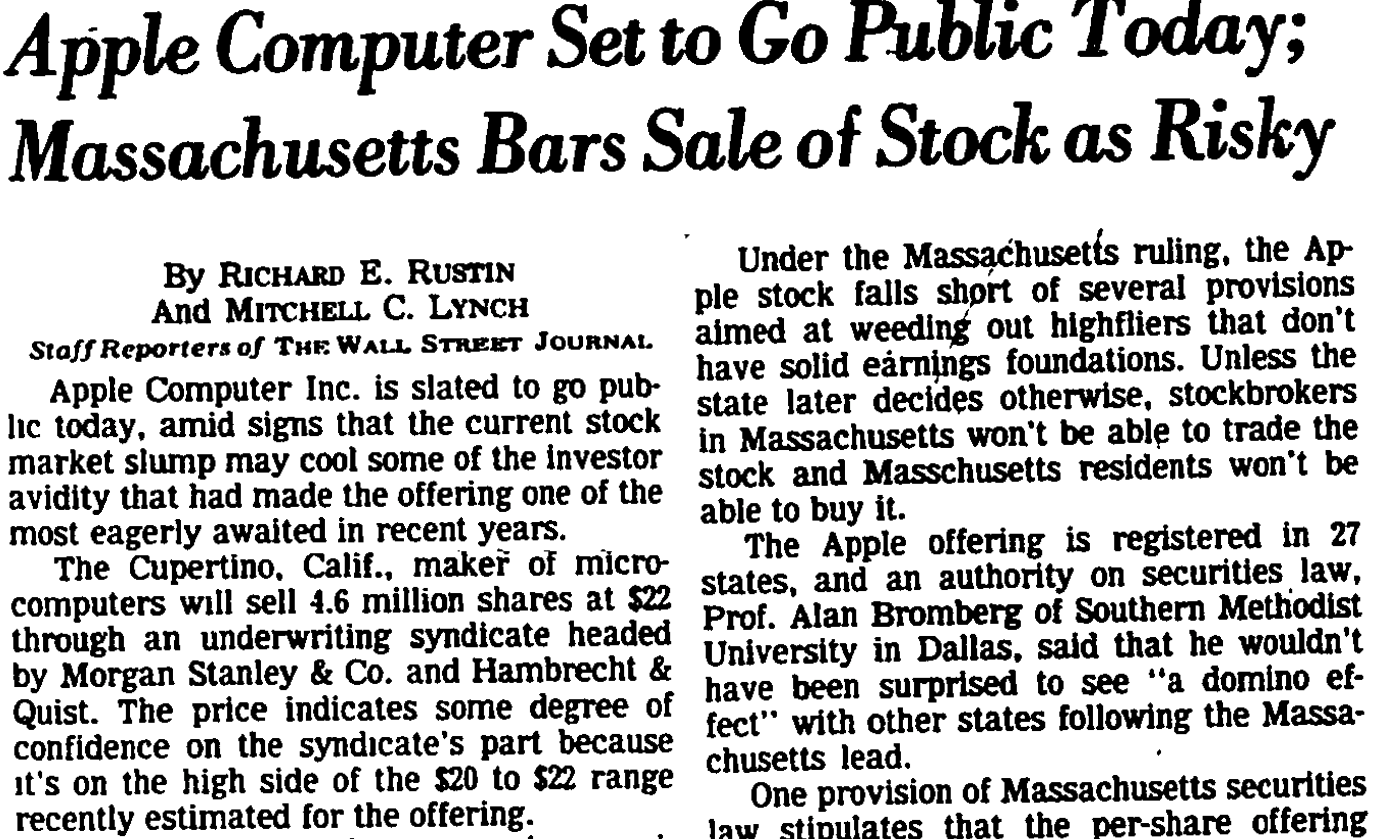
When Apple filed for its IPO, the anticipation was palpable, despite the broader economic headwinds. Trading under the symbol AAPL, the company offered 4.6 million shares at $22 per share. Within minutes, the shares were sold out. By the end of the first day of trading, the stock had risen to $29, giving the company a market valuation of roughly $1.77 billion.
This was the largest IPO since Ford Motor Company went public in 1956. The success of the listing was a signal to institutional investors that the “Silicon Valley” model was not just a fad, but a legitimate engine for capital appreciation. For the first time, Wall Street realized that intellectual property and software-hardware integration could command a premium valuation that traditional book value metrics could not fully explain.
IPO Valuation and Initial Pricing
The pricing of Apple at $22 per share was a strategic decision led by lead underwriters Morgan Stanley and Hambrecht & Quist. At the time, Apple was generating significant revenue from the Apple II, but the company’s long-term profitability was still a subject of debate among conservative analysts.
The valuation was based on a combination of rapid revenue growth and the visionary leadership of Steve Jobs and Steve Wozniak. From a money management perspective, the IPO was a liquidity event that allowed early venture capital backers, such as Mike Markkula and Arthur Rock, to see massive returns on their initial “angel” investments. It set a precedent for the venture-to-public-market pipeline that remains the gold standard for tech financing today.
From Garage to Wall Street: The Mechanics of the Listing
Apple’s journey to the NASDAQ was paved with sophisticated financial maneuvering that many modern startups still emulate. Before the public could buy a single share, the company had to navigate the rigorous process of SEC filings, roadshows, and the assembly of an underwriting syndicate that could handle the volatility of a tech debut.
The Role of Underwriters and Institutional Support
A successful IPO requires the backing of major financial institutions to guarantee the sale of shares. Apple’s choice of Morgan Stanley provided the institutional gravitas necessary to attract “old money” investors. Simultaneously, Hambrecht & Quist brought specialized knowledge of the burgeoning tech sector.
The underwriting process involved a nationwide roadshow where Steve Jobs and the executive team had to convince skeptical fund managers that a computer belonged in every home. This “selling” of the future was as much a marketing feat as it was a financial one. The result was an oversubscribed offering, which is the ideal scenario for any company looking to maximize its initial capital raise.
Creating Millionaires Overnight
One of the most legendary aspects of Apple’s 1980 IPO is the sheer volume of wealth it created for employees and early stakeholders. It is estimated that the IPO created more than 300 millionaires instantly—more than any company in history up to that point.
Because many early employees had been compensated with stock options rather than high salaries, the public listing transformed their “paper wealth” into liquid assets. This phenomenon essentially birthed the modern culture of equity-based compensation in technology companies. For those who held onto their shares, that initial $22 investment would eventually grow into a fortune that defied all historical averages of the S&P 500.
Analyzing the Returns: A Masterclass in Long-Term Investing
For a retail investor, looking back at the 1980 IPO is often an exercise in “what if.” However, the true lesson lies in understanding the math behind Apple’s growth, specifically regarding stock splits and the internal reinvestment of capital.
Stock Splits and Share Dilution
A common misconception among novice investors is that if they had bought one share at $22 in 1980, they would only have one share today. In reality, Apple has undergone five stock splits since its IPO. These splits are designed to keep the share price accessible to retail investors while increasing the total number of shares held by existing owners.
The split history of Apple is as follows:
-
June 16, 1987: 2-for-1 split
-
June 21, 2000: 2-for-1 split
-
February 28, 2005: 2-for-1 split
-
June 9, 2014: 7-for-1 split
-
August 31, 2020: 4-for-1 split
If an investor had purchased 100 shares at the IPO for $2,200, those shares would have multiplied significantly through these splits. Today, that original 100-share block would represent 22,400 shares. When you factor in the current market price of Apple, the return on investment (ROI) is not just thousands of percent—it is tens of thousands of percent. This illustrates the fundamental principle of “buy and hold” in a high-quality growth company.
The Power of Compound Growth
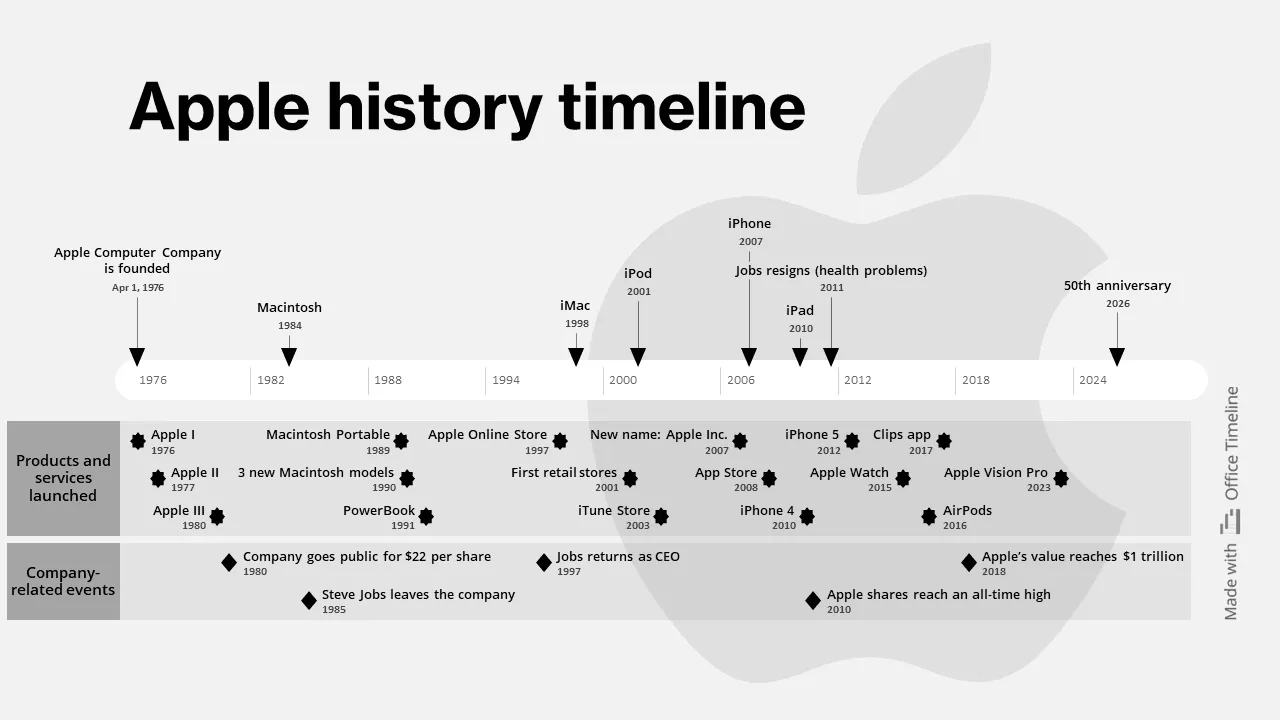
The financial success of Apple wasn’t a straight line. Following the IPO, the company faced significant turmoil in the 1990s, nearly reaching the point of bankruptcy in 1997. From a business finance perspective, this era is fascinating because it showcases the importance of capital preservation and strategic pivots.
The return of Steve Jobs and the subsequent $150 million investment from Microsoft (which was a strategic move to settle litigation and ensure market competition) saved the company. For investors who held through the 1997 lows, the subsequent decade provided a masterclass in compound growth as the company launched the iPod, iPhone, and iPad. The Apple story teaches us that the year a company goes public is merely the starting gun; the real wealth is built during the periods of maximum uncertainty.
The Influence of Apple’s Financial Journey on Modern Tech Valuations
Apple’s IPO did more than just make people rich; it changed the way the financial world calculates the value of innovation. Before Apple, companies were largely valued on physical assets—factories, land, and inventory. Apple helped shift the focus toward intangible assets like brand equity, ecosystem lock-in, and recurring service revenue.
Setting the Standard for Venture Capital Exits
The 1980 IPO proved that venture capital could deliver “home run” returns. This encouraged a massive influx of capital into Silicon Valley throughout the 80s and 90s. Investors realized that if they could identify the “next Apple” in its garage phase, the public markets would eventually provide a multi-billion dollar exit. This cycle of private funding leading to public offerings remains the primary engine of the global tech economy.
Cash Reserves and Dividend Policy
In its later years, Apple has transitioned from a pure growth stock to a “cash cow” that is a staple of many retirement portfolios. The company holds one of the largest cash piles of any corporation in history. Its approach to business finance—balancing aggressive R&D with massive share buybacks and dividends—has become a blueprint for other tech giants like Microsoft, Alphabet, and Meta.
By returning billions of dollars to shareholders through buybacks, Apple effectively increases the value of remaining shares, a strategy that has been highly praised by legendary investors like Warren Buffett. Buffett’s Berkshire Hathaway eventually became one of Apple’s largest shareholders, signaling that the company had moved from a speculative tech play to a foundational “value” investment.
Conclusion: The Legacy of December 12, 1980
What year did Apple go public? While 1980 is the factual answer, the financial implications of that year continue to resonate in every corner of the market today. The IPO was the moment that the world’s most successful consumer product ecosystem was introduced to the rigors of quarterly earnings and public scrutiny.
For the modern investor, Apple’s journey from its $22-per-share debut to its status as a multi-trillion dollar pillar of the global economy serves as a powerful reminder of the importance of identifying companies with strong competitive advantages (moats) and holding them through market cycles. Whether you are looking at personal finance, corporate strategy, or market history, Apple’s IPO remains the gold standard for how a company can use the public markets to fuel a revolution.
aViewFromTheCave is a participant in the Amazon Services LLC Associates Program, an affiliate advertising program designed to provide a means for sites to earn advertising fees by advertising and linking to Amazon.com. Amazon, the Amazon logo, AmazonSupply, and the AmazonSupply logo are trademarks of Amazon.com, Inc. or its affiliates. As an Amazon Associate we earn affiliate commissions from qualifying purchases.