
Apple Inc. (AAPL) has long been considered the gold standard of the public markets. As a cornerstone of the S&P 500 and a dominant force in the “Magnificent Seven,” its movements often dictate the pulse of the broader technology sector and the portfolios of millions of retail and institutional investors. However, even a company with a multi-trillion-dollar market capitalization is not immune to the gravity of macroeconomic shifts, regulatory scrutiny, and changing investor sentiment. When Apple stock experiences a downward move, it is rarely the result of a single event; rather, it is usually a confluence of fundamental, technical, and psychological factors.
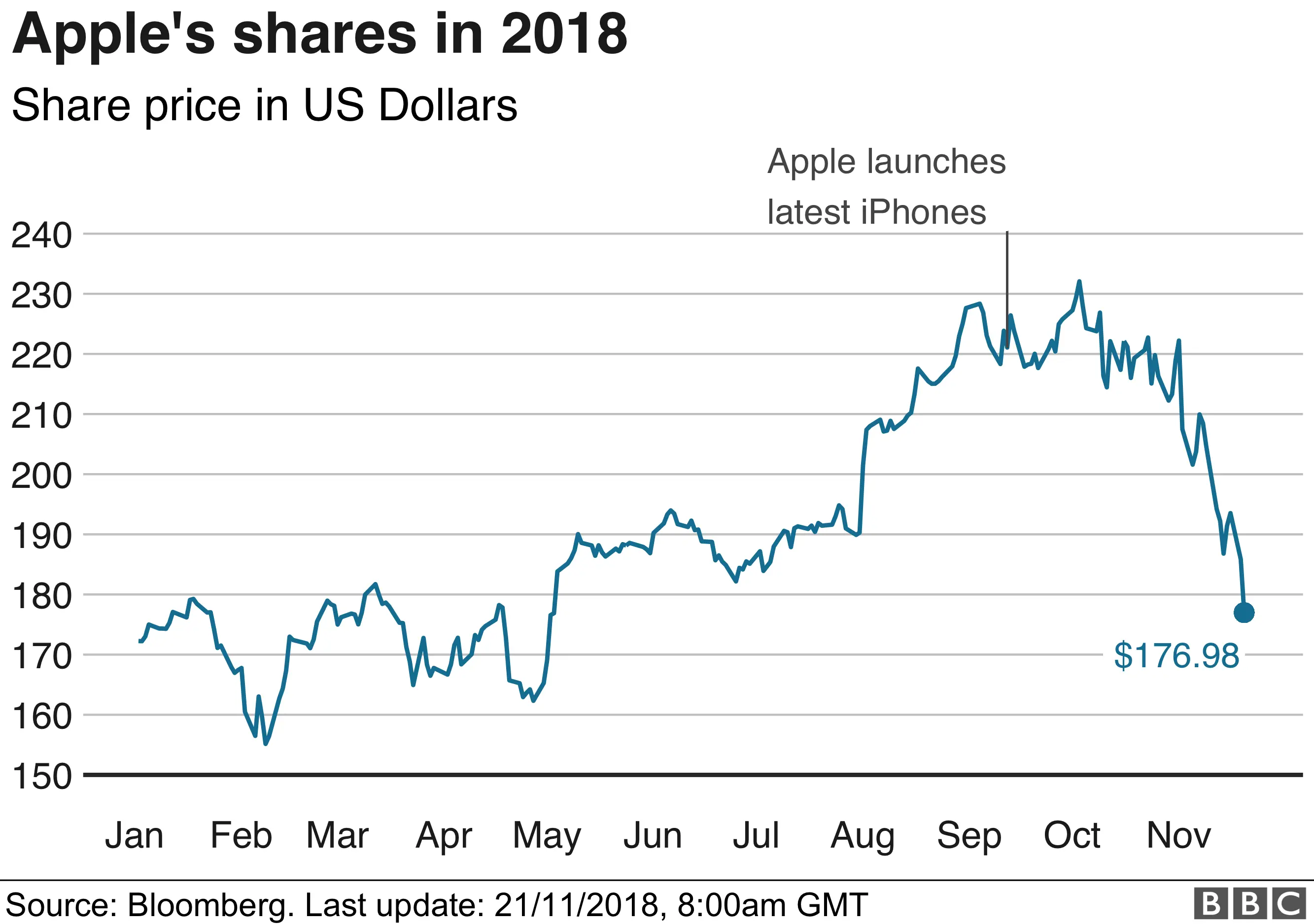
To understand why Apple stock fell today, one must look past the daily price action and examine the structural shifts occurring in the global economy, the specific headwinds facing the consumer electronics sector, and the evolving narrative regarding Apple’s valuation in a high-interest-rate environment.
The Macroeconomic Backdrop: Interest Rates and the Cost of Capital
The most pervasive influence on any equity, including Apple, is the broader macroeconomic environment. For much of the last decade, Apple thrived in a “Goldilocks” economy—low inflation, low interest rates, and steady growth. As the Federal Reserve shifted its stance to combat persistent inflation, the fundamental math of stock valuation changed.
The Impact of Treasury Yields
Equity valuations, particularly for growth-oriented tech giants, are highly sensitive to the risk-free rate of return, typically represented by the 10-year Treasury yield. When yields rise, the “discount rate” used by analysts to calculate the present value of future cash flows also rises. Because a significant portion of Apple’s value is derived from the massive cash flows it is expected to generate five, ten, or twenty years from now, a higher discount rate mathematically lowers the stock’s current price. If today’s market saw a spike in yields due to hawkish Fed commentary or stronger-than-expected economic data, Apple’s stock would naturally face downward pressure.
Consumer Spending and Inflationary Pressure
Apple is a premium consumer brand. While its products are often viewed as “staples” by its loyal user base, they remain discretionary high-ticket items. Persistent inflation erodes the purchasing power of the middle class, potentially lengthening the “replacement cycle”—the amount of time a user waits before upgrading to the latest iPhone or MacBook. If investors receive data suggesting that consumer confidence is waning or that household debt is reaching a breaking point, the market immediately prices in a slowdown for Apple’s hardware sales.
Fundamental Headwinds: iPhone Saturation and the China Factor
Beyond the macro picture, Apple faces company-specific challenges that weigh on its stock price. As the world’s most valuable hardware company, Apple’s revenue remains heavily dependent on the iPhone. Any perceived threat to this product line sends shockwaves through the ticker.
The Slowdown in the Chinese Market
Greater China represents roughly 20% of Apple’s total revenue and a significant portion of its growth potential. Recently, this region has become a source of volatility. The resurgence of domestic competitors, such as Huawei, coupled with reports of government-related restrictions on foreign technology, has led to fears of a permanent loss in market share. If today’s sell-off was triggered by localized data showing a dip in Chinese smartphone shipments or a shift in geopolitical tensions, investors likely reacted by de-risking their positions in AAPL.
The Law of Large Numbers
Apple is a victim of its own success. When a company reaches a $3 trillion valuation, incremental growth becomes increasingly difficult to achieve. To move the needle for a company of this size, Apple needs to find “the next big thing” that can generate tens of billions in revenue. While the Services division continues to grow at a healthy clip, the hardware side of the business is maturing. Investors who are looking for hyper-growth often rotate out of Apple and into emerging AI plays or smaller, more agile tech companies when they perceive that Apple’s peak growth era is behind it.
The Regulatory Landscape: Antitrust and Ecosystem Risks
For years, Apple’s “walled garden”—its tightly integrated ecosystem of hardware, software, and services—was its greatest competitive moat. Today, that moat is under siege by regulators across the globe. Regulatory news is a frequent catalyst for sudden drops in Apple’s stock price.
The European Union and the Digital Markets Act (DMA)
The European Commission has been aggressive in its pursuit of “gatekeeper” companies. Requirements to allow third-party app stores, alternative payment systems, and interoperability threaten Apple’s high-margin Services revenue. The 15% to 30% “Apple Tax” collected from the App Store is one of the most profitable streams in financial history. If new legal filings or regulatory rulings suggest that this stream is at risk of being dismantled, the stock’s premium valuation begins to compress.
U.S. Department of Justice Scrutiny
In the United States, the Department of Justice has intensified its focus on Apple’s ecosystem practices, investigating whether the company uses its market power to stifle competition in the smartphone and messaging markets. Legal battles of this magnitude are not only expensive but also create a cloud of uncertainty. Markets hate uncertainty; institutional investors may sell off Apple shares today to avoid the long-term risk of a court-mandated restructuring or a significant change to the company’s business model.
Valuation Concerns and Investor Sentiment
Stock prices are a reflection of what investors are willing to pay for a piece of a company’s future. For Apple, the price-to-earnings (P/E) ratio has expanded significantly over the last five years. While Apple used to trade at a P/E in the mid-teens, it has recently traded in the high 20s or low 30s.
The “AI Gap” Perception
In the current market cycle, Artificial Intelligence (AI) is the primary driver of capital flows. Companies like Nvidia and Microsoft have been rewarded with massive valuation spikes for their clear leadership in generative AI. For much of the year, there has been a narrative that Apple is “behind” in the AI race. Although the company has integrated machine learning into its products for years and recently announced “Apple Intelligence,” any delay in these features or a perception that they aren’t as transformative as competitors’ offerings can lead to a “rotation.” Investors may sell Apple to fund purchases in other tech stocks that are perceived to have a more immediate AI-driven upside.
Profit Taking and Technical Resistance
From a technical analysis perspective, Apple often hits “resistance levels”—price points where selling pressure outweighs buying pressure. If the stock has had a strong run leading up to today, institutional traders may be “trimming” their positions to lock in profits, especially ahead of earnings reports or major economic announcements. Furthermore, if Apple falls below a key moving average (like the 50-day or 200-day moving average), it can trigger automated sell orders from algorithmic trading platforms, accelerating the downward trend.
The Services Pivot: Is it Enough?
The “Money” story of Apple is increasingly a story of two companies: a hardware company with stagnating growth and a software/services company with explosive margins. Apple’s Services division includes the App Store, Apple Music, iCloud, Apple Pay, and Apple TV+.
Investors monitor Services revenue with extreme precision. If today’s decline is linked to reports of slowing growth in recurring subscriptions or a dip in digital advertising spend, it hits the “bull case” for Apple. The reason Apple commands a premium valuation despite slow hardware growth is the belief that its 2 billion active devices will provide a consistent, high-margin stream of service revenue. If that thesis is questioned—either by economic data or a shift in consumer behavior—the stock’s floor drops.
Conclusion: A Multi-Faceted Decline
When Apple stock falls today, it is rarely due to a singular failure. It is often a combination of a high valuation meeting a high-interest-rate environment, coupled with specific anxieties regarding the Chinese market and the looming shadow of global regulatory intervention.
For the long-term investor, these dips are often viewed through the lens of “valuation resets.” However, for the broader market, a decline in Apple is a signal of caution. As the largest component of many index funds, Apple’s health is inextricably linked to the health of the financial system. Whether today’s drop is a momentary blip or the start of a deeper correction depends on the company’s ability to navigate the complex intersection of global politics, innovative AI integration, and the preservation of its lucrative service-based margins. In the world of high-stakes investing, Apple remains a fortress, but even a fortress faces wear and tear when the economic climate shifts.
aViewFromTheCave is a participant in the Amazon Services LLC Associates Program, an affiliate advertising program designed to provide a means for sites to earn advertising fees by advertising and linking to Amazon.com. Amazon, the Amazon logo, AmazonSupply, and the AmazonSupply logo are trademarks of Amazon.com, Inc. or its affiliates. As an Amazon Associate we earn affiliate commissions from qualifying purchases.