
In the landscape of personal finance and credit card optimization, few questions are as foundational as “how many points per dollar am I earning?” For many high-earning professionals and frequent travelers, the answer is found within the American Express Membership Rewards (MR) program. Unlike fixed-value cashback systems, the American Express ecosystem operates on a flexible currency model where the earning rate per dollar spent can vary significantly based on the specific card held, the category of the purchase, and the strategic alignment of one’s spending habits.
Understanding the earn rate is not merely a matter of checking a statement; it is a strategic exercise in maximizing the Return on Spend (ROS). While the baseline for most transactions is a standard one point per dollar, the true value of the American Express system lies in its tiered multipliers, which can elevate that rate to five points per dollar or higher. To master this ecosystem, one must dissect the mechanics of these multipliers across the most popular card products and understand how to weave them into a cohesive financial strategy.
The Tiered Earning Structure: From Base Rates to High Multipliers
The American Express Membership Rewards program is designed to reward specific consumer behaviors. At its core, the program offers a floor—the minimum you should expect to earn—and a ceiling, which represents the peak earning potential for specialized purchases.
The Standard One-Point-Per-Dollar Floor
The vast majority of American Express cards come with a “non-category” earn rate of one point per dollar spent. This applies to any purchase that does not fall into a predefined bonus category, such as utility bills, medical expenses, or general retail shopping. While 1x might seem underwhelming in a market where 2% cashback cards are common, it is important to remember that Membership Rewards points are often valued at significantly more than one cent each when transferred to travel partners. However, from a pure accumulation standpoint, relying on the 1x rate is the least efficient way to grow a point balance.
The 4x and 5x Powerhouse Categories
To truly accelerate point accumulation, users must leverage the “powerhouse” categories. The American Express Gold Card, for instance, is widely considered the premier “lifestyle” card because it offers 4x points per dollar at restaurants (including takeout and delivery in the U.S.) and 4x points at U.S. supermarkets (on up to $25,000 in purchases per calendar year).
Conversely, The Platinum Card® from American Express is the “travel” powerhouse, offering 5x points per dollar on flights booked directly with airlines or through American Express Travel (on up to $500,000 per calendar year). It also offers 5x points on prepaid hotels booked through the Amex portal. When you compare a 5x earn rate to a 1x rate, the difference in velocity is staggering: a $5,000 international flight earns 25,000 points on a Platinum card versus only 5,000 on a standard card.
Middle-Tier Multipliers: The 3x “Sweet Spot”
The American Express® Green Card serves as a versatile middle ground, offering 3x points per dollar on travel, transit, and dining. This is particularly valuable because its definition of “travel” is much broader than the Platinum Card’s, encompassing trains, taxicabs, rideshares, and even parking. For the urban professional who relies on Uber and commuter rails, the 3x earn rate represents a significant upgrade over the standard 1x baseline.
Maximizing the “Amex Trifecta” Strategy
For those serious about optimizing their points per dollar, carrying a single card is rarely the most efficient path. Instead, many financial enthusiasts utilize what is known as the “Amex Trifecta.” This strategy involves carrying three specific cards to ensure that almost every dollar spent earns more than the 1x baseline.
The Synergy of Combined Earning
The Trifecta typically consists of the Platinum Card, the Gold Card, and the Blue Business® Plus Credit Card. By using these three in tandem, a user can segment their spending with surgical precision:
-
The Platinum Card is used exclusively for flights and large travel bookings to secure the 5x rate.
-
The Gold Card is used for all food-related expenses—groceries and dining—to secure the 4x rate.
-
The Blue Business Plus Card serves as the “catch-all.” This card is unique because it offers 2x points per dollar on all eligible purchases, up to $50,000 per year, regardless of the category.
By implementing this three-card strategy, the user effectively raises their “floor” from 1 point per dollar to 2 points per dollar. Any transaction that doesn’t qualify for the 4x or 5x bonuses is put on the Blue Business Plus, doubling the earn rate on every miscellaneous expense from insurance premiums to office supplies.
Strategic Allocation and Spend Caps
When managing multiple cards, it is vital to monitor spending caps. For example, the Gold Card’s 4x multiplier on U.S. supermarkets is capped at $25,000 annually. Once that limit is reached, the earn rate drops to 1x. A savvy cardholder will track this limit and, should they exceed it, pivot their grocery spending to another tool or accept that their ROS has diminished. Understanding these caps is essential to maintaining a high average points-per-dollar ratio across your entire financial profile.
Business vs. Personal Earning Potential
For business owners, the “points per dollar” equation becomes even more lucrative. The American Express® Business Gold Card offers 4x points on the two categories where your business spends the most each billing cycle (from a list of six, including transit, U.S. media providers, and U.S. gas stations), up to $150,000 in combined purchases annually. This automated “top two” system ensures that your highest expenses are always earning at a premium rate without requiring manual tracking.
Beyond the Transaction: Amex Offers and Referral Bonuses
While the primary way to earn points is through spending, American Express provides several “boosters” that can drastically increase the effective points per dollar earned on specific transactions. These are often overlooked but represent a significant portion of a high-value user’s annual point haul.
The Impact of Amex Offers
Inside the American Express mobile app or web portal, users can “activate” Amex Offers. These are merchant-specific promotions that either provide a statement credit or bonus points for shopping at a particular retailer. For example, an offer might provide +5 bonus points per dollar at a specific technology retailer. If added to a card that already earns 1x, the user is now earning 6 points per dollar for that specific purchase. These offers change frequently and can span categories from insurance and cell phone bills to luxury retail and travel.
Referral Bonuses and the “Effective Earn Rate”
One of the most potent ways to inflate your point balance without increasing your spending is through the referral program. American Express often provides cardholders with referral links that offer 10,000 to 30,000 points per successful referral. Some promotional referral offers also include an “earn boost” for the referrer, such as an extra 5 points per dollar on all purchases for three months. In these scenarios, a standard 1x purchase becomes a 6x purchase, and a 4x grocery purchase becomes a 9x purchase. When these bonuses are active, the points-per-dollar ratio becomes some of the highest available in the entire credit card industry.
Retention and Welcome Bonuses
Though technically not a “per dollar” earn rate on ongoing spend, welcome bonuses and retention offers significantly skew the math in the first year of card ownership. If a user spends $6,000 to earn a 100,000-point bonus, they have effectively earned over 16 points per dollar on that initial spend. Similarly, retention offers—points given to a cardholder to discourage them from canceling a card—act as a “rebate” that lowers the effective cost of the annual fee and boosts the overall value proposition of the card.
The Valuation Equation: What is a Point Really Worth?
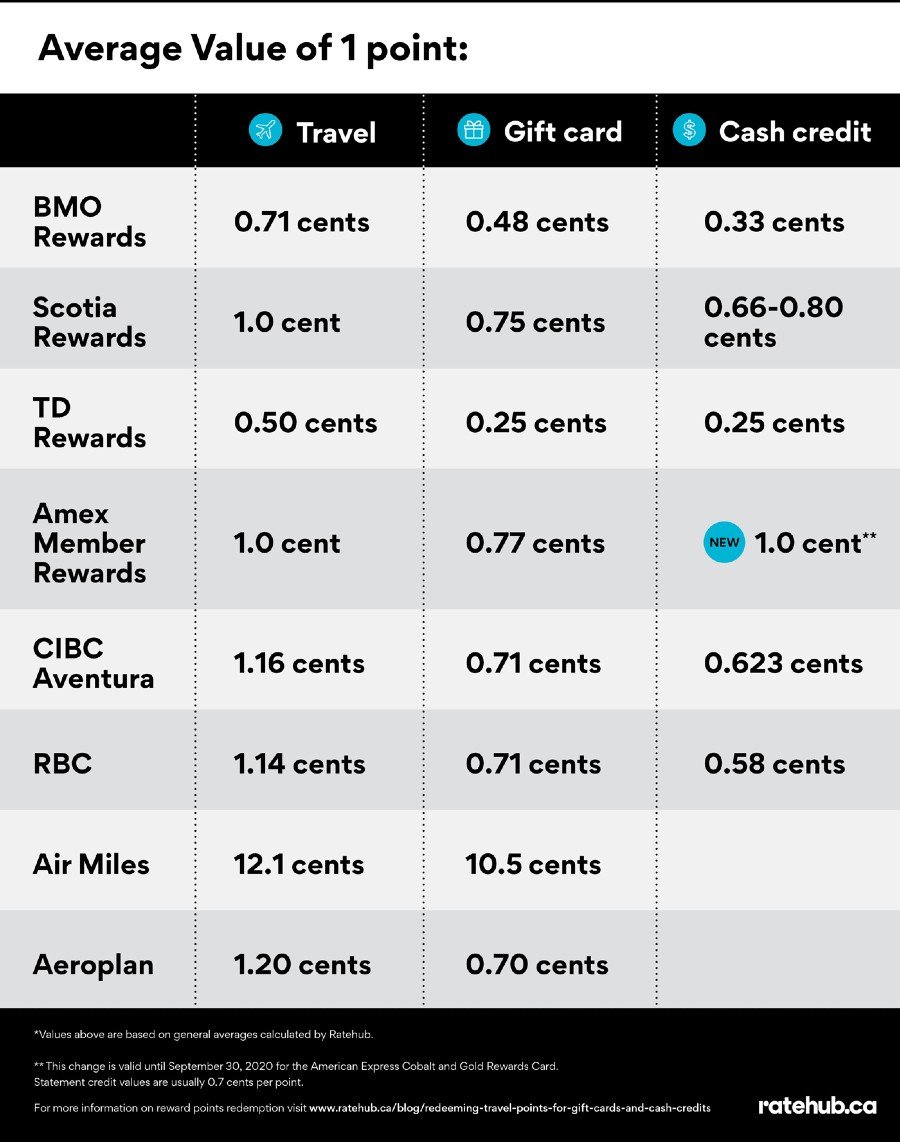
To answer “how many points per dollar” effectively, one must also understand the “cents per point” (CPP) valuation. Earning five points per dollar is only advantageous if those points hold substantial value. In the American Express ecosystem, the value of a point is highly variable based on how it is redeemed.
Transfer Partners: The Key to Outsized Value
The primary reason financial experts covet Membership Rewards points is the ability to transfer them to over 20 airline and hotel partners, such as Delta SkyMiles, British Airways Executive Club, and Hilton Honors. When points are transferred to an airline partner and used to book business or first-class international travel, it is not uncommon to achieve valuations of 2.0 to 4.0 cents per point.
At a 2.0 CPP valuation, a card earning 5x on flights (the Platinum Card) is effectively providing a 10% return on spend. Even the baseline 1x earn rate becomes a 2% return. This is why the “points per dollar” conversation is so much more impactful than a simple cashback conversation; the ceiling for value is significantly higher.
Poor Redemption Choices to Avoid
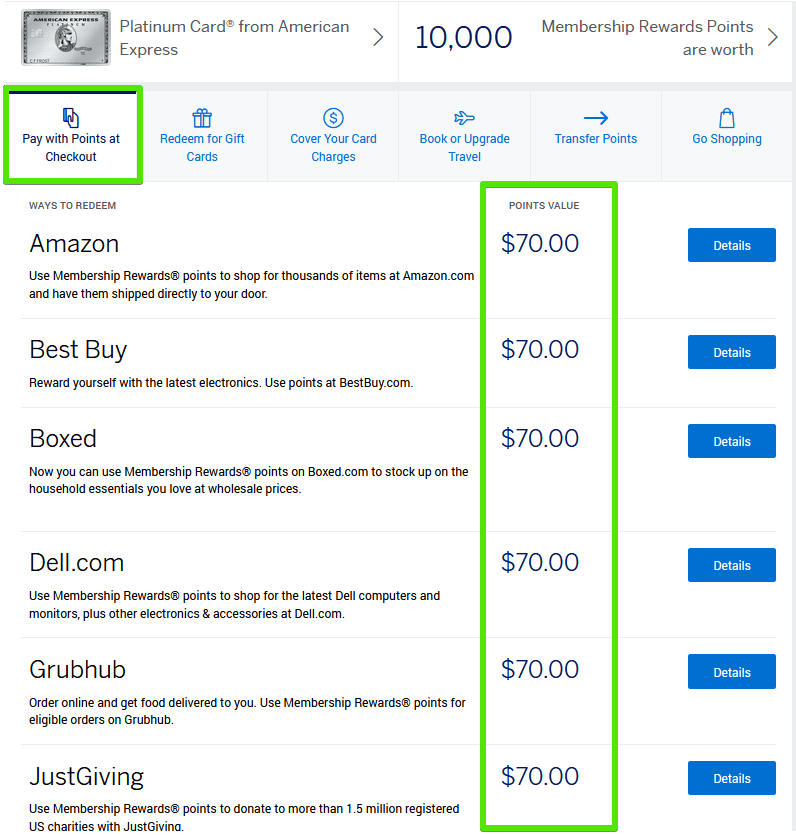
Conversely, if a user redeems their points for “Pay with Points” at checkout on Amazon or for statement credits, the value typically drops to 0.6 to 0.7 cents per point. In this scenario, even a 4x multiplier on the Gold Card results in a mere 2.8% return on spend—hardly better than a basic cashback card. To truly maximize the “points per dollar” earned, the redemption strategy must be as disciplined as the earning strategy.
The 1:1 Transfer Ratio
Most American Express transfer partners maintain a 1:1 ratio, meaning 1,000 Amex points become 1,000 airline miles. Occasionally, Amex runs transfer bonuses (e.g., a 30% bonus when transferring to Virgin Atlantic). During these windows, the “points per dollar” you earned months ago suddenly increases in value retroactively. A 5x earn rate effectively becomes a 6.5x earn rate once that transfer bonus is applied, demonstrating the dynamic nature of the Membership Rewards currency.
Conclusion: Engineering Your Return on Spend
The question of “how many points per dollar” American Express offers is not answered by a single digit. It is a spectrum ranging from 1x to over 10x when factoring in welcome bonuses, Amex Offers, and referral boosts. For the casual user, the answer is likely a blend of 1x and 4x. For the strategic optimizer, it is a choreographed dance between the Platinum, Gold, and Blue Business Plus cards, ensuring that no dollar ever earns less than 2x and high-velocity categories always hit 4x or 5x.
By viewing these points not as a static reward but as a financial asset with a fluctuating value, cardholders can engineer a return on spend that far exceeds traditional banking products. The key lies in understanding the rules of each card, staying disciplined with category spend, and always aiming for high-value redemptions through transfer partners. In the world of American Express, your points per dollar are limited only by your understanding of the ecosystem.
aViewFromTheCave is a participant in the Amazon Services LLC Associates Program, an affiliate advertising program designed to provide a means for sites to earn advertising fees by advertising and linking to Amazon.com. Amazon, the Amazon logo, AmazonSupply, and the AmazonSupply logo are trademarks of Amazon.com, Inc. or its affiliates. As an Amazon Associate we earn affiliate commissions from qualifying purchases.