
In the interconnected world we inhabit, the seamless flow of information is the bedrock of modern life. From streaming your favorite shows to conducting video conferences across continents, our digital existence relies on invisible waves carrying vast amounts of data. At the heart of this invisible ballet lies a fundamental concept: the carrier signal. While the term might sound technical, understanding what a carrier signal is and how it works is crucial for anyone interested in the underlying mechanisms of communication technology, even if you’re more focused on the broader trends in tech, the strategic nuances of branding, or the intricate world of finance. This article will demystify the carrier signal, exploring its role in technology and touching upon its relevance across different domains.

The Invisible Wave: Understanding the Carrier Signal
At its core, a carrier signal is a high-frequency electromagnetic wave that acts as a medium for transmitting information. Think of it as an empty highway, specifically designed to be traveled upon by data. This signal, on its own, carries no meaningful information. Its primary purpose is to be modulated, meaning its characteristics are altered to encode the data we want to send.
Imagine you want to send a message across a large distance. You could shout, but your voice would dissipate quickly. Instead, you could use a megaphone to amplify your voice – the megaphone acts like a carrier, making your message travel further. In the digital realm, the carrier signal is our highly sophisticated digital megaphone.
How it Works: Modulation and Demodulation
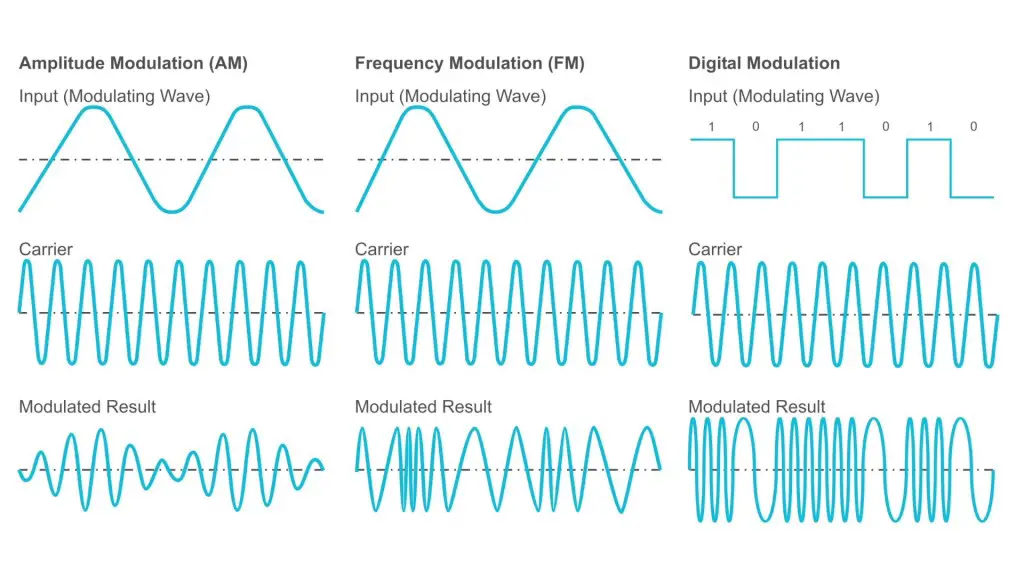
The magic happens through a process called modulation. This is where the information signal (the message you want to send, like your voice, a video stream, or a website request) is superimposed onto the carrier signal. There are several ways this can be done:
- Amplitude Modulation (AM): The amplitude (strength or height) of the carrier wave is varied in accordance with the information signal. This is like varying the volume of your voice through the megaphone.
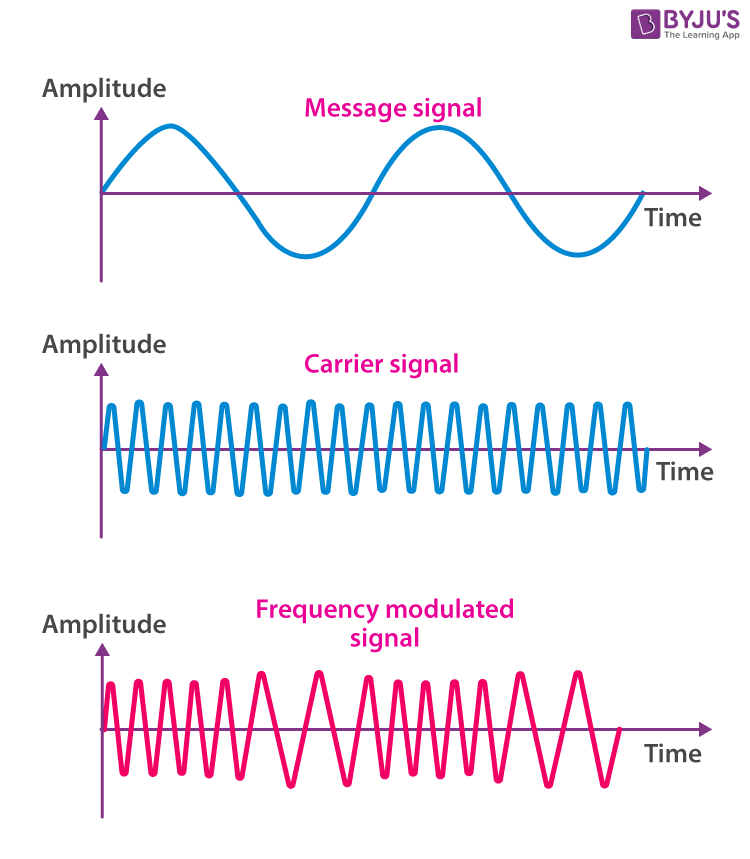
- Frequency Modulation (FM): The frequency (how often the wave cycles) of the carrier wave is varied in accordance with the information signal. This is akin to changing the pitch of your voice.
- Phase Modulation (PM): The phase (the starting point or timing of the wave cycle) is varied. This is a more complex manipulation, often used in digital communication.
- Quadrature Amplitude Modulation (QAM): This is a combination of AM and PM, allowing for more data to be encoded on a single carrier wave. It’s commonly used in Wi-Fi and cable modems.
Once the information is encoded onto the carrier signal, it is transmitted through a medium, typically air (for wireless communication) or cables (for wired communication). At the receiving end, a process called demodulation takes place. This is the reverse of modulation, where the receiver extracts the original information signal from the carrier wave. It’s like having a sensitive ear that can distinguish your voice from the megaphone’s amplification.
Why Use a Carrier Signal?
You might wonder why we need this intermediary step. Why can’t we just transmit the raw data directly? The answer lies in the nature of information and the efficiency of transmission.
- Overcoming Limitations of Raw Data: Most information signals, like audio or video, exist at relatively low frequencies. Transmitting these low-frequency signals directly over long distances is highly inefficient. They would require enormous antennas, and their power would dissipate quickly. Carrier signals, being high-frequency, can travel much further and with less loss.
- Multiplexing and Frequency Division: Carrier signals are fundamental to multiplexing, the technique of transmitting multiple signals simultaneously over a single communication channel. By assigning different carrier frequencies to different information signals, we can ensure they don’t interfere with each other. This is like assigning different radio stations their own unique frequencies, allowing you to tune into one without hearing others. This concept, known as Frequency Division Multiplexing (FDM), is a cornerstone of modern telecommunications.
- Efficient Antenna Design: High-frequency carrier waves require much smaller antennas compared to the wavelengths of raw data signals. This makes wireless devices practical and portable.
- Bandwidth Allocation: Regulatory bodies often allocate specific frequency bands for different types of communication (e.g., radio, television, mobile phones, Wi-Fi). Carrier signals operate within these allocated bands, ensuring orderly use of the electromagnetic spectrum.
Carrier Signals in the Digital Ecosystem
The concept of the carrier signal is ubiquitous in our digital lives, underpinning a vast array of technologies.
Wireless Communication: The Backbone of Mobility
This is perhaps where the carrier signal is most evident. Wi-Fi, cellular networks (2G, 3G, 4G, 5G), Bluetooth, and satellite communication all rely heavily on carrier signals.
- Wi-Fi: Your router broadcasts a Wi-Fi signal using carrier waves. When your laptop or smartphone connects, it modulates its data onto a specific carrier frequency and transmits it back, and it receives data modulated onto carrier waves from the router. Different Wi-Fi standards utilize different frequency bands (e.g., 2.4 GHz and 5 GHz) and modulation techniques to achieve varying speeds and ranges.
- Cellular Networks: When you make a call or use data on your phone, your device communicates with a cell tower using carrier signals. The tower then relays this information, often using a different set of carrier frequencies, to other cell towers or the internet. The progression from 2G to 5G represents advancements in modulation techniques and the ability to carry more data on these carrier signals.
- Bluetooth: For short-range communication, like connecting your headphones to your phone, Bluetooth also employs carrier signals operating in the 2.4 GHz band.
Wired Communication: Still a Vital Link
While often associated with wireless, carrier signals are also crucial in wired communication systems.
- Cable Modems: The internet connection coming into your home via coaxial cable utilizes carrier signals. Your cable modem modulates data onto these signals, which are then transmitted through the cable network.
- Fiber Optics: While fiber optic cables transmit data using light pulses, these pulses are often modulated onto specific wavelengths of light, acting as carrier waves for the digital information.
Beyond the Obvious: Broader Technological Applications
The principles of carrier signals extend beyond direct communication.
- Radio and Television Broadcasting: Traditional AM and FM radio, as well as television broadcasts, are prime examples of carrier signal technology. A radio station transmits its audio program modulated onto a specific carrier frequency.
- Radar Systems: Radar uses carrier waves to detect objects. The reflected waves are analyzed to determine distance, speed, and direction.
- Medical Imaging (e.g., MRI): Magnetic Resonance Imaging (MRI) uses radiofrequency carrier waves to interact with the body’s tissues and generate detailed images.
Carrier Signals and Their Relevance to Tech, Brand, and Money
While the technical definition of a carrier signal is rooted in physics and engineering, the underlying principles have ripple effects that touch upon the broader topics of technology trends, brand strategy, and financial considerations.
Tech: The Foundation for Innovation
Understanding carrier signals is fundamental to grasping the evolution of communication technology.
- Advancements in Bandwidth and Speed: Innovations in modulation techniques and the utilization of new frequency bands directly translate to faster internet speeds, more responsive applications, and the feasibility of data-intensive technologies like the Internet of Things (IoT) and augmented reality (AR). When we talk about 5G or Wi-Fi 6, we are implicitly discussing more sophisticated ways of manipulating carrier signals to carry more data more efficiently.
- Device Design and Miniaturization: The efficiency of carrier signals enables the miniaturization of communication hardware, leading to smaller, more portable gadgets. The evolution of antenna technology, directly linked to carrier frequencies, is a constant area of innovation.
- Digital Security: The way information is encoded onto carrier signals is crucial for digital security. Encryption techniques are applied to the information signal before modulation, ensuring that even if the carrier signal is intercepted, the data remains unintelligible without the decryption key. Understanding the transmission medium and the carrier signal’s properties can inform strategies for secure communication.
Brand: Communication and Reach
For brands, the effective use of communication channels directly impacts their reach and engagement.
- Brand Messaging and Transmission: Just as carrier signals transmit data, brands transmit their messages. The channels they choose (digital advertising, social media, traditional media) are all underpinned by carrier signal technology. The efficiency and reach of these channels are directly influenced by the underlying communication infrastructure. A brand aiming for global reach needs to leverage technologies that utilize robust carrier signal systems.
- User Experience: A poor connection, which can be a result of interference with carrier signals or inefficient modulation, directly impacts user experience. For brands that rely on digital platforms for customer interaction, a seamless and fast experience is paramount. The reliability of Wi-Fi or cellular signals, powered by carrier waves, becomes a brand differentiator.
- Emerging Technologies and Brand Positioning: Brands that embrace new communication technologies, enabled by advancements in carrier signal utilization (like faster 5G networks), can position themselves as innovative and forward-thinking. This can attract a tech-savvy audience and enhance their brand image.
Money: Infrastructure, Investment, and Opportunity
The financial implications of carrier signals are far-reaching, impacting infrastructure development, investment, and new income streams.
- Infrastructure Investment: The development and maintenance of cellular towers, fiber optic networks, and satellite constellations require colossal investment. Telecommunications companies, which are major players in the financial markets, invest billions in building and upgrading this infrastructure, which is all about enabling efficient carrier signal transmission.
- Cost of Services: The efficiency of carrier signal technology directly influences the cost of internet services, mobile plans, and data. As technologies improve and become more efficient, we often see a trend towards more affordable services, or conversely, the ability to offer higher-value services at existing price points.
- New Business Models and Online Income: The proliferation of high-speed internet, made possible by advanced carrier signal technology, has opened up numerous avenues for online income. E-commerce, remote work, digital content creation, and online education all rely on the ability to transmit and receive data reliably and quickly. The very existence of these “online income” opportunities is a direct consequence of the sophisticated communication infrastructure built upon carrier signals.
- Financial Markets and Technology Stocks: Companies involved in developing the hardware, software, and infrastructure for carrier signal transmission (e.g., chip manufacturers, telecommunications equipment providers, mobile carriers) are significant components of the financial markets. Investing in these companies means investing in the future of communication.
Conclusion: The Unseen Enabler
The carrier signal, though often unseen and unremarked upon, is an indispensable component of our modern world. It’s the silent workhorse that enables the instant communication, access to information, and connectivity that we often take for granted. From the intricate dance of radio waves connecting our smartphones to the robust infrastructure powering our internet, the carrier signal is the fundamental medium.
Understanding its principles helps us appreciate the ingenuity behind technological advancements, informs our choices as consumers and businesses, and highlights the significant financial investments and opportunities inherent in the infrastructure of communication. As technology continues to evolve, the carrier signal, in its ever more sophisticated forms, will remain at the forefront, shaping how we interact with the world and each other. It’s a testament to human innovation, an invisible thread weaving together the fabric of our digital, branded, and financially interconnected lives.
aViewFromTheCave is a participant in the Amazon Services LLC Associates Program, an affiliate advertising program designed to provide a means for sites to earn advertising fees by advertising and linking to Amazon.com. Amazon, the Amazon logo, AmazonSupply, and the AmazonSupply logo are trademarks of Amazon.com, Inc. or its affiliates. As an Amazon Associate we earn affiliate commissions from qualifying purchases.