
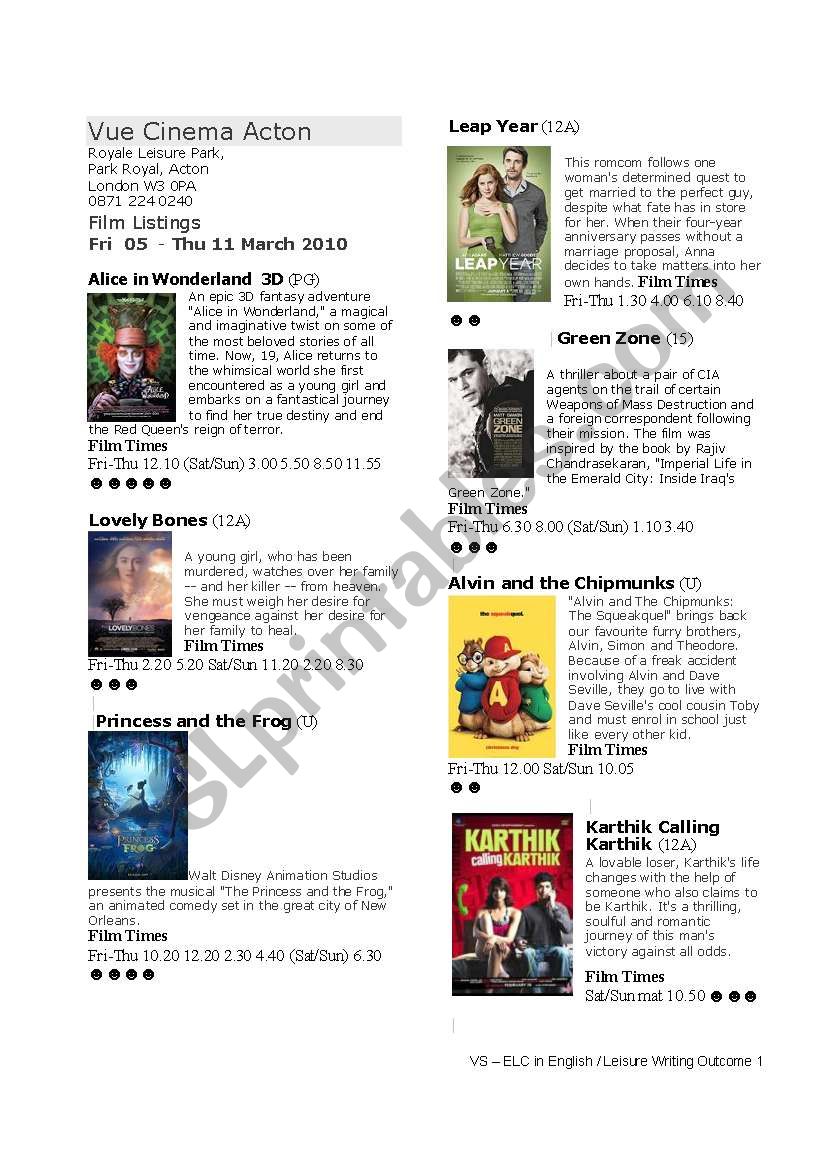
The phrase “what’s on at the cinema” has traditionally referred to the roster of films playing at a local multiplex. However, in the contemporary landscape of digital entertainment, the answer to that question is far more complex than a simple list of titles. Today, what is “on” at the cinema is a sophisticated stack of cutting-edge hardware, complex software ecosystems, and transformative artificial intelligence. The theater experience is no longer just about the projection of light through celluloid; it is a high-tech frontier where visual computing, object-based audio, and digital security converge to create immersive environments that home setups cannot yet replicate.
The Visual Vanguard: Laser Projection and the Death of the Lamp
For decades, the standard for cinema projection was the Xenon bulb. While effective, these lamps suffered from rapid brightness decay and a limited color gamut. The most significant technological shift currently “on” in modern theaters is the transition to RGB Pure Laser projection. Unlike traditional systems, laser projectors utilize individual red, green, and blue lasers to create light, offering a level of brightness and color purity that was previously impossible.
RGB Pure Laser and Expanded Color Gamuts
The implementation of RGB laser technology allows theaters to achieve the Rec. 2020 color space, a standard that covers more than 75% of the colors the human eye can perceive. In comparison, traditional digital cinema (P3 color space) only covers about 45%. This tech trend ensures that the “what’s on” is visually closer to the director’s original vision, with deeper blacks and vibrant highlights that do not wash out the mid-tones. Furthermore, laser systems maintain their brightness for tens of thousands of hours, ensuring consistent quality for every screening.
High Frame Rate (HFR) and 4K Resolution
While 4K resolution has become a standard in consumer electronics, the cinema iteration involves significantly higher bitrates and specialized JPEG 2000 decoding. We are also seeing a resurgence in High Frame Rate (HFR) technology. Traditionally, films are projected at 24 frames per second (fps). However, new tech releases are pushing toward 48, 60, or even 120 fps. This technology reduces motion blur and “judder,” particularly in 3D environments, providing a hyper-realistic clarity that is essential for action-heavy spectacles.
The Rise of Direct-View LED Screens
Perhaps the most disruptive visual tech currently entering the cinema space is the move away from projection entirely. Direct-view LED screens, such as the Samsung Onyx or LG Miraclass, function like giant versions of high-end consumer televisions. By eliminating the projector, these screens offer “true black”—since an LED pixel can be turned completely off—and a peak brightness that projectors cannot match. This eliminates the need for a darkened “projection box” and allows for more flexible architectural designs in modern tech-forward cinemas.
Sonic Architectures: Object-Based Audio and Immersive Soundscapes
In the modern cinema, sound is no longer confined to “channels” (the traditional 5.1 or 7.1 surround sound). The prevailing technology now is object-based audio, which treats every sound—a footstep, a gunshot, a whisper—as an individual digital object within a three-dimensional space.
Dolby Atmos and Spatial Computing
Dolby Atmos remains the gold standard in cinema audio tech. Instead of sending a sound to a specific speaker (e.g., “Left Rear”), the software assigns the sound a set of coordinates in the room. The theater’s processor then calculates which speakers to fire to make that sound appear to originate from a precise point in space. This involves an array of overhead speakers and side-wall drivers that create a “hemisphere” of sound. This level of spatial computing allows for a degree of immersion that renders the physical walls of the theater invisible to the audience’s ears.
Acoustic Transparency and Digital Signal Processing (DSP)
To achieve this immersive effect, the technology behind the screen itself has evolved. “What’s on” in a modern theater is often an acoustically transparent screen. These screens are precision-perforated with thousands of tiny holes that allow sound from the massive “behind-the-screen” speaker arrays to pass through without high-frequency attenuation. Sophisticated Digital Signal Processing (DSP) is then used to calibrate the room, correcting for echoes and standing waves to ensure that every seat in the house receives the same high-fidelity audio experience.
AI and Post-Production: How Algorithms Shape the Screen

The content “on” at the cinema is increasingly a product of advanced software and artificial intelligence. AI tools are no longer relegated to niche experimental films; they are now foundational to the blockbuster pipeline, affecting everything from visual effects to localization.
Generative AI and Visual Effects (VFX)
Artificial intelligence is revolutionizing the VFX industry by automating labor-intensive tasks such as rotoscoping (isolating subjects from backgrounds) and “de-aging” actors. Software like DaVinci Resolve and specialized AI plugins allow editors to manipulate lighting and textures in ways that previously took months of manual labor. Furthermore, AI-driven rendering engines can now simulate realistic water, fire, and smoke physics with a fraction of the computing power previously required, allowing for more complex visual storytelling.
Virtual Production and “The Volume”
A major tech trend currently influencing what we see on screen is Virtual Production. Utilizing the Unreal Engine—the same software that powers high-end video games—filmmakers can project photorealistic 3D environments onto massive LED walls (often called “The Volume”) behind the actors. This technology allows for real-time in-camera visual effects. It eliminates the “green screen” spill and provides natural reflections on actors’ costumes and eyes, bridging the gap between digital software and physical cinematography.
Neural Dubbing and Localization
For international cinema, AI is being used to revolutionize dubbing. New software can analyze an actor’s performance and generate a “deepfake” of their lip movements to match a translated audio track. This ensures that the technical experience of watching a foreign film is seamless, removing the cognitive dissonance of mismatched audio and visuals.
The Infrastructure of the Modern Cinema: Software and Security
Beyond the screen and speakers, the cinema operates on a sophisticated digital backbone. The management of “what’s on” is a feat of network engineering and digital security.
The Digital Cinema Package (DCP) and Encryption
Films are no longer delivered on heavy reels of film. They arrive as a Digital Cinema Package (DCP), essentially a high-security hard drive or a massive encrypted cloud download. A single movie can be upwards of 500GB. To prevent piracy, these files are protected by a KDM (Key Delivery Message). This is a digital certificate that only allows the movie to be decrypted and played on a specific projector during a specific time window. This level of digital rights management (DRM) is the most robust in the entertainment industry.
Theater Management Systems (TMS)
The modern multiplex is controlled by a Theater Management System (TMS). This software acts as the “brain” of the cinema, automating the scheduling of films, the dimming of lights, the playback of trailers, and even the temperature of the room. A single technician can manage twenty screens from a tablet, monitoring the health of projector lasers and the status of audio processors in real-time. This automation ensures that the technical delivery of the “show” is flawless and repeatable.
Mobile Integration and the Internet of Things (IoT)
The consumer-facing side of cinema tech involves sophisticated apps and IoT integration. From mobile ticketing with NFC (Near Field Communication) to “smart” concession stands where orders are synchronized with the film’s start time via API calls, the friction of the cinema-going experience is being removed by software. Some high-end theaters are even experimenting with haptic seating—chairs that are synced to the film’s metadata to vibrate or move in coordination with the on-screen action, a trend known as 4DX technology.

The Future: Connectivity and the Cloud
The final piece of “what’s on” at the cinema is the move toward cloud-based distribution. We are seeing the rise of satellite and fiber-optic delivery systems that allow theaters to receive content in real-time, bypassing physical drives. This opens the door for live-streamed events—concerts, esports tournaments, and interactive Q&As—to be broadcast in 4K resolution to thousands of screens simultaneously.
As technology continues to advance, the “cinema” is evolving from a place that shows movies into a high-performance compute environment. Whether it is the precision of a 40,000-lumen laser projector, the complexity of a 128-channel Atmos mix, or the algorithmic power of AI-enhanced visuals, the modern cinema remains the pinnacle of consumer technology. What is “on” at the cinema is not just a story; it is a showcase of the most advanced digital tools currently available to humanity.
aViewFromTheCave is a participant in the Amazon Services LLC Associates Program, an affiliate advertising program designed to provide a means for sites to earn advertising fees by advertising and linking to Amazon.com. Amazon, the Amazon logo, AmazonSupply, and the AmazonSupply logo are trademarks of Amazon.com, Inc. or its affiliates. As an Amazon Associate we earn affiliate commissions from qualifying purchases.