
In the world of commercial real estate and entertainment, movie theaters represent a unique business model where the core product—the film—often serves as a loss leader, while the ancillary products—the concessions—drive the entirety of the profit margin. When a consumer asks, “how many calories are in a small movie theater popcorn,” they are usually seeking health data. However, from a financial perspective, that small bag of popcorn represents one of the most successful high-margin retail products in the history of modern commerce. Understanding the caloric density of a small popcorn is not just a lesson in nutrition; it is a case study in the pricing psychology, supply chain efficiency, and the survival economics of the cinema industry.

The Business Model of the Bucket: Why Concessions Matter More Than Film
To understand the financial weight of a small popcorn, one must first understand the revenue split of a modern multiplex. When you purchase a ticket to a summer blockbuster, approximately 50% to 70% of that ticket price goes directly back to the film studio. During the opening weekend of a major franchise release, the theater’s cut might be as low as 20%. This leaves the theater owner with very little capital to cover the massive overhead costs of high-end projection equipment, electricity, staffing, and real estate taxes.
The Profit Margin Powerhouse
This is where the small popcorn becomes the hero of the balance sheet. While a small popcorn typically contains between 400 and 600 calories—depending on the theater chain and the amount of coconut oil used in the popping process—its financial “weight” is far more significant. The raw materials required to produce that small bag (kernels, salt, oil, and the paper bag itself) generally cost the theater between $0.15 and $0.25. When that bag is sold for $6.50 or $8.00, the markup is often in excess of 800%.
From an investment standpoint, there are few legal retail products that offer such a consistent and high return on investment (ROI). For a theater to remain solvent, it must maximize the “per-capita” spend of every attendee. The small popcorn is the entry-level gateway to this high-margin ecosystem. Even if a consumer is calorie-conscious, the “small” size is marketed as the responsible choice, ensuring the theater captures at least some revenue from a segment of the audience that might otherwise skip the concession stand.
The “Small” Illusion in Pricing Strategy
In financial psychology, the “small” popcorn serves a dual purpose. While it provides the lowest calorie count on the menu, it is often priced specifically to drive consumers toward the medium or large sizes. This is a classic example of “Price Anchoring.” By setting the price of a small popcorn (e.g., 500 calories for $7.00) just slightly below the price of a large popcorn (e.g., 1,200 calories for $8.50), the theater makes the large size appear to be a superior “value.”
Most consumers will spend the extra $1.50 to double their portion size, even if they didn’t intend to eat that much. This increases the theater’s “Total Transaction Value” with negligible increases in COGS (Cost of Goods Sold). The calories are the variable that the consumer uses to justify the financial “deal,” but the theater wins regardless of which size is chosen because the profit floor is set by the price of the small.
Cost Analysis: Why a “Small” Popcorn is the Most Expensive Item on the Menu
When we analyze the “cost per calorie” or the “cost per ounce,” the small movie theater popcorn is frequently the most expensive item in the building. From a personal finance perspective, purchasing a small popcorn is an exercise in paying a premium for convenience and atmosphere rather than nutritional or volume value.
The Decoy Effect and Tiered Pricing
The theater industry has perfected the “Decoy Effect.” In many locations, the small popcorn exists solely to make the large popcorn look like a bargain. Financially savvy theaters know that a two-tier pricing system (Small vs. Large) often leads consumers to pick the cheaper option. However, by introducing a three-tier system (Small, Medium, Large), where the Small and Medium are priced closely together, the consumer’s brain focuses on the “value” of the Large.
The calorie count plays into this. A small popcorn might be perceived as “enough” for one person, but the pricing suggests that for a few cents more, you can have “too much.” Most consumers view “too much” as a safety net, leading to higher revenue for the theater. The calorie count, therefore, becomes a metric for consumer justification. If a small has 450 calories and a large has 1,100, the consumer feels they are getting “more life” or “more energy” for their dollar, ignoring the fact that they are paying a 1,000% markup on corn.
Raw Materials vs. Retail Price
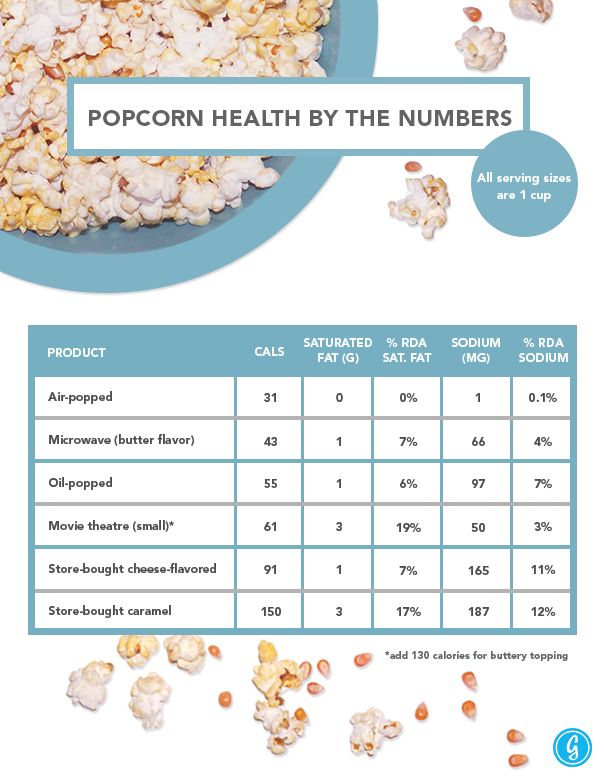
The divergence between the cost of the raw materials and the retail price of a small popcorn is a fascination for business analysts. Corn is a subsidized commodity in many regions, making the kernels incredibly cheap. The popping process utilizes high-heat kettles that are highly efficient. The “butter” flavoring is typically a non-dairy, soybean-oil-based product that is shelf-stable and inexpensive to purchase in bulk.
When you break down the $7.00 price tag of a 500-calorie small popcorn, you aren’t paying for the corn. You are paying for the 40-foot screen, the Dolby Atmos sound system, and the air conditioning. The small popcorn is essentially a “voluntary tax” that moviegoers pay to keep the lights on. Without these high-margin calories, ticket prices would likely need to double or triple to maintain the same level of theater infrastructure.
The Revenue Stream Behind the Butter: Financial Resilience of the Cinema Industry
The theater industry has faced numerous existential threats, from the rise of television in the 1950s to the explosion of streaming services like Netflix and Disney+ in the 2020s. Throughout these shifts, the financial reliance on popcorn has remained the one constant.
Countering Streaming Trends with High-Margin Sales
As theaters struggle to compete with the convenience of streaming, they have pivoted toward “Experience-Based Retail.” This includes luxury seating, IMAX upgrades, and expanded food menus. However, none of these new ventures match the efficiency of the small popcorn. A “Small” popcorn is easy to prepare, requires no specialized chef, has zero wait time, and leaves very little waste.
From a business finance perspective, the calorie-to-revenue ratio is optimized in the small popcorn. It provides the “classic” movie experience that streaming cannot replicate at home (due to the industrial-grade poppers and specific oil blends) while maintaining a labor cost that is significantly lower than that of made-to-order meals or alcohol service.
Loyalty Programs and Upselling
Modern theater chains use calorie and pricing data to fuel their loyalty programs. By offering a “Free Small Popcorn” as a reward for reaching a certain point threshold, theaters are giving away something that costs them $0.20 but has a “perceived value” of $7.00. Furthermore, the “Free Small Popcorn” reward is a brilliant financial hook; it gets the customer to the concession stand, where they are highly likely to purchase a high-margin soda to wash down the salty snack. The calories in the popcorn create a physiological demand for a drink, leading to a secondary high-margin sale.
Consumer Finance: Is the Small Popcorn a Worthy Investment?
For the individual consumer, the question of “how many calories” often leads to a broader question of “is it worth it?” This is a subjective financial decision, but it can be analyzed through the lens of value-based spending.
Value per Ounce Breakdown
If a consumer is looking for the best financial value, the small popcorn is almost always a poor choice compared to the large. On an ounce-per-dollar basis, the large size typically offers 40% to 60% more product for only 15% to 20% more cost. However, if the consumer is looking at “Value per Calorie,” the small popcorn might be the “cheaper” option in the long run. The hidden “cost” of the extra calories in a large popcorn includes potential health implications and the lethargy that follows overconsumption, which can impact productivity.

The Psychology of the Impulse Buy
The movie theater environment is designed to bypass the rational, financial centers of the brain and target the impulsive, sensory centers. The smell of the popcorn is vented through the lobby—a tactic known as “scent marketing.” By the time the customer reaches the counter, the decision-making process is no longer about the 500 calories or the $8.00; it is about fulfilling a sensory expectation.
In conclusion, while the answer to “how many calories are in a small movie theater popcorn” is usually between 400 and 600, the answer to “what is its value” is far more complex. To the theater, it is a 90% profit margin lifeline that subsidizes the cinematic arts. To the consumer, it is a high-priced luxury item that serves as the price of admission to a shared cultural experience. Understanding the economics behind those calories reveals the true machinery of the entertainment industry—a machine fueled by salt, oil, and the incredible profit potential of a few handfuls of expanded corn.
aViewFromTheCave is a participant in the Amazon Services LLC Associates Program, an affiliate advertising program designed to provide a means for sites to earn advertising fees by advertising and linking to Amazon.com. Amazon, the Amazon logo, AmazonSupply, and the AmazonSupply logo are trademarks of Amazon.com, Inc. or its affiliates. As an Amazon Associate we earn affiliate commissions from qualifying purchases.