
Navigating the automotive market requires more than just choosing the right make and model; it requires a sophisticated understanding of the financing landscape. For most consumers, the interest rate on a car loan is the single most significant factor determining the long-term affordability of a vehicle. As of the current fiscal year, average car loan interest rates have seen a period of notable volatility, influenced by broader macroeconomic trends, central bank policies, and the shifting risk appetites of major lenders.
To understand what the average car loan interest rate is today, one must look beyond a single percentage. Rates are highly segmented based on creditworthiness, the age of the vehicle, and the duration of the loan. On average, borrowers with excellent credit might see rates for new cars hovering between 5% and 6.5%, while those with lower credit scores or those purchasing used vehicles could face rates exceeding 18% to 20%. Understanding where you fit into this spectrum is the first step toward making a sound financial decision.
The Current Landscape: Averages by Category
The “average” rate is a composite figure that rarely applies to an individual’s specific circumstances. To gain a clearer picture, we must categorize rates by the type of vehicle and the borrower’s credit profile.
New vs. Used Vehicle Rates
Historically, new car loans carry lower interest rates than used car loans. This is primarily because new vehicles serve as better collateral; they are easier to value, have predictable depreciation curves, and are less likely to suffer mechanical failures that might lead to a borrower defaulting.
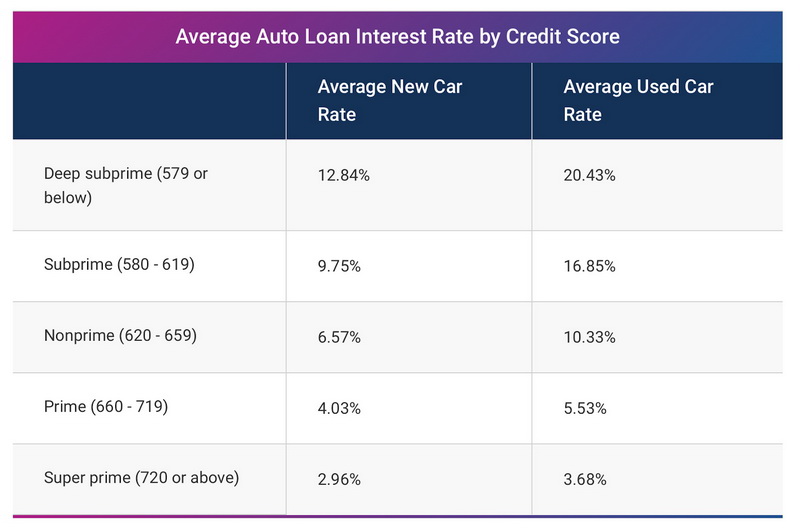
Currently, the national average for a new car loan typically falls between 6.8% and 7.5%. For used cars, the average is significantly higher, often landing between 11% and 12.5%. This discrepancy reflects the increased risk lenders take when financing an asset that has already undergone significant wear and tear.
The Credit Score Hierarchy
Lenders utilize credit tiers to determine risk-adjusted pricing. Your credit score is the primary lever that will move your interest rate up or down.
-
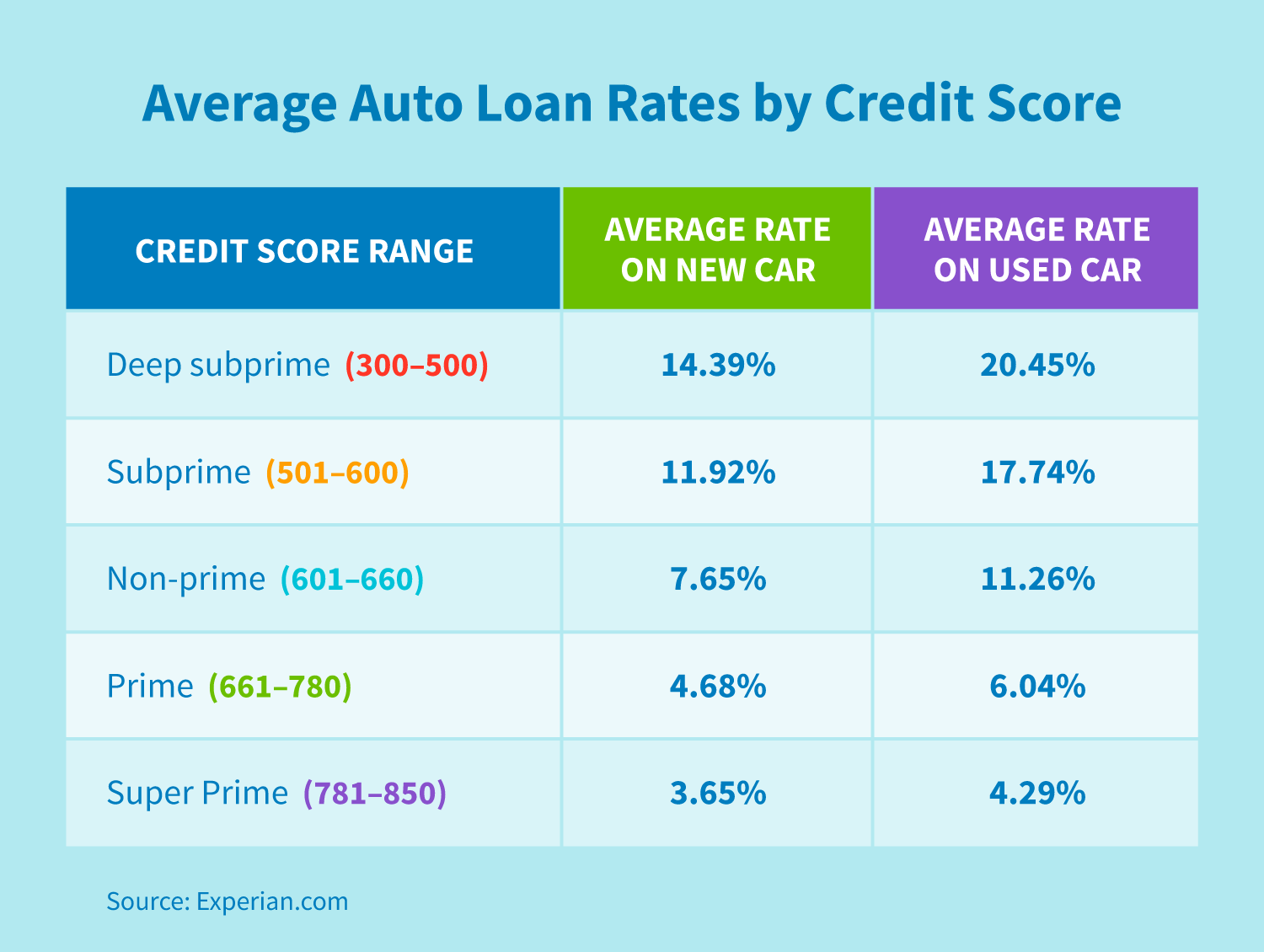
Superprime (781–850): These borrowers receive the most competitive rates. For a new car, a superprime borrower might secure a rate as low as 5.1%, while used car rates for this group hover around 7%.
-
Prime (661–780): This is where the majority of stable borrowers fall. New car rates average around 6.5%, with used car rates near 9%.
-
Nonprime (601–660): Rates begin to climb sharply here. Expect 9% to 10% for new vehicles and 13% to 15% for used ones.
-
Subprime (501–600): Borrowers in this tier are viewed as high-risk. New car rates can hit 12%, while used car rates often reach 18% or more.
-
Deep Subprime (300–500): Financing at this level is expensive. It is not uncommon to see new car rates at 14% and used car rates exceeding 21%.
Key Factors That Dictate Your Specific Interest Rate
While national averages provide a benchmark, your individual rate is a result of a complex calculation performed by the lender’s underwriting department. Understanding these variables allows you to manipulate certain factors in your favor before signing a contract.
Loan Term Length
The duration of your loan has a direct impact on the interest rate. In recent years, 72-month and 84-month loans have become increasingly common as consumers attempt to lower their monthly payments in the face of rising vehicle prices. However, longer terms represent higher risk for the lender. As the loan extends, the vehicle’s value often drops faster than the loan balance, creating “negative equity.” Consequently, a 72-month loan will almost always carry a higher interest rate than a 36-month or 48-month loan.
The Debt-to-Income (DTI) Ratio
Lenders don’t just look at your credit score; they look at your ability to repay. Your DTI ratio—the percentage of your gross monthly income that goes toward paying debts—tells the lender how much “breathing room” you have in your budget. If your DTI is high, a lender may increase your interest rate to compensate for the higher statistical probability of a missed payment, even if your credit score is respectable.
Down Payment and Loan-to-Value (LTV)
The “skin in the game” principle applies heavily to car loans. The Loan-to-Value ratio compares the amount you are borrowing to the actual value of the car. If you provide a substantial down payment (e.g., 20% or more), you lower the LTV. A lower LTV reduces the lender’s risk because, in the event of a repossession, they are more likely to recoup the remaining loan balance by selling the car. Lower risk for the lender almost always translates to a lower interest rate for the borrower.

Strategies to Secure a Rate Below the National Average
Securing a favorable interest rate is a proactive process. If you walk into a dealership without a plan, you are likely to be offered the “buy rate”—the rate the lender gives the dealer—plus a markup that the dealer keeps as profit.
The Power of Pre-Approval
Before visiting a dealership, shop for a loan at credit unions or online banks. Credit unions, being member-owned non-profits, frequently offer rates that are 1% to 2% lower than traditional commercial banks. Obtaining a pre-approval letter gives you a “ceiling” on your interest rate. If the dealership wants your financing business, they must beat the rate you already have in hand. This shifts the power dynamic from the seller to the buyer.
Timing the Market and Captive Finance
Manufacturers often have “captive” finance companies (e.g., Toyota Financial Services, Ford Credit). To move inventory, these companies may offer promotional rates like 0%, 0.9%, or 1.9% on specific models. These rates are usually reserved for superprime borrowers, but they represent the absolute lowest cost of capital available in the market. Keeping an eye on end-of-quarter or end-of-year sales events can yield rates significantly below the national average.
Improving Your Credit Profile
If you are not in an immediate rush to purchase, spending six months improving your credit score can save you thousands of dollars. Reducing credit card balances to lower your utilization ratio and ensuring there are no errors on your credit report are the most effective ways to jump into a higher credit tier, thereby qualifying for a lower interest rate bracket.
The Long-Term Financial Impact of Interest Rates
The difference between a 5% interest rate and a 10% interest rate may seem negligible when looking at a monthly payment, but the cumulative impact over the life of the loan is staggering. This is where personal finance strategy intersects with consumer behavior.
Total Cost of Ownership
Consider a $35,000 car loan with a 60-month term. At a 5% interest rate, the total interest paid over the life of the loan is approximately $4,630. If that rate increases to 10%, the total interest paid jumps to roughly $9,620. By accepting a higher interest rate, the borrower is essentially paying an extra $5,000 for the exact same asset—money that could have been directed toward retirement accounts, an emergency fund, or other wealth-building investments.
Opportunity Cost
In the world of personal finance, every dollar spent on interest is a dollar that isn’t earning interest elsewhere. If a borrower saves $100 a month by securing a lower interest rate and invests that $100 into a diversified index fund with an average annual return of 7%, that money could grow significantly over the next few decades. High-interest car loans are “wealth killers” because they consume disposable income that would otherwise be used for compounding assets.
The Macroeconomic Outlook: Why Rates Move
Interest rates on car loans do not exist in a vacuum; they are closely tied to the Federal Funds Rate set by the Federal Reserve. When the Fed raises rates to combat inflation, the cost of borrowing for banks increases. These banks then pass those costs on to consumers in the form of higher APRs (Annual Percentage Rates) on auto loans.
Inflation and the Used Car Market
The recent surge in car loan rates was also exacerbated by the unique conditions of the post-pandemic economy. A shortage of semiconductor chips led to a decrease in new car production, which drove buyers toward the used car market. This spiked used car prices to historic highs. As prices rose, loan amounts grew, and lenders increased rates to mitigate the risk of a potential “bubble” in used car valuations.
Looking Forward
As inflation stabilizes, financial analysts look for signals from the Federal Reserve regarding potential rate cuts. If the benchmark interest rate decreases, auto loan rates typically follow suit within a few months. However, the days of “free money” and ubiquitous 0% financing for everyone are likely behind us for the foreseeable future. Borrowers should prepare for a “higher-for-longer” environment, where meticulous financial planning and credit management are the only ways to ensure a competitive rate.
Ultimately, the average car loan interest rate is merely a starting point for your research. By understanding the tiers of credit, the mechanics of loan terms, and the importance of competitive shopping, you can navigate the financing process with the confidence of an informed investor, ensuring that your vehicle remains a tool for mobility rather than a burden on your financial future.
aViewFromTheCave is a participant in the Amazon Services LLC Associates Program, an affiliate advertising program designed to provide a means for sites to earn advertising fees by advertising and linking to Amazon.com. Amazon, the Amazon logo, AmazonSupply, and the AmazonSupply logo are trademarks of Amazon.com, Inc. or its affiliates. As an Amazon Associate we earn affiliate commissions from qualifying purchases.