
Purchasing a vehicle is one of the most significant financial commitments the average consumer will make. While the allure of the dealership showroom is powerful, the most critical decisions happen long before you test-drive a car. Financing is the engine that drives your purchase, and for many savvy borrowers, the traditional bank remains the gold standard for securing a loan. Financing a car through a bank—often referred to as direct lending—offers a level of transparency, control, and potential cost savings that dealership financing may lack. Understanding the nuances of this process is essential for protecting your net worth and ensuring your monthly cash flow remains healthy.
Understanding the Mechanics of Direct Lending
When you finance a car through a bank, you are engaging in direct lending. This means you are entering into a contract directly with a financial institution—be it a national retail bank, a local community bank, or a credit union—rather than allowing the dealership to act as a middleman. This distinction is foundational to personal finance because it shifts the power dynamic in favor of the consumer.
The Difference Between Direct and Indirect Financing
In the world of auto finance, there are two primary paths: direct and indirect. Indirect financing occurs when the dealership’s finance office collects your information and shops it around to a network of lenders. While convenient, this often includes a “markup.” The lender may offer an interest rate of 4%, but the dealer presents it to you at 6%, pocketing the difference as a commission.
Direct financing through a bank eliminates this markup. You work directly with the loan officer or an online portal, receiving the raw interest rate for which you qualify based on your creditworthiness. By securing your own financing, you enter the dealership as a “cash buyer.” You have a pre-approved amount, which allows you to focus the negotiation entirely on the price of the vehicle rather than the complexity of monthly payments.
Why Choose a Bank Over a Dealership?
The primary advantage of bank financing is the pre-existing relationship. If you have maintained a checking or savings account with an institution for years, they have a comprehensive view of your financial behavior. This can sometimes lead to preferential rates or simplified approval processes. Furthermore, banks are heavily regulated financial entities with clear disclosure requirements. Unlike some independent “buy-here-pay-here” lots or aggressive dealership finance offices, banks provide clear Truth in Lending Act (TILA) disclosures that break down the total cost of the loan over its entire lifespan.
Preparation: Assessing Your Financial Health
Securing a bank loan requires a proactive approach. Unlike dealership financing, which is often reactive and rushed during the sales process, bank financing demands that you audit your finances before you ever set foot on a lot.
Credit Scores and Their Impact on Interest Rates
Your credit score is the single most influential factor in determining your Annual Percentage Rate (RATE). Banks typically use FICO scores to categorize borrowers into tiers: Super Prime (780+), Prime (660-779), Non-Prime (600-659), and Subprime (below 600).
Before applying, it is vital to pull your credit report from the major bureaus (Equifax, Experian, and TransUnion). Look for inaccuracies or “zombie debt” that could be dragging your score down. A difference of even 50 points can translate into thousands of dollars in interest over a 60-month loan. If your score is on the cusp of a higher tier, it may be worth waiting a few months to pay down revolving credit card balances to boost your standing before applying for the auto loan.
Debt-to-Income Ratios and Affordability
Banks do not just look at your credit score; they look at your capacity to pay. The Debt-to-Income (DTI) ratio is a calculation of your monthly debt payments divided by your gross monthly income. Most conservative lenders prefer a DTI below 36%, though some will go higher.
When calculating how much car you can afford, follow the 20/4/10 rule: put down at least 20%, finance for no more than four years, and ensure that your total transportation costs (loan payment, insurance, and maintenance) do not exceed 10% of your take-home pay. A bank will provide a maximum loan amount, but just because a bank will lend you $50,000 does not mean your budget can comfortably support the associated monthly outflow.
Gathering Necessary Documentation
To streamline the application, you must act as your own bookkeeper. Banks will typically require:
-
Proof of Income: Recent pay stubs, W-2 forms, or tax returns if you are self-employed.
-
Proof of Residence: Utility bills or a lease agreement.
-
Identification: A valid driver’s license or passport.
-
Vehicle Information: If you have already identified a car, you will need the Vehicle Identification Number (VIN), mileage, and a buyer’s order. If you are seeking pre-approval, this can be finalized later.
The Step-by-Step Bank Loan Process
Once your finances are in order, the actual process of securing the loan involves a series of logical steps designed to maximize your leverage.

Researching and Comparing Rates
Do not assume your current bank offers the best deal. Financial markets are competitive, and different institutions have different “appetites” for auto loans at various times. Large national banks often have sophisticated online tools, but local credit unions frequently offer the lowest rates because they are member-owned cooperatives.
Spend a morning “rate shopping.” Since all credit inquiries for an auto loan within a 14-to-45-day window are typically treated as a single inquiry for credit scoring purposes, you can apply at multiple institutions without damaging your score significantly.
The Pre-Approval Phase
The most powerful tool in the car-buying process is the pre-approval letter. This is a document from the bank stating that they are willing to lend you a specific amount at a specific interest rate, valid for a set period (usually 30 to 60 days).
Having a pre-approval changes the psychology of the dealership visit. It signals to the salesperson that you are a serious, prepared buyer who does not need their financing. It sets a “ceiling” on the interest rate; if the dealer wants you to use their financing, they must beat the bank’s rate. This creates a competitive environment where lenders must bid for your business.
Finalizing the Loan and Vehicle Selection
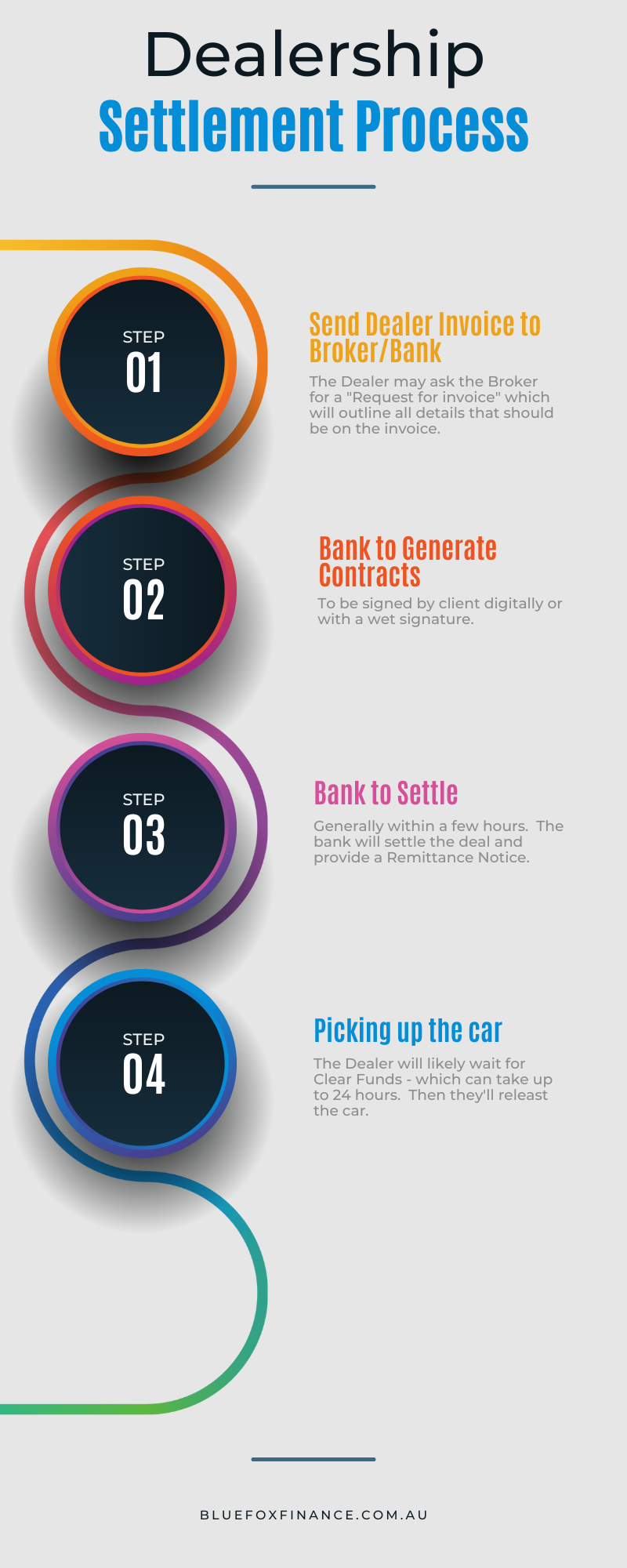
Once you have selected a vehicle and negotiated the purchase price, you provide the dealership’s information to your bank. The bank will then verify the vehicle’s value—ensuring they aren’t lending $25,000 for a car only worth $20,000 (the Loan-to-Value or LTV ratio).
The bank will then issue a draft or a direct wire transfer to the dealership. At this stage, the bank becomes the lienholder on the vehicle’s title. This means they have a legal claim to the property until the debt is fully satisfied. You will receive a repayment schedule, and it is at this point that your journey as a borrower officially begins.
Managing Your Auto Loan for Long-Term Success
Securing the loan is only the beginning. Proper management of that debt is what ensures long-term financial stability and protects your credit profile.
Understanding Amortization and Interest
Most bank auto loans use “simple interest” amortization. This means interest is calculated daily based on the remaining principal balance. In the early stages of the loan, a larger portion of your payment goes toward interest. As the principal drops, more of your payment is applied to the balance.
Understanding this allows you to see the value of making extra payments. Even an additional $50 per month applied directly to the principal can shave months off the loan term and save hundreds in interest. Always ensure your bank allows for “prepayment without penalty,” a standard feature of most reputable bank loans but one that should always be verified in the fine print.
The Role of Down Payments and Trade-Ins
The most effective way to lower the cost of bank financing is to reduce the principal from day one. A substantial down payment acts as a buffer against depreciation. New cars can lose 20% of their value in the first year alone. If you finance 100% of the vehicle’s cost, you risk becoming “upside down” or having “negative equity”—owing more than the car is worth.
If you have a trade-in, treat it as a separate transaction. Research its wholesale value via independent sources like Kelley Blue Book or NADA. The value of your trade-in, combined with your cash down payment, reduces the LTV ratio, making you a lower-risk borrower in the eyes of the bank and potentially qualifying you for even better terms.

Strategies for Early Payoff and Refinancing
Financial circumstances change. If interest rates drop significantly or your credit score improves after a year of timely payments, you should consider refinancing your bank loan. Refinancing involves taking out a new loan to pay off the old one, ideally at a lower interest rate or with a shorter term.
Furthermore, if you receive a tax refund or a work bonus, applying it to your auto loan principal is a guaranteed “return on investment” equal to your interest rate. By shortening the life of the loan, you free up monthly cash flow sooner, allowing you to pivot those funds toward higher-yield investments or retirement accounts.
Financing through a bank requires more legwork than signing a stack of papers in a dealership’s back office. However, the rewards—lower interest rates, better terms, and the peace of mind that comes from professional financial oversight—are well worth the effort. By treating your car loan as a strategic financial product rather than a mere necessity, you position yourself to build wealth even while paying for the mobility you need.
aViewFromTheCave is a participant in the Amazon Services LLC Associates Program, an affiliate advertising program designed to provide a means for sites to earn advertising fees by advertising and linking to Amazon.com. Amazon, the Amazon logo, AmazonSupply, and the AmazonSupply logo are trademarks of Amazon.com, Inc. or its affiliates. As an Amazon Associate we earn affiliate commissions from qualifying purchases.