
Purchasing a vehicle is often the second-largest financial commitment a person makes, surpassed only by the purchase of a home. While the sticker price of the car gets the most attention, the true cost of ownership is heavily dictated by the structure of the car loan. Understanding how much car loans actually cost requires a deep dive into interest rates, loan terms, credit profiles, and the hidden fees that lenders often bake into the contract.
When asking “how much” a car loan is, you are essentially asking two questions: what is the monthly payment, and what is the total cost of the debt over the life of the loan? To navigate these questions, borrowers must understand the mechanics of personal finance as they apply to depreciating assets.

The Core Components Determining Your Loan Cost
The total cost of a car loan is not a single number but a combination of several moving parts. Each of these components can drastically shift the financial burden of the vehicle over several years.
Interest Rates and APR
The Annual Percentage Rate (APR) is the most critical factor in determining the cost of a loan. It includes the base interest rate plus any lender fees. Interest is essentially the “rent” you pay to use the lender’s money. In the current economic climate, APRs can range anywhere from 0% (promotional rates for those with stellar credit) to over 20% for subprime borrowers. A difference of just 2% or 3% in your APR can result in thousands of extra dollars paid over a five-year term.
The Principal Amount
The principal is the actual amount of money you borrow to cover the vehicle’s price after your down payment and trade-in have been subtracted. It is important to remember that you also finance sales tax, registration fees, and documentation fees if you do not pay them upfront. The higher the principal, the more interest you will accrue, as interest is calculated based on the remaining balance.
Loan Duration (The Term)
The length of the loan—usually expressed in months—is a double-edged sword. Longer terms, such as 72 or 84 months, are increasingly common because they lower the monthly payment, making expensive SUVs and trucks appear more affordable. However, a longer term means you will be paying interest for a longer period. Furthermore, because cars are depreciating assets, a long-term loan increases the risk of becoming “upside down” or having negative equity, where you owe more on the loan than the car is worth.
How Your Financial Profile Influences the Price
Lenders do not offer the same “price” for money to everyone. The cost of your car loan is highly personalized based on your perceived risk as a borrower.
The Role of Credit Scores
In the world of personal finance, your credit score is the primary lever for interest rate determination. Lenders typically categorize borrowers into tiers:
-
Super-Prime (780-850): These borrowers receive the lowest rates, often very close to the prime rate set by the central bank.
-
Prime (660-779): Borrowers here still receive competitive rates but may not qualify for the 0% or 0.9% promotional offers from manufacturers.
-
Subprime and Deep Subprime (Below 600): These borrowers face the highest costs. For a $30,000 car, a subprime borrower might end up paying $10,000 more in interest over the life of the loan compared to a super-prime borrower.
Debt-to-Income Ratio (DTI)
Even with a high credit score, a lender will look at your DTI to ensure you can actually afford the monthly obligation. If your existing debts (mortgage, student loans, credit cards) consume too high a percentage of your gross monthly income, a lender may increase the interest rate to compensate for the higher risk of default, or they may require a larger down payment to reduce the loan-to-value (LTV) ratio.
New vs. Used Vehicle Rates
Generally, loans for new cars carry lower interest rates than loans for used cars. This is because new cars have a more predictable resale value, making them better collateral for the bank. If a borrower defaults on a new car, the bank has a better chance of recovering its investment at auction. Used car loans, while often involving a smaller principal, carry higher rates to offset the uncertainty of the vehicle’s condition and faster depreciation.
The Impact of Down Payments and Trade-Ins

One of the most effective ways to reduce the cost of a car loan is to borrow less money. This is where the strategy of the down payment becomes vital.
Reducing the Loan-to-Value (LTV) Ratio
The LTV is a mathematical calculation used by lenders to express the ratio of a loan to the value of an asset purchased. If you buy a $40,000 car with zero money down, your LTV is 100%. If you put $8,000 down, your LTV drops to 80%. Lenders prefer lower LTVs because the borrower has “skin in the game.” A lower LTV often unlocks lower interest rates and eliminates the need for GAP (Guaranteed Asset Protection) insurance, which is an additional cost typically required when the LTV is high.
The Psychology of Trade-In Equity
If you are trading in a vehicle that is fully paid off, that equity acts as a cash down payment. However, if you still owe money on your trade-in, the situation becomes more complex. If you have “negative equity” (owing more than the trade-in value), many lenders allow you to “roll” that debt into the new loan. This is a dangerous financial move, as it artificially inflates the cost of the new loan and leads to paying interest on a car you no longer own.
Hidden Costs and Dealership Tactics
When finalizing a car loan at a dealership, the “Finance and Insurance” (F&I) office is where the final cost is determined. It is here that many borrowers unknowingly agree to hundreds or thousands of dollars in extra costs.
Dealer Interest Rate Markups
Many people do not realize that the interest rate a dealer presents is often higher than what the bank actually approved. This is known as a “dealer reserve” or markup. If a bank approves a borrower for a 5% rate, the dealer may present it as 7% and pocket the 2% difference as profit. This is why securing a pre-approval from a credit union or private bank is essential; it provides a benchmark to ensure you aren’t overpaying for the credit itself.
Add-ons and “The Box”
The F&I manager will often present a variety of products: extended warranties, tire and wheel protection, VIN etching, and GAP insurance. While some of these products offer value, they are often marked up significantly. When these are financed into the loan, you aren’t just paying for the product; you are paying interest on that product for the next five to seven years. A $2,500 extended warranty can easily cost $3,500 by the time the loan is paid off.
Simple Interest vs. Add-on Interest
Most modern auto loans use “simple interest,” where interest is calculated daily based on the remaining principal. This is beneficial for the borrower because making extra payments directly reduces the principal and, consequently, the future interest charged. However, some predatory lenders still use “add-on interest,” where the interest is calculated at the beginning of the loan and added to the total. In an add-on interest loan, you are responsible for the full interest amount even if you pay the loan off early. Always verify that your loan is a simple interest contract with no prepayment penalties.
Strategic Approaches to Minimizing Loan Costs
To ensure you are paying the absolute minimum for your car loan, a proactive approach to personal finance is required.
The Power of Pre-Approval
Before even stepping onto a car lot, you should apply for a loan through your personal bank or a credit union. Credit unions are member-owned and often offer the most competitive rates in the market. Having a pre-approval letter in hand changes the dynamic at the dealership from a “payment buyer” to a “cash buyer.” It forces the dealer’s finance department to beat an existing rate, rather than setting a high rate and negotiating down.
Shortening the Term
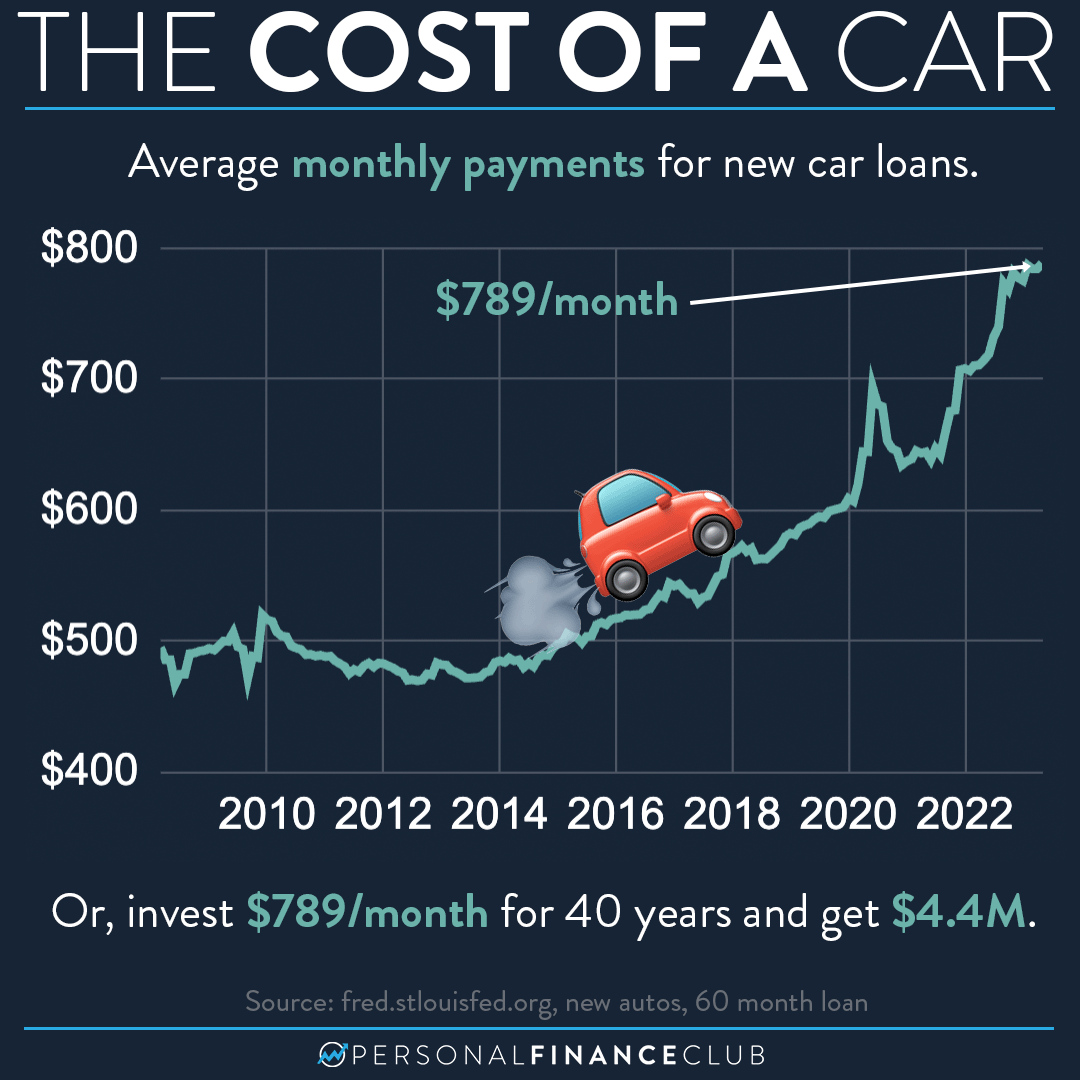
While a 48-month loan has a higher monthly payment than a 72-month loan, the savings in total interest are substantial. For example, on a $35,000 loan at 6% interest:
-
A 72-month term results in a $580 monthly payment and roughly $6,700 in total interest.
-
A 48-month term results in an $822 monthly payment but only $4,400 in total interest.
By opting for the shorter term, the borrower saves $2,300 and builds equity in the vehicle much faster.
Monitoring Market Cycles
Car loan costs are also subject to the broader movements of the bond market and Federal Reserve policy. In periods of high inflation, the cost of borrowing rises across the board. Conversely, during economic slowdowns, manufacturers often offer “subsidized financing” to move inventory. Timing your purchase to coincide with manufacturer incentives—typically at the end of the model year or during holiday sales events—can result in obtaining a loan that is significantly cheaper than standard market rates.
In conclusion, the cost of a car loan is a dynamic figure shaped by your credit history, the structure of the loan agreement, and your ability to navigate the negotiation process. By focusing on the total cost of borrowing rather than just the monthly payment, you can ensure that your vehicle remains a tool for mobility rather than a perpetual drain on your financial health. Understanding these variables allows you to treat a car loan not as an inevitable expense, but as a financial product that can be optimized.
aViewFromTheCave is a participant in the Amazon Services LLC Associates Program, an affiliate advertising program designed to provide a means for sites to earn advertising fees by advertising and linking to Amazon.com. Amazon, the Amazon logo, AmazonSupply, and the AmazonSupply logo are trademarks of Amazon.com, Inc. or its affiliates. As an Amazon Associate we earn affiliate commissions from qualifying purchases.