
Purchasing a vehicle is often the second-largest financial commitment a consumer makes, trailing only the purchase of a home. While most buyers focus on the “sticker price” or the monthly payment, the true cost of vehicle ownership is heavily dictated by the interest accrued over the life of the loan. Understanding how to calculate car loan interest is not merely an academic exercise; it is a critical skill in personal finance that allows you to compare offers, optimize your budget, and potentially save thousands of dollars.
To navigate the complexities of auto financing, one must look beyond the monthly installment and deconstruct the variables that lenders use to generate their profit. By mastering the mechanics of interest calculations, you move from being a passive borrower to an informed strategist capable of making data-driven decisions.
Understanding the Fundamentals of Car Loan Interest
Before diving into the mathematical formulas, it is essential to understand the terminology and the structures that financial institutions use. Not all interest is created equal, and the way it is applied to your balance determines how much of your hard-earned money goes toward the principal versus the lender’s pocket.
Interest Rates vs. Annual Percentage Rate (APR)
Many borrowers use the terms “interest rate” and “APR” interchangeably, but in the world of personal finance, they represent different values. The interest rate is the basic cost of borrowing the principal amount. However, the APR provides a more comprehensive picture of the loan’s cost. It includes the interest rate plus any additional fees, such as origination fees, documentation charges, or mandatory insurance premiums required by the lender. When calculating your total cost, always use the APR to ensure you are accounting for the full financial burden.
Simple Interest vs. Compound Interest in Auto Loans
The vast majority of modern car loans are “simple interest” loans. In a simple interest structure, the interest is calculated daily or monthly based on the current outstanding principal balance. This is advantageous for the borrower because as you pay down the principal, the amount of interest you owe decreases. This differs from compound interest, where interest is charged on the interest already accrued. Because car loans typically use simple interest, any additional payment you make toward the principal immediately reduces the interest you will be charged in the following months.
The Impact of Amortization
Amortization is the process of spreading out loan payments over a specific period. In an amortized car loan, your monthly payment remains constant, but the ratio of interest to principal shifts over time. In the early stages of the loan, a larger portion of your payment goes toward interest because the principal balance is at its highest. As the balance drops, the interest portion shrinks, and more of your payment is applied to the principal. Understanding this “front-loaded” nature of interest is key to realizing why early repayment is so financially beneficial.
The Mathematical Formulas Behind Your Monthly Payment
While online calculators are convenient, knowing how to perform the calculation manually provides a deeper insight into how variables like “term length” and “rate” interact. To calculate the interest on a car loan, you must first determine your monthly interest rate and then apply it to the declining balance.
The Monthly Interest Rate Calculation
Lenders quote interest rates as an annual figure. To find your monthly interest obligation, you must convert this annual rate into a decimal and divide it by the number of months in a year.
For example, if you have an APR of 6%, you first convert it to 0.06. You then divide this by 12 to get a monthly interest rate of 0.005. This figure represents the percentage of your current principal balance that will be charged as interest for that specific month.
The Standard Amortization Formula
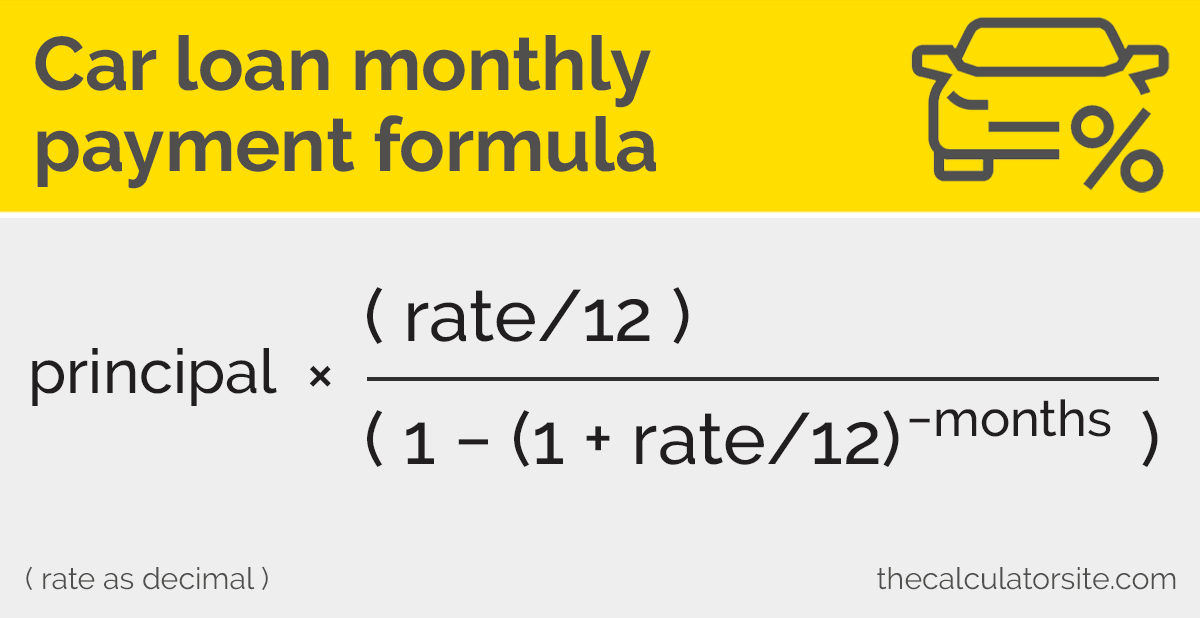
To determine exactly what your monthly payment (Principal + Interest) will be, professionals use the following amortization formula:
M = P [ i(1 + i)^n ] / [ (1 + i)^n – 1 ]
Where:
-
M = Total monthly payment
-
P = Principal loan amount
-
i = Monthly interest rate (decimal)
-
n = Number of months in the loan term
By plugging your numbers into this formula, you can see how a slight increase in the interest rate or a longer term (n) can dramatically inflate the total amount paid over the life of the loan.
Step-by-Step Guide to Manual Calculation
If you want to track exactly how much interest you are paying this month, follow this step-by-step process. This manual method is the most accurate way to visualize your progress toward debt freedom.

Step 1: Gathering Your Loan Variables
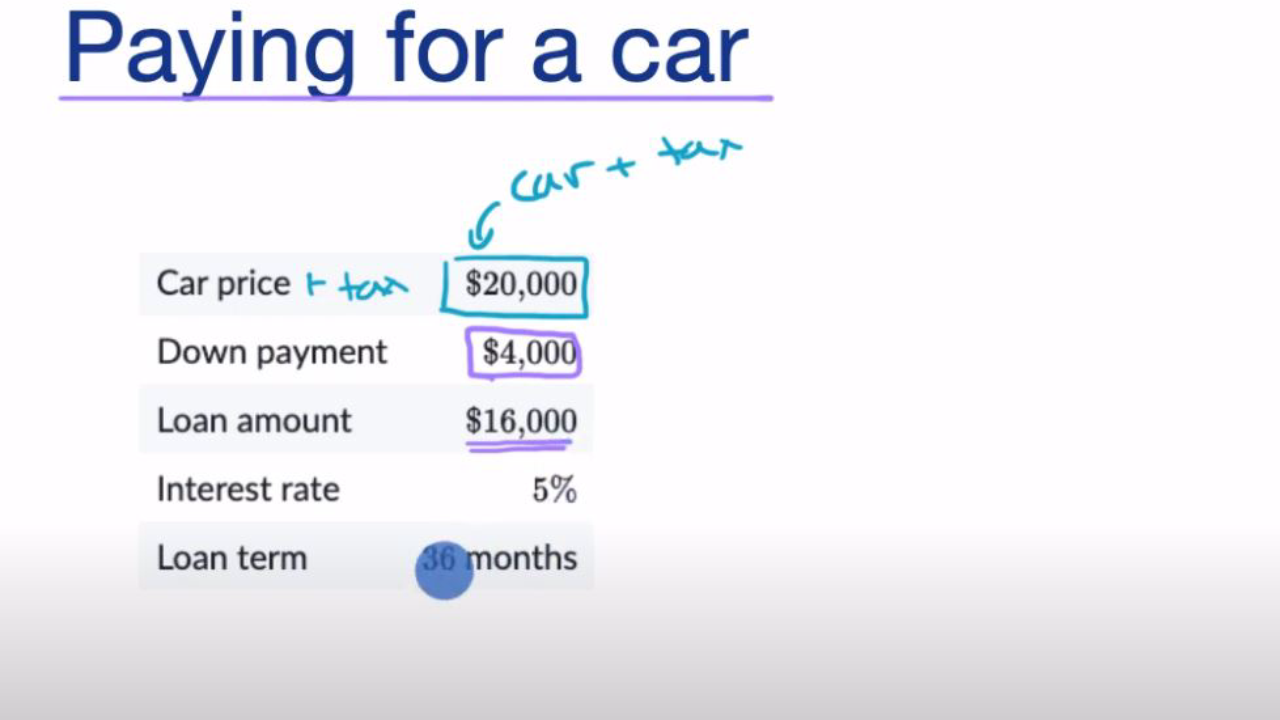
You need three specific numbers: your current principal balance (the amount you still owe, not the original price), your interest rate, and your monthly payment amount. Let’s assume a current balance of $20,000, an APR of 5%, and a monthly payment of $450.
Step 2: Calculating the Interest for the Current Month
Take your current balance and multiply it by the annual interest rate expressed as a decimal:
$20,000 x 0.05 = $1,000 (This is the annual interest).
Now, divide that annual interest by 12 to find the interest for this month:
$1,000 / 12 = $83.33.
In this scenario, $83.33 of your $450 payment is going strictly to the lender as profit.
Step 3: Determining Principal Reduction
To find out how much your debt actually decreased, subtract the interest from your total payment:
$450 – $83.33 = $366.67.
This $366.67 is what actually reduces your debt. To find your starting balance for next month, subtract this from your current principal:
$20,000 – $366.67 = $19,633.33.
Step 4: Projecting the Total Interest Cost
To calculate the total interest you will pay over the entire life of the loan, multiply your monthly payment by the total number of months in the term, then subtract the original principal. If you pay $450 a month for 60 months on a $24,000 loan:
($450 x 60) – $24,000 = $3,000 total interest.
Factors That Influence Your Interest Expense
Knowing the math is one thing; knowing how to manipulate the variables to your advantage is another. Several external factors dictate the interest rate a lender will offer you, and understanding these can help you secure a more favorable deal.
Credit Scores and Tiered Pricing
The most significant factor in your interest rate is your credit score. Lenders view the interest rate as a reflection of risk. A borrower with a 750+ credit score (Prime or Super Prime) might receive an offer of 4%, while a borrower with a 580 score (Subprime) might see rates as high as 18% to 20%. Over a five-year loan, this difference can mean paying $15,000 more for the exact same vehicle.
Loan Term Length and Its Impact
In the current economic climate, 72-month and 84-month car loans have become increasingly common. While these longer terms lower the monthly payment, they significantly increase the total interest paid. Furthermore, lenders often charge a higher interest rate for longer terms because the risk of default increases over time. A 48-month loan almost always carries a lower APR than a 72-month loan.
Down Payments and Loan-to-Value (LTV) Ratios
The “Loan-to-Value” ratio is the relationship between the amount you borrow and the value of the car. If you put 20% down, you have a lower LTV, which reduces the lender’s risk. Lenders often reward high down payments with lower interest rates. Conversely, if you “roll over” negative equity from a previous car into a new loan, your interest rate may climb because you are borrowing more than the asset is worth.
Strategies to Minimize Interest Paid Over Time
Once you understand how the interest is calculated, you can implement strategies to reduce the total financial cost of your vehicle. Since most auto loans use simple interest, you have significant power to alter the outcome of the loan.
Refinancing for Lower Rates
If your credit score has improved since you first took out the loan, or if market interest rates have dropped, refinancing is a powerful tool. By replacing your current high-interest loan with a new one at a lower rate, you immediately reduce the monthly interest charge. Even a 2% reduction in APR can save over $1,000 on a mid-sized SUV loan.
The Power of Principal-Only Payments
Because simple interest is calculated on the remaining balance, any extra money you pay directly toward the principal has a compounding positive effect. If you pay an extra $50 every month, you aren’t just shortening the loan term; you are ensuring that every subsequent month’s interest calculation is based on a smaller number. This effectively lowers the total interest paid for every remaining month of the loan.
Bi-Weekly Payment Strategies
A popular tactic in personal finance is switching from monthly payments to bi-weekly payments (paying half your monthly payment every two weeks). Because there are 52 weeks in a year, this results in 26 half-payments, which equals 13 full payments per year instead of 12. This extra payment, applied consistently, can shave months off a loan and drastically reduce the total interest expense without requiring a major lifestyle shift.
By deconstructing the interest on a car loan, you gain the clarity needed to treat a vehicle purchase as a strategic financial move rather than a burden. Whether through manual calculations or the application of principal-reduction strategies, the ability to control the cost of debt is a hallmark of sophisticated financial management.
aViewFromTheCave is a participant in the Amazon Services LLC Associates Program, an affiliate advertising program designed to provide a means for sites to earn advertising fees by advertising and linking to Amazon.com. Amazon, the Amazon logo, AmazonSupply, and the AmazonSupply logo are trademarks of Amazon.com, Inc. or its affiliates. As an Amazon Associate we earn affiliate commissions from qualifying purchases.