
Purchasing a vehicle is often the second-largest financial commitment a consumer makes, trailing only the purchase of a home. When looking at a $30,000 price tag—a figure that currently sits slightly below the average price of a new car in the United States—the immediate question is rarely about the total sum. Instead, most buyers focus on the “monthly number.” Understanding how a $30,000 sticker price translates into a monthly obligation requires a deep dive into interest rates, loan terms, and the fundamental mechanics of amortized debt.
Determining a car payment isn’t as simple as dividing $30,000 by a set number of months. To build a sustainable financial plan, one must account for the levers that move that payment up or down and the long-term impact those choices have on personal net worth.

The Core Variables of Car Financing
The monthly payment on a $30,000 car is a product of four primary variables: the principal amount, the down payment, the interest rate (APR), and the loan term. Each of these components acts as a lever; adjusting one will inevitably impact the others.
The Impact of Down Payments and Trade-Ins
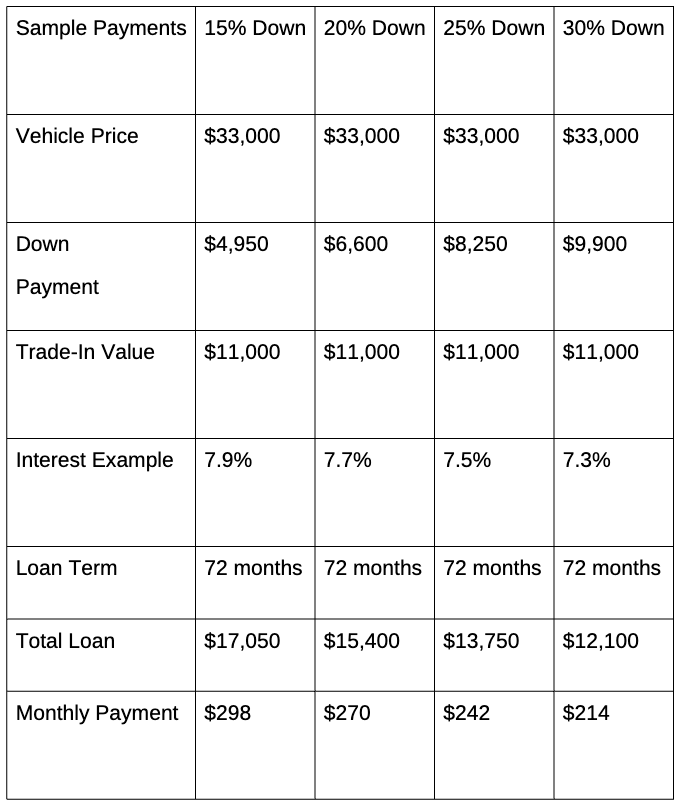
The principal is the actual amount you borrow. While the car may cost $30,000, the loan amount is rarely that exact figure. A down payment serves as the first line of defense against high monthly costs. In personal finance, the “20% rule” is often cited—putting $6,000 down on a $30,000 car. This immediately reduces the financed amount to $24,000, which significantly lowers the monthly burden and protects the buyer from “negative equity,” where the car is worth less than the remaining loan balance.
Interest Rates and Credit Tiers
The Annual Percentage Rate (APR) is perhaps the most volatile variable. Interest rates are determined by a combination of the Federal Reserve’s benchmarks and the borrower’s credit score. A borrower with a “super-prime” credit score (above 780) might secure a rate of 5%, while a “subprime” borrower might face rates of 15% or higher. On a $30,000 loan, this difference can mean hundreds of dollars in additional monthly interest charges and thousands over the life of the loan.
Loan Term Duration
The length of the loan is the most common tool used by dealerships to make an expensive car “fit” into a buyer’s monthly budget. While a 48-month loan was once the standard, 72-month and even 84-month loans have become increasingly common. While extending the term lowers the monthly payment, it increases the total interest paid and keeps the borrower in debt for a depreciating asset for a longer period.
Calculating the Numbers: Real-World Scenarios
To understand the range of potential payments, we must look at how different scenarios play out mathematically. For these examples, we will assume a $30,000 purchase price and include an estimated 7% for taxes and fees, bringing the total “out-the-door” price to roughly $32,100.
Scenario A: The Conservative Buyer
This buyer follows the 20/4/10 rule (20% down, 4-year term, and payments under 10% of gross income).
-
Total Price: $32,100
-
Down Payment: $6,420 (20%)
-
Amount Financed: $25,680
-
Interest Rate: 5% (Excellent credit)
-
Term: 48 months
-
Monthly Payment: ~$591
In this scenario, the buyer pays roughly $2,680 in interest over four years. They build equity quickly and are likely to own the car outright while it still retains significant market value.
Scenario B: The Average Modern Buyer
This buyer provides a smaller down payment and opts for a longer term to keep the payment manageable.
-
Total Price: $32,100
-
Down Payment: $2,000
-
Amount Financed: $30,100
-
Interest Rate: 7% (Average credit)
-
Term: 72 months
-
Monthly Payment: ~$513
While the payment is lower than Scenario A, the total interest paid jumps to approximately $6,836. Furthermore, because cars depreciate fastest in the first three years, this buyer will likely be “underwater” on their loan for several years.
Scenario C: The Subprime Challenge
For those with lower credit scores, the cost of borrowing increases dramatically.
-
Total Price: $32,100
-
Down Payment: $1,000
-
Amount Financed: $31,100
-
Interest Rate: 14%
-
Term: 72 months
-
Monthly Payment: ~$636

In this case, the borrower pays nearly $14,700 in interest alone. By the time the loan is paid off, the $30,000 car has cost them nearly $47,000, despite the vehicle likely being worth less than $10,000 by the end of the six-year term.
The Total Cost of Ownership (TCO)
A common mistake in personal finance is equating the “car payment” with the “cost of the car.” The monthly loan installment is only one piece of the puzzle. To truly understand if a $30,000 car fits your budget, you must calculate the Total Cost of Ownership (TCO).
Insurance Premiums
A $30,000 vehicle typically requires full coverage insurance as a condition of the loan. Depending on your age, driving record, and location, this can add $100 to $250 per month to your transportation expenses. Newer vehicles with advanced safety tech are often more expensive to repair, which can drive these premiums higher.
Maintenance and Fuel
Even a brand-new $30,000 car requires oil changes, tire rotations, and eventually, new brakes or tires. Financial experts recommend earmarking at least $50 to $100 per month for a maintenance fund. Additionally, fuel costs fluctuate. If the vehicle requires premium fuel or has lower MPG, your “monthly car cost” could easily increase by another $150 to $200 depending on your commute.
Depreciation: The Silent Expense
While not a direct monthly cash outflow, depreciation is a real financial cost. A $30,000 car might lose 15-20% of its value in the first year. From a net worth perspective, you are “losing” roughly $5,000 in value during that first year. Understanding this helps in deciding whether to buy new or opt for a certified pre-owned vehicle where the previous owner has already absorbed the initial depreciation hit.
Strategies to Optimize Your Car Payment
If the calculated payment for a $30,000 car seems too high, there are several strategic moves to bring it within your financial comfort zone without resorting to dangerous 84-month loan terms.
Improve Your Credit Before Buying
A difference of just 100 points in your credit score can lower your interest rate by 5% or more. If you aren’t in a rush, taking six months to pay down credit card debt or dispute errors on your credit report can save you thousands in interest over the life of the car loan.
Shop for Financing Separately
Never walk into a dealership without a pre-approval from a bank or credit union. Dealerships often add a “markup” to the interest rate offered by the lender. If a credit union offers you 6%, but the dealer presents 8%, they are pocketing that 2% difference as profit. Having a pre-approval letter forces the dealer to meet or beat the rate you already have.
The “Gap” Consideration
If you are financing a $30,000 car with less than 20% down, you should consider Gap Insurance. This covers the “gap” between what you owe and what the insurance company says the car is worth if it is totaled in an accident. Without it, a total loss could leave you owing $5,000 to a bank for a car you can no longer drive. However, buy this through your insurance provider rather than the dealership, as the dealer’s price is often marked up by 300% or more.
The Opportunity Cost of the Car Payment
From a wealth-building perspective, the most important question isn’t just “Can I afford the payment?” but “What else could this money be doing?”
A $600 monthly car payment is a significant sum that, if invested in a diversified index fund with a 7% average annual return, would grow to approximately $43,000 over five years. Over 30 years, that same $600 monthly contribution would grow to over $700,000.
This doesn’t mean you should never buy a $30,000 car. It means that the decision should be made with an awareness of the trade-offs. If a $30,000 car is a necessity for reliable transport to a high-paying job, it is a tool for income generation. If it is purely a lifestyle choice, ensure that the payment is not cannibalizing your ability to contribute to retirement accounts or an emergency fund.
Ultimately, the payment on a $30,000 car typically lands between $500 and $700 per month depending on your financial profile. By focusing on a high down payment, a short term, and a competitive interest rate, you can ensure that your car remains a manageable utility rather than a financial anchor.
aViewFromTheCave is a participant in the Amazon Services LLC Associates Program, an affiliate advertising program designed to provide a means for sites to earn advertising fees by advertising and linking to Amazon.com. Amazon, the Amazon logo, AmazonSupply, and the AmazonSupply logo are trademarks of Amazon.com, Inc. or its affiliates. As an Amazon Associate we earn affiliate commissions from qualifying purchases.