
To the uninitiated, the question “how much is cryptocurrency?” might seem like asking “how much is a stock?” The answer is not a single figure, but a complex mosaic of market capitalization, circulating supply, and perceived utility. At any given moment, the price of a single Bitcoin may be tens of thousands of dollars, while a promising altcoin might trade for fractions of a cent. Understanding the “cost” of cryptocurrency requires moving beyond the sticker price and examining the underlying financial principles that drive value in this digital-first asset class.

The Mechanics of Cryptocurrency Pricing
The price of any cryptocurrency is fundamentally determined by the equilibrium between supply and demand on various global exchanges. Unlike traditional fiat currencies, which are managed by central banks, most cryptocurrencies operate on algorithmic monetary policies.
Market Capitalization vs. Unit Price
One of the most common pitfalls for new investors is focusing solely on the unit price. A coin priced at $1.00 is not necessarily “cheaper” than a coin priced at $100.00. The true measure of a cryptocurrency’s size and market impact is its Market Capitalization (Market Cap), calculated as:
Market Cap = Current Price × Circulating Supply
For instance, if Coin A has a supply of 1 million tokens and a price of $10, its market cap is $10 million. If Coin B has a supply of 1 billion tokens and a price of $1, its market cap is $1 billion. In this scenario, Coin B is a significantly larger and more established asset, despite its lower unit price. Investors use market cap to categorize assets into large-cap, mid-cap, and small-cap, similar to the stock market, which helps in assessing the risk-to-reward ratio.
Liquidity and Order Books
The “price” you see on a tracker like CoinMarketCap or a brokerage app is actually the last traded price on a specific exchange. However, for large-scale investors, the “cost” of cryptocurrency involves liquidity. Liquidity refers to how easily an asset can be converted into cash without affecting its market price. High-liquidity assets like Bitcoin or Ethereum have deep order books, meaning you can buy or sell large amounts with minimal “slippage.” Conversely, low-liquidity “micro-cap” coins can see their prices skyrocket or plummet based on a single large trade, making the entry and exit costs significantly higher for the strategic investor.
Factors Influencing Individual Coin Value
Why does the market value one digital ledger entry at $60,000 and another at zero? The answer lies in the intersection of technology, scarcity, and economic utility.
Scarcity and Tokenomics
“Tokenomics” is a term used to describe the economic framework of a cryptocurrency. Many digital assets derive value from programmed scarcity. Bitcoin, for example, has a hard cap of 21 million coins. This “fixed supply” model is a hedge against the inflationary nature of fiat currencies.
Other projects use “burn mechanisms,” where a portion of transaction fees is permanently removed from circulation, creating deflationary pressure. When the supply of a token decreases while demand remains constant or increases, the price per unit naturally rises. Investors must analyze the total supply, the circulating supply, and the release schedule of new tokens (vesting) to understand the long-term price potential.
Utility and Network Effects
A cryptocurrency’s value is often a reflection of its utility within its ecosystem. For example, Ether (ETH) is required to pay for “gas”—the transaction fees on the Ethereum network. As more developers build decentralized applications (dApps) and more users interact with Non-Fungible Tokens (NFTs) or Decentralized Finance (DeFi) protocols, the demand for ETH increases.
This is known as Metcalfe’s Law, which states that the value of a network is proportional to the square of the number of its connected users. In the world of finance, a cryptocurrency that solves a real-world problem—such as cross-border payments, decentralized identity, or supply chain transparency—possesses an intrinsic value that goes beyond mere speculation.
Evaluating the Cost of Entry: Investment Strategies
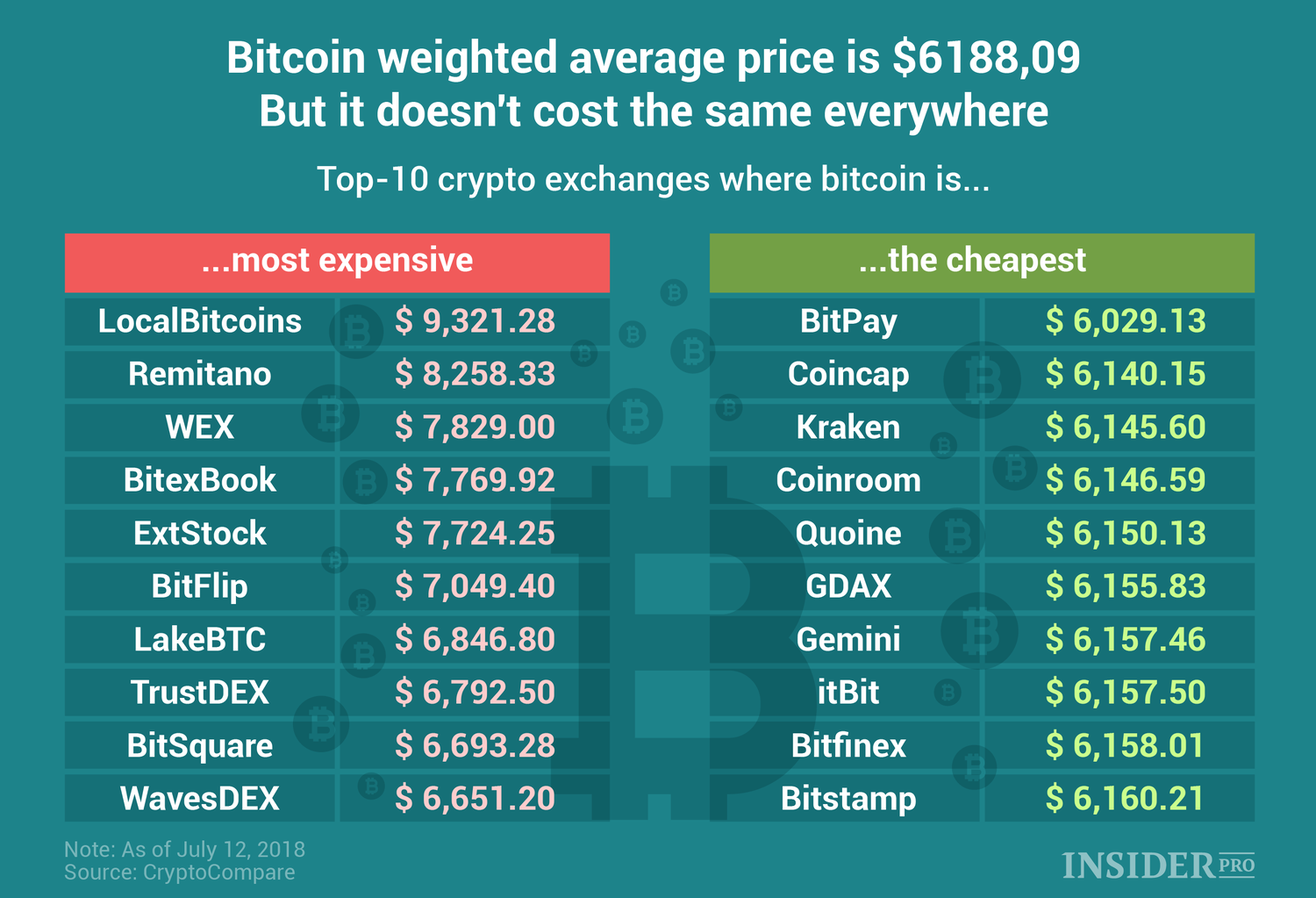
For the individual investor, “how much is cryptocurrency” is often a question of “how much do I need to start?” and “what are the hidden costs of investing?”
Fractional Ownership and Minimums
One of the greatest advantages of digital assets is their divisibility. You do not need to buy a whole Bitcoin. Most cryptocurrencies can be purchased in fractions; a Bitcoin is divisible down to eight decimal places, with the smallest unit (0.00000001 BTC) known as a “Satoshi.” Most exchanges allow users to start investing with as little as $10 or $20. This lowers the barrier to entry, allowing for a broader demographic of participants to engage in wealth-building through digital assets.
Transaction Fees and “Gas” Costs
The price of the coin is only one part of the financial equation. Investors must also account for transaction fees. Centralized exchanges (CEXs) charge “maker” and “taker” fees, which typically range from 0.1% to 0.5% per trade.
However, if you choose to move your assets to a private wallet for security (self-custody), you must pay network fees. On networks like Ethereum, these “gas fees” can fluctuate wildly based on network congestion. During periods of high activity, a single transfer might cost $50 or $100, regardless of the amount being sent. Understanding these overhead costs is vital for maintaining profitability, especially for those employing short-term trading strategies.
Dollar-Cost Averaging (DCA)
Because the “price” of cryptocurrency is notoriously volatile, many financial advisors recommend Dollar-Cost Averaging. Instead of trying to “time the market” and buy at the absolute bottom, an investor commits a fixed dollar amount at regular intervals (e.g., $100 every month). This strategy reduces the impact of volatility; you buy more units when prices are low and fewer when prices are high, effectively lowering your average cost per coin over time.
Institutional Influence and Global Economic Factors
The valuation of cryptocurrency is no longer confined to a niche group of tech enthusiasts. It has become deeply integrated into the global financial system, meaning its price is now influenced by macroeconomic trends.
The “Risk-On” vs. “Store of Value” Debate
Historically, cryptocurrency—specifically Bitcoin—was viewed as an uncorrelated asset. However, as institutional adoption has grown, crypto prices have shown an increasing correlation with the tech-heavy Nasdaq index. In periods of low interest rates and high liquidity, investors tend to move money into “risk-on” assets like crypto to seek higher returns. Conversely, when central banks raise interest rates to combat inflation, speculative capital often flows back into “safer” investments like Treasury bonds, causing crypto prices to retreat.
Institutional Inflows and ETFs
The introduction of Spot Bitcoin and Ethereum ETFs (Exchange-Traded Funds) has fundamentally changed how the market is priced. These financial instruments allow pension funds, 401(k) holders, and institutional managers to gain exposure to cryptocurrency without the technical hurdles of managing private keys. This creates a massive, steady stream of demand that can act as a price floor, but it also means that the “cost” of crypto is increasingly tied to the whims of Wall Street and institutional sentiment.
Assessing Long-Term Value vs. Speculative Price
When asking “how much is cryptocurrency,” one must distinguish between the current market price and the long-term value proposition. Price is what you pay; value is what you get.
Fundamental Analysis in a Digital Age
Traditional stock valuation uses metrics like Price-to-Earnings (P/E) ratios. In the crypto space, investors use different metrics to determine if a coin is undervalued or overvalued:
-
Total Value Locked (TVL): The amount of capital deposited in a protocol’s smart contracts.
-
Active Addresses: A measure of how many people are actually using the network.
-
Transaction Volume: The total economic value moving across the blockchain.
If a project has a skyrocketing price but declining user activity and low TVL, it may be in a speculative bubble. Conversely, a project with robust development activity and growing user adoption despite a stagnant price may represent a value opportunity.
Risk Management and Allocation
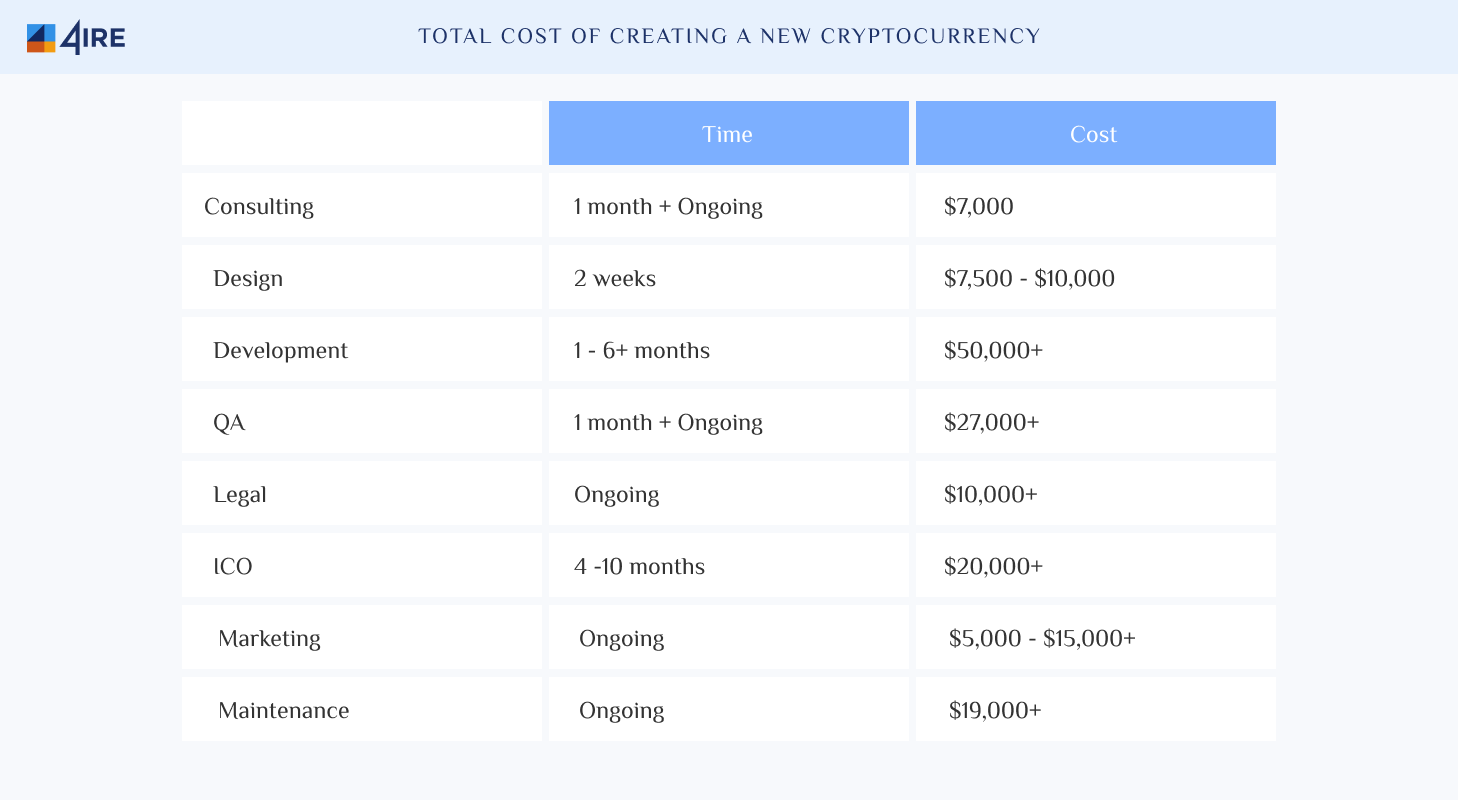
Finally, the “cost” of cryptocurrency should always be measured against one’s personal risk tolerance. Because of the 24/7 nature of the market and the lack of “circuit breakers” found in traditional stock exchanges, prices can drop by 20% or 30% in a single day. Professional financial planning suggests that cryptocurrency should occupy a specific percentage of a diversified portfolio—often between 1% and 5% for conservative investors, and higher for those with a longer time horizon.
In conclusion, “how much is cryptocurrency” is a dynamic and multifaceted question. It is a reflection of technology, global economics, investor psychology, and mathematical scarcity. By looking beyond the daily price tickers and understanding the mechanics of market cap, tokenomics, and institutional influence, investors can navigate this volatile landscape with a clear, finance-focused perspective. Value in the crypto market is not just about the number on the screen; it is about the long-term potential of decentralized systems to reshape the future of money.
aViewFromTheCave is a participant in the Amazon Services LLC Associates Program, an affiliate advertising program designed to provide a means for sites to earn advertising fees by advertising and linking to Amazon.com. Amazon, the Amazon logo, AmazonSupply, and the AmazonSupply logo are trademarks of Amazon.com, Inc. or its affiliates. As an Amazon Associate we earn affiliate commissions from qualifying purchases.