
Bitcoin, the pioneering cryptocurrency, has captivated the financial world since its inception. Heralded by some as digital gold and dismissed by others as a speculative bubble, its price history is a testament to extreme volatility, marked by dizzying highs and gut-wrenching lows. For investors, understanding these historical troughs is not merely an academic exercise; it offers crucial insights into market dynamics, investor psychology, and risk management in the nascent world of digital assets. Pinpointing Bitcoin’s “lowest” is not a straightforward answer, as its journey from an obscure concept to a global asset involves different definitions of value at various stages. This article delves into the most significant periods where Bitcoin experienced its deepest price corrections, exploring the catalysts behind these lows and the lessons they impart.

The Genesis and Early Price Discovery: From Pennies to Profits (and Back)
Bitcoin’s earliest days represent its absolute lowest valuation, quite literally fractions of a penny, due to its initial lack of perceived monetary value and limited liquidity. As it began to gain traction, however, its price discovery became a wild ride of rapid appreciation followed by brutal corrections.
The Initial Years (2009-2010): A Novelty, Not an Asset
When Satoshi Nakamoto mined the genesis block in January 2009, Bitcoin had no market value. It was a novel technological experiment, shared among a small group of cypherpunks and developers. The first real-world transaction occurred in May 2010 when Laszlo Hanyecz paid 10,000 BTC for two pizzas. At that point, the cost of the pizzas, roughly $41, implicitly valued one Bitcoin at a mere $0.0041. This period, characterized by minimal exchange activity and largely symbolic transactions, represents Bitcoin’s absolute lowest valuation. It was not a tradable asset in any meaningful sense but a nascent technology whose potential market price was still being forged. For all intents and purposes, from an investment perspective, Bitcoin started at zero.
The First Major Correction (2011-2013): Learning Volatility the Hard Way
As Bitcoin started to gain a foothold, exchanges like Mt. Gox emerged, allowing for its first real price pumps. In early 2011, Bitcoin surged from under $1 to over $30 by June. This meteoric rise was unprecedented, driven by early adopters and speculative interest. However, this initial bubble burst spectacularly. A security breach at Mt. Gox, coupled with general profit-taking and fears of unproven technology, sent the price plummeting by over 90%, dropping from $32 to around $2 by late 2011. This was the first major “crypto winter,” teaching early investors the brutal realities of extreme volatility. While $2 was significantly higher than its initial sub-penny valuation, it represented a devastating psychological low for those who bought at the peak of the first bubble. The market took nearly two years to fully recover these losses.
Post-Mt. Gox Era (2014-2015): A Prolonged Bear Market
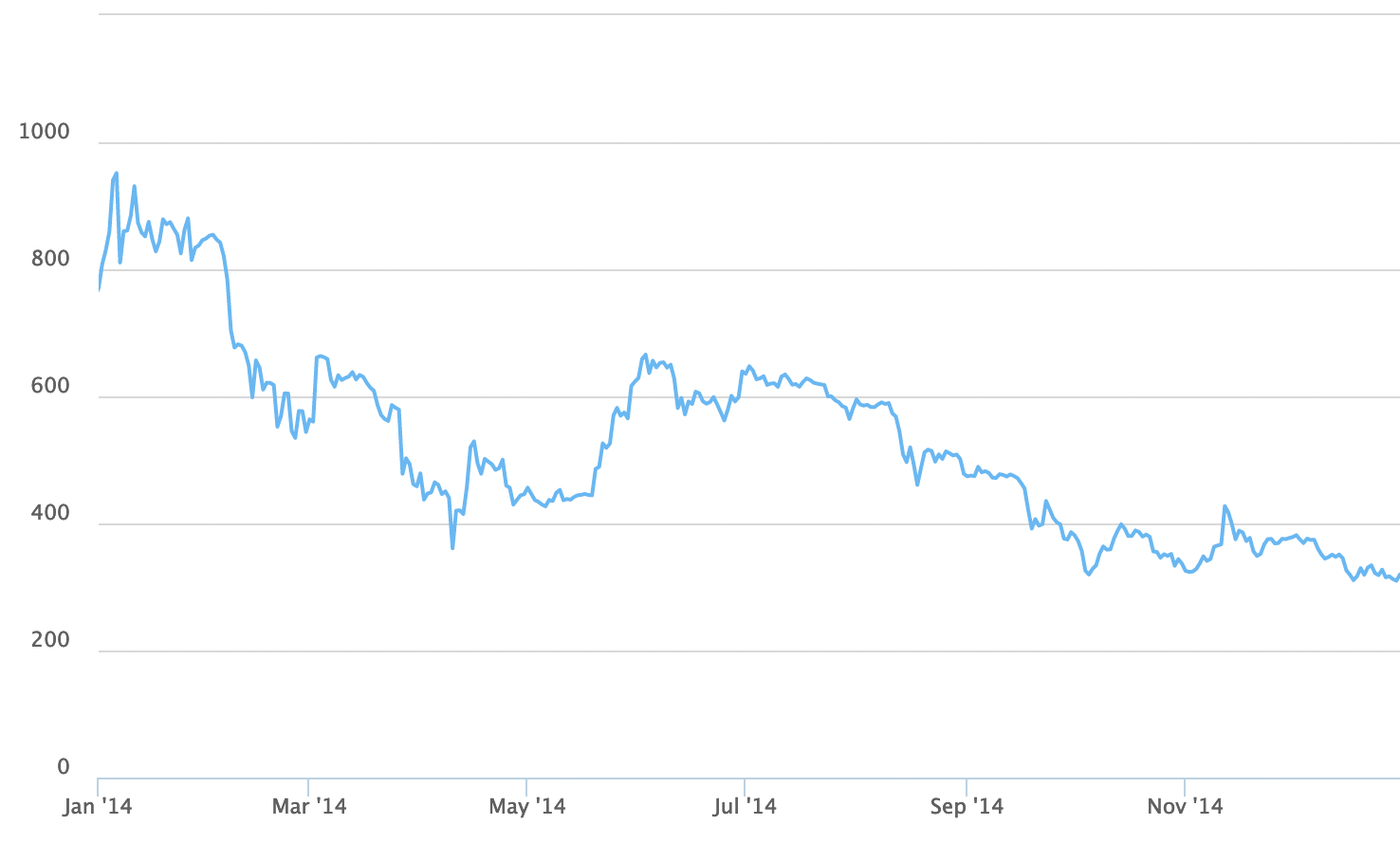
The period following the 2013 bull run, which saw Bitcoin briefly touch over $1,100, was overshadowed by the catastrophic collapse of Mt. Gox in early 2014. The largest Bitcoin exchange at the time, handling over 70% of all BTC transactions, filed for bankruptcy after reporting the loss of 850,000 Bitcoins. This event single-handedly shattered investor confidence, leading to a prolonged and painful bear market. Bitcoin steadily declined throughout 2014 and into 2015, reaching a low of around $170-$200 in January 2015. This period represented a significant low not just in price, but in market sentiment and trust. Many proclaimed Bitcoin dead, questioning its viability and the security of the ecosystem. It was a prolonged bottom that tested the conviction of even the most ardent believers, demonstrating how external events and market infrastructure failures could drastically impact prices.
Navigating Subsequent Bear Markets and Significant Dips
Bitcoin’s journey has been punctuated by cycles of euphoria and despair. Each major bull run has been followed by a significant correction, establishing new “lows” relative to their preceding peaks.
The ICO Boom and the “Crypto Winter” of 2018-2019
The year 2017 was legendary for Bitcoin, witnessing a parabolic ascent fueled by retail investor interest, the rise of altcoins through Initial Coin Offerings (ICOs), and increasing media attention. Bitcoin soared from under $1,000 at the start of the year to nearly $20,000 by December. This unprecedented rally, however, was unsustainable. The subsequent “crypto winter” of 2018-2019 was one of the longest and most severe bear markets in Bitcoin’s history. From its peak, Bitcoin began a relentless decline, shedding over 80% of its value. By December 2018, it bottomed out around $3,100-$3,200. This period was characterized by regulatory uncertainty, the collapse of many overhyped ICOs, and a general cooling of speculative fervor. For many who entered the market in late 2017, this was their most painful “lowest” point, representing substantial portfolio losses.
The COVID-19 Crash (March 2020): A Black Swan Event
In early 2020, as the world grappled with the nascent COVID-19 pandemic, global financial markets experienced a sharp, synchronized crash. Bitcoin, which some proponents claimed would act as a safe haven or uncorrelated asset, was not immune. On March 12, 2020, often referred to as “Black Thursday,” Bitcoin plummeted by over 50% in a single day, dropping from around $8,000 to approximately $3,800. This rapid descent was primarily driven by a broader flight to liquidity across all asset classes, as investors rushed to convert assets into cash amidst unprecedented economic uncertainty. While short-lived—Bitcoin recovered remarkably quickly in the following months—this event demonstrated its susceptibility to extreme macroeconomic shocks and its correlation with traditional markets during moments of panic. It was a swift, sharp low that tested the mettle of holders.
The Mid-2021 Correction and 2022 Bear Market: Macroeconomic Headwinds
Following its impressive rally to new all-time highs above $60,000 in early 2021, driven by institutional adoption and growing mainstream acceptance, Bitcoin experienced significant corrections. Mid-2021 saw a substantial pullback, largely attributed to regulatory concerns in China and Elon Musk’s comments on environmental impact, pushing the price from over $64,000 to around $29,000. However, the most profound bear market since 2018 unfolded in 2022. This period was characterized by aggressive interest rate hikes by central banks to combat soaring inflation, leading to a broader de-risking in financial markets. Additionally, the crypto ecosystem itself faced internal crises, including the collapse of the Terra (LUNA) ecosystem in May and the implosion of the FTX exchange in November. These events triggered severe contagion, driving Bitcoin down from over $48,000 at the start of 2022 to a low of approximately $15,500 in November 2022. This particular low was influenced by a confluence of macroeconomic pressures and significant, industry-specific self-inflicted wounds, marking a multi-year low for the asset.
Understanding Bitcoin’s “Lowest”: Absolute vs. Relative
The concept of Bitcoin’s “lowest” is nuanced, encompassing both its historical dollar price and its perceived value within the broader financial landscape.
The Nuance of “Lowest”: Price vs. Value
In absolute dollar terms, Bitcoin’s lowest was undoubtedly in its infancy when it traded for fractions of a cent, or effectively zero when it was merely code. However, as Bitcoin matured into a recognized asset class, its “lowest” evolved. A low point in 2015 at $170 represented a severe dip, but it was still orders of magnitude higher than its 2010 price. Similarly, a low of $3,100 in 2018, while devastating for those who bought at $20,000, was significantly above any prior major low. Thus, “lowest” can refer to the absolute dollar figure, but more often, it refers to the percentage drop from a preceding peak, or the lowest point within a specific market cycle.
Percentage Drops vs. Absolute Dollar Figures
Early percentage drops were from minuscule dollar amounts (e.g., 90% from $32 to $2). While financially significant for early adopters, the absolute dollar losses were small. In contrast, later bear markets, like 2018 or 2022, saw Bitcoin drop from tens of thousands of dollars to several thousands. An 80% drop from $20,000 to $4,000, or from $69,000 to $15,500, represents far greater absolute dollar losses, impacting a much wider investor base and having more substantial implications for global financial markets. Understanding this distinction is crucial for appreciating the evolution of Bitcoin’s market impact.
The “Lowest” from an Investor’s Perspective
Ultimately, an individual investor’s “lowest” is highly personal, tied to their entry point into the market. Someone who bought Bitcoin at $60,000 might consider a dip to $30,000 as their personal “lowest” or most painful period, even if the asset had been much cheaper historically. This subjective experience underscores the psychological aspect of investing in volatile assets like Bitcoin, where the timing of entry and exit points dramatically shapes an investor’s perception of risk and reward.
Lessons from the Lows: Investment Strategies and Market Psychology
Bitcoin’s history of extreme lows offers invaluable lessons for both seasoned investors and newcomers to the crypto space, particularly concerning risk management and long-term strategy.
Volatility as a Feature, Not a Bug
The recurring, steep declines in Bitcoin’s price are not anomalies; they are inherent to a nascent, global, and relatively illiquid asset class operating 24/7 without traditional market circuit breakers. This volatility is driven by a combination of speculative interest, evolving regulatory landscapes, technological developments, and macroeconomic factors. Successful investors understand that extreme price swings are part of the game and must be factored into their financial planning. It’s a feature of rapid innovation and adoption, not necessarily a flaw.
The Importance of Risk Management and Dollar-Cost Averaging
The dramatic drops unequivocally highlight the critical need for sound risk management. Never invest more than you can afford to lose. Furthermore, the strategy of Dollar-Cost Averaging (DCA)—investing a fixed amount of money at regular intervals, regardless of the asset’s price—proves its worth in volatile markets. DCA helps mitigate the risk of buying at a peak and smooths out the average purchase price over time, allowing investors to accumulate more units when prices are low without attempting the impossible task of “timing the bottom.”
Long-Term Perspective and Conviction
Perhaps the most compelling lesson from Bitcoin’s multiple recoveries from severe lows is the power of a long-term investment horizon. Despite predictions of its demise during every major bear market, Bitcoin has consistently bounced back to establish new all-time highs. This resilience suggests that for those with high conviction in its underlying technology and fundamental value proposition as a decentralized, scarce digital asset, riding out the volatility with a multi-year outlook has historically been a rewarding strategy.
Analyzing Fundamentals vs. Hype
During periods of extreme FUD (Fear, Uncertainty, Doubt) that often accompany market lows, it becomes challenging to differentiate between transient market sentiment and genuine threats to Bitcoin’s long-term viability. Investors who focus on fundamental analysis—understanding the network’s security, adoption rates, technological advancements, and the broader macroeconomic landscape—are better positioned to make informed decisions rather than succumbing to panic selling or FOMO (Fear Of Missing Out) buying.
What the Future Holds: Potential for New Lows and Continued Growth
Bitcoin’s journey is far from over. While its “lowest” absolute price point is firmly in the past, the potential for new relative lows in future market cycles remains a reality that investors must acknowledge.
Evolving Market Dynamics
As Bitcoin matures, with increasing institutional adoption, clearer regulatory frameworks, and greater market liquidity, its volatility might temper over time. Larger market participants, such as institutional funds and corporations, tend to have longer investment horizons and more sophisticated risk management strategies, which could contribute to greater price stability. However, this evolution is a slow process, and Bitcoin is still relatively small compared to traditional asset classes.
The Macroeconomic Impact
Bitcoin has shown increasing correlation with traditional risk assets, especially during periods of global economic stress. Future lows could be heavily influenced by macroeconomic factors like global recessions, inflation rates, interest rate policies, or geopolitical conflicts. As a global asset, Bitcoin is not immune to the broader economic climate, and investors must consider these external forces in their financial planning.
A Maturing Asset Class
While new absolute lows below its genesis price are impossible, new relative lows from future all-time highs are an inherent part of Bitcoin’s market cycle. Investors should remain vigilant, conduct thorough due diligence, and adopt disciplined financial strategies. Bitcoin continues to evolve, facing new challenges and opportunities. Its history of extreme lows serves as a powerful reminder of both the risks and the unparalleled opportunities in this unique and transformative asset class.

Conclusion
Bitcoin’s historical lows are more than just data points on a chart; they are pivotal moments in its evolution, revealing critical lessons about market cycles, human psychology, and the resilience of a revolutionary technology. From its initial valuation at fractions of a penny to the multi-thousand-dollar floor established during severe bear markets, Bitcoin has repeatedly demonstrated its capacity for both breathtaking growth and precipitous declines. For investors navigating this volatile landscape, understanding “when was Bitcoin at its lowest” means appreciating the full spectrum of its price history. It underscores the importance of a long-term perspective, disciplined risk management through strategies like dollar-cost averaging, and unwavering conviction in the face of inevitable market turbulence. Bitcoin’s journey is a powerful testament to its unique characteristics as a financial asset, demanding a thoughtful and informed approach from anyone looking to participate in its future.
aViewFromTheCave is a participant in the Amazon Services LLC Associates Program, an affiliate advertising program designed to provide a means for sites to earn advertising fees by advertising and linking to Amazon.com. Amazon, the Amazon logo, AmazonSupply, and the AmazonSupply logo are trademarks of Amazon.com, Inc. or its affiliates. As an Amazon Associate we earn affiliate commissions from qualifying purchases.