
In today’s increasingly interconnected digital landscape, understanding the fundamentals of networking is no longer solely the domain of IT professionals. Whether you’re a budding entrepreneur looking to optimize your startup’s infrastructure, a tech enthusiast exploring the intricacies of digital security, or even someone managing a small business, grasping concepts like subnets can unlock significant advantages in terms of efficiency, organization, and even cost. At its core, a /24 subnet is a fundamental building block in network management, and its understanding can demystify how devices communicate and how networks are structured.

This article will delve into the concept of a /24 subnet, explaining its significance within the broader context of IP addressing and network segmentation. We’ll explore why this particular subnet size is so prevalent and how it contributes to more organized and secure digital environments. By the end of this piece, you’ll have a solid grasp of what a /24 subnet is and why it matters for both technical and business-minded individuals.
Understanding IP Addresses and the Need for Subnetting
Before we dive into the specifics of a /24 subnet, it’s crucial to have a basic understanding of IP addresses and why subnetting is necessary.
The Foundation: What is an IP Address?
An Internet Protocol (IP) address is a unique numerical label assigned to each device connected to a computer network that uses the Internet Protocol for communication. Think of it as a postal address for your devices, allowing them to send and receive data. IP addresses enable devices to identify and locate each other across the vast expanse of the internet and within local networks.
There are two primary versions of IP addresses currently in use: IPv4 and IPv6. While IPv6 is the newer and more expansive version, IPv4 remains widely used, and the concept of subnetting, especially /24, is deeply rooted in IPv4 addressing.
IPv4 Addresses: A Closer Look
An IPv4 address is a 32-bit number, typically represented in four decimal numbers (each ranging from 0 to 255) separated by dots. For example, 192.168.1.1 is a common IPv4 address. This format, known as dotted-decimal notation, makes it easier for humans to read and remember.
The 32 bits in an IPv4 address are divided into two parts:
- Network ID: This portion identifies the specific network to which a device belongs. All devices on the same network share the same Network ID.
- Host ID: This portion uniquely identifies a device within its network. Each device on the network will have a different Host ID.
The challenge with this system is determining where the Network ID ends and the Host ID begins. This is where the subnet mask comes into play.
The Problem: A Single, Large Network
Imagine a company with hundreds or even thousands of devices. If all these devices were placed on a single, large network without any segmentation, it would create several significant problems:
- Broadcast Storms: When a device needs to send a message to all other devices on the network (a broadcast message), it can overwhelm the network, causing performance issues and disruptions.
- Security Risks: All devices are exposed to each other, making it easier for unauthorized access or malicious activity to spread across the entire network.
- Management Complexity: Troubleshooting, assigning IP addresses, and managing a massive, flat network becomes incredibly difficult and time-consuming.
- Inefficiency: Data traffic can become congested, as all devices compete for bandwidth on the same shared infrastructure.
The Solution: Subnetting
Subnetting is the process of dividing a larger IP network into smaller, more manageable sub-networks, called subnets. This division is achieved by using a subnet mask.
A subnet mask is also a 32-bit number that works in conjunction with an IP address. It essentially “masks” the IP address, separating the Network ID from the Host ID. Where the subnet mask has a ‘1’ bit, the corresponding IP address bit is part of the Network ID. Where the subnet mask has a ‘0’ bit, the corresponding IP address bit is part of the Host ID.
By carefully choosing a subnet mask, network administrators can logically divide a network into smaller segments. This brings numerous benefits:
- Improved Performance: Smaller networks reduce broadcast traffic, leading to less congestion and faster communication.
- Enhanced Security: Subnets allow for better control over network access. You can implement security policies to restrict traffic between different subnets, isolating sensitive devices or departments.
- Simplified Administration: Managing smaller, distinct network segments is far easier than dealing with a single, massive network.
- Efficient IP Address Allocation: Subnetting allows for more granular control over IP address allocation, preventing waste and ensuring that addresses are used effectively.
Decoding the “/24” Notation: The Power of CIDR
The “/24” notation you see in the title of this article is a modern and efficient way to represent subnet masks, known as Classless Inter-Domain Routing (CIDR). It simplifies the way we describe IP address ranges and their associated subnet masks.
From Dotted-Decimal to CIDR
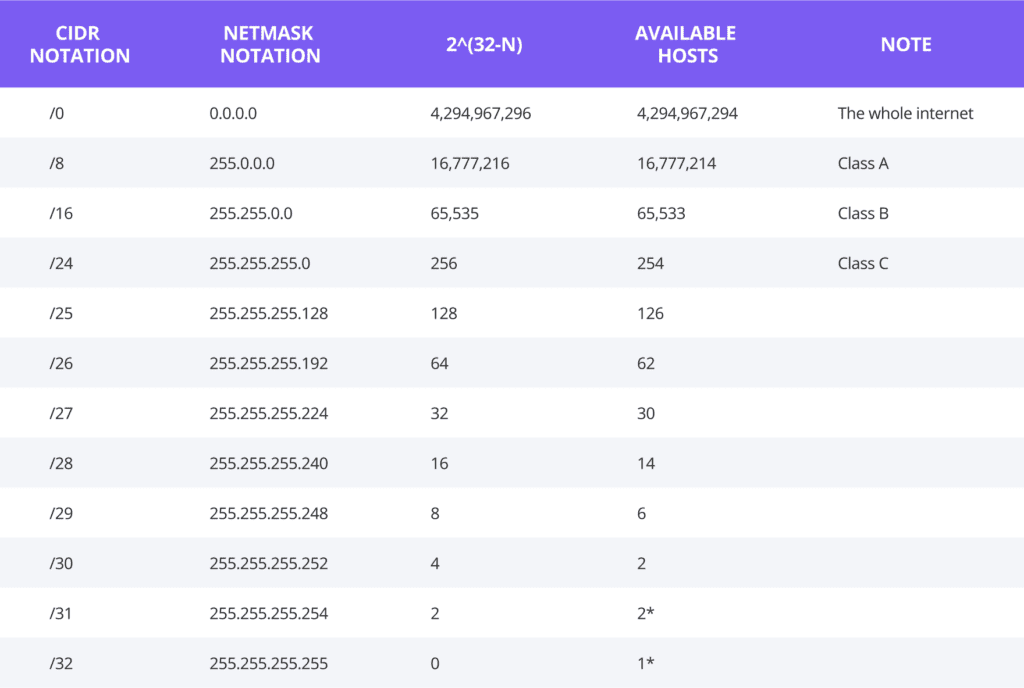
Traditionally, subnet masks were expressed in dotted-decimal notation, mirroring the format of IP addresses. For example, a common subnet mask used with private IP address ranges is 255.255.255.0.
The CIDR notation, like /24, provides a more concise representation. The number following the slash (in this case, 24) indicates the number of consecutive bits in the IP address that are used for the Network ID. The remaining bits are then automatically designated for the Host ID.
Let’s break down what /24 means in terms of an IPv4 address:
- An IPv4 address has 32 bits in total.
- A
/24notation signifies that the first 24 bits of the IP address are dedicated to the Network ID. - This leaves the remaining
32 - 24 = 8bits for the Host ID.
The Subnet Mask for /24
When the first 24 bits are set to ‘1’ in the subnet mask (representing the Network ID), and the remaining 8 bits are set to ‘0’ (representing the Host ID), the dotted-decimal equivalent is:
- First 8 bits:
11111111=255 - Next 8 bits:
11111111=255 - Next 8 bits:
11111111=255 - Last 8 bits:
00000000=0
Therefore, a /24 subnet is equivalent to a subnet mask of 255.255.255.0. This is a very common configuration.
How many IP Addresses in a /24 Subnet?
The number of usable IP addresses within a subnet is determined by the number of bits allocated for the Host ID.
- In a
/24subnet, there are 8 bits for the Host ID. - The total number of possible combinations for 8 bits is $2^8 = 256$.
- However, two of these addresses are reserved and cannot be assigned to individual devices:
- The Network Address: This is the first address in the range (where all Host ID bits are 0). It represents the subnet itself.
- The Broadcast Address: This is the last address in the range (where all Host ID bits are 1). It’s used to send data to all devices within that specific subnet.
Therefore, the number of usable IP addresses within a /24 subnet is $256 – 2 = 254$.
The Practical Implications of a /24 Subnet
The /24 subnet size is incredibly prevalent for several practical reasons, making it a cornerstone of network design for small to medium-sized businesses, home networks, and even specific segments within larger enterprises.
Why is /24 So Common?
- Simplicity and Manageability: A
/24subnet offers a good balance between network size and manageability. With 254 usable IP addresses, it’s sufficient for most small to medium-sized offices, departments, or even entire home networks. It provides enough room for a healthy number of devices without becoming unwieldy. - Default for Private IP Ranges: Private IP address ranges, such as
192.168.0.0/16and172.16.0.0/12, are often divided into/24subnets by default. This makes them easy to segment. For instance, the popular192.168.1.0/24network is a common example of a single/24subnet. - Ease of Understanding: The consistent
/24structure makes it easier for IT administrators and even tech-savvy individuals to grasp network layouts and troubleshoot issues. When you see a/24, you immediately know the scope of the network segment. - Security Best Practices: By default, devices within a
/24subnet can communicate with each other. However, by strategically placing routers or firewalls between different/24subnets, administrators can enforce security policies, control traffic flow, and limit the “blast radius” of potential security breaches. For example, you might put your guest Wi-Fi on a separate/24subnet from your internal business network. - Efficient Resource Utilization: While larger subnets might seem appealing for their sheer number of addresses, they can lead to wasted IPs if not all are used. Conversely, extremely small subnets might require more complex routing and management.
/24often hits a sweet spot for many common use cases.
Common Use Cases and Examples
- Home Networks: Most home routers default to creating a
192.168.1.0/24or192.168.0.0/24subnet for your home devices (computers, phones, smart TVs, etc.). This allows all your home devices to communicate with each other and access the internet. - Small Business Offices: A small business might use a
/24subnet for its main office, accommodating computers, printers, and servers. They might then create another/24subnet for their guest Wi-Fi network, effectively isolating guests from internal resources. - Departmental Segmentation: In larger organizations, a
/24subnet could be used to segment specific departments, such as marketing, accounting, or engineering. This helps in managing access control and potentially improving performance by reducing internal broadcast traffic. - Server Farms: A dedicated server farm might be placed on its own
/24subnet for enhanced security and easier management.
The Trade-offs: When is /24 Not Enough?
While the /24 subnet is incredibly useful, it’s not a one-size-fits-all solution. There are situations where you might need a different subnet size:
- Larger Networks: If you have more than 254 devices that need to be on the same broadcast domain, a single
/24subnet will not suffice. You would need to use a larger subnet (e.g.,/23which allows for 510 usable IPs, or even larger) or multiple/24subnets managed by routers. - Very Small Networks: For extremely small networks with only a handful of devices, a
/24might be overkill. However, given its prevalence and ease of management, it’s often still used for simplicity. - Specific Security Requirements: In highly sensitive environments, administrators might choose to break down networks into even smaller subnets (e.g.,
/27or/28) to further limit the scope of devices that can communicate with each other.
Understanding the number of usable IP addresses is critical. A /24 subnet offers 254 usable IPs. If you need, for example, 300 IPs on a single network segment, a /24 will not work. You’d need to consider a larger subnet like /23.

Conclusion: Mastering the /24 for Network Savvy
The /24 subnet is a fundamental concept in network administration and a building block for efficient and organized digital infrastructure. By understanding what a /24 subnet represents – a network segment defined by 24 bits for the network ID and 8 bits for the host ID, yielding 254 usable IP addresses – you gain valuable insight into how networks are structured and managed.
Whether you’re a technology professional, a business owner optimizing your IT setup, or simply someone curious about the inner workings of the digital world, grasping concepts like /24 subnets empowers you. It allows for better decision-making regarding network design, security implementation, and resource allocation. In a world where connectivity is paramount, mastering these foundational elements is a significant step towards building robust, secure, and efficient digital environments. The prevalence and practicality of the /24 subnet ensure its continued relevance in the ever-evolving landscape of technology and business.