
In an era dominated by digital transformation, the allure of cryptocurrency has captivated millions worldwide. From Bitcoin’s meteoric rise to the proliferation of countless altcoins, the digital asset class presents a fascinating, albeit often perplexing, landscape for investors. A common entry point for many curious individuals is to ponder the smallest possible investment: “How much is $1 in cryptocurrency?” While seemingly a straightforward question, the answer is nuanced, reflecting the inherent volatility, fractional nature, and diverse ecosystem of the crypto market. This article delves into the financial realities, opportunities, and considerations of investing a single dollar in the world of digital assets, strictly adhering to the realm of personal finance and investing.

Understanding the Volatile Value of Cryptocurrency
The fundamental concept to grasp when considering a $1 investment in cryptocurrency is that its value is not static. Unlike a dollar bill, which consistently represents a dollar, the purchasing power of $1 in crypto fluctuates by the second. This dynamic characteristic is both the source of its potential for rapid gains and its significant risk.
The Dynamic Nature of Crypto Pricing
Cryptocurrency prices are determined by a complex interplay of supply and demand, market sentiment, technological developments, regulatory news, and macroeconomic factors. Bitcoin, for instance, might be trading at $60,000 one day and $58,000 the next, or even experience more dramatic swings. This means that $1 might buy you a certain fraction of a Bitcoin today, and a slightly different fraction tomorrow. The decentralized nature of many cryptocurrencies means there’s no central bank or government setting their value; instead, it’s the collective actions of millions of participants across global exchanges that dictate prices. This constant flux is a defining feature of the crypto market, distinguishing it sharply from traditional fiat currencies.
Factors Influencing Price Fluctuations
Several key factors contribute to the dramatic price swings observed in the cryptocurrency market:
-
Supply and Demand: Like any asset, if demand for a cryptocurrency outstrips its available supply, its price will rise. Conversely, if supply exceeds demand, the price falls. Limited supply (like Bitcoin’s capped 21 million coins) can contribute to scarcity and drive up value.
-
Market Sentiment: News, social media trends, and general investor confidence can heavily sway prices. Positive news (e.g., adoption by a major corporation) can trigger buying sprees, while negative news (e.g., a security breach or regulatory crackdown) can lead to sell-offs.
-
Technological Developments: Upgrades to a blockchain network, the launch of new features, or advancements in scalability can increase a cryptocurrency’s utility and perceived value.
-
Regulatory Environment: Government decisions regarding cryptocurrency regulation can have a profound impact. Favorable regulations can foster growth and adoption, while restrictive policies can cause prices to plummet.
-
Macroeconomic Trends: Broader economic conditions, such as inflation rates, interest rates, and global economic stability, can influence investor appetite for risk assets like cryptocurrency. In times of uncertainty, some investors may flee to safer assets, while others might view crypto as a hedge against inflation.
Given these variables, determining “how much is $1 in cryptocurrency” is less about a fixed amount and more about understanding the fractional ownership you can acquire at a specific moment in time.
What $1 Can Buy You (Realistically) In Crypto
While $1 might seem like an insignificant amount in the context of major cryptocurrencies trading at thousands of dollars, the digital nature of these assets allows for fractional ownership, making even the smallest investment possible.
Fractional Ownership and Accessibility
The beauty of cryptocurrency lies in its divisibility. Just as a dollar can be broken down into 100 cents, cryptocurrencies like Bitcoin can be divided into much smaller units. Bitcoin, for example, is divisible down to eight decimal places, meaning you can own 0.00000001 BTC, known as a Satoshi. Ethereum, similarly, is divisible into Wei. This extreme divisibility means that even if a single Bitcoin costs $70,000, $1 can still purchase 1/70,000th of a Bitcoin (approximately 0.0000142 BTC). This accessibility is a game-changer, democratizing investment and allowing virtually anyone to participate in the crypto market, regardless of their financial standing. It lowers the barrier to entry significantly compared to traditional assets like real estate or even single shares of expensive stocks.
Micro-Investments in Major Cryptocurrencies
For $1, you can purchase a small fraction of almost any major cryptocurrency. This includes:
-
Bitcoin (BTC): As mentioned, you’d get a very small fraction, likely a few thousand Satoshis.
-
Ethereum (ETH): Similar to Bitcoin, $1 would buy you a tiny slice of an Ether token.
-
Ripple (XRP), Cardano (ADA), Solana (SOL), Dogecoin (DOGE), Shiba Inu (SHIB): For these cryptocurrencies, which often trade at prices ranging from a few cents to a few hundred dollars, $1 might buy you a more substantial fraction, or even several whole units in the case of very low-priced meme coins.
The key takeaway is that you are always buying a fraction of the total supply for most established coins, and the exact quantity depends on the current market price.
Exploring Altcoins and Meme Coins with $1
Beyond the major players, the crypto market is teeming with thousands of altcoins (alternative cryptocurrencies) and meme coins. These often have much lower per-unit prices, meaning $1 could buy you a significant number of tokens.
-
Altcoins: Some newer altcoins with smaller market caps might trade for mere cents or fractions of a cent. Investing $1 in such a coin could yield hundreds or even thousands of units. While this sounds appealing, it’s crucial to understand that these coins often carry significantly higher risk and volatility compared to established cryptocurrencies. They might offer greater potential for exponential growth but also a higher chance of losing all invested capital.
-
Meme Coins: Cryptocurrencies like Dogecoin or Shiba Inu, initially created as jokes or internet memes, have demonstrated that even low-priced tokens can achieve massive market valuations driven by community enthusiasm and social media trends. $1 can buy you a substantial amount of these tokens. However, their value is often speculative and highly dependent on public sentiment, making them exceptionally risky investments. The price can surge dramatically on a tweet and plummet just as quickly.
For a $1 investment, the sheer volume of tokens you can acquire in a low-priced altcoin or meme coin might seem exciting, but this must be balanced with a thorough understanding of the associated financial risks.
The Practicalities of Investing a Single Dollar
While technologically possible, the practicalities of investing a single dollar in cryptocurrency introduce several considerations, primarily related to transaction costs and exchange minimums.
Exchange Minimums and Transaction Fees
Most cryptocurrency exchanges have minimum deposit and trading amounts. While some might allow deposits as low as $1, others might require $5, $10, or even more. Furthermore, every transaction on an exchange incurs fees. These can be:
-
Trading Fees: A percentage of the trade value (e.g., 0.1% to 0.5%). For a $1 trade, this might seem negligible, but it can quickly eat into your capital.
-
Network Fees (Gas Fees): These are paid to the blockchain network to process your transaction. For some networks, particularly Ethereum, gas fees can be substantial and easily exceed a $1 investment, making a direct purchase of $1 worth of ETH impractical on its own.
-
Withdrawal Fees: If you decide to move your crypto off the exchange to a personal wallet, you’ll incur another fee.

Effectively, if you’re only investing $1, a significant portion, or even all, of your initial capital could be consumed by fees. For instance, if a trading fee is 0.5% ($0.005) and a network fee is $0.50, your actual crypto purchase would only be $0.495. This makes repeated micro-investments highly inefficient from a financial perspective. It highlights that while fractional ownership is possible, the cost of facilitating that ownership might make such small trades non-viable on many platforms.
Strategies for Entry with Small Amounts
Given the fee structures, a direct $1 purchase might be more theoretical than practical for many individual transactions. Here are some more realistic strategies for beginning with small amounts:
-
Start with a Slightly Larger Initial Investment: Most beginners will find it more cost-effective to start with a minimum of $10-$50. This allows for more meaningful purchases after fees and provides a buffer.
-
Dollar-Cost Averaging (DCA): Instead of one $1 investment, consider setting up recurring small investments (e.g., $10-$20 weekly or monthly). While each individual transaction might still incur fees, the cumulative effect over time can build a substantial position, and the fees become a smaller percentage of the total invested. DCA helps mitigate the risk of market timing by averaging out your purchase price over time.
-
Utilize Low-Fee Platforms: Some exchanges are known for lower trading fees, especially for smaller trades. Researching these platforms can make micro-investments more feasible. However, be cautious of unregulated or less secure platforms.
-
Bundled Crypto Purchases: Some platforms offer “crypto bundles” or index-like products, which might allow you to invest a small amount across several cryptocurrencies with a single transaction fee. While not strictly a $1 investment, it offers diversified exposure for a modest sum.
Ultimately, while the concept of investing $1 is appealing, the savvy investor needs to account for the overhead costs that come with participating in the market.
The Potential and Pitfalls of Micro-Investing in Crypto
Investing a single dollar in cryptocurrency carries both tantalizing potential and significant risks, disproportionate to the small sum involved.
The Dream of Exponential Growth (And Its Reality)
The allure of cryptocurrency often stems from stories of early investors turning a few dollars into millions. Bitcoin’s parabolic growth and the sudden surges of meme coins like Dogecoin have fueled this narrative. For $1, the dream is that your tiny fraction of a promising altcoin or meme coin will one day explode in value, making you rich overnight.
While it’s mathematically true that a $1 investment in a cryptocurrency could theoretically multiply by thousands or millions if the coin’s value skyrockets, the reality is far more sobering. The vast majority of cryptocurrencies, especially newer, low-cap altcoins, either fail, stagnate, or experience limited growth. The chances of picking the “next Bitcoin” with a $1 investment are astronomically low. True exponential growth for a small investment usually requires both immense luck and holding through extreme volatility for many years. It’s crucial to understand that past performance is not indicative of future results, and survivorship bias often distorts perceptions of crypto investment success.
Risk Management for Small Investments
Even with just $1, understanding risk management is paramount. The primary risk is that you could lose 100% of your investment. This is not uncommon in the highly speculative crypto market. For a $1 investment, losing it all might not be financially devastating, but it’s important to internalize that possibility.
-
Volatility: Cryptocurrencies are highly volatile. A $1 investment could become $0.50 or $2 within hours.
-
Scams and Rug Pulls: Many new projects are outright scams designed to trick investors. $1 might seem insignificant to lose, but repeated investments in such projects can add up.
-
Lack of Liquidity: Smaller altcoins might not have enough trading volume, making it difficult to sell your tokens when you want to, especially in a downturn.
The best approach for micro-investments is to treat them as highly speculative ventures. Only invest what you are genuinely prepared to lose entirely without it impacting your financial well-being.
Learning and Experimentation as the True Value
Perhaps the greatest value of investing a single dollar (or a very small amount) in cryptocurrency is not the financial return, but the invaluable learning experience it provides. For a minimal cost, you can:
-
Learn How Exchanges Work: Navigate trading interfaces, understand order types, and get familiar with the process of buying and selling.
-
Experience Market Volatility Firsthand: Witness how prices fluctuate, how news impacts sentiment, and how quickly your holdings can change value.
-
Understand Wallet Security: If you decide to move your small holding to a private wallet, you’ll learn about seed phrases, private keys, and the importance of self-custody.
-
Develop a Research Habit: A small investment can motivate you to research projects, understand whitepapers, and follow market trends, building a foundation for more substantial future investments.
From a financial education standpoint, a small, controlled investment is an excellent way to dip your toes into the crypto waters without risking significant capital. It’s a low-stakes way to convert theoretical knowledge into practical understanding.
Beyond the Dollar: Building a Crypto Investment Strategy
While $1 can serve as a potent learning tool, a sustainable crypto investment strategy, even for modest sums, requires thinking beyond the smallest possible entry point.
Dollar-Cost Averaging with Modest Sums
As mentioned earlier, dollar-cost averaging (DCA) is a powerful strategy. Instead of trying to time the market with a single, larger investment, DCA involves investing a fixed amount of money at regular intervals (e.g., $25 every two weeks). This strategy helps to average out your purchase price over time, reducing the risk of buying all your assets at a market peak. For someone starting with limited funds, consistently investing even modest amounts over time can lead to a significant crypto portfolio, allowing you to benefit from the long-term growth trends without being overly exposed to short-term volatility. It emphasizes discipline and a long-term perspective over speculative bets.
Diversification, Even On A Budget
Even with a small budget, some level of diversification is advisable. Instead of putting all your $100 into one altcoin, consider spreading it across 2-3 well-established cryptocurrencies with different use cases or market positions (e.g., Bitcoin, Ethereum, and one promising altcoin). This strategy, while not eliminating risk, can help mitigate the impact if one of your chosen assets underperforms or fails. For those with larger sums, diversification could extend to different sectors of crypto, such as DeFi, NFTs, or metaverse tokens. For smaller investors, focusing on the blue-chip cryptocurrencies provides a more stable foundation.
The Long-Term Perspective
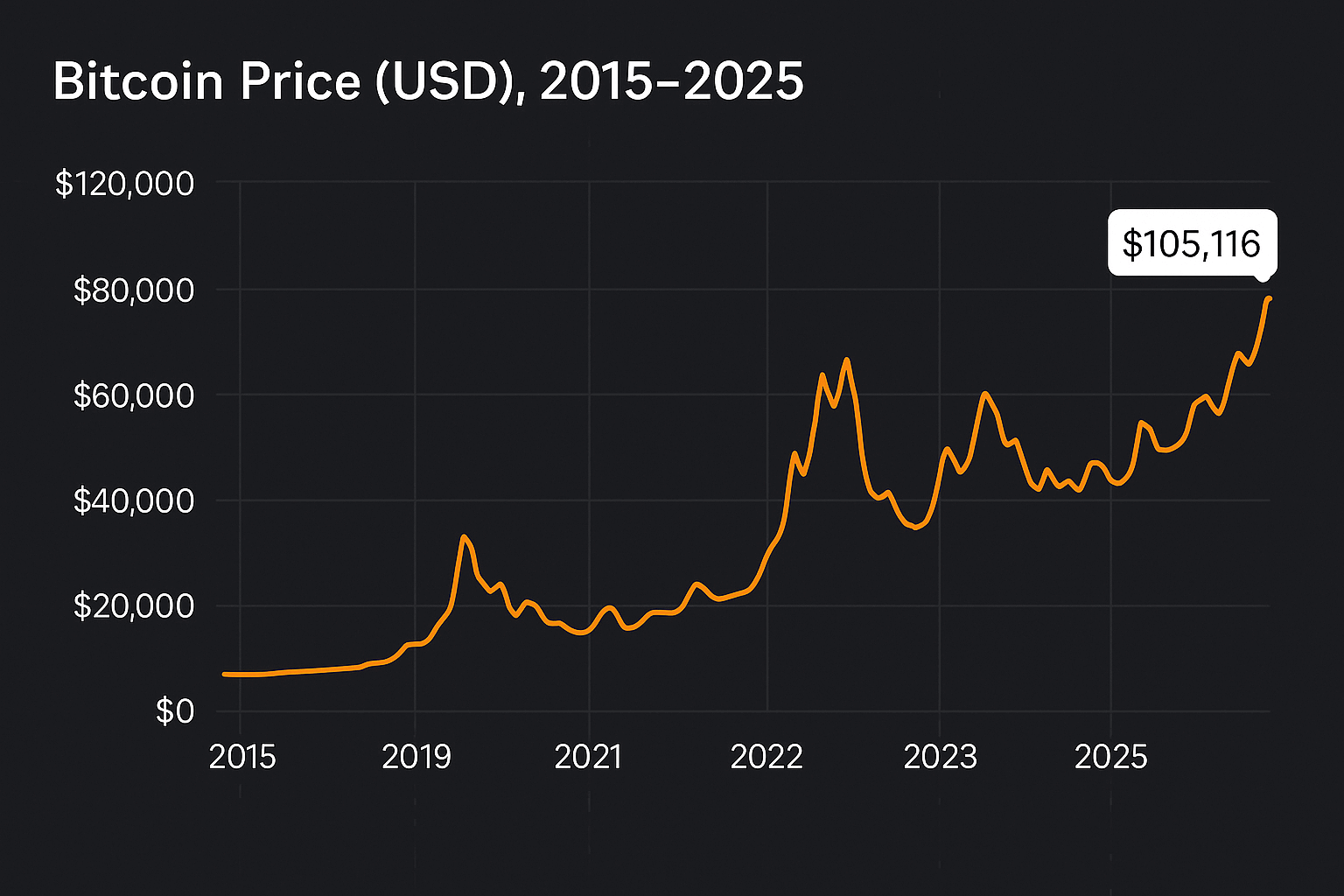
The crypto market is notoriously volatile in the short term. Daily and even hourly price swings can be dramatic. Investors focused on long-term growth, however, tend to ride out these fluctuations, believing in the fundamental value proposition and future potential of decentralized technologies. For someone looking to build wealth in crypto, adopting a “hold” or “HODL” (an intentional misspelling of “hold on for dear life”) strategy is often recommended. This involves holding onto your assets for several years, rather than reacting to every market dip or surge. This approach aligns well with DCA, where consistent small investments accumulate over time, benefiting from compounding returns as the overall market matures and expands.
In conclusion, “how much is $1 in cryptocurrency” is not a question about a fixed monetary translation, but rather an entry point into a complex financial ecosystem. While technologically possible to acquire a minute fraction of almost any cryptocurrency, the true value of such a micro-investment often lies in financial education and practical experience rather than immediate monetary gains. For those looking to build a sustainable presence in the crypto space, a more considered approach involving slightly larger initial investments, dollar-cost averaging, and a long-term perspective rooted in sound financial principles will yield more meaningful results.
aViewFromTheCave is a participant in the Amazon Services LLC Associates Program, an affiliate advertising program designed to provide a means for sites to earn advertising fees by advertising and linking to Amazon.com. Amazon, the Amazon logo, AmazonSupply, and the AmazonSupply logo are trademarks of Amazon.com, Inc. or its affiliates. As an Amazon Associate we earn affiliate commissions from qualifying purchases.