
The landscape of digital asset trading is often characterized by extreme volatility and rapid technological shifts, but few assets have commanded as much attention from the financial community as XRP, the native digital asset of the XRP Ledger. Often referred to interchangeably with the company Ripple, XRP serves a specific purpose within the global financial ecosystem: providing liquidity and facilitating near-instant cross-border settlements. For investors and traders looking to navigate this specific market, understanding the nuances of how to trade Ripple is essential for both capital preservation and profit generation.
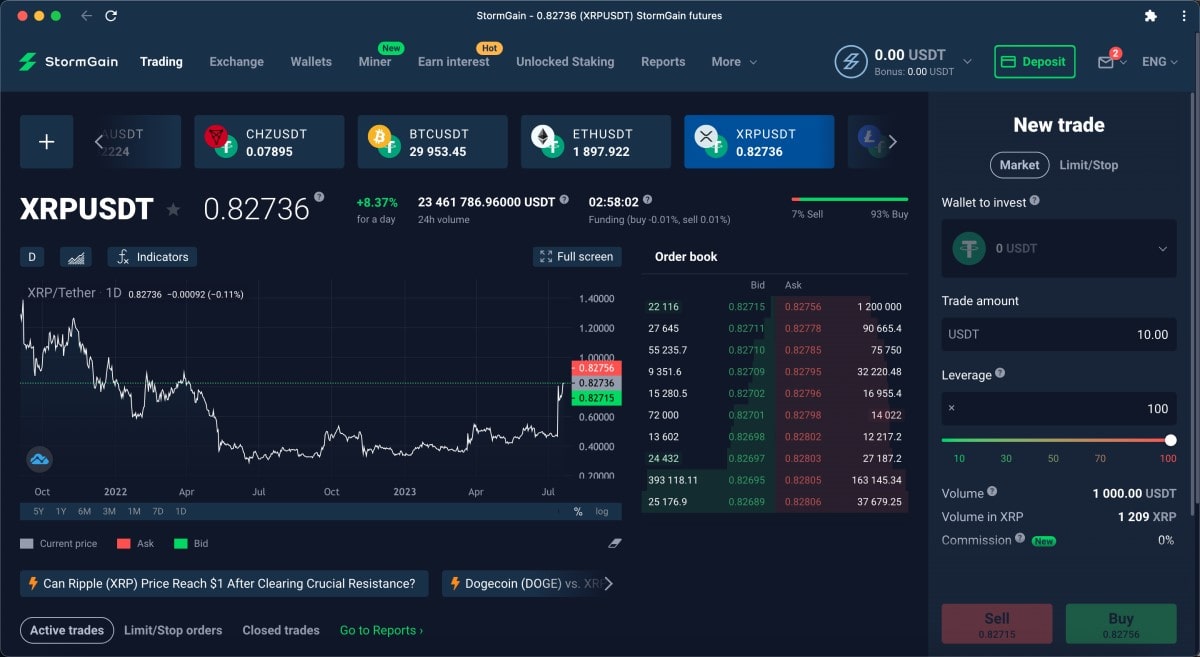
Unlike Bitcoin, which was designed as a decentralized alternative to fiat currency, or Ethereum, which functions as a programmable layer for smart contracts, XRP was engineered with institutional utility in mind. This fundamental difference dictates how the asset moves in the market and how traders should approach their positions. To trade XRP effectively, one must look beyond simple price charts and delve into the intersection of traditional finance, regulatory developments, and blockchain efficiency.
Understanding the Fundamentals of the XRP Ledger
Before placing a single trade, it is imperative to distinguish between Ripple, the enterprise software company, and XRP, the independent digital asset. Ripple uses XRP in its liquidity products to help banks and payment providers move money across borders more efficiently. This institutional backing provides a unique “utility floor” for the asset, which is a significant factor in long-term fundamental analysis.
The Mechanism of Consensus
Unlike many cryptocurrencies that rely on Proof of Work (mining) or Proof of Stake (validating), the XRP Ledger uses a unique consensus protocol. Transactions are confirmed by independent validator nodes that agree on the order and validity of XRP transactions. For a trader, this means two things: speed and cost. Transactions settle in three to five seconds, and fees are negligible. This high throughput makes XRP an excellent “bridge” currency, not just for banks, but for traders moving value between different exchanges.
Supply and Escrow Dynamics
A critical component of XRP’s market value is its supply management. The total supply is capped at 100 billion tokens. Ripple, the company, holds a significant portion of this supply in escrow, releasing a set amount each month to fund operations and incentivize the ecosystem. Any unused tokens are returned to escrow. Traders monitor these releases closely, as they represent predictable increases in circulating supply, which can occasionally influence short-term price action or “sell-side” pressure.
Developing a Ripple Trading Strategy
Trading XRP requires a strategy tailored to its specific market behavior. XRP often undergoes long periods of consolidation followed by explosive, high-volume “breakout” moves. Choosing the right timeframe and methodology is the first step toward consistent performance.
Day Trading XRP
Day trading involves opening and closing positions within a single 24-hour cycle. Because XRP is highly liquid, it offers tight spreads on major exchanges, making it ideal for scalping or momentum trading. Day traders typically focus on technical indicators like the Relative Strength Index (RSI) and Moving Average Convergence Divergence (MACD) to identify overbought or oversold conditions on 5-minute or 15-minute charts. The goal here is to capitalize on small price fluctuations driven by daily news cycles or general market sentiment.
Swing Trading and Trend Following
Swing trading is perhaps the most popular method for XRP investors. This involves holding positions for several days or weeks to capture a “swing” in the price. XRP is known for its “altcoin rallies,” where it may lag behind Bitcoin for a time before making a rapid upward correction. Swing traders look for “higher highs” and “higher lows” on the daily chart. By identifying key support and resistance levels—levels where the price has historically struggled to fall below or rise above—traders can set entry and exit points with a higher degree of confidence.
Position Trading and Long-Term Investing
For those who believe in the systemic integration of Ripple’s technology into the global banking system (the SWIFT replacement theory), position trading is the preferred route. This strategy ignores short-term noise and focuses on the long-term adoption curve. Position traders look at “macro” factors, such as the expansion of Ripple’s On-Demand Liquidity (ODL) corridors and changes in international payment regulations.
Technical and Fundamental Analysis for XRP
Successful trading is a balance between understanding the “why” (fundamental analysis) and the “when” (technical analysis). XRP is particularly sensitive to both.
The Impact of Regulatory News
More than almost any other digital asset, XRP is tethered to the regulatory environment. The legal proceedings between the U.S. Securities and Exchange Commission (SEC) and Ripple have historically been the primary driver of XRP’s price. Positive legal milestones often lead to massive price surges, while negative or ambiguous news can lead to sharp sell-offs. Traders must stay informed through reputable legal analysts and primary source filings to anticipate these shifts.
Chart Patterns and Market Correlation
When performing technical analysis on XRP, it is vital to observe its correlation with Bitcoin (BTC). As the market leader, Bitcoin often dictates the general direction of the crypto market. When BTC is stable, XRP is more likely to move based on its own merits. However, during a BTC crash, even bullish XRP news may not be enough to prevent a price drop. Common patterns to look for include:
-
The Symmetrical Triangle: Often appearing after a large move, this suggests a period of consolidation before a breakout.
-
The Cup and Handle: A bullish reversal pattern that suggests a long-term bottom has been formed.
-
Volume Profiles: Always confirm a price move with volume. A breakout on low volume is often a “fakeout,” whereas a move on high volume suggests institutional participation.
Executing the Trade: Platforms and Security
Once a strategy is in place, the practical execution involves choosing a venue and securing the assets.
Selecting an Exchange
Investors should choose exchanges based on liquidity, security, and fee structures. Major platforms like Binance, Kraken, and Coinbase provide deep order books, ensuring that large trades can be executed without significant “slippage” (the difference between the expected price and the executed price). For more advanced traders, derivative platforms offer XRP futures and options, allowing for “shorting” (betting on the price to go down) or using leverage to amplify gains. However, leverage should be used with extreme caution due to the inherent volatility of the asset.
Wallet Management and Custody
“Not your keys, not your coins” is a common adage in the industry. For active trading, keeping a portion of XRP on an exchange is necessary. However, for long-term holdings, traders should use private wallets. Hardware wallets (cold storage) provide the highest level of security by keeping the private keys offline. When moving XRP between wallets, remember that the XRP Ledger requires a “Tag” or “Memo” for most exchange deposits; failing to include this can lead to a loss of funds.
Risk Management and the Future of XRP
The final, and most crucial, pillar of trading is risk management. Without it, even the best strategy will eventually fail during a market downturn.
Position Sizing and Stop-Losses
Never allocate more capital to a single XRP trade than you are prepared to lose. A common rule of thumb is to risk no more than 1-2% of your total portfolio on any single trade. Furthermore, using “Stop-Loss” orders is non-negotiable. A stop-loss automatically sells your position if the price hits a predetermined level, preventing a bad trade from becoming a catastrophic one. In a market that can move 20% in an hour, an automated exit strategy is a trader’s best friend.

The Macro Outlook
As we look toward the future, the trading environment for XRP will likely be influenced by the rise of Central Bank Digital Currencies (CBDCs). Ripple has positioned the XRP Ledger as a platform for CBDC issuance and interoperability. If central banks adopt this technology, the demand for XRP as a neutral bridge asset could increase exponentially. Conversely, increased competition from other blockchain protocols or traditional financial networks remains a constant risk factor.
Trading Ripple is not merely about gambling on price movements; it is an exercise in analyzing the future of global value transfer. By combining a deep understanding of the XRPL’s utility, a disciplined approach to technical analysis, and a rigorous risk management framework, traders can navigate the complexities of this unique market. Whether you are a day trader looking for quick volatility or a long-term investor banking on financial innovation, XRP offers a distinct opportunity within the broader digital asset economy. Success in this arena requires patience, continuous learning, and the ability to remain objective in the face of market hype and fear.
aViewFromTheCave is a participant in the Amazon Services LLC Associates Program, an affiliate advertising program designed to provide a means for sites to earn advertising fees by advertising and linking to Amazon.com. Amazon, the Amazon logo, AmazonSupply, and the AmazonSupply logo are trademarks of Amazon.com, Inc. or its affiliates. As an Amazon Associate we earn affiliate commissions from qualifying purchases.