
In the modern financial landscape, the phrase “I’ll Venmo you” has become synonymous with settling debts, splitting dinner checks, and managing shared household expenses. Since its inception, Venmo has transformed from a simple peer-to-peer (P2P) payment experiment into a cornerstone of the digital economy. While it appears as a simple social networking app for payments, the underlying financial mechanisms are complex, involving intricate relationships between digital ledgers, traditional banking rails, and evolving regulatory frameworks. Understanding how Venmo works to send money is not just about knowing which buttons to press; it is about understanding how digital liquidity moves and how to manage your personal finances within this ecosystem.

The Financial Mechanics of Venmo Transactions
To understand how money moves through Venmo, one must first view the platform as a digital ledger. Unlike a traditional bank transfer that might move funds directly from one institution to another via the Automated Clearing House (ACH) network, Venmo often operates within its own closed-loop system.
Funding Sources and the Internal Ledger
When you send money on Venmo, the platform first looks at your internal Venmo balance. If you have funds sitting in the app from a previous payment received, Venmo simply updates its internal database. It subtracts the amount from your balance and adds it to the recipient’s balance. This transaction is instantaneous because no money has actually left Venmo’s ecosystem.
If your Venmo balance is zero, the app must pull funds from an external source. Users typically link three types of accounts:
-
Bank Accounts: Linked via routing and account numbers, these transactions use the ACH network.
-
Debit Cards: These offer a faster way to pull funds but are still tied to your liquid bank balance.
-
Credit Cards: Venmo allows the use of credit cards, though this is treated differently due to processing costs.
The Role of the Clearing House
When Venmo pulls money from a linked bank account to facilitate a payment, it initiates an ACH transfer. This is why you might see a “pending” status on your bank statement even if the recipient sees the funds in their Venmo app immediately. Venmo essentially fronts the money to the recipient while waiting for the actual currency to clear from your bank, a process that can take one to three business days. This “fronting” of liquidity is a key part of the user experience, providing the illusion of instantaneous movement for what is traditionally a slow banking process.
Standard vs. Instant Transfers
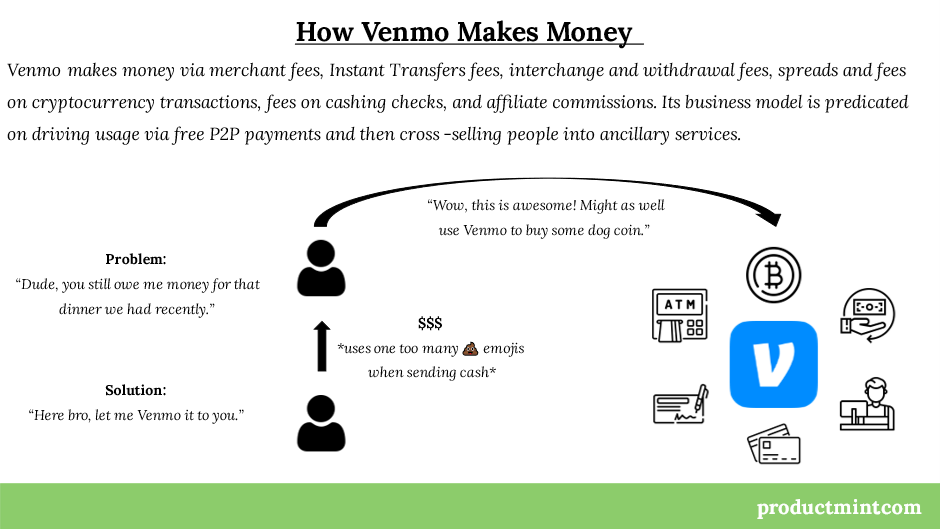
The movement of money out of Venmo back into a traditional bank account is where the platform’s financial structure becomes most visible. A “Standard Transfer” utilizes the ACH network and is free of charge, taking one to three days. An “Instant Transfer,” however, utilizes the Real-Time Payments (RTP) network or pushed-debit technology. This allows the funds to land in a user’s bank account within minutes, but it comes at a cost, reflecting the premium placed on immediate liquidity.
Understanding Costs, Limits, and Fee Structures
For the savvy financial consumer, understanding the cost of moving money is paramount. While Venmo is largely free for casual use, it employs a specific fee structure to cover its operational costs and generate revenue from its services.
Transaction Fees for Senders
Sending money to friends and family using a Venmo balance, a linked bank account, or a debit card is free. However, using a credit card incurs a 3% transaction fee. This fee is not a “Venmo tax” in the traditional sense; rather, it is a pass-through cost. Credit card issuers charge merchants (and in this case, P2P platforms) an interchange fee for processing. Venmo passes this 3% cost directly to the user to avoid losing money on the transaction. For those looking to maximize their personal finance strategy, using a credit card on Venmo is generally discouraged unless it is necessary to meet a specific spending requirement for a sign-up bonus.
Instant Transfer Fees
As of recent updates, Venmo charges a 1.75% fee (with a minimum fee of $0.25 and a maximum of $25) for instant transfers to a bank account or debit card. For individuals managing a tight budget, these fees can add up over time. Choosing the 1–3 day standard transfer is a simple way to preserve capital and maintain better control over one’s financial overhead.
Sending and Transfer Limits
To comply with anti-money laundering (AML) regulations and “Know Your Customer” (KYC) laws, Venmo imposes strict limits on how much money can be moved.
-
Unverified Users: If you have not completed the identity verification process, your weekly spending limit is generally capped at a low threshold, often around $299.99.
-
Verified Users: Once you provide your Social Security Number, zip code, and birthdate, your limits increase significantly. Currently, the combined weekly spending limit for verified users is $60,000, though individual transactions and bank transfers may have lower ceilings (such as $19,999.99 per week for bank transfers).
Understanding these limits is crucial for users who intend to use Venmo for larger financial obligations, such as paying a monthly rent share or settling a large group travel bill.

Security Protocols and Financial Protections
One of the most critical aspects of how Venmo works to send money is the security architecture designed to protect those funds. Because Venmo handles billions of dollars in volume, it must employ bank-level security measures to safeguard user data and assets.
Data Encryption and Multi-Factor Authentication
Venmo uses data encryption to protect your financial information from unauthorized access. Furthermore, the platform utilizes Multi-Factor Authentication (MFA). When a user logs in from an unrecognized device, Venmo requires a code sent via SMS or email. This adds a layer of protection against account takeover (ATO) attacks, which are common in the fintech space.
Purchase Protection for Goods and Services
Historically, Venmo was strictly for “friends and family,” meaning there was no recourse if a transaction went wrong. However, Venmo has introduced a “Goods and Services” toggle. When a sender marks a payment as a purchase, the transaction is covered by Venmo’s Purchase Protection. This means if an item is not received or is significantly different from what was described, the buyer can file a dispute to recover their money.
From a financial perspective, this shifts the risk. For the protection to apply, the seller pays a small fee (similar to a merchant processing fee). This creates a safer environment for side hustles and small-scale commerce, aligning Venmo more closely with its parent company, PayPal.
Identifying Potential Scams
Despite technical security, the “human element” remains the greatest risk in P2P payments. Common scams include the “accidental transfer” scam, where a fraudster sends money using a stolen credit card and then asks for it back. Once the victim “returns” the money using their own balance, the original stolen transaction is reversed, leaving the victim out of pocket. Understanding that Venmo payments are designed to be final and irreversible (unless marked as a purchase) is the first step in digital financial literacy.
Integrating Venmo into a Broader Personal Finance Strategy
Venmo is no longer just a standalone tool; it is a financial instrument that should be integrated into your broader money management strategy.
Budgeting for Social Expenses
Many modern budgeting apps now sync directly with Venmo. Because social spending is often the most difficult category to track, using Venmo’s transaction history as a ledger can provide deep insights into your discretionary spending habits. By reviewing your Venmo feed, you can categorize expenses—like “Dining Out” or “Utilities”—to ensure you are staying within your monthly financial goals.
The Venmo Debit and Credit Cards
To further bridge the gap between digital and physical finance, Venmo offers a Mastercard debit card and a Visa credit card.
-
The Debit Card: Allows you to spend your Venmo balance at any retailer that accepts Mastercard. This provides immediate access to your funds without waiting for a bank transfer.
-
The Credit Card: Offers cash-back rewards that can be automatically converted into cryptocurrency or deposited back into your Venmo balance. For those who use Venmo as their primary social payment tool, these cards offer a way to earn rewards on transactions that were previously non-incentivized.
Tax Reporting and the 1099-K Requirement
In recent years, the IRS has adjusted the reporting requirements for P2P platforms. If you use Venmo for business purposes or sell goods and services, you may receive a Form 1099-K if your gross payments exceed a certain threshold (currently in a state of flux but trending toward a $600 limit). It is vital to distinguish between personal “reimbursements”—which are not taxable—and business “income.” Keeping your personal and business transactions separate on Venmo is essential for accurate tax reporting and avoiding unnecessary audits.
Choosing the Right P2P Platform for Your Needs
While Venmo is a leader in the space, it is one of several tools available. Choosing how to send money depends on your specific financial needs.
Venmo vs. Zelle vs. Cash App
-
Zelle: Works directly between bank accounts and is often faster for large, trusted transfers because it moves money between the banks themselves without an intermediary ledger. However, it lacks the social features and “purchase protection” of Venmo.
-
Cash App: Offers similar features to Venmo but includes more robust tools for investing in stocks and Bitcoin.
-
Venmo: Remains the king of social payments. Its “social feed” (which can be set to private) and its widespread adoption make it the most convenient tool for splitting costs among a large peer group.
In conclusion, Venmo works by operating a sophisticated digital ledger that interfaces with the traditional banking system. By understanding the underlying mechanics—from ACH clearing times to credit card fees and tax implications—users can move money more efficiently and securely. As the lines between social media and personal finance continue to blur, mastering tools like Venmo is an essential component of modern financial health.
aViewFromTheCave is a participant in the Amazon Services LLC Associates Program, an affiliate advertising program designed to provide a means for sites to earn advertising fees by advertising and linking to Amazon.com. Amazon, the Amazon logo, AmazonSupply, and the AmazonSupply logo are trademarks of Amazon.com, Inc. or its affiliates. As an Amazon Associate we earn affiliate commissions from qualifying purchases.