
Navigating the digital marketplace of travel booking requires more than just an eye for a good deal; it requires a granular understanding of the financial contracts you enter when clicking the “book” button. On platforms like Expedia, the term “non-refundable” is ubiquitous, often attached to the most enticing price points. From a personal finance perspective, choosing a non-refundable rate is a calculated risk—a trade-off between immediate capital savings and the potential for a total loss of investment. To manage your travel budget effectively, you must understand exactly what this designation means for your wallet, your consumer rights, and your overall financial planning.
The Economics of Non-Refundable Bookings
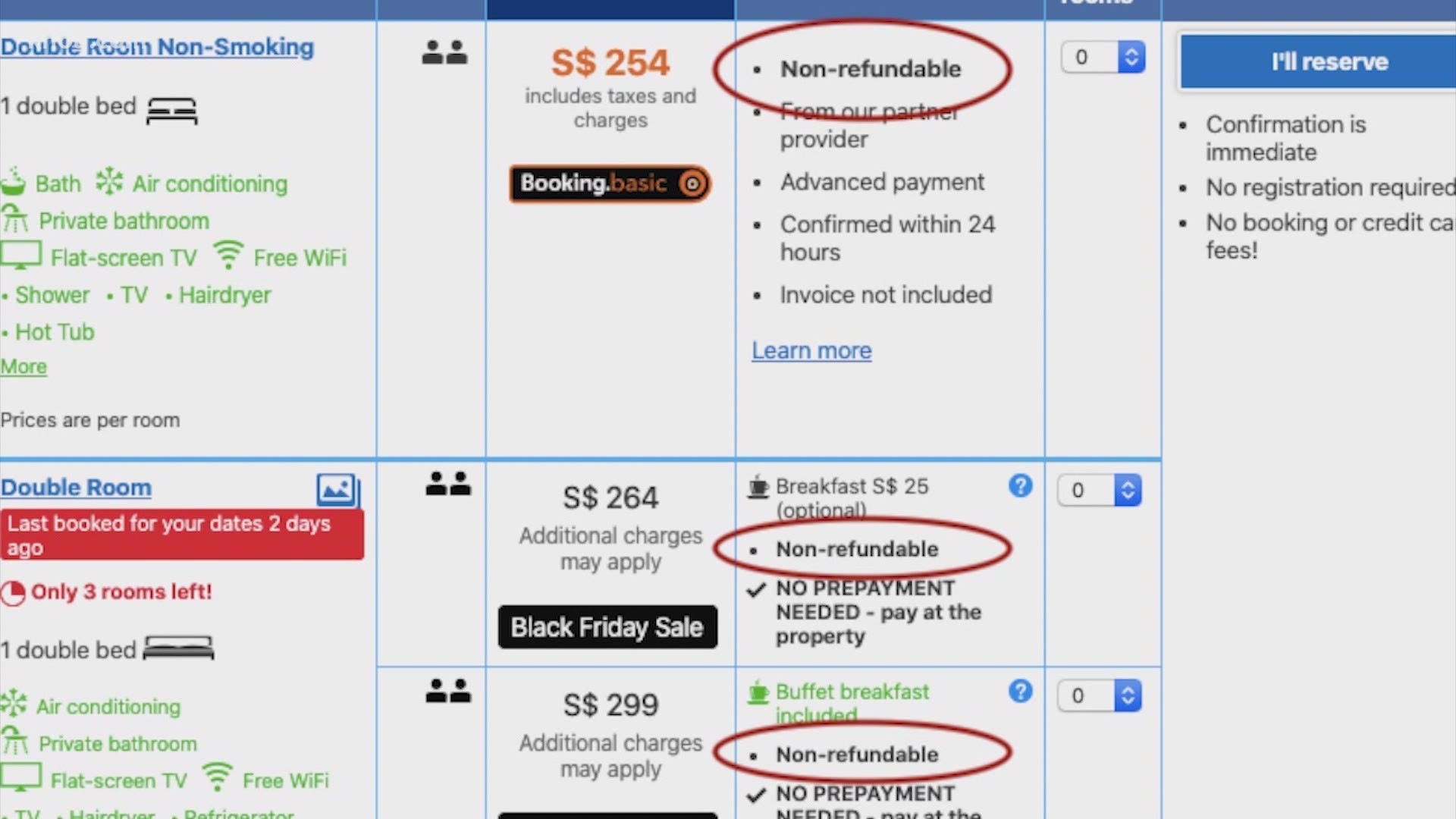
The travel industry operates on a model of perishable inventory. A hotel room or an airplane seat that goes unoccupied for a night is revenue lost forever. To mitigate this risk, service providers and aggregators like Expedia offer tiered pricing. The non-refundable rate is essentially a financial instrument designed to guarantee revenue for the provider while offering a discount to the consumer in exchange for the assumption of risk.
Why Travel Platforms Offer Lower Rates for Restricted Tickets
From a business finance standpoint, non-refundable bookings provide companies with immediate liquidity and predictable cash flow. When you book a non-refundable hotel room or flight, the provider can count that revenue as “guaranteed,” allowing them to manage their balance sheets with higher precision. Because they are shifting the risk of cancellation from their shoulders to yours, they “pay” you for that risk-taking in the form of a lower price. This is a classic risk-premium model, but in reverse: you are the insurer of the booking, and the discount is your premium.
The Trade-off Between Upfront Savings and Potential Loss
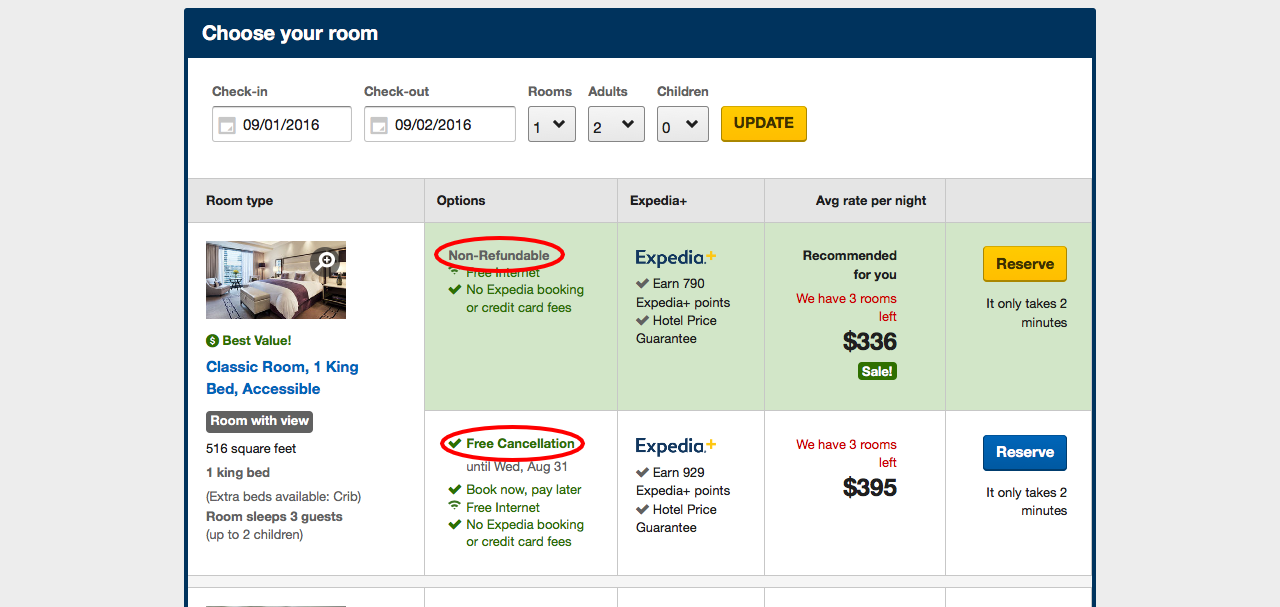
When faced with a choice between a $500 refundable room and a $400 non-refundable room, the traveler is making an internal financial projection. You are essentially betting $100 that your plans will not change. If the trip proceeds as planned, you have achieved a 20% savings on that specific line item. However, if an emergency arises, the “cost” of that room is no longer $400—it is the full $400 plus the cost of any replacement booking you might need to make in the future. In financial terms, you are weighing the “expected value” of the savings against the “maximum potential loss.”
The “Sunk Cost” Trap in Travel Planning
A non-refundable booking immediately becomes a “sunk cost.” In behavioral economics, this can lead to poor financial decision-making later on. Travelers might feel forced to spend even more money on a trip they no longer wish to take—or one that has become logistically difficult—simply because they cannot recover the initial booking fee. Understanding that “non-refundable” means the money is gone the moment the transaction is processed is vital for maintaining a rational approach to your travel budget.
Navigating Expedia’s Cancellation Policies and Financial Risk
Expedia acts as a marketplace, meaning that “non-refundable” can mean different things depending on whether you are dealing with an airline, a hotel, a car rental agency, or a cruise line. While Expedia provides the interface, the underlying financial contract is often dictated by the service provider’s specific terms of service.
Identifying the Fine Print in Your Itinerary
When browsing Expedia, the “non-refundable” label is usually displayed prominently near the price. However, the financial implications extend into the “Rules and Restrictions” link, which many users overlook. This section details whether the booking is truly “zero-recovery” or if there is a possibility of obtaining a “Future Travel Credit.” While a credit is better than a total loss, it is still a form of “trapped capital”—money that can only be spent with one specific vendor, often within a strictly defined timeframe. From a liquidity perspective, a credit is significantly inferior to a cash refund.
How “Non-Refundable” Interacts with Merchant and Agency Models
Expedia utilizes two primary business models: the Merchant Model and the Agency Model. In the Merchant Model, Expedia acts as the merchant of record, meaning they buy rooms in bulk and resell them. In the Agency Model, they simply facilitate the transaction between you and the hotel. This distinction matters for non-refundable bookings. If you have a dispute or a request for a hardship refund, knowing who actually holds your money—Expedia or the hotel—is the first step in any financial recovery effort. Typically, non-refundable merchant bookings are the most rigid, as the funds have already been factored into Expedia’s quarterly revenue projections.
The 24-Hour Grace Period: A Financial Safety Net
In the United States, the Department of Transportation (DOT) mandates that for most flights booked at least seven days before departure, consumers have a 24-hour window to cancel without penalty, even on non-refundable tickets. This is a critical piece of financial protection. If you realize you made a budgetary error or found a better price within 24 hours of booking on Expedia, you can claw back that capital. However, this rule generally applies to flights and does not universally extend to hotels or car rentals unless specifically stated in the Expedia terms.
Strategies to Protect Your Capital
Given the risks associated with non-refundable bookings, savvy travelers use various financial tools to hedge against potential losses. Treating a high-value trip like an investment portfolio allows you to spend with confidence, knowing you have a “stop-loss” mechanism in place.

Utilizing Travel Insurance to Mitigate Risk
Travel insurance is the primary hedge against the “non-refundable” tag. For a premium—usually 4% to 10% of the trip cost—you can purchase a policy that covers “covered reasons” for cancellation, such as illness or job loss. For those seeking maximum protection, “Cancel For Any Reason” (CFAR) insurance provides a higher level of security, typically refunding 50% to 75% of non-refundable costs regardless of why you cancel. While this adds to the upfront cost of the trip, it effectively converts a non-refundable booking into a partially refundable one, protecting the bulk of your capital.
Credit Card Protections and Chargeback Realities
Many high-end credit cards geared toward personal finance and travel offer built-in trip cancellation insurance. If you use a card with these benefits to pay for your Expedia booking, you may be reimbursed for non-refundable expenses if the cancellation is due to a covered reason (like a medical emergency). It is important to distinguish this from a “chargeback.” A chargeback is a tool for fraud or service failure; using it to circumvent a “non-refundable” policy you agreed to is generally unsuccessful and can lead to being blacklisted by the booking platform.
The “Self-Insurance” Strategy
For frequent travelers, “self-insurance” is a viable financial strategy. Instead of paying for insurance on every trip, you take the savings earned from choosing non-refundable rates and set them aside in a dedicated high-yield savings account. Over time, the accumulated savings from dozens of discounted bookings will likely exceed the cost of the occasional lost booking. This approach requires disciplined financial tracking and a high enough volume of travel to make the math work in your favor.
When “Non-Refundable” Isn’t Absolute: Exceptions and Legal Protections
While the term implies a finality that favors the merchant, there are specific legal and regulatory frameworks that can override a “non-refundable” clause. Understanding these can be the difference between a total loss and a full recovery of your funds.
Significant Schedule Changes and Cancellations
If an airline makes a “significant” change to your flight schedule or cancels the flight entirely, you are entitled to a full refund in the original form of payment, regardless of whether your ticket was “non-refundable.” The definition of “significant” has historically been a point of contention, but recent regulatory updates have moved toward more consumer-friendly definitions (often 3 hours for domestic and 6 hours for international). If Expedia offers you a voucher in this scenario, remember that you have the right to demand cash.
Extenuating Circumstances and “Force Majeure”
In rare instances, such as a global pandemic, a natural disaster, or a major change in government travel advisories, companies may trigger “force majeure” clauses. During these times, the standard non-refundable rules are often suspended. While you cannot count on these as a standard part of your financial planning, it is important to monitor the news and the specific “hardship policies” that Expedia or its partners may roll out during large-scale disruptions.
Negotiating Vouchers and Credits
If you must cancel a non-refundable booking and do not have insurance, your best financial move is often negotiation. While a refund may be contractually barred, many hotel managers have the discretion to offer a “manager’s credit” or to move your booking dates to a future time. From a personal finance perspective, a date change is a neutral event (excluding any price differences), whereas a cancellation is a 100% loss. Always approach these negotiations with a professional tone, focusing on your desire to remain a loyal customer.
Making the Smarter Financial Choice for Your Next Trip
Ultimately, the decision to book a non-refundable rate on Expedia should be driven by data and a clear understanding of your financial risk tolerance. It is not merely a matter of “saving money” today; it is a matter of protecting your wealth for tomorrow.
Calculating the Risk-Adjusted Value of a Booking
To determine if a non-refundable rate is worth it, use a simple risk-adjustment formula. Compare the cost of the refundable rate ($R$) to the non-refundable rate ($N$). The “savings” is $R – N$. Then, estimate the probability ($P$) that you will need to cancel (e.g., 5% or 0.05). If the savings ($R – N$) is greater than the expected loss ($P times N$), the non-refundable rate is mathematically the better financial choice. If you are booking months in advance for a trip with many moving parts, the probability of cancellation rises, often making the refundable rate the more prudent investment.
Best Practices for High-Stakes Travel Planning
For high-cost travel, such as international vacations or business trips with fixed deadlines, the “Money” niche perspective suggests a three-tier approach:
-
Use a Protected Payment Method: Always book with a credit card that offers travel insurance as a standard feature.
-
Audit the “Refundable” Window: Many “refundable” rooms on Expedia are only refundable up to 48 or 72 hours before arrival. Mark these dates in your financial calendar to avoid missing the window.
-
Diversify Your Bookings: You might choose a non-refundable rate for a $100 car rental (low risk) but opt for a fully refundable rate for a $3,000 resort stay (high risk).
By treating Expedia bookings as a series of financial decisions rather than simple logistical tasks, you can optimize your travel spend, minimize your exposure to loss, and ensure that your travel budget remains a tool for enrichment rather than a source of financial stress. Understanding that “non-refundable” is a contractual status—not a suggestion—is the first step toward mastering your personal travel economy.
aViewFromTheCave is a participant in the Amazon Services LLC Associates Program, an affiliate advertising program designed to provide a means for sites to earn advertising fees by advertising and linking to Amazon.com. Amazon, the Amazon logo, AmazonSupply, and the AmazonSupply logo are trademarks of Amazon.com, Inc. or its affiliates. As an Amazon Associate we earn affiliate commissions from qualifying purchases.