
As tax season approaches, the annual ritual of gathering documents and calculating liabilities begins. For many taxpayers, the complexity of the tax code makes professional assistance a necessity, yet the high costs of traditional accounting firms often lead individuals to seek more affordable, technology-driven solutions. TurboTax remains the industry leader in this space, offering a tiered suite of products designed to cater to everything from the simplest W-2 returns to the intricate filings of self-employed professionals and high-net-worth investors.
Choosing the correct version of TurboTax for the 2024 tax year is not merely a matter of convenience; it is a critical financial decision. Selecting a tier that is too basic may result in missed deductions or, worse, an incomplete filing that triggers an IRS audit. Conversely, paying for a premium version when your tax situation is straightforward leads to unnecessary expenditure. This guide examines the 2024 lineup to help you identify the specific tool that aligns with your financial profile.
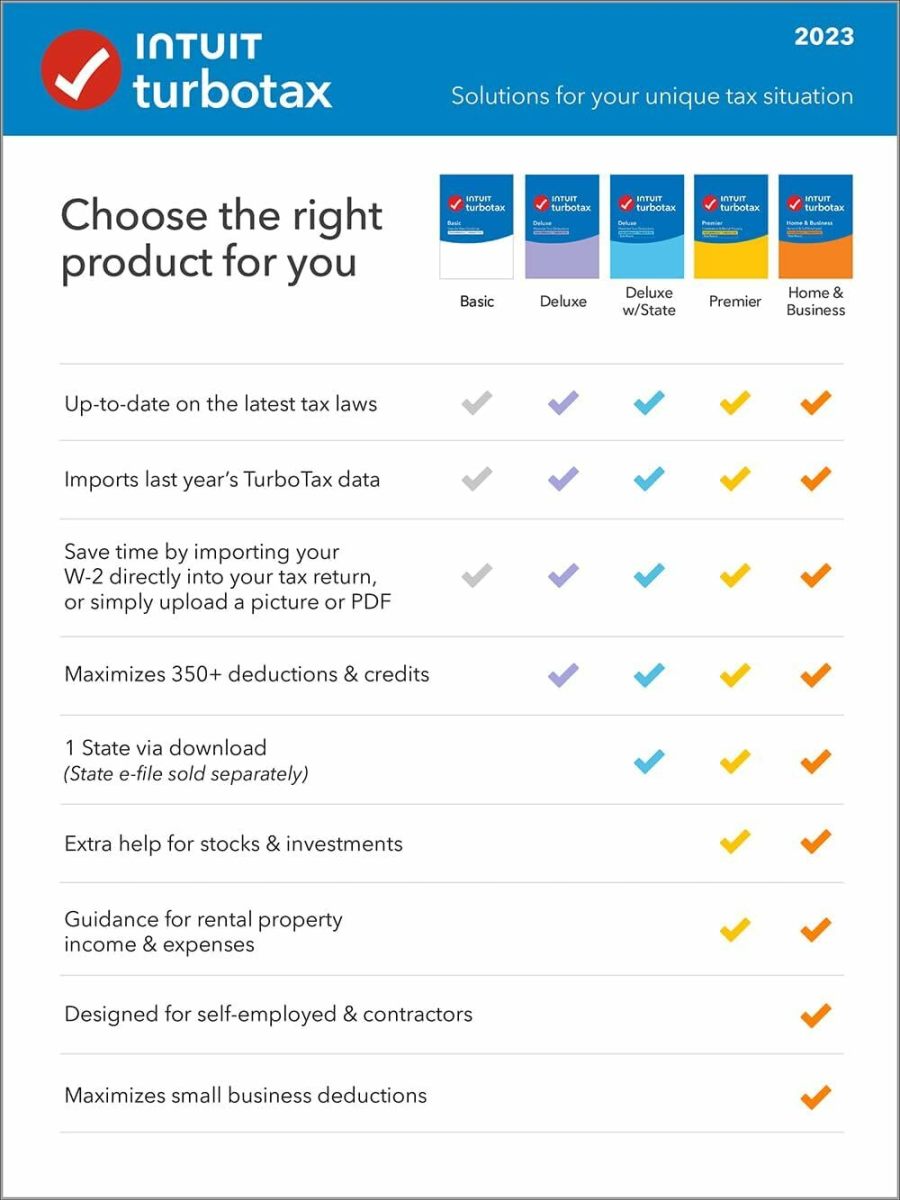
Breaking Down the TurboTax Tiers: From Simple to Complex
The TurboTax ecosystem is structured around the complexity of your income sources and the types of deductions you intend to claim. For 2024, the software has refined its user interface and logic engines to better handle the nuances of modern financial lives, including remote work expenses, cryptocurrency transactions, and the ever-evolving gig economy.
TurboTax Free Edition
The Free Edition is designed exclusively for taxpayers with “simple” tax returns. Generally, this means you are filing a Form 1040 only. It is ideal for individuals whose primary income is derived from a W-2, those claiming the standard deduction, and those with limited interest or dividend income reported on 1099-INT or 1099-DIV forms. It also handles the Earned Income Tax Credit (EITC) and child tax credits. However, it is important to note that if you have student loan interest to deduct, unemployment income to report, or if you itemize deductions, you will likely be prompted to upgrade.
TurboTax Deluxe
TurboTax Deluxe is widely considered the most popular version because it bridges the gap between basic filing and complex financial situations. This tier is specifically engineered for those who want to maximize their deductions beyond the standard amount. If you own a home and want to deduct mortgage interest and property taxes, or if you have significant charitable contributions and medical expenses, Deluxe is the starting point. It searches over 350 tax deductions and credits to ensure no stone is left unturned. For the 2024 tax year, Deluxe also provides enhanced support for those dealing with education credits and student loan interest.
TurboTax Premier
As individual investment portfolios become more diverse, TurboTax Premier has become an essential tool for the modern investor. This version is required if you sold stocks, bonds, or mutual funds during the year. It is particularly adept at handling the complexities of cryptocurrency, providing automated imports from various exchanges and calculating gains and losses with precision. Additionally, Premier is the designated choice for individuals with rental property income and expenses. If you are a landlord or a frequent trader, the automated “cost basis” tracking in this version can save hours of manual calculation.
TurboTax Self-Employed
The rise of the “side hustle” and independent contracting has made the Self-Employed version a staple for millions. This tier is built for freelancers, 1099-NEC contractors, and small business owners who need to file a Schedule C. It offers industry-specific deduction discovery, helping users identify write-offs they might not have considered, such as home office expenses, travel, and specialized equipment. For 2024, the Self-Employed version features deep integration with QuickBooks, allowing for a seamless transfer of expense data throughout the year into the final tax return.
Specialized Support: Live Assisted vs. Full Service
One of the most significant shifts in financial technology over the last few years has been the integration of human expertise into automated software. TurboTax has categorized its offerings into three distinct service levels: DIY, Live Assisted, and Full Service.
The DIY Experience
The standard DIY path is what most long-term users are familiar with. You enter your data, the software runs the calculations, and you file. This is best for those who are confident in their record-keeping and have a clear understanding of their financial year. The software’s internal error-checking mechanisms are robust, but you are ultimately responsible for the data entry.

TurboTax Live Assisted
For many, the fear of making a mistake is the biggest hurdle in tax preparation. Live Assisted allows you to work through your taxes independently while maintaining the ability to click a button and speak with a tax expert via one-way video. These experts can review your return line-by-line before you file, providing a “signed-off” level of confidence without the price tag of a full-service firm. In 2024, this service has been expanded to provide year-round tax advice, not just during the filing season.
TurboTax Live Full Service
TurboTax Live Full Service is a direct competitor to traditional CPA firms. In this model, you upload your documents, and a dedicated tax expert takes over the entire process. They prepare the return, walk you through the results, and file it on your behalf. This is the premium option for those whose time is more valuable than the cost of the service, or for those whose tax situations have become so convoluted (due to multi-state income, complex business structures, or large inheritance) that they no longer feel comfortable using a software-only approach.
Key Factors in Making Your Final Decision
When deciding which TurboTax product to purchase for 2024, you must look beyond just the price tag and evaluate your financial year through several specific lenses.
Complexity of Income Sources
The first question is always: Where did your money come from? If you have a single W-2, your path is simple. However, if you received K-1s from a partnership, had several 1099s from freelance work, and sold equity in a startup, you are immediately moved into the Premier or Self-Employed categories. It is better to start with the version that matches your highest level of complexity rather than trying to “force” data into a lower-tier product.
Itemization vs. Standard Deduction
With the standard deduction at historic highs, fewer taxpayers find it beneficial to itemize. However, if your mortgage interest, state and local taxes (up to the $10,000 cap), and charitable gifts exceed the standard deduction, you must use at least the Deluxe version. TurboTax will often run the numbers both ways to show you which method results in a lower tax bill, but the logic required to do this effectively is absent in the Free edition.
The Cost-to-Value Ratio
Consider the value of your time and the potential for error. If you are an active investor with 500 cryptocurrency trades, the Premier version’s ability to auto-import that data is worth the cost alone. Manually entering those trades into a cheaper version would not only be a logistical nightmare but would drastically increase the risk of a mathematical error. In the world of personal finance, the most expensive software is often the one that fails to find a thousand-dollar deduction you were entitled to.
Strategies for a Seamless Filing Experience in 2024
Once you have identified the right version of TurboTax, the focus shifts to execution. High-quality financial tools are only as effective as the data provided to them.
Organizing Your Financial Documentation
Before opening the software, ensure you have a digital or physical folder containing every relevant document. This includes W-2s, 1099s (INT, DIV, B, NEC, K), 1098s for mortgage interest, and receipts for any business expenses or charitable donations. For 2024, many financial institutions provide downloadable files specifically formatted for TurboTax import. Utilizing these can reduce data entry errors by nearly 100%.
Leveraging Artificial Intelligence and Automation
TurboTax has integrated more AI-driven features for the 2024 cycle. These features analyze your data in real-time to spot anomalies—such as a missing 1099 from an employer you worked for in the previous year but didn’t report this year. Pay attention to the “Tax Health” indicators and suggestions the software provides. These are not merely suggestions; they are often based on massive datasets of IRS filing patterns designed to help you avoid red flags.

Security and Data Protection
In an era of increasing digital fraud, the security of your financial data is paramount. TurboTax utilizes multi-factor authentication and high-level encryption. When choosing your version, ensure you are purchasing directly from the official website or a reputable authorized retailer to avoid “phishing” versions of the software that aim to steal sensitive personal information.
Ultimately, the “right” TurboTax for 2024 is the one that provides the maximum peace of mind at the most efficient price point. Whether you are a student filing for the first time or a seasoned investor managing a complex portfolio, matching the software’s capabilities to your financial reality is the first step toward a successful and stress-free tax season. By understanding the nuances of each tier and leveraging the available expert support, you can ensure that your 2024 filing is accurate, optimized for deductions, and fully compliant with current tax laws.
aViewFromTheCave is a participant in the Amazon Services LLC Associates Program, an affiliate advertising program designed to provide a means for sites to earn advertising fees by advertising and linking to Amazon.com. Amazon, the Amazon logo, AmazonSupply, and the AmazonSupply logo are trademarks of Amazon.com, Inc. or its affiliates. As an Amazon Associate we earn affiliate commissions from qualifying purchases.