
The transition from utilizing professional accounting services to managing your own tax filings is a significant milestone in personal financial management. For many, the prospect of navigating the Internal Revenue Code feels daunting, yet the modern financial landscape has evolved to empower the individual taxpayer. Filing your taxes yourself is no longer just about saving on professional fees; it is about gaining a granular understanding of your own cash flow, liabilities, and the various incentives the government provides to those who manage their money wisely.
When you take control of your tax filing process, you bridge the gap between earning income and understanding its net value. This guide explores the strategic approach to self-filing, the tools that facilitate the process, and the financial frameworks you need to ensure accuracy and maximize your returns.

Understanding the Landscape of Self-Filing
Before diving into forms and calculations, it is essential to assess your financial complexity. Not every tax situation is suited for a DIY approach, but as software becomes more sophisticated, the threshold for what an individual can handle has shifted significantly.
Assessing Your Financial Complexity
The first step in self-filing is determining where you sit on the spectrum of financial complexity. If your income is derived solely from a W-2 employer and you plan to take the standard deduction, the process is straightforward and can often be completed in less than an hour. However, as you introduce variables such as freelance income (1099s), rental properties, capital gains from stock trading, or ownership in a multi-member LLC (K-1s), the stakes become higher.
Self-filing is ideal for those who have a proactive interest in their personal finances. If you find yourself curious about how your 401(k) contributions lower your taxable income or how your student loan interest deduction functions, you are a prime candidate for filing yourself.
The Shift Toward Financial Autonomy
There is a profound psychological benefit to self-filing. When a professional handles your taxes, the final “number”—whether it’s a refund or a balance due—can feel like a random judgment from the IRS. When you file yourself, you see the direct correlation between your financial decisions and your tax outcomes. You begin to see your taxes as a year-round strategy rather than a springtime chore. This shift in perspective is the foundation of long-term wealth building.
Essential Financial Tools and Software for the DIY Taxpayer
The rise of financial technology (FinTech) has democratized the tax preparation process. For most taxpayers, the choice of software is the most critical decision in the self-filing journey.
Top Software Options for Different Budgets
The market for tax software is diverse, catering to various levels of financial complexity.
-
Established Giants: Platforms like TurboTax and H&R Block offer robust, interview-style interfaces. They are excellent for users who want a “hand-holding” experience, as they translate complex tax laws into simple questions. However, these often come with higher price tags, especially for state filings or investment income.
-
Value-Driven Solutions: Platforms like FreeTaxUSA have gained a massive following in the personal finance community. They provide federal filing for free and charge a nominal fee for state returns, covering almost all complex scenarios, including K-1s and rental income, without the steep “upsell” model of larger competitors.
-
IRS Direct File and Free File: For those within certain income limits, the IRS Free File program provides access to brand-name software at no cost. Additionally, the new IRS Direct File pilot program allows eligible taxpayers in participating states to file directly through the government’s own portal, streamlining the process further.
Leveraging Digital Tools for Documentation
Filing your taxes is 80% organization and 20% data entry. To file efficiently, you should leverage digital security and storage tools throughout the year.
-
Digital Vaults: Use encrypted cloud storage to save PDFs of your W-2s, 1099s, and 1098s as they arrive in January.
-
Expense Tracking Apps: If you are a freelancer or small business owner, apps that sync with your bank accounts to categorize expenses are invaluable. Tools like QuickBooks Self-Employed or specialized apps like Expensify can generate a Schedule C summary that makes tax season a breeze.
The Step-by-Step Roadmap to Filing Success
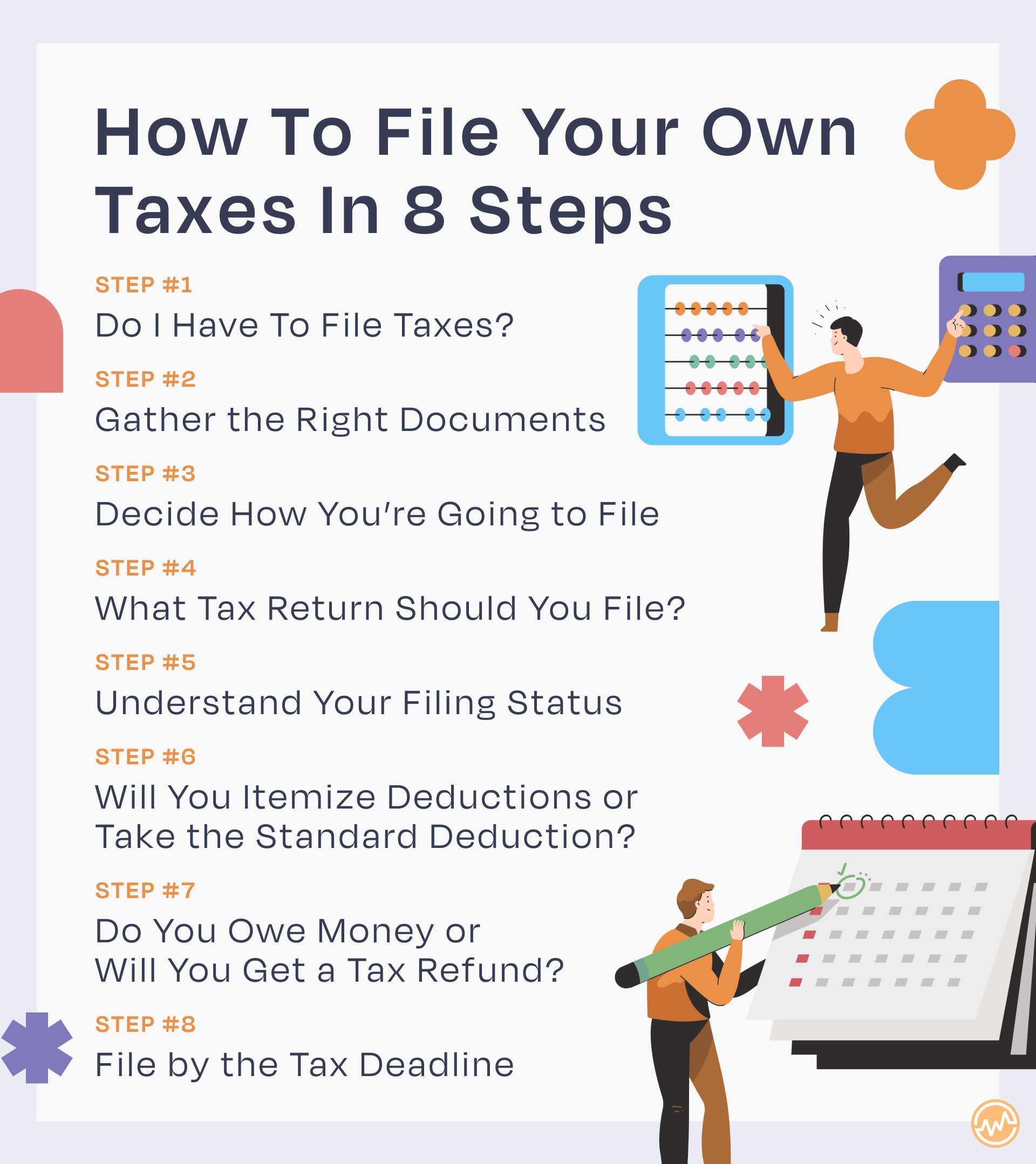
Filing your taxes yourself requires a systematic approach. By breaking the process down into logical phases, you reduce the risk of error and ensure you aren’t leaving money on the table.
Phase 1: Gathering and Categorizing Documentation
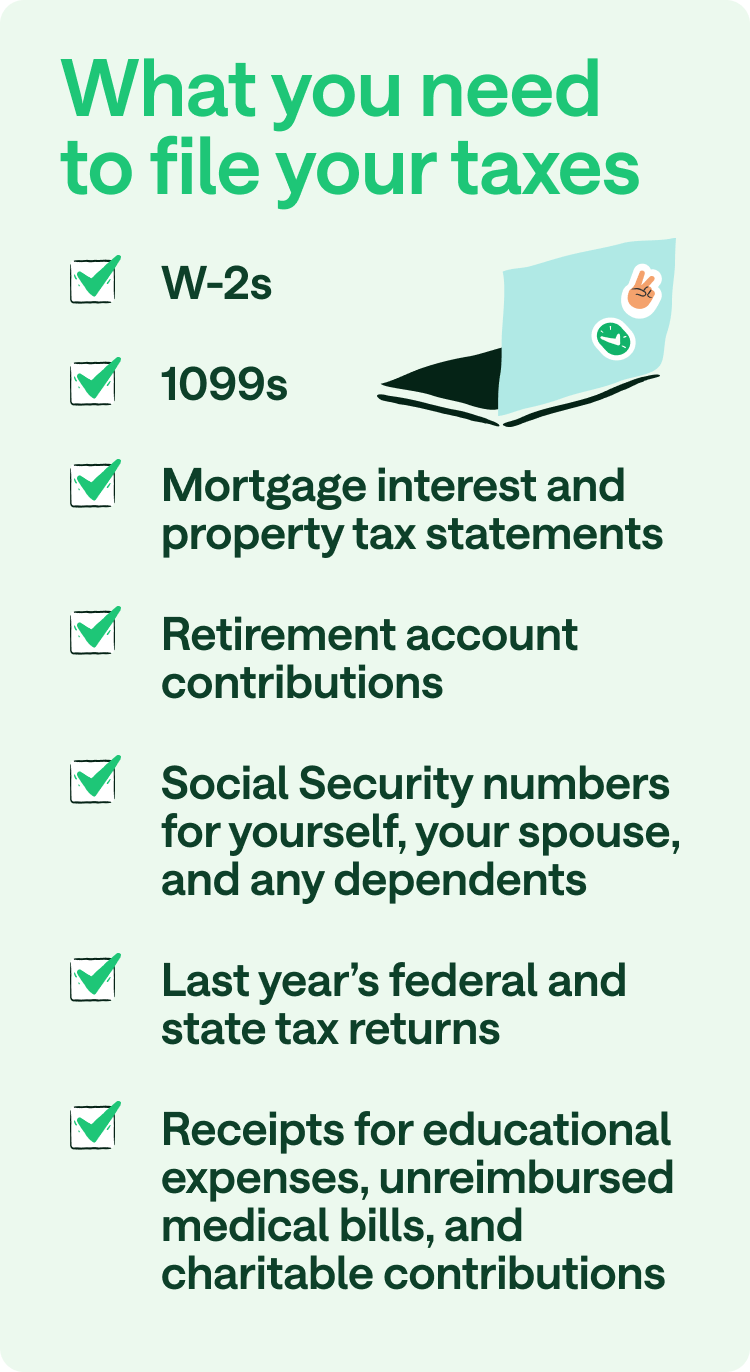
Before opening your software of choice, gather all necessary documents. This includes:
-
Income Statements: W-2s for employees, 1099-NEC for freelancers, 1099-INT for bank interest, and 1099-DIV/B for investments.
-
Adjustments to Income: Records of IRA contributions, student loan interest, and HSA contributions. These are “above-the-line” deductions that lower your Adjusted Gross Income (AGI) even if you don’t itemize.
-
Tax Credits: Information regarding dependents (Child Tax Credit), education expenses (AOTC or Lifetime Learning Credit), and energy-efficient home improvements.
Phase 2: Navigating Deductions and Credits
The most common question for self-filers is whether to take the standard deduction or to itemize. Since the Tax Cuts and Jobs Act of 2017, the standard deduction has been high enough that the vast majority of taxpayers no longer need to itemize (Schedule A).
However, you must be aware of “Tax Credits” versus “Tax Deductions.” A deduction lowers the amount of income you are taxed on, while a credit is a dollar-for-dollar reduction in the tax you owe. Credits are more powerful. If you are self-filing, pay close attention to the Earned Income Tax Credit (EITC) and the Child Tax Credit, as these are frequently updated by Congress.
Phase 3: Executing the E-File and Payment Logistics
Once the data is entered, the software will perform a final “audit check” to flag inconsistencies. When you are ready to file, e-filing is the gold standard. It is faster, more secure, and provides an immediate confirmation receipt. If you owe money, you can schedule an electronic funds withdrawal or pay via the IRS “Direct Pay” portal. If you are owed a refund, opting for direct deposit is the fastest way to receive your funds, often within 21 days.
Avoiding Common Pitfalls and Ensuring Accuracy
The primary fear of filing oneself is the risk of an audit or an error. While the IRS audit rate is historically low for individual taxpayers, accuracy remains paramount for financial peace of mind.
Understanding Tax Law Changes
Tax laws are not static. Every year, there are adjustments for inflation (bracket creeps), changes to standard deduction amounts, and the expiration of temporary credits. Good tax software will update these automatically, but as a savvy financial manager, you should stay informed. For example, changes to 1099-K reporting thresholds for digital payments (like Venmo or PayPal) have been a moving target recently. Knowing these nuances helps you avoid surprises.
The Importance of Double-Checking Math and Personal Data
The most common reasons for rejected tax returns are not complex legal errors, but simple typos.
-
SSN and Names: Ensure that names and Social Security numbers match exactly what is on the social security cards for you, your spouse, and your dependents.
-
Routing Numbers: A single digit error in your bank routing number can delay a refund by weeks or months as the IRS waits for the funds to bounce back before issuing a paper check.
-
Rounding: Most tax software rounds to the nearest dollar. If you are doing manual calculations, consistency in rounding is key to preventing minor discrepancies that flag the system.
Maximizing Your Refund and Planning for Next Year
The act of filing your taxes should not be the end of your financial cycle; it should be the beginning of your strategy for the following year.
Strategies for Lowering Future Tax Liabilities
As you review your completed return, look at your “Effective Tax Rate”—this is the actual percentage of your income that went to the government, as opposed to your “Marginal Tax Rate” (your highest bracket). If you find your tax liability is higher than you’d like, use the self-filing process to identify “levers” you can pull.
-
Retirement Accounts: Increasing your 401(k) or traditional IRA contributions is the most direct way to lower your taxable income.
-
Health Savings Accounts (HSAs): If you have a high-deductible health plan, an HSA offers a triple tax advantage: contributions are tax-deductible, growth is tax-free, and withdrawals for medical expenses are tax-free.
Setting Up a Continuous Organization System
The best way to make next year’s filing even easier is to start organizing today. Create a physical or digital folder labeled for the current tax year. Every time you make a charitable donation, receive a medical bill, or pay property taxes, drop the receipt into that folder immediately.
Filing your taxes yourself is a journey toward financial literacy. It demystifies the relationship between the citizen and the state and provides a clear-eyed view of your true earnings. By utilizing the right tools, staying organized, and viewing the process as a strategic financial exercise, you turn a mandatory obligation into an opportunity for empowerment and wealth optimization.
aViewFromTheCave is a participant in the Amazon Services LLC Associates Program, an affiliate advertising program designed to provide a means for sites to earn advertising fees by advertising and linking to Amazon.com. Amazon, the Amazon logo, AmazonSupply, and the AmazonSupply logo are trademarks of Amazon.com, Inc. or its affiliates. As an Amazon Associate we earn affiliate commissions from qualifying purchases.