
Tax season is an inevitable fixture of the financial calendar, yet for many taxpayers, the true cost of compliance remains a moving target. While the Internal Revenue Service (IRS) mandates the filing of returns, the price tag associated with fulfilling this obligation varies wildly based on the complexity of your financial life, the tools you choose, and the level of professional oversight you require. Understanding the landscape of tax preparation costs is essential for maintaining a healthy personal balance sheet and ensuring that you aren’t overpaying simply to tell the government how much you owe.

From entirely free DIY options to high-end boutique accounting services costing thousands of dollars, the spectrum of tax filing is broad. To navigate this effectively, one must weigh the value of their time against the potential for professional-grade deductions and the peace of mind that comes with expert review.
The Spectrum of Tax Filing Costs: From Free to Premium
The most common misconception about tax filing is that it must inherently cost money. For a significant portion of the population, the cost can—and should—be zero. However, as financial portfolios grow to include diverse income streams, real estate, and investments, the “free” threshold is quickly surpassed.
Internal Revenue Service (IRS) Free File
The IRS Free File program is a public-private partnership between the federal government and several tax preparation software companies. If your Adjusted Gross Income (AGI) falls below a certain threshold—traditionally around $79,000—you are eligible to use brand-name software to file your federal return at no cost. Recently, the IRS has also piloted “Direct File,” a homegrown system that allows eligible taxpayers in participating states to file directly with the government, further lowering the barrier to entry for simple tax situations.
Volunteer Income Tax Assistance (VITA)
For those who prefer a human touch but lack the budget for a private accountant, the VITA program offers free tax help to people who generally make $64,000 or less, persons with disabilities, and limited English-speaking taxpayers. These centers are staffed by IRS-certified volunteers who provide basic income tax return preparation with electronic filing. While effective, the trade-off is often a longer wait time and less flexibility in scheduling compared to paid services.
Self-Directed Online Software
This is the “middle ground” where the majority of modern taxpayers reside. Platforms like TurboTax, H&R Block, and FreeTaxUSA offer tiered pricing. If your return only involves a standard W-2 and the standard deduction, you might still pay $0. However, once you introduce student loan interest, health savings accounts (HSAs), or basic investment dividends, software providers often nudge users into paid tiers ranging from $40 to $120.
Navigating the Pricing Tiers of Major Tax Software Providers
For many, the convenience of a user-friendly interface is worth a moderate fee. However, the software industry is notorious for “feature creep,” where specialized forms are gated behind increasingly expensive paywalls.
The “Free Edition” Reality Check
Most major software providers advertise a “Free Edition.” It is crucial to read the fine print. These versions are typically restricted to “simple returns,” which generally means Form 1040 only. If you have any “above-the-line” deductions, itemized deductions, or unemployment income, the software may force an upgrade mid-way through the process. This can lead to frustration if you have already invested hours inputting data only to find a $60 charge added at the final review.
Deluxe and Premier Packages for Homeowners and Investors
Once you step out of the “simple” category, you enter the Deluxe or Premier tiers. These are designed for homeowners who want to deduct mortgage interest and property taxes, as well as retail investors who have capital gains or losses from stock trading and cryptocurrency. These packages usually cost between $60 and $100 for the federal return alone. The value here lies in the software’s ability to import data directly from financial institutions, saving hours of manual entry and reducing the risk of typos.
Self-Employed and Small Business Solutions
The highest tier of consumer software is reserved for freelancers, independent contractors (1040 Schedule C filers), and small business owners. Because these returns require calculating business expenses, home office deductions, and self-employment taxes, the software is more complex. Prices for these versions often range from $120 to $170. While expensive, they are still significantly cheaper than hiring a full-service CPA for the same task.
The Cost of Professional Human Expertise
When your financial life involves multiple rental properties, K-1 forms from partnerships, or complex international tax issues, software may no longer be sufficient. At this point, the cost shifts from purchasing a product to purchasing a professional’s time and liability coverage.
Enrolled Agents vs. Certified Public Accountants (CPAs)
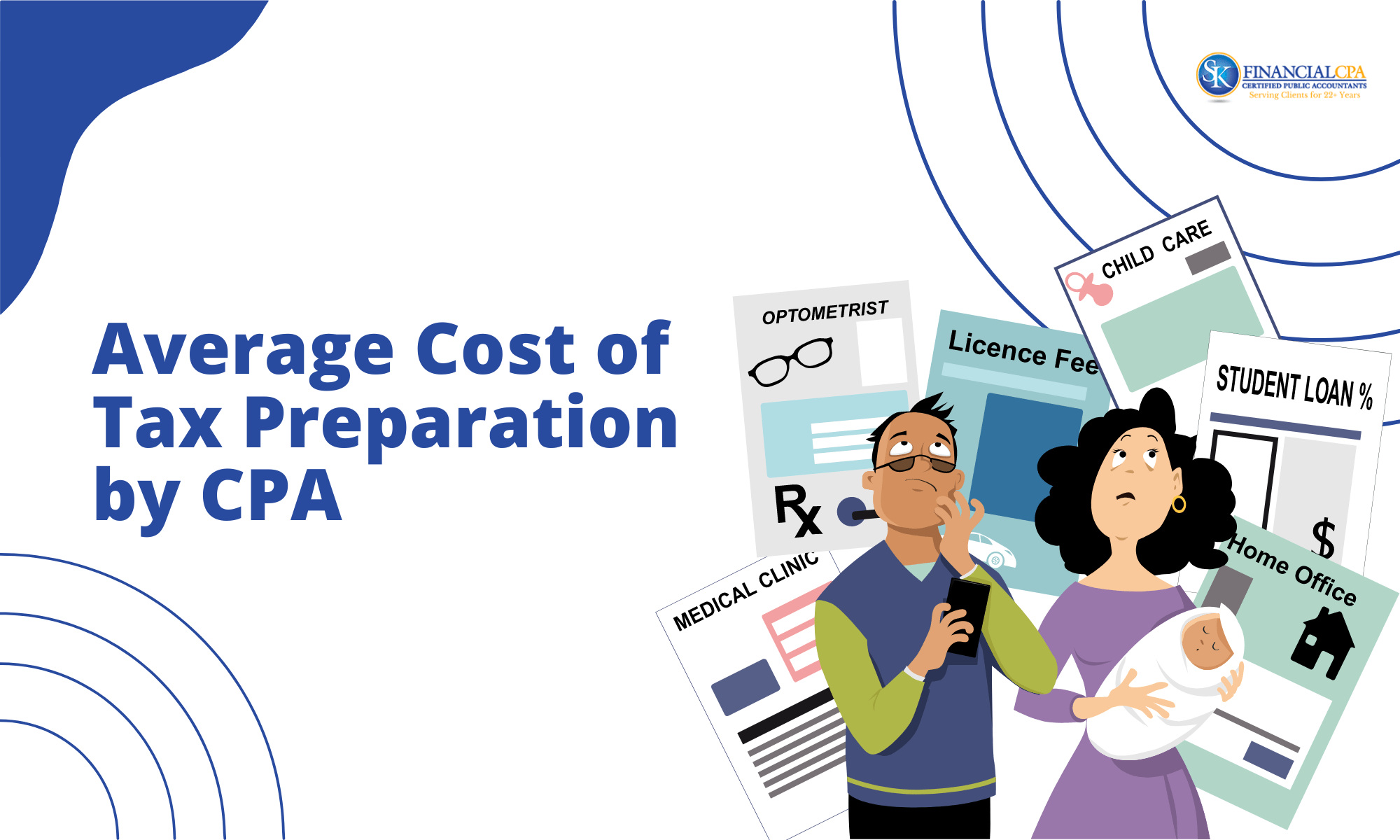
Not all tax professionals are created equal. Enrolled Agents (EAs) are federally authorized tax practitioners who have technical expertise in the field of taxation. They are often more affordable than CPAs, with fees for a standard return typically ranging from $300 to $500. CPAs, on the other hand, have a broader scope of accounting expertise. Because of their extensive licensing requirements, a CPA will likely charge more—often starting at $500 and climbing well over $1,000 for complex personal returns.
Flat Fees vs. Hourly Rates
Professional tax preparers generally use one of two billing models. Many use a flat fee per form (e.g., a set price for the 1040, an additional price for Schedule E). According to the National Society of Accountants, the average cost to hire a professional to prepare a standard Form 1040 and a state return is approximately $323. However, if your books are disorganized or if you require year-round tax planning advice, many firms will pivot to an hourly rate, which can range from $150 to $450 per hour.
When the Investment in a Pro Pays for Itself
While the upfront cost of a CPA is higher than software, the “net cost” may be lower. A skilled professional can often identify legal deductions or credits that an automated interview might miss. Furthermore, the cost includes representation; if the IRS sends a notice or initiates an audit, having a professional who is already familiar with your return can save you thousands in potential penalties and legal fees.
Hidden Costs and Add-ons to Watch For
The “sticker price” of filing is rarely the final amount that leaves your bank account. There are several ancillary costs that can inflate the total expense of tax season.
State Filing Fees
Almost all commercial software packages charge an additional fee to file a state tax return. Even if the federal return is “free,” the state return might cost $40 to $60. If you lived or worked in multiple states during the year, you may have to pay this fee for each state, quickly doubling or tripling your expected cost.
Audit Defense and ID Theft Protection
During the checkout process, most software companies will offer “Audit Defense” for an additional $40 to $60. This is essentially an insurance policy that provides a professional to talk to the IRS on your behalf if you are audited. While it provides peace of mind, for those with simple W-2 income, the statistical likelihood of an audit is extremely low, making this an often unnecessary expense.
Refund Transfer Fees and “Instant” Refunds
One of the most expensive ways to file is to choose a “Refund Anticipation Loan” or to have your preparation fees deducted from your refund. Banks and tax prep chains often charge a “convenience fee” of $40 to $100 just to process these payments. When calculated as an annual percentage rate (APR), these fees represent an incredibly high interest rate. It is always more cost-effective to pay the filing fee upfront and receive your refund via direct deposit from the IRS.
Strategic Ways to Minimize Your Tax Preparation Expenses
Managing the cost of tax filing is an exercise in organization and timing. By being proactive, you can significantly reduce the amount you spend on compliance.
Early Bird Discounts and Promotional Pricing
Tax software companies typically offer their best rates in January and February. As the April deadline approaches, prices often increase by 20% to 30%. Similarly, many CPA firms offer lower rates for clients who submit all their documentation before the end of February, as it helps them manage their peak season workload.
Organizing Your Documentation to Reduce Billable Hours
If you use a professional accountant, the “messy shoebox” approach is the fastest way to drive up your bill. If your accountant has to spend three hours categorizing your receipts and reconciling your bank statements, you are paying CPA rates for data entry work. By using bookkeeping software throughout the year and providing a clean, summarized spreadsheet of your income and expenses, you can drastically reduce the billable hours required to file your return.
Leveraging Employer or Bank Discounts
Before paying full price for software, check your benefits. Many large employers, credit unions, and banks (such as Chase or Capital One) offer discounted or even free access to major tax platforms as a perk for their members. Additionally, many brokerage firms provide free “Premier” level software to clients who maintain a certain balance in their investment accounts.
Ultimately, the cost of filing your taxes is a balance between your financial complexity and your personal comfort level with the tax code. Whether you choose the zero-cost route of IRS Free File or the premium service of a dedicated CPA, the goal remains the same: accurate compliance at the most efficient price point possible. By understanding the tiers of the industry and avoiding unnecessary add-ons, you can ensure that more of your hard-earned money stays in your pocket rather than going toward the process of reporting it.
aViewFromTheCave is a participant in the Amazon Services LLC Associates Program, an affiliate advertising program designed to provide a means for sites to earn advertising fees by advertising and linking to Amazon.com. Amazon, the Amazon logo, AmazonSupply, and the AmazonSupply logo are trademarks of Amazon.com, Inc. or its affiliates. As an Amazon Associate we earn affiliate commissions from qualifying purchases.