
The secondary market for electric vehicles has undergone a seismic shift over the last twenty-four months. For years, Tesla vehicles defied the standard rules of automotive depreciation, often retaining a staggering percentage of their original MSRP even after several years of use. However, a combination of increased production capacity, aggressive price cuts on new models, and fluctuating interest rates has transformed the used Tesla market into a complex landscape for the financially conscious buyer. Understanding how much a used Tesla costs today requires more than a simple glance at a listing; it requires an analysis of market cycles, federal incentives, and long-term maintenance liabilities.
Understanding the Economics of Used Tesla Depreciation
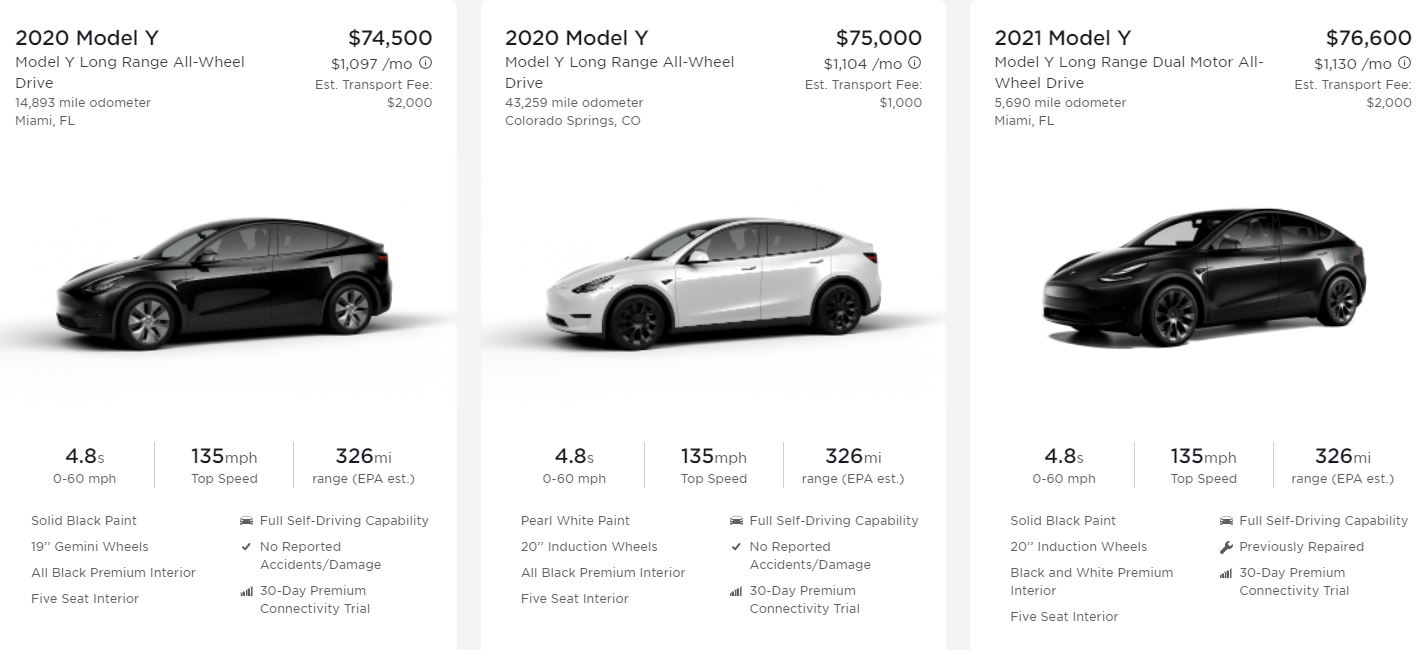
Depreciation is typically the single largest expense of vehicle ownership. In the case of Tesla, the depreciation curve has historically been non-linear. Between 2020 and 2022, supply chain constraints led to a phenomenon where some used Teslas sold for more than their original purchase price. This anomaly has since corrected, and we are now seeing a return to more traditional—though still unique—depreciation patterns.
The Impact of Manufacturer Price Volatility
One of the most significant factors influencing the cost of a used Tesla is the pricing strategy of the manufacturer itself. When Tesla slashes the price of a new Model 3 or Model Y by $5,000 overnight, the value of every pre-owned equivalent on the market drops instantaneously. From a financial planning perspective, this makes timing the market essential. Buyers who purchased used inventory in late 2022 often found themselves “underwater” on their loans by mid-2023 due to these aggressive price adjustments. Currently, the market has stabilized, but prospective owners must monitor new vehicle MSRPs as a leading indicator of used car valuations.
Supply, Demand, and the “High-Mileage” Threshold
The secondary market is now saturated with vehicles coming off three-year leases. This influx of supply has driven down the entry price for the Model 3 and Model Y specifically. Furthermore, the market applies a significant “mileage penalty” to Teslas approaching the 100,000-mile mark. Because the battery and drive unit warranty typically expires at 100,000 or 120,000 miles (depending on the model), there is often a sharp price drop for vehicles nearing this threshold. This creates a strategic entry point for buyers who are comfortable with the mechanical risks in exchange for a lower capital outlay.
Price Breakdown by Model and Production Year
The cost of a used Tesla varies significantly depending on the specific model, the battery configuration, and the “hardware suite” included with the vehicle. Below is an analysis of current market valuations across the primary fleet.
The Model 3: The High-Volume Entry Point
As the most prolific Tesla on the road, the Model 3 offers the most consistent pricing data.
-
Early Models (2018–2020): These are currently the “value” leaders. High-mileage Rear-Wheel Drive (RWD) units can be found for between $20,000 and $25,000. For many buyers, this makes the Model 3 cheaper than a comparable used Honda Accord or Toyota Camry.
-
Mid-Life Refreshes (2021–2023): These models, featuring the heat pump and powered trunk, typically command a premium, ranging from $28,000 to $36,000 depending on the trim (Long Range vs. Performance).
-
The “Highland” Factor: With the recent release of the redesigned Model 3, older body styles are experiencing an additional 5-10% depreciation, making the 2021-2022 models a “sweet spot” for balancing modern features with a depreciated price tag.
The Model Y: Resilient Resale Value
The Model Y is currently the best-selling vehicle globally, and its used prices reflect high demand.
-
Standard Range and Long Range: A used 2021 Model Y Long Range typically fluctuates between $32,000 and $39,000.
-
Depreciation Stability: Because the Model Y is the preferred choice for families, its depreciation curve is slightly shallower than that of the Model 3. It serves as a more stable asset for those concerned about mid-term resale value.
Model S and Model X: The Luxury Depreciation Curve
The flagship models follow a much more traditional luxury car depreciation path. A Tesla Model S that cost $100,000 in 2017 can often be found for under $25,000 today.
-
Legacy vs. Raven vs. Plaid: Buyers must distinguish between “Legacy” units (pre-2019), “Raven” drivetrain updates (2019–2021), and the “Plaid” refresh (2021–present). A 2022 Model S Plaid still commands $70,000+, whereas a 2019 Model S Long Range may sit comfortably at $35,000.
-
The Risk Premium: The lower cost of older Model S and X units is offset by the potential for high-cost repairs to air suspension systems, door handles, and falcon-wing doors.
Hidden Costs and Long-Term Financial Considerations
When calculating “how much” a used Tesla costs, the sticker price is only one part of the equation. A disciplined financial approach requires looking at the Total Cost of Ownership (TCO).
Battery Health and Replacement Reserves
The battery is the most expensive component of the vehicle. While Tesla batteries are designed to last 200,000 to 500,000 miles, degradation is a reality. A used Tesla will typically have 3% to 8% capacity loss depending on how it was charged. From a financial perspective, a buyer should assess the “remaining life value” of the battery. If a vehicle is out of warranty, setting aside a “sinking fund” for a potential $12,000–$15,000 battery replacement is a prudent move, even if the likelihood of total failure is low.
Insurance and Registration Premiums
Many first-time EV buyers are surprised by insurance costs. Because Teslas are categorized as high-performance luxury vehicles and can be expensive to repair after collisions due to their aluminum structures and specialized sensors, insurance premiums are often 20% to 40% higher than those for internal combustion engine (ICE) vehicles. Additionally, many states impose higher annual registration fees on EVs to recoup lost gas tax revenue. These recurring costs must be factored into the monthly budget.
Software Transfers and FSD Value
A unique aspect of Tesla pricing is the Full Self-Driving (FSD) software. Tesla originally sold this as a $12,000 to $15,000 add-on. However, on the used market, FSD rarely adds more than $2,000 to $4,000 to the vehicle’s valuation. This represents a massive “value trap” for the original seller but a significant “value gain” for the used buyer. When shopping, finding a unit with FSD included at a minimal markup is one of the most effective ways to maximize the ROI of the purchase.
Strategic Buying: Maximizing Incentives and ROI
The effective cost of a used Tesla can be drastically reduced through strategic use of government incentives and smart financing.
The Federal Used EV Tax Credit (IRC 25E)
One of the most powerful tools for the used buyer is the Federal Tax Credit of up to $4,000. To qualify, the used Tesla must:
-
Cost $25,000 or less.
-
Be at least two model years old.
-
Be purchased from a licensed dealer (private party sales do not qualify).
-
Be the first time the vehicle has been “flipped” as a used EV credit recipient.
For a buyer looking at a $24,500 Model 3, this credit brings the effective cost down to $20,500, creating a price point that is nearly impossible to beat in the secondary market for a vehicle of this caliber.
Maintenance Savings as an Offset
To accurately compare the cost of a used Tesla to a used BMW or Audi, one must account for the reduction in operating expenses. With no oil changes, spark plugs, or timing belts, and significantly reduced brake wear due to regenerative braking, the “cost per mile” of a used Tesla is substantially lower. For a driver covering 15,000 miles per year, the fuel and maintenance savings can effectively “subsidize” a higher monthly loan payment by $150 to $250.

Conclusion: Is a Used Tesla a Sound Financial Investment?
Determining the cost of a used Tesla is an exercise in balancing the upfront purchase price against the long-term benefits of the EV ecosystem. While the market remains sensitive to Tesla’s new-car pricing whims, the current landscape offers a historically low barrier to entry.
For the budget-conscious buyer, the “sweet spot” currently lies in the 2021 Model 3 or Model Y. These vehicles have already absorbed the steepest part of their depreciation curve, they benefit from newer heat-pump technology, and they often still have several years of battery and drivetrain warranty remaining. By leveraging the $4,000 federal tax credit and accounting for reduced fuel and maintenance costs, a used Tesla often emerges not just as a technology choice, but as a superior financial decision compared to many traditional luxury or mid-range internal combustion vehicles. In the modern economy, the value of a used Tesla is no longer found in its status, but in its efficiency as a depreciating asset that lowers the daily cost of mobility.
aViewFromTheCave is a participant in the Amazon Services LLC Associates Program, an affiliate advertising program designed to provide a means for sites to earn advertising fees by advertising and linking to Amazon.com. Amazon, the Amazon logo, AmazonSupply, and the AmazonSupply logo are trademarks of Amazon.com, Inc. or its affiliates. As an Amazon Associate we earn affiliate commissions from qualifying purchases.