
In the current landscape of personal finance and automotive investment, the decision to purchase a Tesla has shifted from a statement of luxury to a calculated financial move. When asking, “How much does a Tesla model cost?” the answer is rarely a single number. Instead, it is a dynamic calculation involving fluctuating MSRPs, federal tax incentives, varying financing rates, and the long-term total cost of ownership (TCO). For the modern investor and budget-conscious professional, understanding these layers is essential to determining whether an electric vehicle (EV) fits within a diversified financial plan.
Navigating the Initial Investment: Base Prices and Configuration Costs
The starting point for any financial evaluation of a Tesla is the Manufacturer’s Suggested Retail Price (MSRP). Tesla is unique in the automotive industry for its direct-to-consumer model and its frequent, sometimes volatile, price adjustments. Unlike traditional dealerships, the price you see on the website is the price you pay, but that price can change overnight based on market demand and production efficiency.
The Entry-Level Tier: Model 3 and Model Y
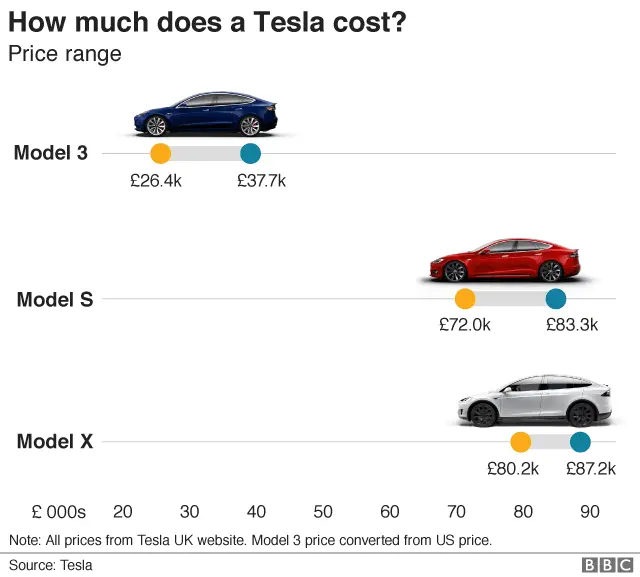
The Model 3 remains the most accessible entry point into the Tesla ecosystem. From a personal finance perspective, the Model 3 Rear-Wheel Drive (RWD) represents the “budget” option, often hovering in the high $30,000 to low $40,000 range. For those requiring more utility, the Model Y, Tesla’s compact SUV, typically commands a premium of $5,000 to $7,000 over the Model 3. These two models represent the bulk of Tesla’s volume and are the primary targets for buyers looking to maximize value per dollar.
The Premium Tier: Model S and Model X
For those with higher net worth or those seeking a flagship executive vehicle, the Model S and Model X represent a significant step up in capital expenditure. The Model S sedan generally starts in the mid-$70,000 range, while the Model X, with its signature falcon-wing doors and increased storage, often starts near $80,000. These models are not just transport; they are high-end assets that come with higher insurance premiums and steeper depreciation curves, which must be factored into a high-level financial strategy.
Software and Aesthetics: The “Hidden” Upgrades
Beyond the base price, several configuration choices can inflate the final invoice by thousands. Premium paint colors, upgraded wheels, and white interior packages typically add between $1,000 and $2,500 each. However, the most significant financial add-on is the Full Self-Driving (FSD) capability. Historically priced as high as $15,000 as a one-time purchase, or available as a monthly subscription, FSD represents a choice between an upfront capital investment or a recurring operational expense. From a cash-flow perspective, the subscription model often makes more sense for those who do not plan to keep the vehicle for more than five years.
Leveraging Federal and State Financial Incentives
One of the most critical components of the “real” cost of a Tesla is the suite of government incentives designed to accelerate EV adoption. For a savvy buyer, these incentives can reduce the effective purchase price by nearly 20%.
The Federal Clean Vehicle Credit
Under the Inflation Reduction Act, the Section 30D federal tax credit provides up to $7,500 toward the purchase of a new Tesla. However, this is not a universal discount. There are strict price caps—$55,000 for sedans like the Model 3 and $80,000 for SUVs like the Model Y and Model X. Furthermore, there are Modified Adjusted Gross Income (MAGI) limits for the buyer ($150,000 for individuals, $300,000 for married couples filing jointly). A significant recent change is the “Point of Sale” credit, allowing buyers to transfer the credit to the dealer to reduce the purchase price immediately, rather than waiting for tax season, which provides an instant boost to the buyer’s liquidity.
State-Level Rebates and Local Perks
Beyond federal assistance, states like California, New Jersey, and Colorado offer additional rebates that can range from $2,000 to $5,000. Some regions also offer sales tax exemptions on EVs, which on a $50,000 car can save an additional $3,000 to $4,000. When calculating the total cost, one must also account for non-monetary financial perks, such as High Occupancy Vehicle (HOV) lane access, which can save a professional hours of time—a variable that, while hard to quantify, has a distinct “opportunity cost” value.
Calculating the Total Cost of Ownership (TCO)
The “sticker price” of a Tesla is only one part of the financial equation. To truly understand the cost, an owner must look at the Total Cost of Ownership over a five-to-seven-year horizon. This is where Tesla often outperforms internal combustion engine (ICE) vehicles.
Fuel Savings: Electricity vs. Gasoline
The most immediate impact on a monthly budget is the shift from gasoline to electricity. On average, charging a Tesla at home costs about one-third as much as fueling a comparable gas vehicle. For a driver covering 15,000 miles per year, this can result in annual savings of $1,000 to $2,000. Over five years, that is a $5,000 to $10,000 reduction in the net cost of the vehicle. However, heavy reliance on the Tesla Supercharger network—while convenient for long trips—is more expensive than home charging and can eat into these savings.
Maintenance and Repair Budgets
Teslas have significantly fewer moving parts than traditional cars. There are no oil changes, spark plugs, or timing belts to replace. Regenerative braking also extends the life of brake pads and rotors significantly. However, Teslas are notorious for their weight, which can lead to faster tire wear. A set of high-performance tires for a Model Y can cost $1,200 to $1,500 and may need replacement every 25,000 miles. Additionally, out-of-warranty repairs for electronics or sensors can be costly, making the “cost of maintenance” lower on average but potentially volatile in the event of a major component failure.
Insurance Premiums
A commonly overlooked cost in the Tesla ecosystem is insurance. Due to their high-tech components and specialized repair requirements, Teslas can be more expensive to insure than their gas-powered counterparts. Some owners report premiums 20% to 30% higher than average. To combat this, Tesla offers its own insurance product in several states, using real-time driving behavior to set rates. For a safe driver, this can be a significant financial tool to lower the monthly cost of ownership.
Financing, Leasing, and Corporate Tax Advantages
How you pay for a Tesla is just as important as how much you pay. The choice between a cash purchase, traditional financing, or leasing depends heavily on your broader investment strategy and tax situation.
Interest Rates and Liquidity
In a high-interest-rate environment, financing a $50,000 vehicle requires careful thought. Tesla often offers promotional APRs (sometimes as low as 0.99% or 1.99% for specific models and quarters) to drive end-of-year sales. If an investor can finance at 2% while their capital is earning 5% in a high-yield savings account or index fund, financing becomes the superior financial move compared to a cash purchase.
Leasing: Managing Tech Obsolescence
Leasing is an attractive option for those who treat their vehicle like a piece of technology rather than a long-term asset. Because EV technology, especially battery range and charging speed, evolves rapidly, a three-year lease protects the user from the risk of owning an “obsolete” model. However, Tesla’s lease terms are often strict, and in some cases, they do not allow for a “buyout” at the end of the term, meaning you do not build equity in the vehicle.
The Section 179 Deduction for Business Owners
For business owners and entrepreneurs, the Model X offers a unique financial loophole. Because its Gross Vehicle Weight Rating (GVWR) exceeds 6,000 pounds, it may qualify for the Section 179 tax deduction. This allows business owners to deduct a significant portion of the vehicle’s purchase price from their business income in the first year, provided the vehicle is used at least 50% for business purposes. For those in a high tax bracket, this can result in a massive reduction in the effective cost of the car.

The Long-Term Financial Outlook: Depreciation and Asset Value
The final piece of the financial puzzle is resale value. Historically, Teslas held their value better than almost any other vehicle on the market. However, as production has scaled and Tesla has aggressively cut prices on new models, used Tesla prices have normalized.
A buyer today should expect a depreciation curve more in line with luxury German sedans—roughly 40% to 50% over three years. While the fuel and maintenance savings help offset this loss of capital, a Tesla should not be viewed as a financial investment in the sense that it will appreciate. Instead, it should be viewed as a depreciating asset with high utility and low operational overhead.
In summary, the cost of a Tesla is a multifaceted figure. A Model 3 might have a sticker price of $40,000, but after a $7,500 tax credit, $5,000 in gas savings over five years, and $2,000 in avoided maintenance, the “effective cost” to the owner’s net worth is significantly lower. By approaching the purchase through the lens of personal finance—analyzing incentives, TCO, and financing leverage—buyers can turn a major expense into a sophisticated financial strategy.
aViewFromTheCave is a participant in the Amazon Services LLC Associates Program, an affiliate advertising program designed to provide a means for sites to earn advertising fees by advertising and linking to Amazon.com. Amazon, the Amazon logo, AmazonSupply, and the AmazonSupply logo are trademarks of Amazon.com, Inc. or its affiliates. As an Amazon Associate we earn affiliate commissions from qualifying purchases.