
Tax season is often viewed through a lens of stress and administrative burden, but for the savvy taxpayer, it represents the single most significant financial optimization event of the year. Maximizing your tax return is not about finding “loopholes” or cutting corners; it is about a sophisticated understanding of the tax code and leveraging every available provision to keep more of your hard-earned money. Whether you are a high-earning professional, a dedicated freelancer, or an intentional investor, the difference between a standard filing and a strategic one can amount to thousands of dollars.

To truly maximize your return, you must shift your perspective from reactive filing to proactive tax planning. This involves understanding the nuances of credits versus deductions, optimizing your retirement contributions, and managing your investment portfolio with tax efficiency in mind.
Understanding the Foundation: Deductions vs. Tax Credits
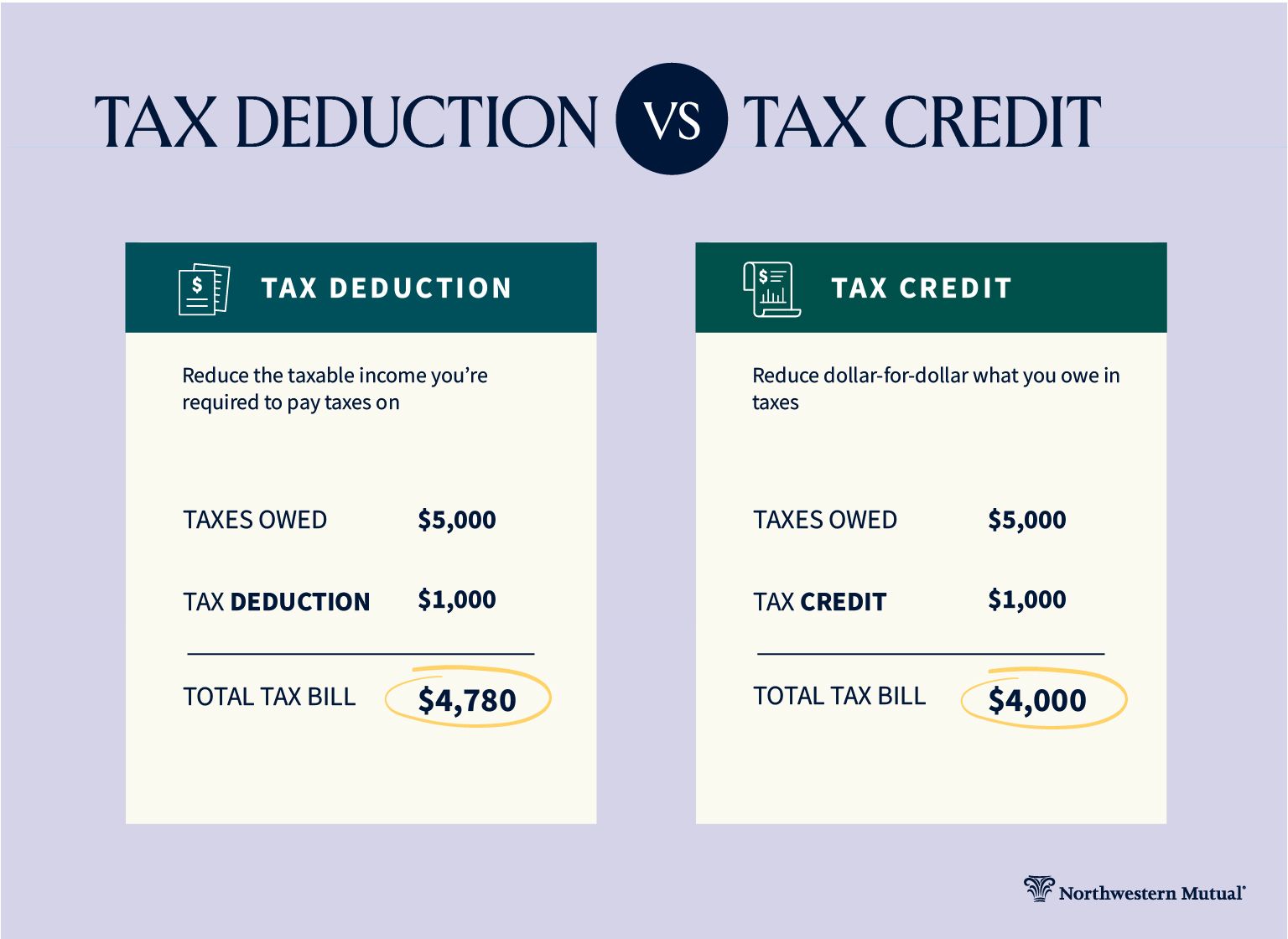
The first step in maximizing your return is understanding the two primary mechanisms the government uses to reduce your tax liability: deductions and credits. While both result in a lower tax bill, they function in fundamentally different ways.
The Power of Tax Credits
A tax credit is a dollar-for-dollar reduction of the actual tax you owe. If you owe $5,000 in taxes and qualify for a $2,000 credit, your bill drops to $3,000. Because credits reduce the final bill directly, they are significantly more valuable than deductions.
There are two types of credits: refundable and non-refundable. Non-refundable credits can reduce your tax liability to zero, but any remaining credit is lost. Refundable credits, such as the Earned Income Tax Credit (EITC) or the Additional Child Tax Credit, can actually trigger a refund that exceeds the total amount of tax you paid throughout the year.
Key credits to investigate include:
-
The Child Tax Credit: For parents and guardians, this remains one of the most substantial ways to lower a tax bill.
-
Education Credits: The American Opportunity Tax Credit (AOTC) and the Lifetime Learning Credit (LLC) provide significant relief for those paying for higher education.
-
The Energy Efficient Home Improvement Credit: For homeowners making “green” upgrades, such as solar panels or heat pumps, these credits offer a dual benefit of lower utility bills and lower taxes.
Standard Deduction vs. Itemizing
The majority of taxpayers take the standard deduction, a fixed dollar amount that reduces the income you’re taxed on. However, if your eligible expenses exceed the standard deduction amount, you should “itemize.”
Common itemized deductions include mortgage interest, state and local taxes (SALT) up to the current cap, medical expenses that exceed a certain percentage of your adjusted gross income, and charitable contributions. To maximize your return, you must run the numbers both ways. If you are close to the threshold, a strategy known as “bunching”—where you accelerate two years’ worth of charitable donations or elective medical procedures into a single tax year—can push you over the standard deduction limit and yield a much larger return.
Above-the-Line Deductions
Even if you take the standard deduction, you may be eligible for “above-the-line” deductions, now referred to as adjustments to income. These are subtracted from your gross income to determine your Adjusted Gross Income (AGI). Lowering your AGI is critical because many credits and further deductions are phased out as your AGI increases. Common adjustments include student loan interest, educator expenses, and contributions to Health Savings Accounts (HSAs).
Leveraging Retirement and Health Savings Accounts
One of the most effective ways to maximize a tax return is by utilizing tax-advantaged accounts. These accounts are designed by the government to encourage long-term financial stability, and they offer some of the most potent tax-saving opportunities available.
Traditional IRA and 401(k) Contributions
Contributions to a traditional 401(k) or a Traditional IRA are often made with pre-tax dollars. This means the money is taken out of your paycheck before taxes are calculated, effectively lowering your taxable income for the year. If you are in the 24% tax bracket and contribute $10,000 to your 401(k), you could potentially reduce your tax bill by $2,400.
For those who do not have access to an employer-sponsored plan, the Traditional IRA remains a vital tool. It is important to note that you often have until the tax filing deadline (usually April 15th) to contribute to an IRA for the previous tax year, providing a rare “last-minute” opportunity to boost your refund after the calendar year has ended.
The Triple Tax Advantage of the HSA
If you have a high-deductible health plan (HDHP), the Health Savings Account (HSA) is perhaps the most powerful tax tool in existence. It offers a “triple tax advantage”:
-
Contributions are tax-deductible, lowering your taxable income.
-
Growth is tax-deferred, meaning you pay no taxes on interest or investment gains within the account.
-
Withdrawals are tax-free when used for qualified medical expenses.
By maximizing your HSA contribution, you are not only preparing for future healthcare costs but also immediately lowering your current tax liability.

The Saver’s Credit
Lower-to-moderate-income taxpayers can benefit from the Retirement Savings Contributions Credit, commonly known as the Saver’s Credit. This is a “double win” scenario: you get a deduction for contributing to your retirement account, and then you receive a tax credit for having made that contribution. It is one of the most overlooked ways to maximize a return for those early in their careers or in lower income brackets.
Strategic Investment Management and the “Wash-Sale” Rule
For those with taxable brokerage accounts, the way you manage your investments throughout the year—and specifically in December—can have a massive impact on your tax return.
Tax-Loss Harvesting
Tax-loss harvesting is the practice of selling investments that are trading at a loss to offset capital gains realized elsewhere in your portfolio. If your losses exceed your gains, you can use the excess loss to offset up to $3,000 of your ordinary income. Any remaining loss can be “carried forward” to future tax years. This strategy turns a portfolio decline into a valuable tax asset.
However, investors must be wary of the “wash-sale” rule. If you sell a security at a loss and buy the same or a “substantially identical” security within 30 days before or after the sale, the IRS will disallow the loss for tax purposes. Professional management or careful tracking is required to ensure this strategy is executed correctly.
Capital Gains Timing
The duration for which you hold an asset significantly changes how it is taxed. Assets held for more than one year qualify for long-term capital gains rates, which are typically 0%, 15%, or 20%, depending on your income. These rates are substantially lower than ordinary income tax rates. By strategically timing the sale of appreciated assets to ensure they meet the one-year threshold, you can significantly reduce the tax bite on your investment profits.
Optimization for Freelancers and the “Side Hustle” Economy
The rise of the gig economy and remote work has opened up new avenues for tax optimization. If you earn income outside of a standard W-2 job, you are considered a business owner in the eyes of the IRS, which opens the door to a wide array of business deductions.
The Home Office Deduction
If you use a portion of your home exclusively and regularly for business, you may be eligible for the home office deduction. You can choose between the simplified method ($5 per square foot up to 300 square feet) or the actual expense method, which allows you to deduct a percentage of your mortgage interest, utilities, insurance, and repairs.
Section 179 and Depreciation
For freelancers and small business owners, purchasing equipment—such as laptops, cameras, or specialized machinery—can result in major tax savings. Under Section 179, you can often deduct the entire purchase price of qualifying equipment in the year it was placed in service, rather than depreciating it over several years. This can create a massive “paper loss” that offsets your earned income, leading to a much higher return.
The Qualified Business Income (QBI) Deduction
The QBI deduction allows eligible self-employed individuals and small business owners to deduct up to 20% of their qualified business income from their taxes. This is a complex deduction with various income thresholds and phase-outs based on the type of business, but for many, it represents one of the most significant tax breaks introduced in recent decades.
Year-Round Planning and Digital Record Keeping
The most common reason taxpayers fail to maximize their return is a lack of documentation. A deduction you cannot prove is a deduction you cannot take.
Maintaining a “Tax Audit” Mindset
To maximize your return, you should operate year-round with the mindset that every business expense or charitable donation needs a digital paper trail. Utilizing financial tools to track receipts, mileage, and invoices ensures that when April arrives, you aren’t scrambling to remember expenses from the previous January.
Charitable Giving Strategies
Beyond simple cash donations, consider donating appreciated securities. If you donate stock that has risen in value and you’ve held it for more than a year, you can deduct the full fair market value of the stock and avoid paying capital gains tax on the appreciation. For high-net-worth individuals, using a Donor-Advised Fund (DAF) can allow you to take an immediate tax deduction for a large contribution, while distributing the funds to charities over several years.
The Importance of Timing
Finally, pay attention to the calendar. If you know you will be in a lower tax bracket next year, it may make sense to accelerate deductions into the current year. Conversely, if you expect to earn significantly more next year, you might want to defer deductions to offset that higher-taxed income.
Maximizing your tax return is a marathon, not a sprint. It requires a blend of disciplined record-keeping, strategic investment moves, and a deep dive into the credits and deductions that apply to your specific life stage. By treating your tax return as a core component of your broader financial strategy, you transform a yearly obligation into a powerful engine for wealth creation.
aViewFromTheCave is a participant in the Amazon Services LLC Associates Program, an affiliate advertising program designed to provide a means for sites to earn advertising fees by advertising and linking to Amazon.com. Amazon, the Amazon logo, AmazonSupply, and the AmazonSupply logo are trademarks of Amazon.com, Inc. or its affiliates. As an Amazon Associate we earn affiliate commissions from qualifying purchases.