
Tax planning is often viewed as a seasonal chore, something to be addressed in the frantic weeks leading up to April. However, the most effective strategies for reducing income tax liability are those implemented throughout the year. Understanding the mechanics of the tax code allows individuals and business owners to make informed financial decisions that preserve wealth and maximize after-tax income. Reducing your tax burden is not about evasion; it is about utilizing the legal frameworks provided by the government to encourage specific economic behaviors, such as saving for retirement, investing in infrastructure, or supporting charitable causes.
Strategic Use of Tax Deductions and Credits
The first step in any tax reduction strategy is distinguishing between tax deductions and tax credits. While both serve to lower your final bill, they function in fundamentally different ways. A tax deduction reduces the amount of your income that is subject to tax. For example, if you are in the 24% tax bracket, a $1,000 deduction saves you $240. A tax credit, conversely, is a dollar-for-dollar reduction of the actual tax you owe. A $1,000 tax credit saves you exactly $1,000, regardless of your bracket.
Maximizing the Standard Deduction vs. Itemizing
For many taxpayers, the standard deduction—a fixed dollar amount that reduces the income on which you’re taxed—is the most straightforward path. However, if your eligible expenses exceed the standard deduction threshold, itemizing on Schedule A can significantly lower your liability. Key itemized deductions include state and local taxes (SALT) up to the $10,000 cap, mortgage interest on up to $750,000 of debt, and unreimbursed medical expenses that exceed 7.5% of your adjusted gross income (AGI).
A sophisticated strategy often employed is “deduction bunching.” This involves timing expenses so they fall into a single tax year. For instance, if you are close to the standard deduction limit, you might choose to make two years’ worth of charitable contributions in December of year one and none in year two. This pushes you over the threshold in the first year to maximize itemization, while you take the standard deduction in the second.
Leveraging High-Value Tax Credits
Beyond deductions, taxpayers should look for credits that apply to their life stage. The Child Tax Credit remains a primary tool for families, while the Child and Dependent Care Credit can offset the costs of childcare needed for parents to work. For those pursuing higher education, the American Opportunity Tax Credit (AOTC) and the Lifetime Learning Credit (LLC) provide substantial relief for tuition and related fees.
Furthermore, energy-efficient home improvements, such as installing solar panels or heat pumps, often qualify for the Residential Clean Energy Credit. These credits not only reduce immediate tax liability but also contribute to long-term utility savings, representing a dual financial benefit.
Retirement Planning as a Tax Shield
One of the most powerful ways to reduce taxable income is through the proactive use of retirement accounts. The internal revenue code is designed to incentivize long-term savings by offering immediate tax breaks for contributions to qualified plans.
Traditional 401(k) and IRA Contributions
Contributions to a traditional 401(k) or 403(b) are typically made with pre-tax dollars. This means the money is taken out of your paycheck before taxes are calculated, effectively lowering your AGI. If an individual earns $100,000 and contributes $20,000 to their 401(k), the IRS only sees $80,000 of taxable income. For those without access to an employer-sponsored plan, a Traditional IRA offers similar benefits, though deductibility may be limited based on income levels and whether a spouse has access to a work plan.
The Triple Tax Advantage of HSAs
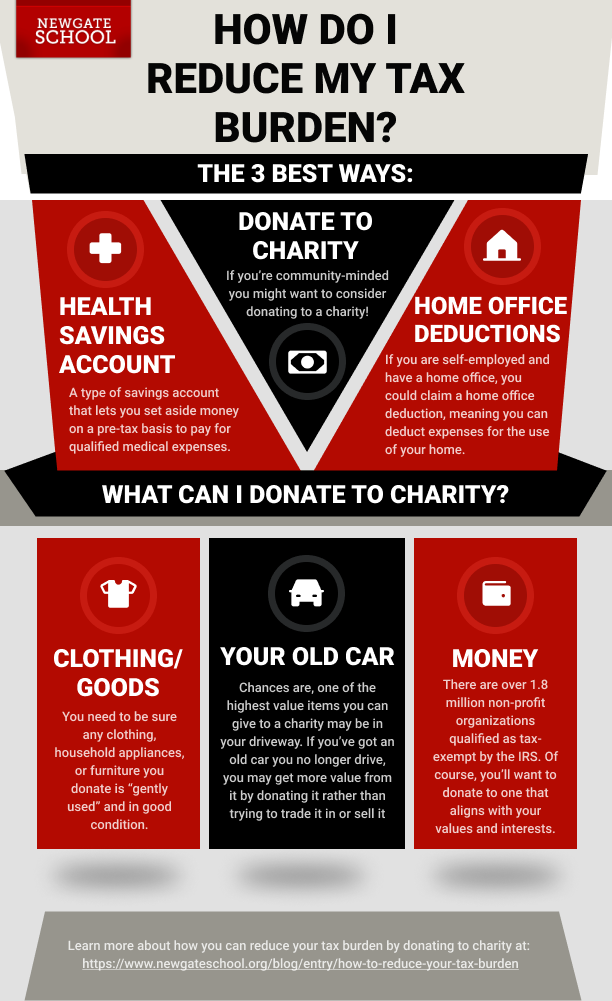
While primarily intended for healthcare, the Health Savings Account (HSA) is arguably the most efficient tax-advantaged vehicle available. To qualify, you must be enrolled in a High Deductible Health Plan (HDHP). HSAs offer a “triple tax advantage”: contributions are tax-deductible (or pre-tax via payroll), the funds grow tax-free through investments, and withdrawals for qualified medical expenses are entirely tax-free. Unlike Flexible Spending Accounts (FSAs), HSA balances roll over indefinitely. Savvy investors often pay for current medical expenses out-of-pocket, allowing the HSA to grow untouched for decades as a de facto retirement account.
Tax-Efficient Investing Techniques
How you manage your investment portfolio can have a profound impact on your annual tax bill. Investors who are mindful of “tax drag”—the reduction in returns caused by taxes—can significantly outperform those who ignore it.
Capital Gains and the Power of Holding

The duration for which you hold an asset determines the tax rate applied to its sale. Short-term capital gains (on assets held for one year or less) are taxed at ordinary income rates, which can be as high as 37%. Long-term capital gains (on assets held for more than a year) benefit from preferential rates of 0%, 15%, or 20%, depending on your total income. By simply waiting 366 days to sell a profitable stock, an investor can potentially cut their tax rate on that gain by more than half.
Tax-Loss Harvesting
Tax-loss harvesting is the practice of selling securities at a loss to offset capital gains earned elsewhere in the portfolio. If your losses exceed your gains, you can use up to $3,000 of the excess loss to offset your ordinary income. Any remaining losses can be carried forward to future years. This strategy is particularly effective during market volatility. However, investors must be wary of the “wash-sale rule,” which disallows the loss if a “substantially identical” security is purchased within 30 days before or after the sale.
Municipal Bonds for High Earners
For investors in the highest tax brackets, municipal bonds offer a compelling way to generate income. The interest earned on bonds issued by state and local governments is generally exempt from federal income tax. In many cases, if the investor lives in the state where the bond was issued, the interest is also exempt from state and local taxes. While “munis” often offer lower nominal yields than corporate bonds, their tax-equivalent yield can be significantly higher for those in the 32% to 37% brackets.
Optimizing Side Hustles and Business Income
The rise of the gig economy and remote consulting has turned many taxpayers into “solopreneurs.” Navigating the tax landscape as a business owner requires a shift in mindset from an employee-centric view to a profit-and-loss view.
Maximizing Business Expense Deductions
Self-employed individuals can deduct “ordinary and necessary” expenses required to run their business. This includes everything from marketing costs and software subscriptions to a portion of home internet and phone bills. The Home Office Deduction is a frequently overlooked benefit; if a portion of your home is used exclusively and regularly for business, you can deduct a percentage of your rent, mortgage interest, utilities, and insurance.
Additionally, the cost of equipment—computers, furniture, or specialized machinery—can often be deducted immediately through Section 179 depreciation, rather than spreading the deduction over several years. This provides a significant upfront tax break that can be used to reinvest in the business’s growth.
The Qualified Business Income (QBI) Deduction
Established under the Tax Cuts and Jobs Act, the QBI deduction (Section 199A) allows eligible self-employed individuals and small business owners to deduct up to 20% of their qualified business income from their taxes. This deduction is available to “pass-through” entities, such as sole proprietorships, partnerships, and S-corporations. While there are income thresholds and phase-outs—particularly for “Specified Service Trades or Businesses” like doctors, lawyers, and consultants—the QBI deduction remains one of the most substantial tax-saving opportunities for small business owners in recent history.
Long-Term Planning and Residency
Finally, where you live and how you structure your long-term giving can influence your tax trajectory.
Charitable Giving and Donor-Advised Funds
For those with philanthropic goals, Donor-Advised Funds (DAFs) offer a flexible way to manage charitable deductions. You can contribute a large sum to a DAF in a high-income year, receive an immediate tax deduction for the full amount, and then distribute the funds to specific charities over time. Contributing appreciated securities (like stocks that have gone up in value) to a DAF or a charity is even more efficient: you avoid paying capital gains tax on the appreciation and still receive a deduction for the full fair market value of the asset.
State Tax Considerations
Income tax rates vary wildly across the United States. While federal taxes are uniform, moving from a high-tax state like California or New York to a state with no income tax, such as Florida, Texas, or Washington, can result in an immediate and permanent increase in take-home pay. For retirees or remote workers with flexibility, state residency is a major lever in the quest for tax efficiency. However, residency changes must be documented carefully, as high-tax states often scrutinize “statutory residency” to ensure taxpayers have truly moved their “domicile.”

Conclusion: The Value of Consistency
Reducing income taxes is a multifaceted endeavor that requires a blend of disciplined saving, strategic spending, and astute investing. By focusing on lowering Adjusted Gross Income through retirement contributions, utilizing credits to offset the final tax bill, and managing investments with an eye toward long-term gains, individuals can significantly decrease their lifetime tax liability. Tax laws are subject to change, but the principles of utilizing deductions, deferring income, and maximizing credits remain the cornerstones of sound financial management. Engaging with these strategies throughout the year ensures that when tax season arrives, you are not merely reporting your finances, but reaping the rewards of a well-executed plan.
aViewFromTheCave is a participant in the Amazon Services LLC Associates Program, an affiliate advertising program designed to provide a means for sites to earn advertising fees by advertising and linking to Amazon.com. Amazon, the Amazon logo, AmazonSupply, and the AmazonSupply logo are trademarks of Amazon.com, Inc. or its affiliates. As an Amazon Associate we earn affiliate commissions from qualifying purchases.