
Tax planning is often viewed as a seasonal chore, a flurry of activity that takes place in the weeks leading up to April. However, for the financially savvy individual or business owner, maximizing deductions is a year-round strategic discipline. At its core, maximizing deductions is not about tax evasion; it is about tax avoidance—using the legal frameworks provided by the tax code to ensure you do not pay a penny more than you are legally obligated to. Every dollar saved through a legitimate deduction is a dollar that can be reinvested, saved, or used to fuel further economic growth. To truly master this aspect of personal and business finance, one must understand the nuanced interplay between income, expenses, and the ever-evolving regulatory landscape.

The Foundation of Deductions: Standard vs. Itemized
The first and most fundamental decision in maximizing deductions is determining whether to take the standard deduction or to itemize. Since the implementation of the Tax Cuts and Jobs Act (TCJA), the standard deduction has increased significantly, making it the most efficient choice for a large majority of taxpayers. However, for those with significant qualifying expenses, itemizing remains the gold standard for lowering tax liability.
Evaluating the Standard Deduction Benchmark
The standard deduction acts as a “floor.” If your total qualifying itemized expenses do not exceed this fixed dollar amount, itemizing is mathematically disadvantageous. For many, the simplicity of the standard deduction is appealing, but it can lead to “leaving money on the table” if one’s lifestyle involves high mortgage interest, significant charitable giving, or high state and local taxes. Maximizing deductions starts with a rigorous comparison: total your potential itemized deductions and see how they stack up against the current year’s standard deduction limits.
The Logic of Itemizing
When your specific expenses exceed the standard deduction, you move into the realm of itemization. This is where strategic documentation becomes critical. Itemizable deductions generally fall into several categories: medical and dental expenses (above a certain percentage of your Adjusted Gross Income), state and local taxes (subject to a cap), home mortgage interest, and charitable contributions. To maximize these, you must be proactive. For instance, if you are close to the threshold, you might choose to accelerate a charitable gift planned for January into December, or pay your January mortgage payment in late December to capture an extra month of interest deduction.
Maximizing Personal and Household Deductions
For the individual taxpayer, the goal is to transform everyday life expenses into tax-advantaged opportunities where the law permits. While the tax code has tightened in recent years, several high-value avenues remain for those who know where to look.
The Power of Charitable Giving and Donor-Advised Funds
Charity is one of the most flexible areas for deduction maximization. Beyond simple cash donations, donating appreciated securities (like stocks) can be a double win: you receive a deduction for the fair market value of the stock, and you avoid paying capital gains tax on the appreciation. For high-net-worth individuals, the use of a Donor-Advised Fund (DAF) is a sophisticated strategy. By “bunching” several years’ worth of charitable contributions into a single year’s DAF contribution, you can cross the itemization threshold in that specific year, while distributing the funds to charities over time.
Navigating the SALT Cap and Mortgage Interest
The State and Local Tax (SALT) deduction is currently capped at $10,000. While this limits many in high-tax states, some states have enacted “workaround” legislation for business owners, allowing them to pay state taxes at the entity level, which can sometimes circumvent the individual cap. Furthermore, while the deduction for mortgage interest is limited to the first $750,000 of indebtedness for new loans, ensuring that your loan is structured correctly—and that you are capturing all eligible points paid at closing—is essential for maximizing the deduction.
Healthcare Expenses and the HSA Advantage
Medical expenses are only deductible if they exceed 7.5% of your Adjusted Gross Income (AGI). This is a high bar, but for those with significant elective surgeries or long-term care needs, timing these procedures within the same calendar year can help breach the threshold. However, the most powerful tool in the healthcare deduction arsenal is the Health Savings Account (HSA). Contributions to an HSA are 100% tax-deductible (or pre-tax through payroll), the growth is tax-deferred, and withdrawals for qualified medical expenses are tax-free. It is, effectively, the only “triple tax-advantaged” vehicle in the American financial system.
Business Deductions: Optimizing the Professional Footprint
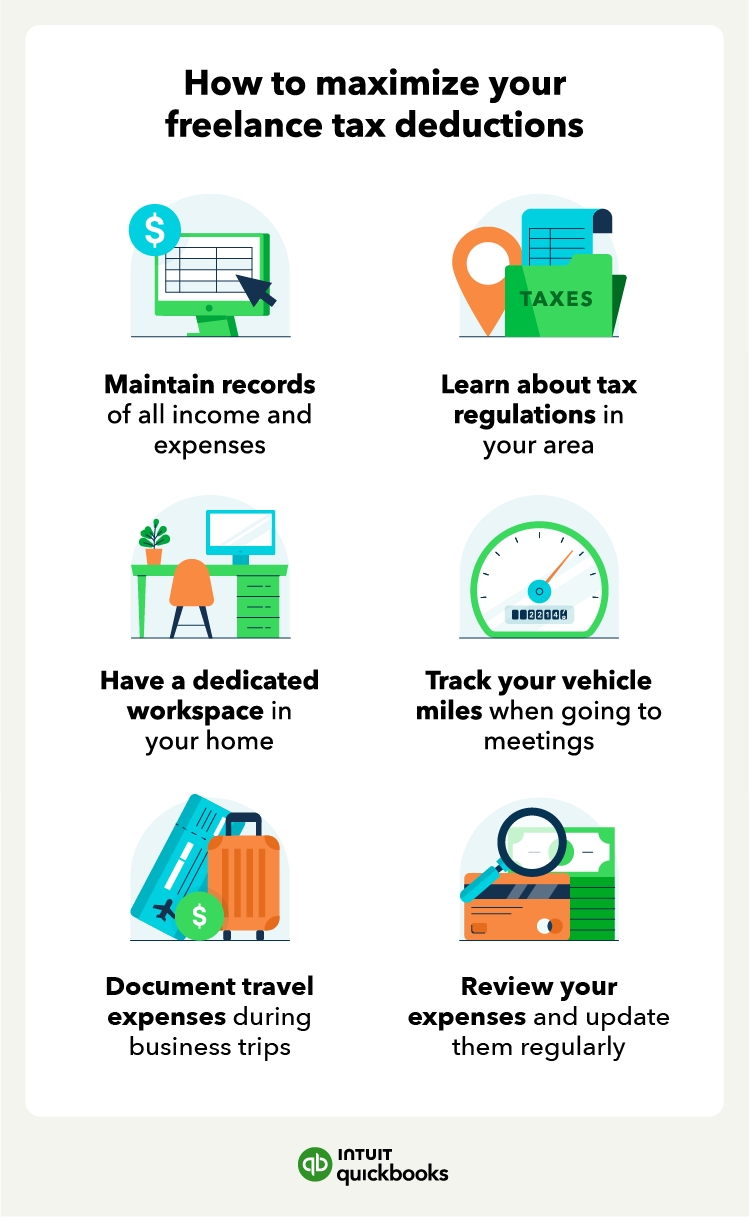
For entrepreneurs, freelancers, and small business owners, the opportunities to maximize deductions are vastly more expansive. In a business context, a deduction is a mechanism to lower the “cost of doing business,” directly boosting the bottom line.
The Qualified Business Income (QBI) Deduction
One of the most potent tools for business owners is the Section 199A deduction, commonly known as the QBI deduction. This allows eligible self-employed individuals and small business owners to deduct up to 20% of their qualified business income from their taxes. Maximizing this deduction requires careful income management. Because the deduction is subject to various income thresholds and phase-outs based on the type of trade or business, working with a financial advisor to manage your “taxable income” level can be the difference between receiving the full 20% deduction or none at all.
Section 179 and Accelerated Depreciation
Capital expenditures—investing in equipment, machinery, or vehicles—offer a major deduction opportunity. Under Section 179, businesses can often deduct the full purchase price of qualifying equipment in the year it is placed in service, rather than depreciating it over many years. This is a powerful “accelerator” for businesses looking to expand. Combined with “bonus depreciation,” this allows for massive upfront deductions that can offset high-revenue years. The strategy here is timing: if your business has had an exceptionally profitable year, investing in necessary infrastructure before December 31st can significantly lower your tax bill.
The Home Office and Administrative Nuances
The home office deduction remains one of the most misunderstood yet valuable deductions for the remote workforce and entrepreneurs. To maximize this, you must meet the “exclusive and regular use” test. You can choose between the simplified method (a flat rate per square foot) or the actual expense method. For those in high-cost-of-living areas with high utilities and insurance, the actual expense method—calculating the percentage of the home used for business and applying it to all household costs—often yields a much larger deduction.
Investment-Linked Deductions and Retirement Strategy
Maximizing deductions is also intrinsically linked to how you save for the future. Retirement contributions are among the most effective ways to lower your current-year taxable income while simultaneously building wealth.
Traditional IRAs and 401(k) Contributions
For every dollar you contribute to a Traditional 401(k) or a Traditional IRA (subject to income limits if you have a workplace plan), you reduce your taxable income by that same dollar. This is an immediate “return on investment” equal to your marginal tax rate. A taxpayer in the 24% bracket who contributes $20,000 to a 401(k) essentially “saves” $4,800 in taxes. To maximize this, one should always aim to hit the annual contribution limits set by the IRS, including “catch-up” contributions for those over age 50.
Tax-Loss Harvesting as a Deduction Strategy
While not a deduction in the traditional “expense” sense, tax-loss harvesting allows investors to use investment losses to offset capital gains. If your losses exceed your gains, you can use up to $3,000 of those losses to offset “ordinary income.” This effectively acts as a deduction against your salary or business income. This strategy requires a keen eye on portfolio performance throughout the year, ensuring that underperforming assets are sold strategically to optimize the tax outcome.
The Importance of Precision and Documentation
A deduction that cannot be proven is a liability. Maximizing deductions requires a level of administrative rigor that many find daunting, but the financial rewards far outweigh the clerical burden.
The Digital Paper Trail
In the modern era, paper receipts are a relic of the past. To maximize deductions, you should utilize cloud-based accounting software and receipt-scanning apps. These tools categorize expenses in real-time, ensuring that nothing is forgotten by tax season. For business owners, maintaining a separate bank account and credit card for business expenses is non-negotiable. This “clean” data allows for a more aggressive (yet defensible) approach to deductions because the line between personal and professional is clearly defined.
The “Bunching” Strategy Revisited
The concept of “bunching” is perhaps the most effective advanced tactic for those who find themselves just below the itemization threshold every year. By intentionally pushing expenses into one year and pulling them out of the next, you create a “high-deduction year” followed by a “standard-deduction year.” This cyclical approach ensures that over a two-year period, your total deductions are higher than if you had taken the standard deduction both years. This applies to property taxes, charitable gifts, and elective medical expenses.

Professional Oversight
Finally, the most effective way to maximize deductions is to recognize that the tax code is too complex for a “DIY” approach as wealth grows. Tax laws change annually; deductions that were available last year may be phased out this year, and new credits may emerge. Engaging with a Certified Public Accountant (CPA) or a tax strategist is an investment, not a cost. A professional can identify “hidden” deductions—such as educator expenses, student loan interest, or specific energy-efficient home improvements—that the average taxpayer might overlook.
Maximizing deductions is a proactive pursuit of efficiency. It requires a shift in perspective: viewing every financial decision through the lens of its tax implications. By mastering the balance between standard and itemized deductions, leveraging business incentives like Section 179, and utilizing tax-advantaged accounts like HSAs and 401(k)s, you can significantly reduce your tax burden. In the pursuit of financial independence and business success, the ability to retain more of what you earn is just as important as the ability to earn it in the first place. High-level tax planning is the bridge between a high income and true, sustainable wealth.
aViewFromTheCave is a participant in the Amazon Services LLC Associates Program, an affiliate advertising program designed to provide a means for sites to earn advertising fees by advertising and linking to Amazon.com. Amazon, the Amazon logo, AmazonSupply, and the AmazonSupply logo are trademarks of Amazon.com, Inc. or its affiliates. As an Amazon Associate we earn affiliate commissions from qualifying purchases.