
The Dow Jones Industrial Average (DJIA), often referred to simply as “the Dow,” is the most recognized stock market index in the world. For over a century, it has served as the definitive pulse of the American economy, a three-digit or five-digit number that tells investors whether the “market” is up or down. But to understand the Dow’s significance in modern finance, one must look back to the late 19th century, a time of rapid industrialization, lack of financial transparency, and the visionary efforts of two men who sought to bring order to the chaos of Wall Street.
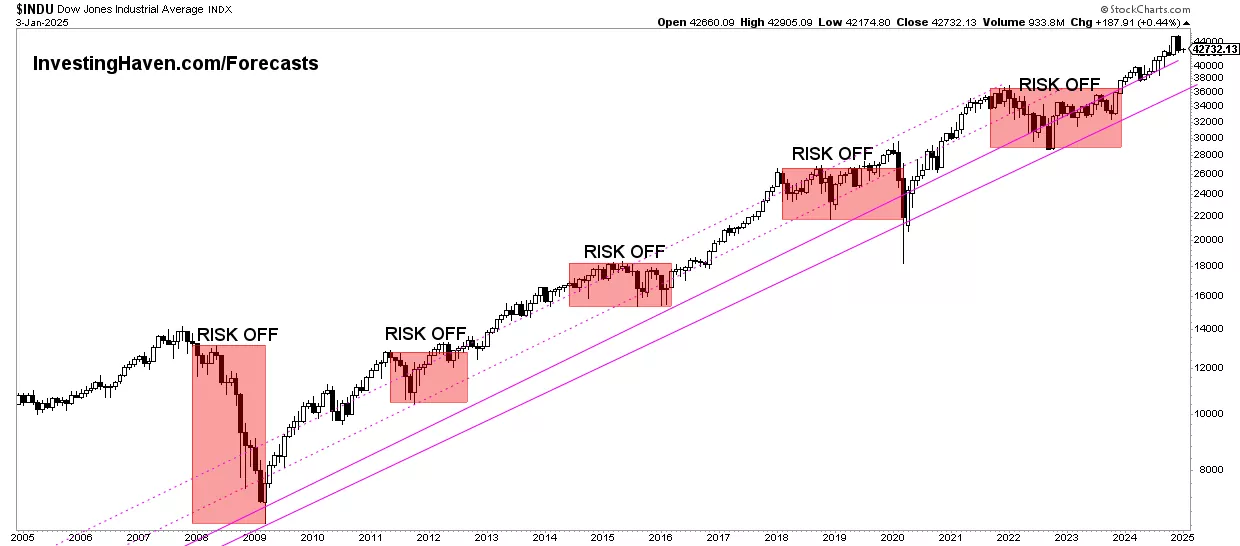
The Dow Jones Industrial Average was officially created on May 26, 1896. It was the brainchild of Charles Dow, the co-founder of Dow Jones & Company and the first editor of The Wall Street Journal, and his business partner, Edward Jones. At its inception, the index was a simple calculation designed to provide a snapshot of the health of the U.S. industrial sector. Today, it is a global financial benchmark that influences trillions of dollars in investment decisions.
The Birth of an Icon: 1896 and the Vision of Charles Dow
In the late 1800s, the American stock market was a wild and unpredictable environment. Information was scarce, insider trading was rampant, and the average person had no reliable way to gauge whether the economy was expanding or contracting. Charles Dow believed that the market moved in trends and that by tracking the closing prices of certain representative stocks, he could identify the underlying health of the broader business environment.
The Original Twelve
When the Dow was launched in 1896, it consisted of only 12 companies. These were the “blue chips” of the era—primarily firms involved in heavy industry, energy, and commodities. The original list included:
-
American Cotton Oil
-
American Sugar
-
American Tobacco
-
Chicago Gas
-
Distilling & Cattle Feeding
-
General Electric
-
Laclede Gas
-
National Lead
-
North American Company
-
Tennessee Coal, Iron and Railroad
-
U.S. Leather (Preferred)
-
U.S. Rubber
Of these original twelve, only General Electric remained in the index for the longest duration, finally being removed in 2018. The composition of this first list reflects the agrarian and early industrial roots of the United States. At the time of its debut, the index closed at a level of 40.94.
The Methodology of 1896
The original calculation was remarkably straightforward. Charles Dow simply added up the prices of the 12 stocks and divided the sum by 12. This “price-weighted” approach was revolutionary in its simplicity, offering a single number that summarized the performance of the most influential companies in the country. While the math has become significantly more complex over the decades due to stock splits and dividends, the core philosophy—that a select group of leading companies can represent the whole—remains the foundation of the DJIA.
Evolution of the Index: From 12 Industrials to 30 Global Powerhouses
The Dow Jones has never been a static entity. As the American economy shifted from a focus on heavy manufacturing to consumer goods, technology, and services, the index evolved to maintain its relevance. The first major expansion occurred in 1916, when the index grew from 12 to 20 stocks. In 1928, it expanded again to 30 stocks, a number that has remained the standard ever since.
Moving Beyond “Industrial”
Although the word “Industrial” remains in its name, the modern Dow bears little resemblance to the smoke-stack-heavy list of 1896. Today, the index includes giants from the world of technology (Microsoft, Apple), healthcare (UnitedHealth Group), finance (Goldman Sachs, JPMorgan Chase), and retail (Walmart, Amazon).
The selection of stocks for the Dow is not governed by a rigid quantitative formula like the S&P 500. Instead, it is managed by a committee at S&P Dow Jones Indices. The committee looks for companies with an excellent reputation, sustained growth, and a high level of interest among investors. A company is typically only removed if it falls into financial distress or if its industry no longer represents a significant portion of the U.S. economy.
Why 30 Stocks?
Critics often argue that 30 stocks are too few to represent the thousands of publicly traded companies in the U.S. However, the Dow’s proponents argue that because these 30 companies are the leaders in their respective sectors, their performance is highly correlated with the broader market. When the Dow moves significantly, it is usually because of macroeconomic factors—such as interest rate changes or geopolitical shifts—that affect all businesses. This allows the 30-stock index to remain a highly accurate barometer of market sentiment despite its narrow scope.
How the Dow Jones Industrial Average Works: Understanding the Price-Weighted Model

To the casual observer, the Dow is just a number. To the investor, it is a complex mathematical construction. Unlike the S&P 500 or the Nasdaq Composite, which are market-capitalization-weighted (meaning larger companies have a bigger impact), the Dow remains a price-weighted index.
The Mechanics of Price-Weighting
In a price-weighted index, companies with a higher share price have a greater influence on the index’s value than companies with a lower share price. For example, if a stock trading at $200 moves by 1%, it has a much larger impact on the Dow’s total point movement than a stock trading at $20 moving by the same percentage.
This methodology has unique implications for how companies manage their shares. In a market-cap-weighted world, stock splits don’t change a company’s “weight.” In the Dow, however, a stock split drastically reduces a company’s influence on the index. This is one reason why Apple and Amazon, despite their massive size, were only added to the Dow after their share prices were brought down through splits to levels that wouldn’t overwhelm the other 29 components.
The Dow Divisor
Because companies frequently undergo stock splits, spin-offs, and other structural changes, a simple average (dividing by 30) would cause the index to “jump” or “drop” artificially. To prevent this, the index uses the “Dow Divisor.”
The Divisor is a constantly adjusted numerical value that accounts for these corporate actions. When a company in the index splits its stock, the Divisor is adjusted downward so that the index value remains the same. As of recent years, the Dow Divisor is a decimal much smaller than one, meaning that a $1 move in any component stock results in a multi-point move in the index itself.
The Dow as a Financial Barometer: Major Milestones and Market Impact
Since its creation in 1896, the Dow Jones has acted as a witness to the most significant moments in modern history. Its peaks and valleys tell the story of the Great Depression, the post-WWII boom, the stagflation of the 1970s, the dot-com bubble, and the digital revolution.
Historical Milestones
-
The 1929 Crash: The Dow lost nearly 90% of its value between 1929 and 1932, a decline that came to define the Great Depression. It took until 1954 for the index to return to its pre-crash highs.
-
Breaking 1,000: In 1972, the Dow closed above 1,000 for the first time, a psychological milestone that signaled the beginning of a new era of institutional investing.
-
The 1987 Black Monday: The Dow suffered its largest single-day percentage drop in history, falling 22.6% on October 19, 1987.
-
The 20,000 and 30,000 Thresholds: The index crossed 20,000 in 2017 and 30,000 in 2020, driven by the massive expansion of the technology sector and accommodative monetary policy.
Why the Dow Still Matters to Main Street
While professional fund managers often prefer the S&P 500 for its technical breadth, the Dow Jones remains the primary index for “Main Street” investors. Because it consists of household names—the companies whose products people buy and whose services they use—it feels more tangible. When the evening news reports on “the market,” they almost always lead with the Dow. Its longevity allows for long-term historical comparisons that few other indices can provide.
Investing in the Dow Today: Modern Strategies for the Traditional Index
For the first century of its existence, you couldn’t “buy” the Dow; you could only track it. However, the rise of financial innovation in the 1990s changed the landscape for personal finance and business investing.
The Rise of the DIA ETF
In 1998, State Street Global Advisors launched the SPDR Dow Jones Industrial Average ETF Trust, known by its ticker symbol “DIA” (and often nicknamed “Diamonds”). This exchange-traded fund allows investors to buy a single security that mirrors the performance of the 30 stocks in the Dow. For the average investor, this provides an easy way to gain exposure to a diversified basket of blue-chip companies with a single transaction.

The Role of the Dow in a Diversified Portfolio
In the modern era of Side Hustles and Online Income, many investors look toward high-growth tech stocks or volatile crypto assets. However, the Dow Jones Industrial Average remains a cornerstone of conservative wealth building.
Because the Dow consists of established, dividend-paying companies, it often shows more resilience during market downturns than the growth-heavy Nasdaq. For those focused on long-term personal finance and retirement planning, the Dow represents “Quality.” It is a collection of companies with proven business models, strong balance sheets, and global reach.
Whether you are a seasoned investor or someone just beginning to explore the world of finance, the Dow Jones Industrial Average offers a window into the machinery of global capitalism. Created in a world of telegraphs and steamships, it has successfully transitioned into the age of artificial intelligence and cloud computing, proving that Charles Dow’s original vision—a simple way to measure the pulse of the economy—is as relevant today as it was in 1896.
aViewFromTheCave is a participant in the Amazon Services LLC Associates Program, an affiliate advertising program designed to provide a means for sites to earn advertising fees by advertising and linking to Amazon.com. Amazon, the Amazon logo, AmazonSupply, and the AmazonSupply logo are trademarks of Amazon.com, Inc. or its affiliates. As an Amazon Associate we earn affiliate commissions from qualifying purchases.