
Bank of America (NYSE: BAC) stands as one of the “Big Four” banking institutions in the United States, alongside JPMorgan Chase, Citigroup, and Wells Fargo. For anyone interested in the intersection of personal finance, institutional investing, and corporate governance, the question of “who owns” such a massive entity is more than just a matter of curiosity. It is a window into how global capital is distributed and who truly wields influence over the financial systems that manage our mortgages, savings, and credit.
Unlike a private company or a family-owned business, Bank of America is a publicly traded corporation. This means its ownership is fragmented across millions of individual and institutional shareholders. However, a closer look at the data reveals that while “the public” owns the bank, a handful of powerful financial titans and one legendary investor hold the lion’s share of the influence.

The Dominance of Institutional Investors
When we look at the ownership structure of Bank of America, the most striking observation is the sheer volume of shares held by institutional investors. These are organizations—such as mutual funds, pension funds, and insurance companies—that trade securities in quantities large enough to qualify for preferential treatment. As of the latest filings, institutional investors own approximately 58% to 62% of the total outstanding shares.
The “Big Three” Asset Managers: Vanguard, BlackRock, and State Street
The most significant institutional owners are the “Big Three” of the indexing world. The Vanguard Group, BlackRock, and State Street Global Advisors are consistently the top shareholders of nearly every S&P 500 company, and Bank of America is no exception.
Vanguard typically holds the top spot, owning roughly 8% of the company. BlackRock follows closely behind with a stake usually hovering around 6% to 7%. It is important to clarify, however, that while these firms are the “owners” on paper, the capital they use belongs to millions of individual investors who participate in their ETFs and mutual funds. These institutions act as fiduciaries, voting on corporate resolutions and board members on behalf of the underlying investors.
The Role of Passive Investing
The reason these institutions own such a large percentage of Bank of America is tied to the rise of passive investing. Because Bank of America is a staple of the S&P 500 and various financial sector indices, any index fund tracking these benchmarks must buy shares of the bank. This creates a stable base of ownership that provides liquidity and market stability, though it also raises questions about “horizontal shareholding,” where the same few firms own significant stakes in all major competitors within the same industry.
The Warren Buffett Factor: Berkshire Hathaway’s Strategic Stake
While Vanguard and BlackRock are the largest owners by volume, their ownership is spread across thousands of different funds. The most significant concentrated owner of Bank of America is Berkshire Hathaway, the conglomerate led by the legendary Warren Buffett.
A Vote of Confidence in 2011
The story of Berkshire Hathaway’s ownership of Bank of America is a masterclass in opportunistic investing. In 2011, as the bank was still reeling from the aftermath of the 2008 financial crisis and facing litigation related to the subprime mortgage meltdown, Buffett swooped in. He invested $5 billion in preferred stock and obtained warrants to purchase 700 million common shares at a set price.
By 2017, the bank’s recovery was so complete that Buffett exercised those warrants, instantly becoming the bank’s largest single shareholder. Today, Berkshire Hathaway owns more than 10% of Bank of America’s outstanding shares, a position valued at tens of billions of dollars.
Why Buffett Prefers Bank of America
Buffett’s ownership is not just about the money; it is a signal to the market. He often speaks of the “moat” that large banks possess—massive scale, high barriers to entry, and “sticky” customer relationships. Unlike the passive holdings of Vanguard, Buffett’s stake is an active endorsement of the bank’s management, specifically CEO Brian Moynihan. Buffett has frequently praised Moynihan’s “responsible growth” strategy, which prioritized stability and dividend increases over risky trading maneuvers.
Inside Ownership: Management and the Board
While institutional and billionaire investors dominate the headlines, another critical layer of ownership exists within the bank itself: the executives and board members who steer the ship.
Executive Compensation and Alignment
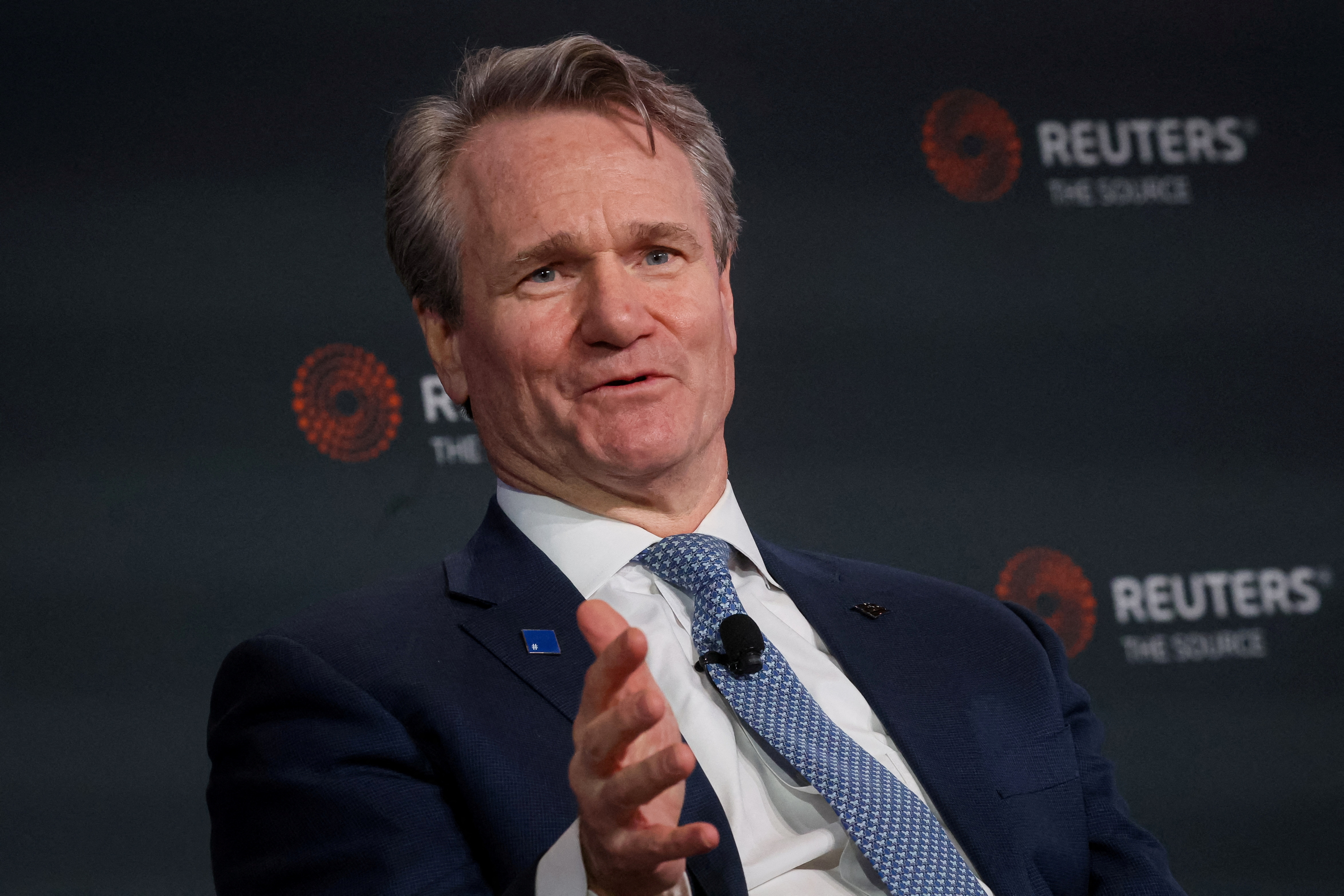
CEO Brian Moynihan and other C-suite executives hold significant amounts of Bank of America stock, often as part of their compensation packages. The logic behind this is “alignment of interests.” By ensuring that a substantial portion of an executive’s wealth is tied to the performance of the stock, the Board of Directors ensures that management makes decisions that benefit the shareholders.
As of recent filings, Brian Moynihan holds several million shares. While this is a tiny fraction of the total shares outstanding (roughly 0.1% or less), it represents a massive personal stake that ensures he is incentivized to maintain the bank’s profitability and share price.
The Board of Directors’ Oversight
The Board of Directors also holds shares, though typically in smaller amounts than the top executives. These individuals are responsible for representing shareholder interests, setting executive pay, and overseeing the bank’s long-term strategy. Their ownership, while modest in the grand scheme of a trillion-dollar company, is a requirement for maintaining credibility with the larger institutional owners.
Retail Investors: The Power of the Public
The final piece of the ownership puzzle is the retail investor—the everyday person who buys shares through a brokerage account like Robinhood, Fidelity, or Charles Schwab.
Direct vs. Indirect Ownership
Retail investors own approximately 30% to 35% of Bank of America. This group is incredibly diverse, ranging from small-scale traders to high-net-worth individuals. Some own the stock directly in their own names, while others own it through 401(k) plans or IRAs.
Bank of America is a particularly popular stock for retail investors who focus on “dividend growth” strategies. Because the bank has a history of increasing its dividend payouts and conducting massive share buybacks, it is often viewed as a reliable cornerstone for a retirement portfolio.
The Impact of Share Buybacks
Ownership is not a static number. Bank of America frequently engages in share buybacks, where the company uses its profits to buy its own shares back from the marketplace and retire them. This reduces the total number of shares outstanding, which in turn increases the ownership percentage of every remaining shareholder. If you own 100 shares and the bank buys back 5% of its stock, your 100 shares now represent a larger slice of the company’s total value. This is a primary way the bank returns value to its owners without the immediate tax implications of a dividend.
Why Ownership Matters for the Global Economy
Understanding who owns Bank of America is not just an exercise in accounting; it has real-world implications for how the global economy functions. Ownership confers voting rights, and those voting rights influence how the bank approaches massive issues like climate change, financial technology (FinTech) adoption, and lending practices.
ESG and Institutional Influence
Because firms like BlackRock and State Street own such large chunks of the bank, their internal policies on Environmental, Social, and Governance (ESG) factors carry immense weight. If BlackRock decides that its funds will only support boards that meet certain diversity or carbon-reduction targets, Bank of America must listen. This “stewardship” by large owners means that the bank’s direction is often shaped by the prevailing winds of the institutional investing world.
Regulatory Limits on Ownership
It is also worth noting that ownership of a major bank is strictly regulated. The Federal Reserve keeps a close eye on any entity that seeks to own more than 10% of a bank’s voting stock. Once an investor crosses that threshold, they can be classified as a “Bank Holding Company,” which brings a mountain of regulatory oversight. This is why you rarely see a single individual or company (other than Berkshire Hathaway, which has specific agreements with the Fed) owning more than 10% of a major U.S. financial institution.

Conclusion: A Collaborative Ownership Structure
In summary, Bank of America is owned by a complex web of participants. It is anchored by the passive holdings of institutional giants like Vanguard and BlackRock, validated by the massive concentrated stake of Warren Buffett’s Berkshire Hathaway, and supported by millions of retail investors looking for long-term growth and dividends.
This distributed ownership model ensures that the bank remains a public utility of sorts—highly regulated and beholden to a wide array of stakeholders rather than the whims of a single owner. For the individual investor, owning a piece of Bank of America means sitting at the same table as some of the most sophisticated financial minds in the world, sharing in the profits of a central pillar of the global economy.
aViewFromTheCave is a participant in the Amazon Services LLC Associates Program, an affiliate advertising program designed to provide a means for sites to earn advertising fees by advertising and linking to Amazon.com. Amazon, the Amazon logo, AmazonSupply, and the AmazonSupply logo are trademarks of Amazon.com, Inc. or its affiliates. As an Amazon Associate we earn affiliate commissions from qualifying purchases.