
The Multiple Listing Service (MLS) is the foundational architecture of the modern real estate market. Far from being a single, centralized website, the MLS is a complex network of over 500 regional databases that facilitate the exchange of property information between brokers. In the current technological landscape, accessing these listings has evolved from exclusive, guarded books to sophisticated digital feeds that power everything from global search portals to niche investment tools. Understanding how to access MLS listings requires a deep dive into the software protocols, data standards, and digital interfaces that bridge the gap between private professional databases and the public-facing internet.
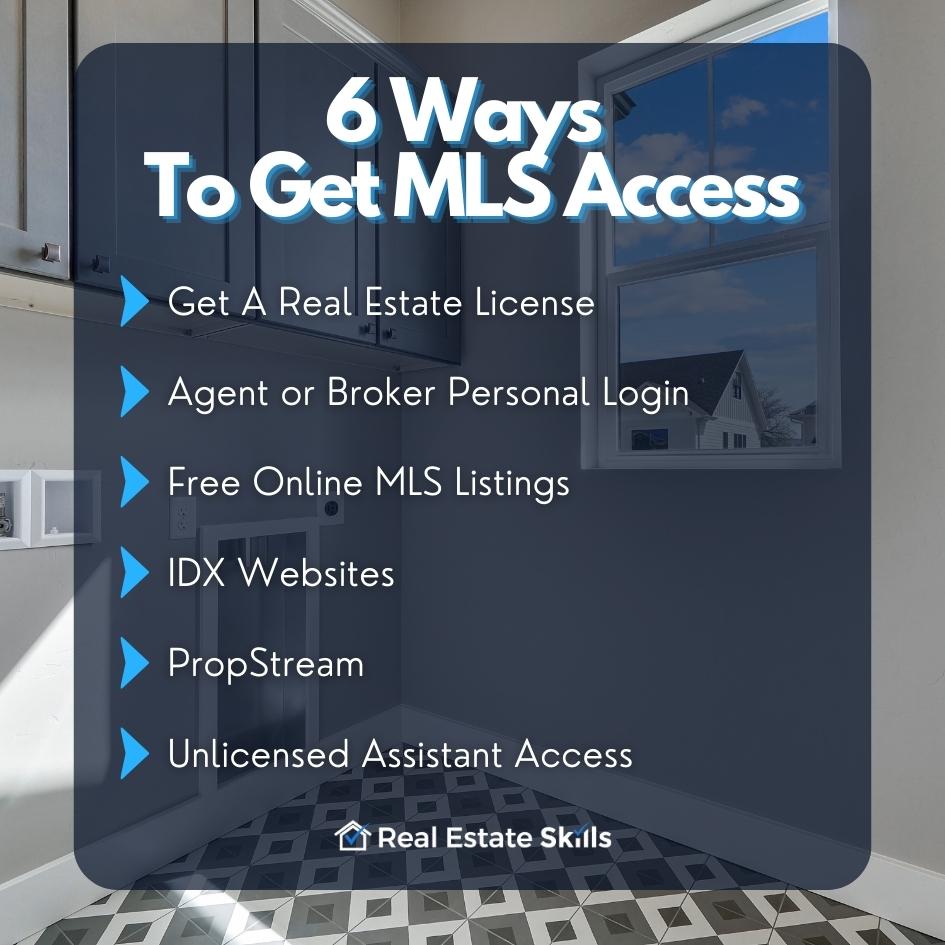
The Digital Infrastructure of the Multiple Listing Service
At its core, the MLS is a proprietary database managed by regional associations of Realtors. To understand how to access this data, one must first understand the technical framework that governs it. Unlike a standard public website, the MLS operates on a membership-based infrastructure designed for high-speed data entry and retrieval.
The Role of RESO and Data Standardization
One of the biggest hurdles in accessing MLS listings historically was the lack of uniformity. Every regional MLS used different naming conventions for data fields—one might use “HalfBath” while another used “BathsPartial.” To solve this, the Real Estate Standards Organization (RESO) was established.
RESO created the “Data Dictionary,” a common language for real estate data. When you access an MLS listing today through a modern software application, you are likely interacting with data that has been “normalized” according to RESO standards. This standardization is what allows a single app to show listings from Miami, Chicago, and Seattle in the exact same format. Without this layer of technical standardization, building software that accesses multiple MLS feeds would be a logistical nightmare of custom coding for every individual market.
Regional vs. National Database Logic
It is a common misconception that there is one “National MLS.” In reality, the technology is fragmented. Accessing “the MLS” actually means gaining access to a specific regional node. Each node utilizes its own software vendor—such as CoreLogic’s Matrix, Black Knight’s Paragon, or FBS’s Flexmls. These platforms serve as the backend interface where data is hosted. For a developer or a tech-savvy user, accessing listings involves understanding which of these platforms a specific board uses, as the API (Application Programming Interface) documentation may vary slightly depending on the vendor’s implementation.
API Protocols: Moving Data from Database to Screen
The most significant technological shift in real estate over the last decade has been the method by which data is transferred from these private databases to external applications. If you are looking to build a tool or a website that displays listings, you must navigate the world of data feeds.
From RETS to Web API
For years, the industry standard was the Real Estate Transaction Standard (RETS). RETS required developers to “pull” data from the MLS server, often downloading tens of thousands of records into a local database several times a day to keep it updated. This was resource-intensive and led to data latency issues—where a house might be sold on the MLS but still appear “active” on a website for hours.
The industry has now transitioned toward the RESO Web API. Based on the OData (Open Data Protocol) standard, the Web API allows for real-time querying. Instead of downloading the entire database, an application can ask the MLS server, “Show me all active listings in this specific zip code right now.” This transition to API-centric access has drastically lowered the barrier to entry for new real estate tech startups and has improved the accuracy of listing data across the web.
Understanding IDX and VOW Feeds
Accessing MLS listings for public display is governed by two primary technical frameworks: Internet Data Exchange (IDX) and Virtual Office Websites (VOW).
-
IDX (Internet Data Exchange): This is the most common way listings are accessed for public websites. It is a set of rules and a data feed that allows brokers to show each other’s listings on their own sites. Technically, an IDX feed is a subset of the full MLS data. It excludes sensitive information like seller phone numbers, showing instructions, and commissions.
-
VOW (Virtual Office Website): A VOW feed is a more comprehensive data set. Accessing a VOW feed requires a user to create an account and sign a digital agreement. Because the user is technically in a “virtual office” with a broker, they are allowed to see more data, such as sales history and more detailed property characteristics, which are not available on standard IDX sites.
Consumer Portals and the Democratization of Real Estate Data
For the average user or tech enthusiast not looking to build their own software, accessing MLS listings happens through high-traffic consumer portals. These platforms act as massive aggregators that ingest thousands of different MLS feeds simultaneously.
Aggregators and Mobile Application Logic
Sites like Zillow, Redfin, and Realtor.com are essentially massive data-processing engines. They utilize sophisticated “ingestion engines” to take raw data from hundreds of different MLS sources, clean it, and present it through a high-performance User Interface (UI).
The technology behind these apps involves complex mapping APIs (like Google Maps or Mapbox) and elastic search databases that allow users to filter through millions of records in milliseconds. When you access listings through these apps, you are benefiting from a multi-million dollar tech stack that handles the “heavy lifting” of data synchronization, image hosting, and geospatial indexing.
The Challenges of Data Latency
A major technical challenge in accessing MLS listings through third-party apps is latency. Even with modern APIs, there can be a delay between a listing hitting the local MLS and appearing on a national portal. Tech-focused buyers often seek out “direct-access” apps provided by local brokerages. These local apps often have a direct pipe into the local MLS server, bypassing the extra processing steps required by national aggregators, thus providing updates a few minutes faster—a critical advantage in high-competition markets.
Professional Tech Stacks for Direct MLS Access
For real estate professionals, access to the MLS is not just about viewing listings; it is about data entry, comparative market analysis (CMA), and client management. This requires a much more robust tech stack.
Desktop Platforms and Enterprise Software
Direct access for professionals is usually conducted through enterprise-grade SaaS (Software as a Service) platforms. These platforms provide advanced search logic that goes far beyond what is available on consumer sites. For instance, a professional might use a “Tax Integration” feature that overlays MLS data with public county records using a unique parcel identifier (APN). This allows for a 360-degree view of a property’s financial and legal history.
Furthermore, professional access often includes integration with electronic signature tools (like DocuSign) and transaction management software. This creates a seamless digital workflow where a listing can be identified, analyzed, and put under contract within a single software ecosystem.
Mobile-First Solutions for Agents
In the field, agents use specific mobile applications like MLS-Touch or Homesnap (now integrated into various platforms). These apps utilize the smartphone’s GPS to provide “augmented reality” or “proximity-based” access. An agent can stand in front of a house, and the app will use geolocation to pull the specific MLS record for that property instantly. This represents the cutting edge of mobile MLS access, combining database querying with real-world spatial data.
The Future of Access: AI, Machine Learning, and Blockchain
As we look toward the future, the way we access and interact with MLS listings is being transformed by emerging technologies.
Predictive Analytics and Smart Search
Artificial Intelligence is changing the “search” part of MLS access. Instead of traditional filters (3 beds, 2 baths), Natural Language Processing (NLP) allows users to search for “houses with lots of natural light and a modern kitchen.” AI algorithms analyze the listing photos—not just the text—to verify if a kitchen actually has granite countertops or if the “view” described in the text is actually present in the images. This computer vision technology adds a new layer of metadata to MLS listings, making them more searchable and accessible than ever before.
Security and Data Sovereignty
As data becomes more valuable, the security protocols for accessing the MLS are tightening. We are seeing a move toward more secure authentication methods, such as OAuth 2.0 and multi-factor authentication, to ensure that proprietary data is not scraped by unauthorized bots.
There is also ongoing discussion regarding the use of blockchain for MLS listings. A decentralized ledger could, in theory, provide a single, immutable source of truth for property data, eliminating the need for 500+ regional databases. In this scenario, “accessing the MLS” would mean interacting with a smart contract on a blockchain, which would verify a user’s credentials and permissions in a decentralized manner, potentially increasing transparency and reducing the fees associated with data access.
In summary, accessing MLS listings is a multifaceted technical process. It involves a journey from raw data entry in a regional database, through standardized API protocols like the RESO Web API, and finally into highly optimized front-end applications. Whether you are a consumer using a mobile app or a developer integrating a VOW feed, the technology of the MLS is the silent engine driving the global real estate economy.
aViewFromTheCave is a participant in the Amazon Services LLC Associates Program, an affiliate advertising program designed to provide a means for sites to earn advertising fees by advertising and linking to Amazon.com. Amazon, the Amazon logo, AmazonSupply, and the AmazonSupply logo are trademarks of Amazon.com, Inc. or its affiliates. As an Amazon Associate we earn affiliate commissions from qualifying purchases.