
Understanding the true financial worth of your vehicle is not merely a matter of curiosity; it’s a critical component of sound personal finance, smart investment decisions, and effective asset management. Whether you’re planning to sell, trade-in, refinance, insure, or simply assess your net worth, having an accurate valuation is paramount. In an age where information is power, the Vehicle Identification Number (VIN) emerges as the undisputed cornerstone for unlocking your car’s most precise monetary value. This unique 17-character code is far more than just a serial number; it’s a comprehensive digital fingerprint that holds the key to your vehicle’s entire history and specifications, directly impacting its market value. Relying on mere guesswork or generic estimates can lead to significant financial losses, from accepting an offer far below market value to receiving insufficient insurance payouts. This guide delves into the financial importance of VIN-based valuation, demonstrating how this simple number can empower you to make informed decisions and maximize your automotive asset’s financial potential.
The Indispensable Role of Your VIN in Car Valuation
In the realm of vehicle valuation, objectivity and specificity reign supreme. Generic estimations based solely on make, model, and year can be misleading, as they fail to account for the unique attributes and history that differentiate one vehicle from another. This is precisely where the VIN becomes an indispensable financial tool.
What is a VIN and Why It’s Crucial
A Vehicle Identification Number (VIN) is a unique, 17-character alphanumeric code assigned to every automobile upon manufacture. It serves as the vehicle’s unique identity document, meticulously encoding a wealth of specific data about its origin and features. Each character or group of characters within the VIN reveals critical information: the country of origin, manufacturer, model year, specific plant where it was assembled, and a unique serial number. More importantly, it specifies the engine type, transmission, body style, safety features, and even the original trim level and optional packages installed at the factory.
From a financial perspective, this granular detail is crucial. It allows buyers, sellers, lenders, and insurers to verify the exact specifications of a vehicle, eliminating ambiguity. For instance, knowing whether a car has a standard or premium engine, a basic or luxury interior package, or specific safety features can swing its value by thousands of dollars. The VIN ensures that any valuation is based on the actual vehicle in question, not a generalized approximation.
Beyond the Basics: Unlocking Hidden Value Data
While the basic specifications are vital, the VIN’s financial utility extends much further by linking to comprehensive databases. When you input your VIN into a reputable valuation tool, it doesn’t just pull up basic factory data. It often taps into historical records, revealing a vehicle’s life story which profoundly impacts its financial standing. This includes:
-
Accident History: Has the car been involved in any collisions, and what was the extent of the damage? A vehicle with a clean accident history typically commands a higher price.
-
Service and Maintenance Records: Evidence of regular, documented maintenance can significantly enhance a car’s perceived reliability and thus its value.
-
Ownership History: The number of previous owners can influence a car’s attractiveness and value, especially if it’s been consistently well-maintained by fewer owners.
-
Recalls: Information about completed or outstanding manufacturer recalls can impact safety and long-term reliability, which in turn influences value.
-
Lien Status: Crucially, the VIN can reveal if there’s an outstanding loan or lien on the vehicle, a critical piece of financial information for any potential buyer or seller.
-
Flood or Salvage Titles: These types of titles indicate significant structural or water damage and will drastically reduce a car’s market value, often making it difficult to finance or insure.
By consolidating all this objective, verifiable data, the VIN transforms car valuation from a subjective guess into a data-driven financial assessment. It ensures transparency and builds trust, which are essential for effective financial transactions.
Financial Implications of Accurate Car Valuation
Accurate car valuation, driven by the specificity of the VIN, is not merely a formality; it’s a powerful financial lever that can save or make you thousands of dollars across various scenarios. Ignoring this precision can lead to substantial financial pitfalls.
Maximizing Your Sale or Trade-in Value
When it comes time to sell your car privately or trade it in at a dealership, knowing its precise worth is your strongest negotiation tool. Without an accurate, VIN-based valuation, you run the risk of underselling your vehicle, leaving money on the table. If you’re armed with a detailed valuation report derived from your VIN, you can confidently justify your asking price, highlight specific features or a clean history that add value, and counter lowball offers effectively. For trade-ins, dealerships often aim to offer the lowest possible price. Your VIN-backed valuation provides objective evidence of your car’s market worth, enabling you to challenge unfair offers and negotiate for a better deal, potentially converting what could have been a loss into a significant financial gain.
Insurance, Loans, and Financial Planning
The financial impact of accurate car valuation extends far beyond buying and selling. For insurance purposes, if your car is totaled or stolen, your payout will be based on its Actual Cash Value (ACV). An accurate, VIN-supported valuation ensures that this ACV truly reflects your vehicle’s worth, preventing you from being underinsured and suffering a financial loss in the event of a claim. Similarly, when seeking an auto loan or refinancing an existing one, lenders use your car’s value as collateral. A precise valuation can influence the loan amount you qualify for, the interest rate you receive, and your overall financial leverage. In broader personal financial planning, your car is often a significant asset. Regularly updating its estimated value based on VIN data provides a clearer picture of your net worth, aiding in budgeting, investment decisions, and long-term financial strategy.
Avoiding Costly Mistakes
Relying on generic estimates or anecdotal information for your car’s value is a recipe for costly mistakes. These can include:
-
Overpaying for a Purchase: If you’re buying a used car and don’t verify its VIN-based value, you might pay above market rate for a vehicle with hidden issues that significantly reduce its true worth.
-
Under-budgeting for a New Car: If you overestimate your trade-in’s value without VIN verification, you might set an unrealistic budget for your next purchase, leading to financial strain later.
-
Inaccurate Depreciation Calculations: For businesses or individuals tracking asset depreciation, incorrect initial valuations skew long-term financial projections.
-
Legal or Estate Disputes: In situations like divorce settlements or estate planning, an undisputed, VIN-backed valuation can prevent lengthy and expensive legal battles over asset division.
In essence, the VIN-driven valuation is a shield against financial exploitation and a sword for maximizing your financial outcomes in all automotive transactions.
Step-by-Step: Leveraging Your VIN for Valuation
Harnessing the power of your VIN for an accurate valuation is a straightforward process, made accessible by a variety of digital tools. Understanding how to navigate these resources is key to unlocking your car’s true financial potential.

Locating Your VIN
Before you can embark on the valuation journey, you need to locate your vehicle’s VIN. Fortunately, it’s typically displayed in several easily accessible locations:
-
Dashboard (Driver’s Side): Look through the windshield on the driver’s side, where the dashboard meets the glass. The VIN plate is usually visible there.
-
Driver’s Side Door Jamb: Open the driver’s side door and look at the doorframe (the pillar between the front and rear doors). There’s often a sticker or label containing the VIN.
-
Vehicle Registration and Insurance Documents: Your car’s VIN will be clearly printed on your vehicle registration card, title, and insurance policy documents.
-
Under the Hood: On some vehicles, particularly older models, the VIN might be stamped on the firewall or on a plate attached to the engine block.
Once you’ve located it, ensure you transcribe the 17 characters accurately, as even a single incorrect digit can lead to an erroneous valuation.
Popular Online Valuation Tools and Resources
The digital age has democratized car valuation, making sophisticated tools available to everyone. These platforms leverage vast databases of sales data, market trends, and specific vehicle information pulled directly from your VIN to provide highly accurate estimates:
-
Kelley Blue Book (KBB.com): Arguably the most well-known, KBB offers various valuations (trade-in, private party sale, retail) based on your VIN, condition, mileage, and optional features. Its methodology incorporates millions of transactional data points.
-
Edmunds.com: Edmunds provides an “Appraise My Car” tool, also utilizing VIN inputs to generate market value estimates. They are known for their comprehensive reviews and long-standing market expertise.
-
NADAguides (J.D. Power Valuation Services): Often favored by dealerships and financial institutions, NADAguides provides professional-grade valuations. It’s particularly useful for understanding clean trade-in values.
-
CARFAX.com/Autocheck.com: While primarily known for vehicle history reports, these services also integrate valuation tools. More importantly, their history reports (which require a VIN) are essential for validating the condition factors that influence value. A car with a clean CARFAX report will inherently command a higher financial value than one with a checkered past.
When using these tools, be prepared to accurately describe your car’s condition (excellent, good, fair), mileage, and specific optional features. The more precise your input, the more accurate the financial estimate.
Interpreting Valuation Reports and Market Adjustments
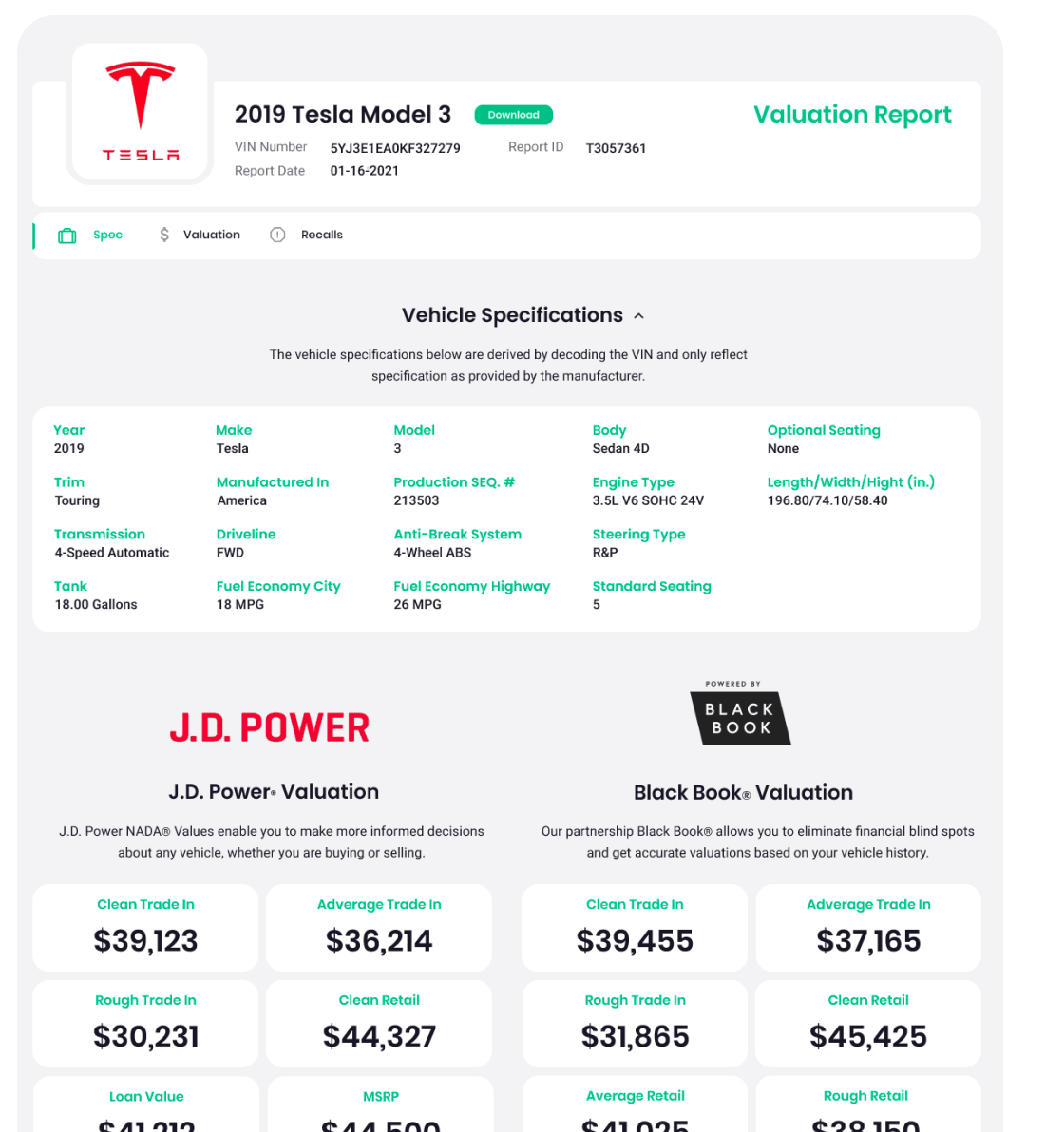
Once you receive a valuation report, it’s crucial to understand what the numbers mean and how to apply them. Online tools typically provide a range (e.g., $15,000 – $17,500) rather than a single fixed price. This range accounts for variations in local markets, seller motivation, and minor condition differences.
Key aspects to consider when interpreting reports:
-
Trade-in vs. Private Party vs. Retail Value: These represent different financial scenarios. Trade-in value is typically the lowest, reflecting the dealer’s need for profit. Private party is what you might expect selling to an individual. Retail is what a dealer would sell the car for after reconditioning.
-
Condition Adjustments: Be realistic about your car’s condition. While you might see it as “excellent,” a scratch or minor ding might place it in “good” or “fair” for valuation purposes. Honesty here prevents financial disappointment.
-
Mileage Impact: Higher mileage generally reduces value, but the degree varies by make and model.
-
Local Market Dynamics: Car values can fluctuate geographically. A convertible might fetch a higher price in Florida than in Alaska. Always consider local demand and supply.
-
Optional Features: Premium sound systems, navigation, sunroofs, advanced safety packages, and specialized wheels often add value. Ensure these are accurately reflected in your input.
-
Service History: While not always directly entered into online tools, a strong service record, when presented to a buyer, can reinforce and even justify a higher end of the valuation range.
By combining the objective data from your VIN with a realistic assessment of these factors, you can arrive at a highly precise and financially sound understanding of your car’s true worth.
Factors Influencing Your Car’s Financial Worth (Beyond the VIN)
While the VIN provides the foundational data for valuation, several other dynamic and tangible factors play a significant role in determining your car’s final financial worth in the marketplace. Understanding these elements is crucial for maximizing your return.
Condition, Mileage, and Maintenance History
These three factors represent the physical and operational health of your vehicle, directly translating into financial value.
-
Condition: This encompasses both the exterior and interior. Dents, scratches, rust, faded paint, torn upholstery, stains, and non-working accessories all detract from value. A well-maintained, clean, and damage-free vehicle will always command a higher price. Investing in cosmetic repairs or professional detailing can often yield a positive financial return upon sale.
-
Mileage: Generally, lower mileage equates to higher value. Mileage is often seen as a proxy for wear and tear on mechanical components. However, this is relative; a 5-year-old car with 15,000 miles is highly desirable, whereas a 15-year-old car with 15,000 miles might raise questions about long-term storage or lack of use.
-
Maintenance History: A comprehensive and documented service history demonstrates that the car has been cared for, reducing perceived risk for future buyers. Evidence of regular oil changes, tire rotations, and timely repairs by certified mechanics can add significant financial confidence and justify a higher asking price. Conversely, a patchy or absent maintenance history can significantly devalue a vehicle due to uncertainty about its mechanical health.
Market Dynamics and Economic Factors
Car values are not static; they are heavily influenced by broader economic conditions and market forces, which can fluctuate rapidly.
-
Supply and Demand: If a particular make and model is in high demand and short supply (e.g., popular SUVs or specific performance cars), its value will naturally increase. Conversely, an oversupply of less popular models can drive values down.
-
Fuel Prices: High fuel prices typically reduce the demand and value of large, less fuel-efficient vehicles, while boosting the value of hybrids and smaller, economical cars.
-
New Model Releases: The introduction of a new generation of a car model can cause the value of the previous generation to dip, as buyers often prefer the latest features and styling.
-
Economic Health: During economic downturns, consumers tend to buy fewer new cars, increasing demand for reliable used cars and potentially stabilizing or even boosting their value. In strong economies, demand for new cars might be higher, putting downward pressure on used car values.
-
Seasonal Trends: Certain types of vehicles might sell better at specific times of the year (e.g., convertibles in spring, 4x4s in winter), leading to seasonal price fluctuations.
Optional Features and Aftermarket Additions
While the VIN captures factory-installed features, the impact of these and any aftermarket additions must be considered for a complete financial picture.
-
Desirable Factory Options: Features like a sunroof, premium sound system, navigation, heated seats, advanced safety packages, and leather upholstery can significantly enhance a car’s financial value, especially in the used car market where buyers prioritize comfort and technology.
-
Aftermarket Additions: These are a double-edged sword. Professionally installed, desirable upgrades like a high-quality towing package for a truck or performance enhancements for a sports car can add value. However, highly personalized or poorly installed modifications (e.g., extreme body kits, loud exhausts, non-standard suspension changes) often detract from value, as they appeal to a niche market or raise concerns about reliability. It’s crucial to assess whether an aftermarket addition broadens or narrows your potential buyer pool and its associated financial impact.
Professional Valuation vs. DIY Online Tools
While online VIN-based valuation tools provide an excellent starting point for most car owners, there are specific scenarios where a more formalized, professional appraisal is not just recommended but financially prudent.
When to Seek an Appraiser
A professional appraiser offers an expert, impartial assessment of your vehicle’s worth, which can be invaluable in complex or high-stakes financial situations. You should consider seeking a certified automotive appraiser when:
-
Dealing with Classic, Antique, or Collector Cars: These vehicles have unique markets and often appreciate rather than depreciate. Online tools are rarely equipped to accurately value such specialized assets, making a professional appraisal essential for insurance, sales, or estate planning.
-
Customized or Heavily Modified Vehicles: If your car has significant, high-value aftermarket modifications (e.g., custom restoration, performance tuning, specific accessibility modifications), a professional can assess the financial impact of these investments far better than a generic algorithm.
-
Legal Disputes or Settlements: In cases of divorce, estate liquidation, bankruptcy, or insurance claims (especially if you dispute an insurer’s lowball offer), a professional appraisal holds legal weight and can protect your financial interests.
-
Rare or Unique Vehicles: Cars with limited production runs, special editions, or historical significance may defy standard valuation models, necessitating expert evaluation.
-
High-Value Luxury or Exotic Cars: For vehicles in the upper echelons of the market, even a small percentage error in valuation can represent thousands of dollars, making a precise appraisal a wise investment.
Professional appraisers provide a detailed, unbiased report that can be used for financial negotiations, insurance policies, or legal proceedings, offering a level of authority and detail that online tools cannot match.

Combining Resources for the Most Accurate Financial Picture
For the vast majority of car owners, the most financially sound strategy involves a blended approach:
-
Start with Online VIN Tools: Begin by inputting your VIN into multiple reputable online platforms (KBB, Edmunds, NADAguides). This provides a quick, free, and robust initial estimate, giving you a baseline understanding of your car’s general market value.
-
Verify with History Reports: Purchase a CARFAX or AutoCheck report using your VIN. This report will confirm accident history, title issues, and service records, which are critical financial value determinants. This step either validates your initial online estimate or indicates a need for adjustment.
-
Local Market Research: Visit local dealerships (even for a “courtesy appraisal” or rough trade-in offer) and browse local online classifieds or used car listings for vehicles identical or very similar to yours. This helps you understand real-time local supply, demand, and pricing trends, which can slightly adjust the online valuations.
-
Consider Professional Appraisal (If Needed): If your car falls into one of the specialized categories mentioned above, or if you find a significant discrepancy between online estimates and what you believe is fair, then investing in a professional appraisal becomes a financially astute decision.
By judiciously combining the convenience and data aggregation of online VIN-based tools with comprehensive history reports, local market intelligence, and potentially professional expertise, you can construct the most accurate and financially defensible valuation of your vehicle.
Knowing “how much is my car worth by VIN” is more than a simple query; it’s a fundamental step in responsible personal financial management. The VIN acts as a powerful identifier, unlocking a wealth of data that directly informs your vehicle’s market value. From maximizing your return on a sale or trade-in to ensuring adequate insurance coverage and informed financial planning, leveraging your VIN provides the accuracy and confidence needed to navigate the automotive market effectively. By understanding its role, utilizing available tools, and considering all influencing factors, you empower yourself to make financially astute decisions, ensuring you never leave money on the table when it comes to one of your most significant assets. Embrace the power of your VIN—it’s your key to financial clarity in the world of car valuation.
aViewFromTheCave is a participant in the Amazon Services LLC Associates Program, an affiliate advertising program designed to provide a means for sites to earn advertising fees by advertising and linking to Amazon.com. Amazon, the Amazon logo, AmazonSupply, and the AmazonSupply logo are trademarks of Amazon.com, Inc. or its affiliates. As an Amazon Associate we earn affiliate commissions from qualifying purchases.