
In the realm of personal finance, a vehicle is often the second-largest purchase a consumer will make, surpassed only by the acquisition of real estate. Because a car is a depreciating asset that simultaneously serves as a significant component of an individual’s net worth, understanding its precise market value is critical for effective wealth management. For decades, Kelley Blue Book (KBB) has been the gold standard for these valuations. However, as the automotive market experiences unprecedented volatility due to supply chain disruptions and shifting interest rates, many savvy investors and budget-conscious consumers are asking a fundamental question: How accurate is KBB really?

To treat a vehicle as a serious financial asset, one must look past the brand name and evaluate the data. Understanding the accuracy of KBB is not merely about curiosity; it is about ensuring you are not leaving thousands of dollars on the table during a trade-in or overextending your debt-to-income ratio on a new purchase.
Understanding the Role of KBB in Personal Finance
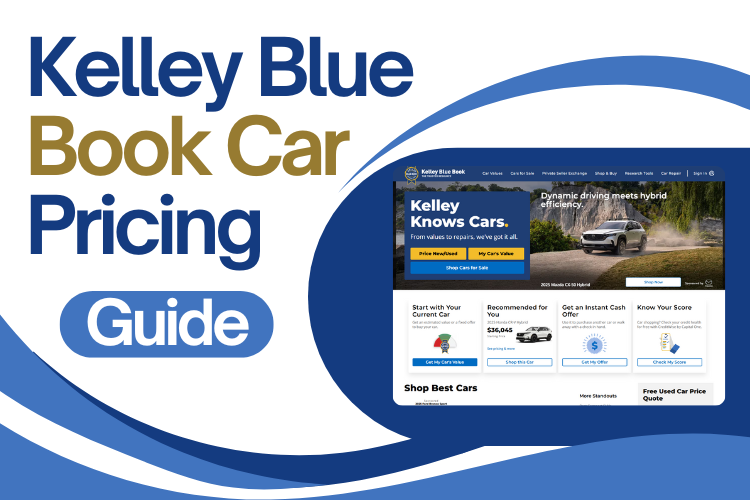
Kelley Blue Book operates as a data aggregator and pricing guide. From a financial perspective, it serves as a “benchmark” rather than a “spot price.” When you check a stock price, you see the exact amount at which the last trade occurred. In contrast, KBB provides a range based on historical data, auction results, and regional trends.
The Asset Value of Your Vehicle
Most people view their car as a tool for transportation, but in the context of a balance sheet, it is a liquidatable asset. Accuracy in valuation is the difference between a healthy emergency fund and a financial shortfall. KBB’s primary utility lies in its ability to provide a “Private Party Value” and a “Trade-In Value.” These figures are essential when calculating your total net worth or when determining the “equity” you have in a vehicle if you are considering a title loan or a refinance. If KBB’s data is lagging behind the market by even 5%, on a $40,000 SUV, that represents a $2,000 discrepancy—enough to derail a monthly budget or a down payment strategy.
KBB vs. The Market Reality
The accuracy of KBB is often challenged by the speed of the modern economy. KBB uses a proprietary algorithm that processes millions of data points, but these points are inherently retrospective. In a rapidly changing economic environment—where interest rates might climb 50 basis points in a month or gas prices might spike—historical data loses its predictive power. For a consumer, this means that while KBB is highly accurate for “normal” market conditions, it can become a lagging indicator during economic shifts. To maintain financial precision, one must view KBB as a starting point for negotiation rather than an absolute truth.
Factors That Influence KBB Accuracy
To understand why KBB might fluctuate, we must look at the variables that feed into its valuation engine. For the financially minded, these variables represent the “risk factors” of the asset valuation.
Algorithmic Delays and Rapid Market Shifts
KBB’s accuracy is highest when the market is stable. However, the used car market is currently influenced by macroeconomic factors such as semiconductor shortages and the pivot toward Electric Vehicles (EVs). When demand for a specific type of vehicle (like fuel-efficient hybrids) spikes overnight, KBB’s algorithm may take several weeks to catch up to the “street price.” If you are selling a vehicle during a period of high inflation, relying solely on KBB might lead you to undervalue your asset. Conversely, during a market correction, KBB might lead you to overvalue your trade-in, causing frustration when you visit a dealership.
Regional Discrepancies and Local Demand
Money is worth different amounts in different places, and the same applies to cars. A 4×4 truck carries a premium in the snowy regions of the Rockies compared to the flatlands of Florida. While KBB does ask for a zip code to localize its data, the granularity can sometimes be lacking. Large-scale regional data can miss hyper-local trends—such as a localized economic boom in a specific city—which can drive up car prices beyond what the “Blue Book” suggests. From a financial planning perspective, it is wise to compare KBB’s regional estimate against actual local listings on platforms like Autotrader or Facebook Marketplace to find the “true” local liquidity of the asset.
The Subjectivity of Vehicle Condition
The greatest point of failure in KBB accuracy is not the tool itself, but the user input. KBB categorizes cars as Fair, Good, Very Good, and Excellent. Statistically, less than 5% of used cars truly qualify as “Excellent,” yet the majority of consumers select this category when valuing their own assets. This psychological bias leads to an inflated sense of wealth. From a professional financial standpoint, one should always value their vehicle at the “Good” or “Fair” level to remain conservative in their financial reporting. Overestimating the condition of an asset leads to “phantom wealth,” which can be a dangerous foundation for making further investment decisions.

Comparing KBB to Other Financial Tools
In any robust financial analysis, “triangulation” is key. You should never rely on a single data source for a major financial transaction.
Edmunds and NADA: The Institutional Competitors
While KBB is the most famous, NADA (National Automobile Dealers Association) and Edmunds offer competing perspectives. NADA values are often used by credit unions and banks to determine how much they are willing to lend on a specific vehicle. Therefore, if you are seeking a car loan, the NADA value may actually be more “accurate” for your specific financial needs than KBB, as it represents the institutional ceiling for financing. Edmunds, on the other hand, often reflects “True Market Value,” which some find to be more aligned with actual dealership transaction prices.
Real-World Transaction Data: Carvana and CarMax
In the modern digital economy, the most “accurate” price is the one someone is willing to pay you today. Platforms like Carvana, Vroom, and CarMax provide “Instant Cash Offers.” These are not estimates; they are binding financial contracts. When assessing the accuracy of KBB, a smart move is to pull a KBB report and then get a real-world cash offer. If KBB says your car is worth $20,000 but CarMax offers you $18,000, the “accurate” value for your immediate liquidity is $18,000. The $2,000 difference is the “convenience tax” or a reflection of the dealer’s overhead.
Strategic Tips for Using KBB in Negotiations
If you are treating your car as a business asset, you must use KBB data strategically to maximize your return on investment (ROI).
Leveraging KBB for Trade-Ins
When walking into a dealership, the KBB “Trade-In Range” is your most powerful defensive tool. Dealerships often use their own internal software (like vAuto) to squeeze margins. By presenting a KBB report, you are anchoring the negotiation in a recognized industry standard. Even if the dealer disputes the accuracy, you have established a psychological floor for the transaction. For your personal finances, achieving a trade-in value at the higher end of the KBB range can effectively reduce the principal on your next loan, saving you hundreds in interest over the life of the new “asset.”
Using Valuation Data for Private Sales
Private party sales typically yield 10-15% more than trade-ins, but they require more financial oversight. Using KBB’s “Private Party Value” allows you to price your vehicle competitively. In this context, KBB is incredibly accurate because buyers use it as their primary research tool. If you price your car significantly above the KBB “Very Good” price, you will likely see a lower velocity of sale, tying up your capital for longer than necessary. In the world of finance, time is money; a quick sale at a KBB-validated price is often better than a long wait for a “unicorn” buyer.
The Impact of Vehicle Value on Your Long-Term Net Worth
Finally, we must consider the macro view of car valuation. Accuracy in tracking your car’s value allows for better long-term capital allocation.
Depreciation Curves and Timing Your Exit
Every vehicle has a unique depreciation curve. Some luxury vehicles lose 20% of their value in the first year, while certain trucks might only lose 5%. By tracking KBB values quarterly, you can identify the “sweet spot” to sell. This is the point where the cost of maintenance begins to outweigh the remaining equity in the vehicle. Accurate KBB tracking allows you to exit the asset before its value plummets, preserving your capital for your next investment.
Insurance and Total Loss Valuations
In the unfortunate event of an accident, insurance companies will offer a “Fair Market Value” settlement. These companies often use their own proprietary databases (like CCC Intelligent Solutions), which can differ from KBB. Knowing the KBB value of your car gives you the evidence needed to dispute a low-ball settlement offer. If you can prove via KBB and local listings that your car’s value is higher than the insurance payout, you are protecting your personal balance sheet from an unexpected capital loss.
Ultimately, Kelley Blue Book is an incredibly accurate tool when used as part of a broader financial strategy. It is a guide, a benchmark, and a psychological anchor. While it may not reflect the exact penny you will receive in every market condition, its massive data set makes it the most reliable starting point for anyone looking to manage the “car” portion of their financial portfolio with professional-grade precision. By understanding its limitations—such as algorithmic lag and user subjectivity—you can navigate the automotive market not just as a driver, but as a savvy manager of your own personal wealth.
aViewFromTheCave is a participant in the Amazon Services LLC Associates Program, an affiliate advertising program designed to provide a means for sites to earn advertising fees by advertising and linking to Amazon.com. Amazon, the Amazon logo, AmazonSupply, and the AmazonSupply logo are trademarks of Amazon.com, Inc. or its affiliates. As an Amazon Associate we earn affiliate commissions from qualifying purchases.