
In the modern financial landscape, the word “budget” often carries a negative connotation. To many, it suggests restriction, deprivation, and the painstaking tracking of every cent spent on a cup of coffee. However, for those who have mastered their personal finances, a budget is viewed through a completely different lens. It is not a cage, but a roadmap; it is not about saying “no” to spending, but about saying “yes” to the things that truly matter. At its core, a budget is a tactical plan for your money, ensuring that every dollar earned is assigned a specific purpose that aligns with your long-term goals and immediate needs.
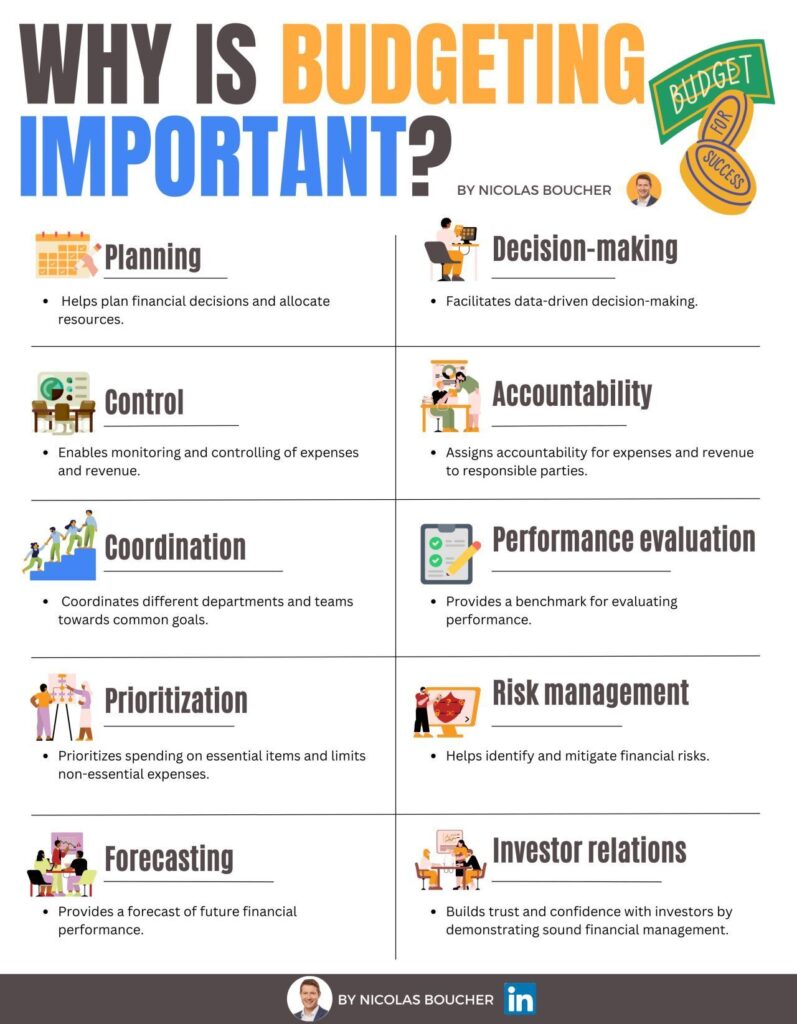
Understanding the mechanics of a budget and, more importantly, the strategic “why” behind it, is the foundational step toward achieving financial independence. Whether you are aiming to climb out of debt, save for a primary residence, or build a robust investment portfolio, the budget serves as the primary engine driving your financial progress.
The Architecture of a Modern Budget
To understand why a budget is important, one must first understand what it is. A budget is a comprehensive financial statement that estimates income and expenditures over a specified future period. While a simple list of expenses is a start, a truly effective budget acts as a dynamic tool for cash flow management.
Income: The Raw Material
The first component of any budget is a clear accounting of all income streams. In the gig economy and an era of diversified assets, this is rarely just a single salary. It includes net take-home pay, dividends from investments, side hustle earnings, and any passive income sources. By identifying exactly what is coming in, an individual can set a realistic ceiling for their lifestyle and investment capabilities.
Fixed vs. Variable Expenses
A sophisticated budget distinguishes between fixed costs—those that remain constant such as rent, mortgage payments, insurance, and loan repayments—and variable expenses, which fluctuate month-to-month. Variable expenses, such as groceries, entertainment, and utility bills, represent the area where an individual has the most control. Distinguishing between these two allows for “stress-testing” a financial plan; if income drops, one immediately knows which variable costs must be slashed to protect fixed obligations.
The Role of Sinking Funds
One of the most overlooked aspects of a budget is the “sinking fund.” This involves setting aside small amounts of money each month for predictable but irregular expenses, such as annual car registrations, holiday gifts, or home maintenance. By treating these as monthly “expenses” within the budget, you eliminate the financial shocks that often derail less disciplined planners.
Why a Budget is the Foundation of Wealth
The importance of budgeting transcends simple arithmetic. It is a psychological and strategic tool that transforms how an individual interacts with the economy. Without a budget, money tends to disappear into the “black hole” of mindless consumption, leaving even high-earners wondering where their paycheck went at the end of the month.
Gaining Absolute Clarity and Control
The most immediate benefit of a budget is clarity. Most people overestimate their savings and underestimate their spending. A budget forces an honest confrontation with financial reality. When you track your spending, you move from a reactive state—wondering if you can afford a purchase—to a proactive state, where you have already decided how much you will spend in that category. This control reduces financial anxiety, as there are no surprises when bills arrive.
Accelerated Debt Elimination
For those carrying high-interest consumer debt, a budget is a weapon. By identifying “leaks” in discretionary spending, a budget allows you to redirect surplus cash toward debt principal. Whether using the “Debt Snowball” (paying off smallest balances first) or the “Debt Avalanche” (prioritizing high-interest rates), the budget provides the data necessary to execute these strategies effectively. Without a budget, debt repayment is often inconsistent, leading to thousands of dollars in unnecessary interest over time.

Maximizing the Power of Compound Interest
In the realm of personal finance, time is the most valuable asset. A budget is the mechanism that “frees up” capital to be put to work in the market. By strictly limiting expenses, a budget increases the “savings rate”—the percentage of income that goes toward investments. Because of compound interest, a dollar saved and invested in your 20s or 30s is worth significantly more than a dollar invested in your 50s. A budget ensures that you are consistently feeding your investment accounts, allowing time to do the heavy lifting of wealth creation.
Strategic Budgeting Frameworks
There is no one-size-fits-all approach to budgeting. The “best” budget is the one that an individual can stick to consistently. Several frameworks have emerged as industry standards for balancing current needs with future growth.
The 50/30/20 Rule
Popularized by Senator Elizabeth Warren, this is an excellent framework for those who want a high-level balance without tracking every penny. It suggests allocating 50% of net income to “Needs” (housing, utilities, basic groceries), 30% to “Wants” (dining out, travel, hobbies), and 20% to “Financial Goals” (debt repayment, emergency funds, and investments). This provides a clear boundary that prevents “lifestyle creep” from consuming potential investment capital.
Zero-Based Budgeting
This is the most granular and effective method for those serious about wealth optimization. The philosophy behind zero-based budgeting is that every single dollar of income must be assigned a “job” until the remaining balance is zero. If you earn $5,000 in a month, you must account for where every one of those $5,000 is going—even if $1,000 of it is simply labeled “Stock Market Investment.” This prevents money from sitting idle in a low-interest checking account and ensures maximum efficiency.
The “Pay Yourself First” Model
For those who find traditional budgeting tedious, the “Pay Yourself First” or “Reverse Budgeting” method is highly effective. In this model, you determine your savings and investment goals first. As soon as you receive your paycheck, those amounts are automatically transferred to investment or savings accounts. Whatever is left over is yours to spend as you wish. This ensures that your future self is taken care of before you have the chance to spend the money on present-day desires.
The Psychological Advantage of Budgeting
Beyond the spreadsheets and bank statements, budgeting offers a profound psychological shift. It bridges the gap between your current reality and your future aspirations.
Intentional Living and Value-Based Spending
A budget forces you to ask: “Does this purchase align with my values?” When you see that you are spending $400 a month on subscription services you rarely use, but you “can’t afford” a vacation, the budget highlights a misalignment of values. By cutting the fluff, you can redirect funds to the experiences and assets that actually improve your quality of life. This is the essence of value-based spending.
Mitigating Financial Stress
Financial problems are a leading cause of stress and relationship friction. Much of this stress stems from the unknown. A budget eliminates the unknown. Even if the financial situation is difficult, having a plan to address it provides a sense of agency. Knowing exactly when a debt will be paid off or exactly how much is in the emergency fund provides a level of peace that no amount of impulsive shopping can match.

Moving from Budgeting to Wealth Building
A budget is the starting point, not the destination. Once the habit of budgeting is ingrained, it serves as the data source for more advanced financial maneuvers. It allows you to calculate your “Burn Rate,” which is essential for determining how much you need in an emergency fund (typically 3–6 months of expenses). It also allows you to calculate your “Net Worth” accurately by understanding the relationship between your cash flow and your liabilities.
Ultimately, a budget is the difference between someone who earns a lot of money and someone who is actually wealthy. Wealth is not determined by the size of your paycheck, but by the gap between your income and your lifestyle. A budget is the tool that widens that gap, allowing you to capture surplus capital and convert it into income-producing assets. By mastering the budget, you stop working for money and begin the process of making your money work for you. In the grand journey toward financial freedom, the budget is your most reliable compass.
aViewFromTheCave is a participant in the Amazon Services LLC Associates Program, an affiliate advertising program designed to provide a means for sites to earn advertising fees by advertising and linking to Amazon.com. Amazon, the Amazon logo, AmazonSupply, and the AmazonSupply logo are trademarks of Amazon.com, Inc. or its affiliates. As an Amazon Associate we earn affiliate commissions from qualifying purchases.