
Choosing the right credit card can feel like navigating a labyrinth. With an overwhelming array of options, each promising unique benefits, it’s easy to get lost in the fine print. Yet, a credit card, when used wisely, is far more than just a payment tool; it’s a powerful financial instrument that can help you build credit, earn rewards, manage expenses, and even provide a financial safety net. Conversely, a poor choice or misuse can lead to debt, damaged credit, and unnecessary fees. This guide is designed to demystify the process, helping you identify the “what credit card to get” that perfectly aligns with your financial habits, goals, and credit profile. We’ll delve into understanding your personal financial landscape, exploring the various types of cards available, evaluating crucial decision-making factors, and empowering you to make an informed choice that supports your long-term financial well-being.
Understanding Your Needs and Financial Profile
Before you even begin to browse credit card offers, the most critical step is to look inward. A credit card is a reflection of your financial life, and the best fit will always be one that complements your spending patterns, credit history, and future aspirations.
Assess Your Current Spending Habits
Take a candid look at where your money goes each month. Do you frequently dine out, travel, or spend a lot on groceries? Are your major expenses concentrated in a few categories, or are they broadly distributed?
-
High Spenders in Specific Categories: If you spend heavily on gas, groceries, or travel, a card offering accelerated rewards in those categories might be ideal. These cards typically offer bonus points or cash back for purchases made within defined categories.
-
Diverse Spenders: A flat-rate cash back card, offering a consistent percentage back on all purchases (e.g., 1.5% or 2% on everything), could be more beneficial if your spending is varied across many categories.
-
Minimal Spenders: If you use a credit card infrequently and pay it off immediately, a card with no annual fee and perhaps a modest rewards program might suffice. The primary goal here might be credit building rather than maximizing rewards.
Evaluate Your Credit Score
Your credit score is a numerical representation of your creditworthiness and plays a pivotal role in determining what cards you qualify for. Generally, credit scores fall into categories:
-
Excellent (780-850): Individuals with excellent credit have access to the most premium rewards cards, highly competitive low APR offers, and exclusive perks.
-
Very Good (740-779): Still eligible for most top-tier cards, but might see slightly less favorable rates or lower credit limits than those with excellent scores.
-
Good (670-739): A wide range of competitive cards are available, including many rewards and low-interest options. This is a solid foundation for most mainstream credit products.
-
Fair (580-669): Options become more limited; focus might shift to cards designed for rebuilding credit, such as secured cards or basic unsecured cards that typically come with higher APRs.
-
Poor (300-579): Secured credit cards or student cards are typically the primary options to begin building a positive credit history, as they are designed for those with little to no established credit.
Understanding your score beforehand prevents disappointment and guides you toward realistic options. You can usually check your credit score for free through various financial institutions or credit monitoring services.
Define Your Financial Goals
What do you hope to achieve with your new credit card? Clearly defining your objectives will significantly narrow your search.
-
Building Credit: If you’re new to credit or recovering from past financial missteps, your primary goal might be to establish or improve your credit history. This often means focusing on secured cards or starter cards.
-
Earning Rewards: Are you aiming for cash back, travel points, or specific merchandise? Your goal will dictate the type of rewards program to prioritize and how aggressively you want to earn.
-
Saving on Interest: If you anticipate carrying a balance, a card with a low Annual Percentage Rate (APR) is crucial to minimize the cost of borrowing.
-
Consolidating Debt: A balance transfer card with an introductory 0% APR period can be invaluable for paying down high-interest debt from other cards more efficiently.
-
Travel Benefits: Free checked bags, airport lounge access, travel insurance, or global entry credits might be a priority for frequent travelers who can leverage these perks.
Exploring the Landscape of Credit Card Types
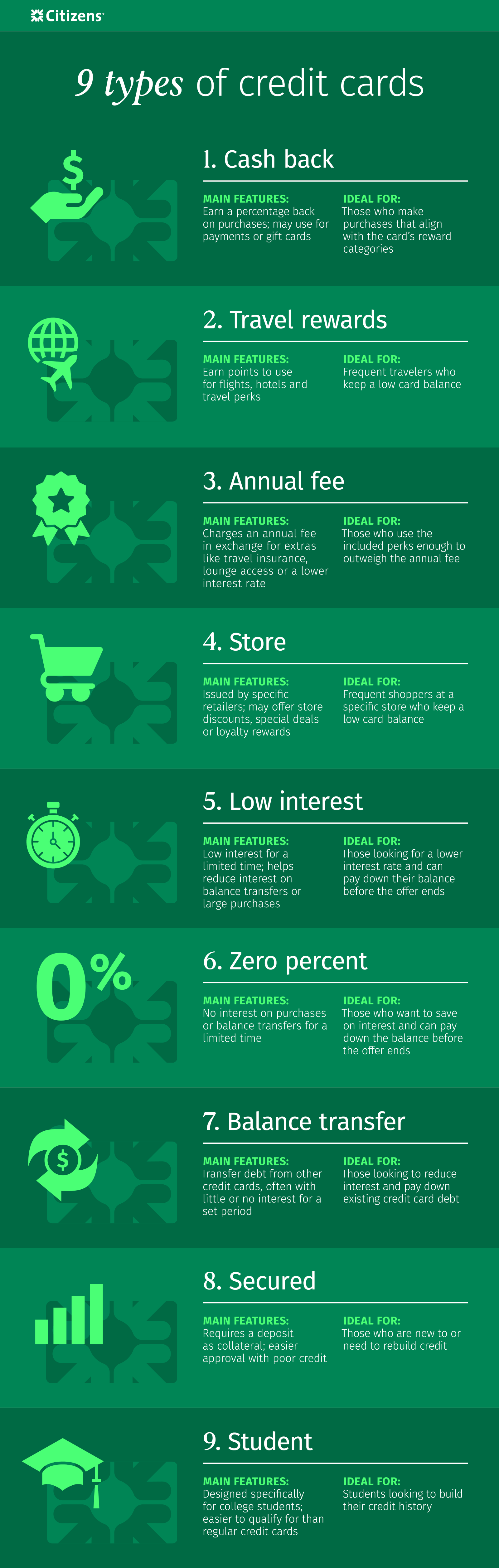
The credit card market is incredibly diverse, with specialized cards designed to meet various financial needs. Familiarizing yourself with the main categories will help narrow down your search and align your choice with your personal profile.
Rewards Credit Cards
These are among the most popular cards, appealing to consumers who want to earn something back on their spending.
-
Cash Back Cards: Offer a percentage back on every purchase, usually redeemable as a statement credit, direct deposit, or gift card. Some offer flat rates (e.g., 1.5% on everything), while others feature tiered rates (e.g., 5% on rotating categories, 2% on groceries, 1% on everything else).
-
Travel Rewards Cards: Accumulate points or miles that can be redeemed for flights, hotels, car rentals, or other travel-related expenses. Many come with premium travel perks like airport lounge access, travel insurance, and no foreign transaction fees, making them highly valuable for frequent flyers.
-
Points Cards: Offer flexible points that can be redeemed for a variety of options, including travel, cash back, merchandise, or gift cards, often through a proprietary online portal. The flexibility of redemption can be a significant advantage.
Balance Transfer Credit Cards
Designed for individuals looking to pay off high-interest debt from other credit cards, personal loans, or even medical bills. These cards typically offer an introductory 0% APR period (e.g., 12-21 months) on transferred balances. This allows you to pay down the principal without accruing interest, provided you make timely payments and pay off the balance before the promotional period ends. Be mindful of balance transfer fees, which are usually 3-5% of the transferred amount.
Low APR Credit Cards
If you anticipate carrying a balance from month to month, a low APR card can save you a significant amount in interest charges. These cards typically have a lower ongoing interest rate compared to rewards cards, which often have higher APRs to offset the value of their rewards programs. They might lack robust rewards, but their primary benefit is minimizing the cost of borrowing, making them ideal for those who occasionally carry a balance.
Secured Credit Cards
An excellent option for those with poor credit or no credit history. To get a secured card, you typically need to provide a cash deposit, which often becomes your credit limit. This deposit acts as collateral, minimizing risk for the issuer. By using the card responsibly (making on-time payments and keeping utilization low), you can build a positive credit history, eventually qualifying for unsecured cards and getting your deposit back.
Student Credit Cards
Tailored specifically for college students, these cards often have more lenient approval requirements than standard unsecured cards. They aim to help students establish credit early, often with modest credit limits and sometimes basic rewards programs. Responsible use during college can set the foundation for a strong financial future, preparing students for more robust financial products after graduation.
Key Factors to Evaluate Before Applying
Once you have a clearer idea of your needs and the types of cards available, it’s time to dive into the specifics of individual card offers. A careful comparison of these factors will illuminate the best choice for your financial situation.

Annual Fees
Some cards, especially premium rewards or travel cards, come with an annual fee (e.g., $95 to $550+). While a no-annual-fee card is always appealing, don’t automatically dismiss cards with fees. Evaluate if the benefits, rewards, and perks offered by the card sufficiently offset the annual cost. For instance, a travel card with a $95 annual fee might offer free checked bags, travel credits, or airport lounge access that far exceeds the fee’s value if you use those benefits regularly. A cost-benefit analysis is essential.
Interest Rates (APR)
The Annual Percentage Rate is the cost of borrowing money if you don’t pay your balance in full each month. This is a critical factor for anyone who expects to carry a balance.
-
Purchase APR: The interest rate applied to new purchases if you carry a balance beyond the grace period.
-
Balance Transfer APR: The rate applied to transferred balances (often an introductory 0% APR, then a variable rate).
-
Cash Advance APR: Typically very high and applied immediately with no grace period; cash advances should generally be avoided due to their exorbitant cost.
Always aim for the lowest possible APR if you anticipate carrying a balance. If you pay your statement balance in full every month, the purchase APR is less critical, as you’ll effectively be using the card interest-free during the grace period.
Rewards Programs and Earning Structure
This is where the fun begins for rewards seekers, but careful attention to detail is paramount to maximize value.
-
Earning Rates: How many points/miles/cash back do you earn per dollar spent? Is it a flat rate, or are there bonus categories? Are these categories fixed (e.g., always 3% on groceries) or rotating (e.g., 5% on gas for one quarter, then 5% on streaming services the next)?
-
Redemption Value: How much are your points or miles truly worth? For travel cards, points often have higher value when redeemed through the issuer’s portal or for specific travel partners. For cash back, the value is straightforward (e.g., 1 point = 1 cent).
-
Redemption Options: Can you redeem for cash, travel, gift cards, merchandise, or statement credits? Flexibility can be a major advantage, allowing you to choose the reward that best suits your current needs.
Welcome Bonuses and Introductory Offers
Many cards entice new cardholders with substantial welcome bonuses for meeting a spending threshold within a specific timeframe (e.g., “Earn 60,000 bonus points after spending $4,000 in the first 3 months”). These can be incredibly valuable, especially for travel or high cash-back cards, potentially offering hundreds of dollars in value. Also, look for introductory 0% APR offers on purchases or balance transfers, which can provide significant financial breathing room. Always ensure you can meet the spending requirement responsibly without overspending or accumulating unnecessary debt.
Additional Card Benefits and Protections
Beyond rewards, many cards offer a suite of benefits that can add significant value and security:
-
Travel Perks: Rental car insurance, trip cancellation/interruption insurance, baggage delay insurance, no foreign transaction fees (crucial for international travel).
-
Purchase Protections: Extended warranty on items purchased with the card, purchase protection (against damage or theft within a certain period), price protection (reimbursement if an item’s price drops).
-
Concierge Services: Assistance with travel bookings, event tickets, or dining reservations, offering convenience and saving time.
-
Cell Phone Protection: Coverage if your phone is damaged or stolen, typically when you pay your monthly bill with the card.
Consider which of these benefits are most relevant to your lifestyle and could genuinely save you money or provide peace of mind.
Navigating the Application Process and Responsible Use
Once you’ve identified the ideal credit card, the final steps involve a careful application and, most importantly, diligent management to maximize its benefits and avoid pitfalls. A credit card is a tool; its effectiveness depends on how you wield it.
Preparing for the Application
Before hitting “submit,” ensure you meet the card’s general requirements and have all necessary information handy to streamline the process.
-
Eligibility Check: Many issuers offer a “pre-qualification” tool that allows you to see if you’re likely to be approved without a hard inquiry on your credit report. This is a soft pull and doesn’t affect your score, providing a good indication of your chances.
-
Required Information: You’ll typically need your full name, address, date of birth, Social Security Number (SSN), gross annual income, and employment information. Have these details ready for a smooth application.
-
Income Disclosure: Be honest about your income. Credit card issuers use this to assess your ability to repay. You can include any verifiable income you have reasonable access to, not just your primary salary, such as investment income, retirement benefits, or income from authorized users.
Building and Maintaining Good Credit
Getting the right credit card is just the first step; using it responsibly is crucial for long-term financial health and opens doors to better financial opportunities.
-
Pay On Time, Every Time: Payment history is the most significant factor in your credit score (35%). Set up automatic payments to at least the minimum amount to avoid late fees and negative marks on your credit report. Paying the full statement balance is always ideal to avoid interest charges.
-
Keep Credit Utilization Low: This refers to the amount of credit you’re using compared to your total available credit. Aim to keep it below 30%, ideally below 10%, for the best impact on your score. For example, if you have a $10,000 credit limit, try to keep your balance under $3,000.
-
Don’t Close Old Accounts: Older accounts with good payment history contribute positively to your average age of credit, which is another factor in your score. Keep them open, even if you don’t use them frequently.
-
Avoid Excessive Applications: Each “hard inquiry” for a new credit line can temporarily ding your score. Space out your applications by at least six months to a year, especially for prime credit cards.
Mastering Debt Management and Financial Discipline
A credit card can be a slippery slope if not managed with discipline. Responsible habits are key to leveraging its benefits without falling into debt.
-
Budgeting: Integrate your credit card spending into your overall budget. Treat it like cash and ensure you can afford what you charge before you swipe.
-
Paying in Full: The golden rule of credit cards is to pay your statement balance in full every month to avoid interest charges and debt accumulation. This is how you use a credit card for free.
-
Emergency Fund: Rely on your emergency savings for unexpected expenses rather than racking up credit card debt, which is far more expensive.
-
Review Statements Regularly: Check your statements for unauthorized charges or errors. This also helps you keep track of your spending and ensures you’re maximizing any rewards earned.
Monitoring Your Financial Health
Regularly review your credit report and score to track your progress and ensure accuracy. Free annual credit reports are available from AnnualCreditReport.com, and many banks and credit card issuers provide free credit score updates. Proactively managing your credit empowers you to take control of your financial future and identify potential issues before they become major problems.
The question of “what credit card to get” doesn’t have a single universal answer. It’s a deeply personal decision that hinges on your unique financial profile, spending habits, and goals. By systematically assessing your needs, understanding the diverse range of card types, diligently evaluating key features like fees, APRs, and rewards, and committing to responsible use, you can confidently select a credit card that acts as a powerful asset in your financial toolkit. Remember, the best credit card is the one that empowers you to achieve your financial objectives while fostering healthy credit habits for years to come. Make your choice a strategic one, and unlock the full potential of responsible credit management.
aViewFromTheCave is a participant in the Amazon Services LLC Associates Program, an affiliate advertising program designed to provide a means for sites to earn advertising fees by advertising and linking to Amazon.com. Amazon, the Amazon logo, AmazonSupply, and the AmazonSupply logo are trademarks of Amazon.com, Inc. or its affiliates. As an Amazon Associate we earn affiliate commissions from qualifying purchases.